SHOP NOW, PAY LATER









 Informed Sport
 Informed Choice
 NSF Certified for Sport
 HASTA Certified

The much-shared finding that one in three supplements contained banned substances needs its full context. It came from a sample of non-batch-tested products available online in Australia. It does not mean one in three products sold in New Zealand has the same problem.
For NZ athletes, the useful lesson from the 2025 Australian supplement survey is to ask for evidence that relates to the product you are considering.
What did the survey actually find?
Sport Integrity Australia published its announcement on 9 April 2025. It had commissioned HASTA in 2022 to buy and analyse 200 sports-supplement products from the Australian online market. Of those products, 35% contained one or more WADA-prohibited substances.
Among the positive products, 57% did not name the prohibited ingredients on their packaging or website. The announcement identified pre-workout, fat-burner and muscle-builder products as the most affected categories. Read the original SIA announcement.
What the percentage cannot tell you
This is a finding about a defined sample. It is not a measured contamination rate for NZ retailers, every supplement category, or products in independent certification programmes. The 2025 publication date also should not be described as the date of a new 2026 market test.
That distinction matters when you are shopping. A dramatic statistic can make a familiar product look suspect without any product-specific evidence. Equally, a reassuring label can distract you from asking whether there is evidence for the exact item in your basket.
Use the research to improve the question you ask. "Was this brand in the news?" is less useful than "What testing record can I check for this product?"
What should replace a quick label glance?
Begin with a clear product name. Then identify which organisation did the testing and whether the claim describes an ongoing certification programme or an independent test of a particular batch. Those descriptions have different meanings.
HASTA's own information distinguishes full certification from independent batch testing. It also limits its testing claims to prohibited-substance screening rather than nutritional or performance claims. See HASTA's testing scope. Our HASTA Certified versus HASTA Tested guide explains how to read that distinction.
A practical shopping note might have four empty spaces: product, flavour, programme and batch. Filling those spaces is more useful than saving an advertising slogan. If a detail is missing, ask for it before deciding.
An example of a better buying question
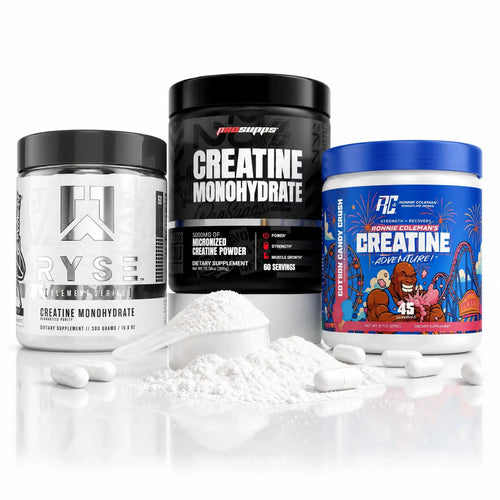
Imagine you are replacing an empty creatine tub. You find the same name online, but the image shows different packaging. Rather than assuming the old details still apply, ask which version will be supplied and how you can check the batch on arrival.
There may be an ordinary explanation, such as a packaging update. You do not need to diagnose it yourself. A clear answer from the retailer, brand or programme lets you finish the check without making an accusation or overlooking a mismatch.
This is an example of a purchasing process, not a finding from the survey. It applies just as well to protein powders, drink mixes or other supplements you already use.
Where NZ Supps fits
Our sport-tested supplement collection gives you a place to start comparing options. Athletech Purest Creatine Monohydrate is one product example in that collection. Its inclusion here does not mean it was sampled or implicated in the Australian study.
Use the product page to identify what you want, then match the exact item and batch with the relevant testing evidence. Keep the purchase details somewhere easy to find. A collection makes shopping easier; it cannot perform the check on the pack that eventually reaches you.
Questions about the survey
Were 35% of New Zealand supplements contaminated?
The cited survey does not establish that. It studied a specific Australian online sample, so the percentage should not be presented as NZ-wide prevalence.
Does a prohibited-substance result prove deliberate spiking?
No. SIA said many detected substances were naturally occurring compounds. A positive finding alone does not establish how the substance entered a product.
Does batch testing remove all risk?
No. HASTA explains that contamination may be unevenly distributed or present at very low levels. Its certification guidance describes risk reduction, not a complete guarantee.
Should I stop using every supplement?
The survey cannot make an individual nutrition decision for you. Start by asking whether each product has a useful role, then investigate any uncertainty about that specific item before using it.