SHOP NOW, PAY LATER











 Informed Sport
 Informed Choice
 NSF Certified for Sport
 HASTA Certified

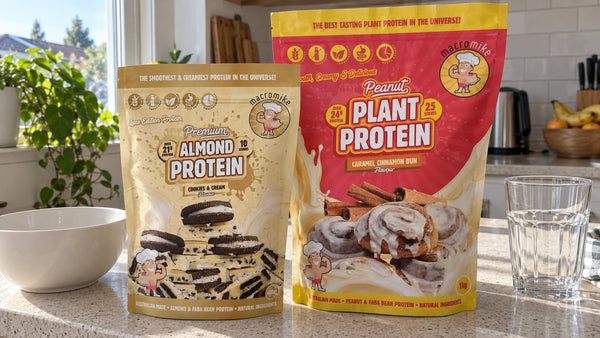
Macro Mike's almond and peanut protein bags can look like two flavour branches of one product. They are different bases. Premium Almond Protein uses almond and faba bean protein. Peanut Plant Protein uses peanut, pea and faba bean protein. That distinction affects allergens and taste before you even get to the flavour printed on the front.
If you have a nut or legume allergy, start with the exact current label and facility statement. If you do not, the choice becomes much easier: buy the base you want to taste and the size you are likely to finish. Protein per serve, sweeteners and pack weight can vary by flavour and formulation, so there is no honest single number that covers every bag at NZ Supps.
The short answer
- Premium Almond Protein: almond and faba bean blend, with a milder base for dessert-style flavours. It still contains almonds.
- Peanut Plant Protein: peanut, pea and faba bean blend, with a more obvious peanut character. It contains peanuts.
- Neither is a direct swap for Macro Shake: the shake is a separate meal-style formula. Compare it for breakfast or lunch, not just protein per scoop.
The Macro Mike plant protein collection is the local starting point. Use its product pages for current flavours and the exact serving label.
What is in Premium Almond Protein?
Macro Mike says its current Premium Almond Protein uses Californian almond and Australian faba bean protein. The official range page describes it as a plant-based, dairy-free powder and says the base is designed to be less peanut-like in flavour. That makes it a reasonable starting point if you want a chocolate, vanilla or cereal-style flavour without the taste of roasted peanuts coming through.
Almond is a tree nut. The word "plant" does not make the powder suitable for everyone with food allergies. Some shoppers also react to legumes; faba bean is a legume. Check the ingredient and cross-contact statement of the specific NZ flavour rather than treating a collection page as an allergy certificate.
NZ Supps stocks many Premium Almond flavours, including Cookies and Cream and licensed Kellogg's options. Those are separate flavour products. A cereal name on a collaborative bag is a reason to inspect its label more carefully, not to assume the base and all ingredients match a plain Vanilla Buttercream bag.
What is in Peanut Plant Protein?
Macro Mike describes Peanut Plant Protein as a blend of peanut, pea and faba bean proteins. The peanut is not merely a flavouring: it is one of the protein ingredients. This line suits someone who wants a peanut butter note in a shake, oats or baking. It is the wrong line for anyone avoiding peanuts.
The local Caramel Cinnamon Bun product is one example, but there are many flavours and sizes. The same flavour can also appear in different pack sizes, so a shelf price does not tell you cost per serving. Divide the live price by the serves on that exact bag. If a smaller bag or sample pack is available, it is a useful way to find out whether you enjoy the peanut base before buying a large one.
Peanut and almond powders may both be plant-based and dairy-free, yet the finished drinks do not taste identical. The base is part of the flavour. If you want a neutral canvas for fruit or coffee, almond may suit you better. If a peanut butter shake sounds like the point, the peanut line is more direct.
What about Luxe and Kellogg's bags?
The NZ catalogue also includes Luxe Almond, Luxe Peanut and Macro Mike x Kellogg's Premium Almond products. Those names identify lines and collaborations, not a promise of identical nutrition across all bags. Check the exact ingredient panel if you move from a standard almond bag to a Luxe or licensed flavour. The serving weight, added pieces and sweeteners may differ.
The existing almond flavour guide can help once you have chosen the almond family. It should not decide whether almond is the right protein base for you. Do the allergen and formula choice first, then read taste opinions.
How to compare value without a misleading price table
Start with comparable bag sizes, not the cheapest amount on a product card. A 400 g almond bag and a 1 kg peanut bag have different up-front prices because they contain different amounts of powder. Look at the number of listed servings and protein per serving for each flavour. If you normally use one scoop, price per scoop is useful. If one scoop has a different amount of protein, compare the cost of the amount you actually need.
Next ask whether you will finish the flavour. A large bag that stays in the cupboard is poor value at any price. Sample packs are particularly useful with a brand built around sweet flavours; sweetness and texture are personal. If you already know your favourite, a larger bag can make sense. No invented NZ price or blanket nutrition claim is needed to make that call.
Finally, keep your daily protein target in view. The powder can fill a gap. It does not make an otherwise inadequate diet complete, and one source does not have to supply all your protein. If breakfast is what you are trying to solve, compare Macro Shake instead of judging these powders as meals.
Which one would we pick?
We would start with Premium Almond for someone who wants a broad range of dessert and cereal-style flavours without a peanut-led taste. We would choose Peanut Plant Protein for someone who actively wants a peanut butter style shake and has no peanut allergy. Both are reasonable plant protein options when their labels fit your diet. There is no winner that overrides a personal allergy, a flavour you dislike or a local pack that offers the wrong serving size.
Browse the Macro Mike collection for the current NZ bags. For the wider brand map, including Macro Shake and powdered peanut butter, use the collection's family links until the dedicated range guide is live.
FAQs
Does Macro Mike Almond Protein contain peanuts?
The named protein base is almond and faba bean, not peanut. That does not settle facility cross-contact, so check the current bag's allergen statement if peanut avoidance is essential.
Is Macro Mike Peanut Protein just peanut flavoured?
No. Peanut is part of the protein blend, alongside pea and faba bean according to the official range page. It is unsuitable for someone with a peanut allergy.
Are both options dairy free?
The official almond and peanut plant protein ranges are positioned as dairy-free. Read the exact NZ flavour label, especially a licensed or Luxe product, if avoiding dairy is a strict requirement.
Which one has more protein?
Compare the exact flavour and serving size. The ranges contain many formulas and pack sizes, so a single across-the-board number would be misleading.
Is Macro Shake the same as these protein powders?
No. Macro Shake is the brand's meal-style formula with a broader nutrient profile. Use it when you want a convenient meal option; use a protein powder when you chiefly need protein.
Should I buy a sample or a big bag first?
Try a smaller format when the base or sweetness is new to you. A larger bag makes better sense once you know you enjoy the taste and will use it regularly.
Sources: Macro Mike Premium Almond Protein; Peanut Plant Protein; NZ Supps catalogue checked 23 September 2026.