SHOP NOW, PAY LATER













 Informed Sport
 Informed Choice
 NSF Certified for Sport
 HASTA Certified

This story comes from a conversation between a customer and the store. We have kept them anonymous and tidied the telling, but the experience is theirs. The owner's note near the end is ours.
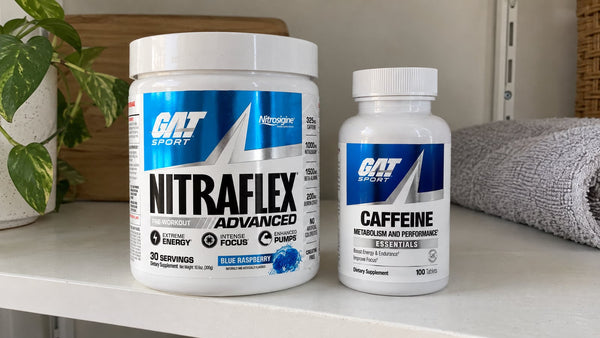
I put off buying pre-workout for almost a year because I was sure it would wreck my sleep. One tub later, I sleep better than I have in years. Not because caffeine is secretly good for sleep. Because the training I do on it is so much harder that by ten o'clock I am properly, honestly tired. There is a timing catch that makes the whole thing work, and an owner's note at the end about keeping your dose effective, but that is the short version.
The assumption I carried around for a year
I am the kind of person who feels a flat white at 3pm. So the maths in my head was simple: pre-workout has more caffeine than coffee, therefore pre-workout equals staring at the ceiling at midnight. Every time I got close to ordering a tub I would picture that and close the tab.
What I actually had was a different problem. I train after work, and most days I arrived at the gym with nothing left. Sessions were flat. I went through the motions, lifted the same weights I lifted months ago, went home not particularly tired, and then, funnily enough, lay awake anyway. It never occurred to me that the sleep problem and the training problem might be the same problem.
What actually happened
The first session on a proper scoop was strange in a good way. Twenty minutes in I realised I was not negotiating with myself between sets. I wanted the next set. I added weight I had no business adding and walked out with the shaky, emptied-out feeling I had not had since I first started lifting.
That night I was in bed at ten and gone by five past. Same on the next training day, and the one after that. A month in, the pattern was impossible to ignore: on days I took pre-workout and trained hard, I slept deeper and woke less. My worst sleep now happens on rest days, which tells you everything.
| What I expected | What happened | |
|---|---|---|
| Falling asleep | Wired until midnight | Out by ten on training days |
| Sleep quality | Light and broken | Deepest in years |
| Training | A bit more energy, maybe | Adding weight again after months of nothing |
| Rest days | My good sleep nights | Now my restless ones |
Why it worked, and the timing caveat that makes it work
There is nothing magic in this. Hard exercise builds real physical tiredness, and the research consistently links exercise with better sleep quality. My old sessions were too soft to generate that. The scoop did not sedate me; it let me train hard enough to make myself tired.
The honest other half: caffeine takes hours to clear, and no amount of hard training changes that. I train straight after work, so my scoop goes in around 4:30pm and there are five or six clear hours before bed. If I trained at 8pm, that same scoop would fight my sleep no matter how good the session was. On the odd late night I skip the caffeine entirely and use something from the stim-free pre-workout guide instead. Pump and focus ingredients, none of the ceiling-staring.
What I would tell the version of me that kept closing the tab
Start lower than you think you need. I began on half a scoop, which the beginner's guide also recommends, and it was plenty. Check the actual caffeine number on your tub against the caffeine content table rather than guessing, and count it alongside your coffees using the caffeine bands guide. And be honest about when you train. The scoop is a tool for the session, and the session is what earns you that sleep.
An owner's note on cycling your dose
One thing we would add to this story: caffeine tolerance builds. The scoop that lights you up in week one feels ordinary by week eight, and the tempting fix is to scoop bigger. Go the other way. Every few weeks, drop back to a half dose for a week, or run a stim-free preworkout like Nexus AMP3D for a week if you train late anyway. Your tolerance resets, your normal dose feels like it did at the start, and your daily caffeine total stays somewhere sensible. A tub also lasts a lot longer when you are not chasing it.
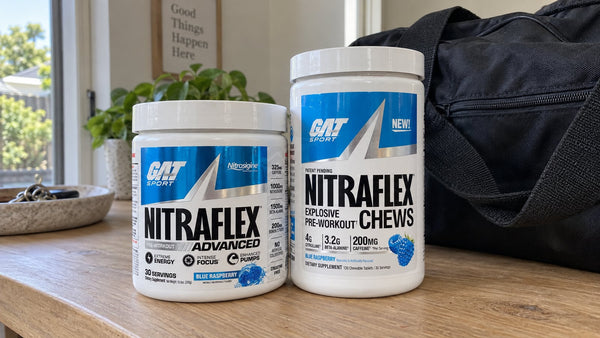
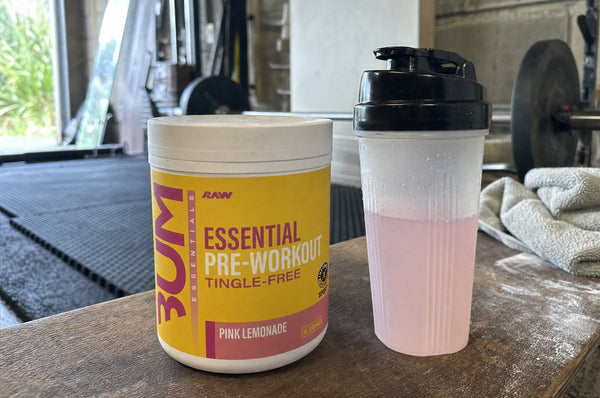
Been putting off pre-workout for the same reason? Check what is in the tub before you buy using the caffeine content table, browse the pre-workout range for full-strength and stim-free options, and let the stack finder match one to when you actually train. Free NZ shipping over $70.
Does pre-workout ruin your sleep?
It depends on dose and timing, not the category. A scoop taken in the morning or well before an evening bedtime clears in time for most people, and the harder training it enables can improve sleep. The same scoop taken late in the evening will disrupt sleep for almost everyone.
How many hours before bed should you take pre-workout?
Treat six hours as the floor, not a guarantee. In one controlled study, 400mg of caffeine taken six hours before bed still cost participants over an hour of measured sleep, so a moderate dose and an earlier scoop beat a big dose on the line. Evening trainers should go stim-free.
Why do I sleep better on days I train?
Hard exercise raises your body's drive for deep sleep, and reviews of the research link regular training with falling asleep faster and sleeping more soundly. Flat, easy sessions generate much less of that pressure, which is why a harder session can improve a night more than an early bedtime does.
Should you cycle pre-workout?
Periodically, yes. Dropping to a half dose for a week every so often, or swapping in a stim-free week, resets caffeine tolerance so your usual serve keeps working. It is cheaper and safer than ratcheting the dose upward as the effect fades.
Sources and health note
- Drake et al., caffeine taken 0, 3 and 6 hours before bed (Journal of Clinical Sleep Medicine)
- Kredlow et al., meta-analysis of exercise and sleep
This is one customer's experience plus general information, not medical or sleep advice. Caffeine sensitivity varies a lot between people, and anyone pregnant, under 18, or managing heart, blood pressure, anxiety or sleep conditions should avoid stimulant pre-workouts and talk to a clinician. Range details checked 6 August 2026.