SHOP NOW, PAY LATER

















 Informed Sport
 Informed Choice
 NSF Certified for Sport
 HASTA Certified

Supplement laboratories screen product samples for specified prohibited substances using validated analytical methods. Chromatography helps separate compounds in a complex sample, while mass spectrometry helps identify target substances. A useful result also needs a clear connection to the product and batch sampled.
The laboratory is not testing an athlete's performance, and a negative screen is not proof that every possible substance is absent. Understanding that scope makes the result easier to use properly.
What happens to a supplement sample?
The work starts with a defined sample: a named product, its batch information and the material submitted for analysis. Laboratory preparation and extraction make it possible to examine target compounds within that material. The analytical method then has to distinguish those compounds from the rest of the product.
Protein powder, a flavoured drink mix and a capsule have different backgrounds of ingredients. Analysts call that background the sample matrix. A method needs appropriate validation for the material and compounds involved; an impressive instrument name alone does not establish that.
Informed Sport describes validation of matrix, compound and detection performance in its science and testing overview. Those details explain why specialist supplement testing involves more than placing any powder into a machine.
What are LC-MS/MS and GC-MS/MS?
LC means liquid chromatography. GC means gas chromatography. Both separate a mixture before detection, using different approaches suited to different analytical tasks. MS refers to mass spectrometry, and MS/MS refers to tandem mass spectrometry.
In practical terms, separation helps untangle the sample. Mass spectrometry then examines signals associated with compounds, which helps analysts distinguish targeted substances. It is not a camera that sees every ingredient at once.
LGC's published 2016 Australian supplement survey identifies LC-MS/MS and GC-MS/MS within its accredited supplement screen. This is a documented example of the techniques used in supplement analysis, not a description of every laboratory's current workflow.
For shoppers, memorising the abbreviations is less useful than asking what the method was designed to detect, in what material, and under what testing scope.
What does a detection limit tell you?
A test has practical limits. A detection limit concerns how small a signal or amount a method can reliably detect under its stated conditions. The limit may differ between compounds and sample types.
This is why "not detected" should be read alongside the testing scope. It is a result within a method, not a claim of absolute absence at every imaginable concentration. Informed Sport's technical FAQ discusses low-level detection and explains that it is not possible to test for every substance on the WADA list.
A shopper rarely needs to calculate a laboratory detection limit. You do need to avoid turning a bounded test result into an unlimited promise. If a certificate leaves the method or scope unclear, ask the issuer to explain it.
Why does sampling still matter after a sophisticated test?
A laboratory analyses the sample it receives. How well that sample relates to a production batch is therefore part of interpreting the evidence.
HASTA explains that contamination can occur at very low levels and may be unevenly distributed through a batch in its certification guidance. A capable analytical method does not remove every sampling limitation.
This is also why manufacturing controls sit alongside screening in certification programmes. Reducing opportunities for contamination during production and examining samples address different parts of the problem. Neither should be described as making every individual retail pack risk free.
Is testing the supplement the same as testing an athlete?
No. Supplement analysis asks about compounds in a product sample. An athlete's anti-doping test examines a biological sample under a different testing framework. The materials and question being investigated are different, even where analytical technologies overlap. The Informed Choice laboratory FAQ explains this distinction.
| Evidence | What it addresses | What it does not establish |
|---|---|---|
| Supplement banned-substance screen | Target substances in the tested product sample | Every possible substance at any concentration |
| Matching batch record | Which product batch the evidence concerns | Automatic coverage of other batches |
| Nutritional analysis | The nutrients examined by that analysis | Sport screening unless separately included |
| Athlete anti-doping test | The athlete sample under the relevant rules | Certification of a supplement brand |
Do not compare a number on a supplement certificate directly with an athlete test result as though they measure the same material. If interpretation is needed, get the laboratory or programme to explain the report in its own context.
What can a buyer check without being a chemist?
Start with the report or programme record: identify who issued it, which product it concerns, the batch reference and the testing scope. Then establish whether those details relate to the pack you intend to use. Avoid treating a generic nutrition certificate as a banned-substance screen.
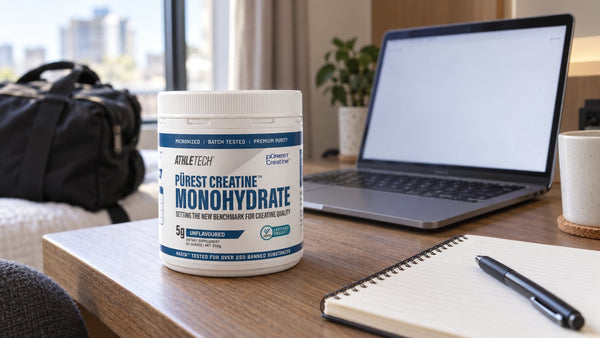
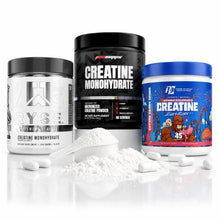
For a concrete example, the HASTA listing for Athletech Purest Creatine Monohydrate provides product and batch information. NZ Supps lists the unflavoured 250g product. The listing gives you something specific to compare with the actual pack; it does not identify the batch currently being dispatched.
Explore the tested-for-sport products at NZ Supps with that evidence check in mind. Our HASTA certification and batch-testing comparison explains why a test and an ongoing programme are different. The NZ supplement checking guide covers the practical lookup steps.
Frequently asked questions
Does LC-MS/MS detect every banned substance?
No single method detects every possible substance in every product. Read the panel and method scope rather than treating the instrument name as a universal guarantee.
What is a supplement matrix?
It is the material surrounding the target substances in the sample, such as the ingredients in a flavoured powder. That background can affect analysis and needs to be considered during method validation.
Does not detected mean zero?
No. It describes the result within the test method and its detection capability. It should not be rewritten as absolute absence at any concentration.
Does a protein-content certificate prove sport testing?
Only if it separately documents appropriate banned-substance screening. A nutrition result answers a different question and should be labelled accordingly.
What is the most useful evidence to retain?
Keep the product and batch identification, the relevant report or programme record, and purchase details together. That makes it possible to reconstruct which evidence applied to the pack you used.