SHOP NOW, PAY LATER









 Informed Sport
 Informed Choice
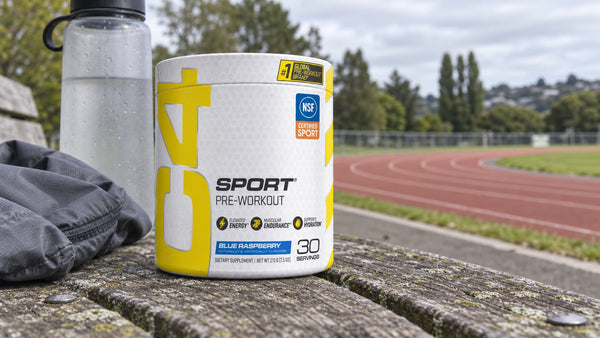
 NSF Certified for Sport
 HASTA Certified

NSF Certified for Sport and Informed Sport both address substances prohibited in sport. Their published scopes differ: NSF Certified for Sport also includes checks of label contents and certain contaminants, while Informed Sport centres on prohibited-substance risk and every-batch testing before release.
For a New Zealand buyer, the useful comparison is the evidence each programme provides for a particular product. A logo comparison alone cannot decide whether the supplement suits your needs or whether your pack matches a listed lot.
What does NSF Certified for Sport cover?
NSF describes a programme that combines banned-substance testing, label-content checks, contaminant limits and manufacturing requirements. Its explanation of the Certified for Sport mark makes clear that the mark covers more than a single banned-substance screen.
Read the full programme name. A product described only as "NSF certified" may refer to a different NSF service or certification scope. Ask to see the Certified for Sport record if that is the evidence you need.
This matters when a shopping page uses "quality tested" beside several badges. Those badges might answer different questions. Establish which claim belongs to which programme before treating them as interchangeable.
What does Informed Sport focus on?
Informed Sport requires each certified product batch to undergo prohibited-substance screening before release. The programme also reviews manufacturing practices and performs ongoing checks, as described in its benefits and programme requirements.
Its science and testing explanation describes validated, accredited supplement methods. Do not automatically extend the sport-testing mark to unrelated claims such as protein quantity or performance improvement. Evidence for those questions needs to address them directly.
How do the published scopes compare?
| Question | NSF Certified for Sport | Informed Sport |
|---|---|---|
| Screens for prohibited substances? | Yes | Yes |
| Reviews manufacturing controls? | Yes | Yes |
| Includes label-content verification in its stated scope? | Yes | Do not infer this from the sport mark alone |
| Describes contaminant checks beyond banned substances? | Yes, with checks depending on product and formulation | Assess separately from the prohibited-substance mark |
| Provides product or tested lot records? | Yes | Yes |
NSF's certification steps describe production-lot banned-substance testing after manufacturing and contents certification, with tested lots listed online and in its app. Use the record for the product and lot concerned rather than applying a claim to everything carrying the NSF name.
Is a larger banned-substance count automatically better?
No single headline count settles this comparison. To judge a testing programme properly, you also need to know what compounds are included, how the methods perform for that product type, when samples are tested and how the results relate to the pack you buy.
For example, a buyer who wants both sport screening and independent label-content evidence has two questions to answer. The appropriate comparison is whether the proposed evidence covers both questions. Simply choosing the higher number printed on a marketing graphic skips that work.
We do not rank these programmes by changing substance totals here. Their official scope and your exact product requirements provide a more useful basis for a decision.
How would you choose between two suitable products?
Imagine two hypothetical products that both meet the purpose of your purchase. One has a matching record in NSF Certified for Sport; the other has a matching Informed Sport record. First, check any requirements set by your team or organisation. Then compare the product details and any additional evidence you need.
If label quantity verification is part of your requirement, make that explicit. If the task is to document a specific sport-tested batch, focus on whether the relevant record can be matched and saved. You may decide either product fits, or that you need more information before buying.
Avoid borrowing a claim from a neighbouring product. A certified protein powder does not confer status on that brand's pre-workout, and a programme listing for one regional version may not resolve another version with a similar name.
Where does this leave NZ Supps shoppers?
Use the NZ Supps tested-for-sport collection to find products worth investigating against your requirements. This article compares programmes; it does not claim that NZ Supps currently stocks a particular NSF Certified for Sport product.
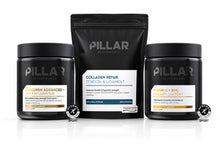
For an Informed Sport example, NZ Supps lists PILLAR Triple Magnesium Powder Berry, 200g. The official PILLAR powder record shows why the exact product and flavour matter. You still need to check the actual batch supplied.
Our Informed Sport buyer guide covers that programme in more detail. For the laboratory side of the comparison, read how banned-substance testing works.
Make your purchasing note specific enough that someone else could follow it. Record the full programme name and the product evidence you used, rather than writing only "certified supplement".
Frequently asked questions
Does any NSF logo mean Certified for Sport?
No. Check the exact certification programme and official product listing. General references to NSF are not a substitute for a Certified for Sport record.
Does sport certification prove a supplement improves performance?
No. Testing scope and product effectiveness are separate questions. A certification mark should not be used as evidence for an unsupported performance claim.
Should I choose by the number of substances screened?
That number alone is insufficient. Scope, methods, timing and evidence for the actual product or batch all affect what the testing tells you.
Can NZ buyers use these international programme directories?
Yes, as evidence resources. Match the exact product and relevant formulation or lot details rather than assuming an overseas listing covers a similarly named pack.
Does certification make a supplement risk free?
No. The NZ Sport Integrity Commission describes residual supplement risk and athlete responsibility. Testing is a way to reduce risk, not erase it.