SHOP NOW, PAY LATER














 Informed Sport
 Informed Choice
 NSF Certified for Sport
 HASTA Certified


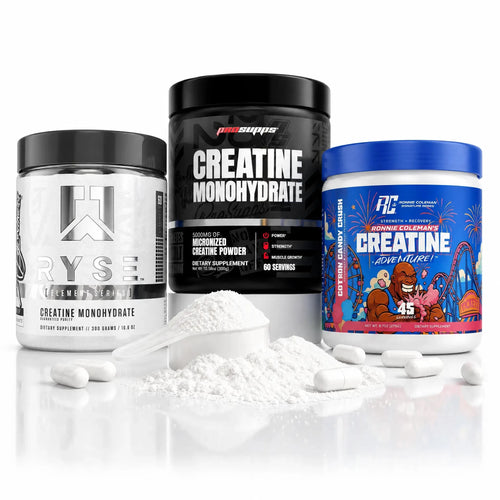
Creatine monohydrate is creatine bound to a single molecule of water, and it's the form used in nearly all the creatine research you'll come across. People typically take 3 to 5 grams a day, or 20 grams a day split into four 5 gram doses for 5 to 7 days to fill muscle stores faster.
The question worth asking next isn't what's in the tub. It's who checked it. A creatine product can be sold legally in New Zealand without any government assessment before it reaches the shelf, which means words like approved, certified and tested are doing very different jobs on different labels. Sorting out what the compound is, how it works, how to dose it, where the evidence stops, and how to read a label properly is what turns a confusing shelf into a simple decision, and it's the quickest route to sensible creatine NZ shopping.
Table of Contents
- What Creatine Monohydrate Is and Where It Comes From
- How Creatine Monohydrate Works in Your Muscles
- Loading and Maintenance Doses Compared
- What Creatine Monohydrate Does for Training, and Where It Stops
- Safety, Side Effects and Who Should Ask First
- Choose a Creatine Monohydrate You Can Check
What Creatine Monohydrate Is and Where It Comes From
Strip the name back and it's two parts. Creatine is the compound itself, a naturally occurring substance your body makes from amino acids and that you also eat in meat and fish. Monohydrate means it's supplied with one molecule of water locked into the crystal, which keeps the powder stable, free-flowing and easy to stir into water or a shake.
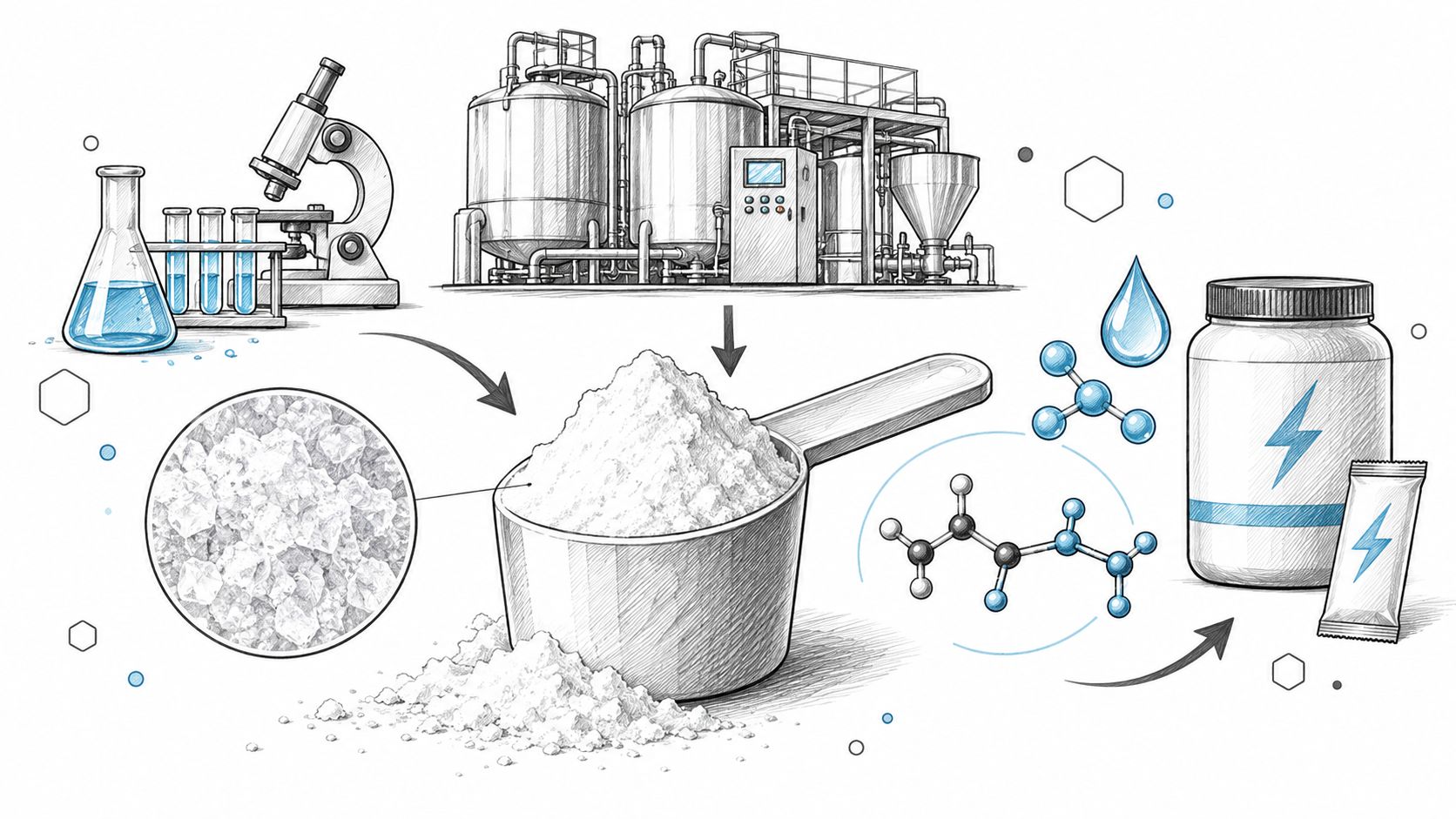
The path from raw material to a sealed tub is short, and knowing roughly what happens along it makes the label easier to read.
Your muscles maintain a small reserve of high-energy phosphate available at all times. Think of it as a backup battery powering the first few seconds of a sprint, a heavy set, or a jump before passing control to other energy systems for the remainder of the session.
New Zealand has added to the picture. University of Auckland researchers examined 15 healthy adults, 10 men and 5 women, with a mean age of 31 years and an age range of 21 to 55, giving them creatine monohydrate during an oxygen deprivation protocol. Supplementation increased neural creatine, enhanced corticomotor excitability and helped prevent an attention decline. The study matters because it shows the same compound being used to ask questions about energy in nerve tissue as well as in muscle. It doesn't mean creatine treats oxygen deprivation or brain injury, and nobody should read it that way.
The formats you'll see on a shelf are narrow. Unflavoured powder, flavoured powder and gummies cover almost all of it. Unflavoured single-ingredient powder is the simplest starting point: one ingredient, one scoop size, nothing else to account for, and it disappears into whatever you already drink.
Before you spend anything, it's worth reading whether supplements actually work for a clear-eyed take on what a powder can realistically do and where training and food do the heavy lifting. From here, the guide moves through muscle energy, dosing, the performance evidence, safety and how to judge a label before you buy.
How Creatine Monohydrate Works in Your Muscles
Creatine helps muscles quickly restore the energy they use during a sprint, jump or heavy lift. That process explains why taking it consistently matters more than timing a serve around a workout.
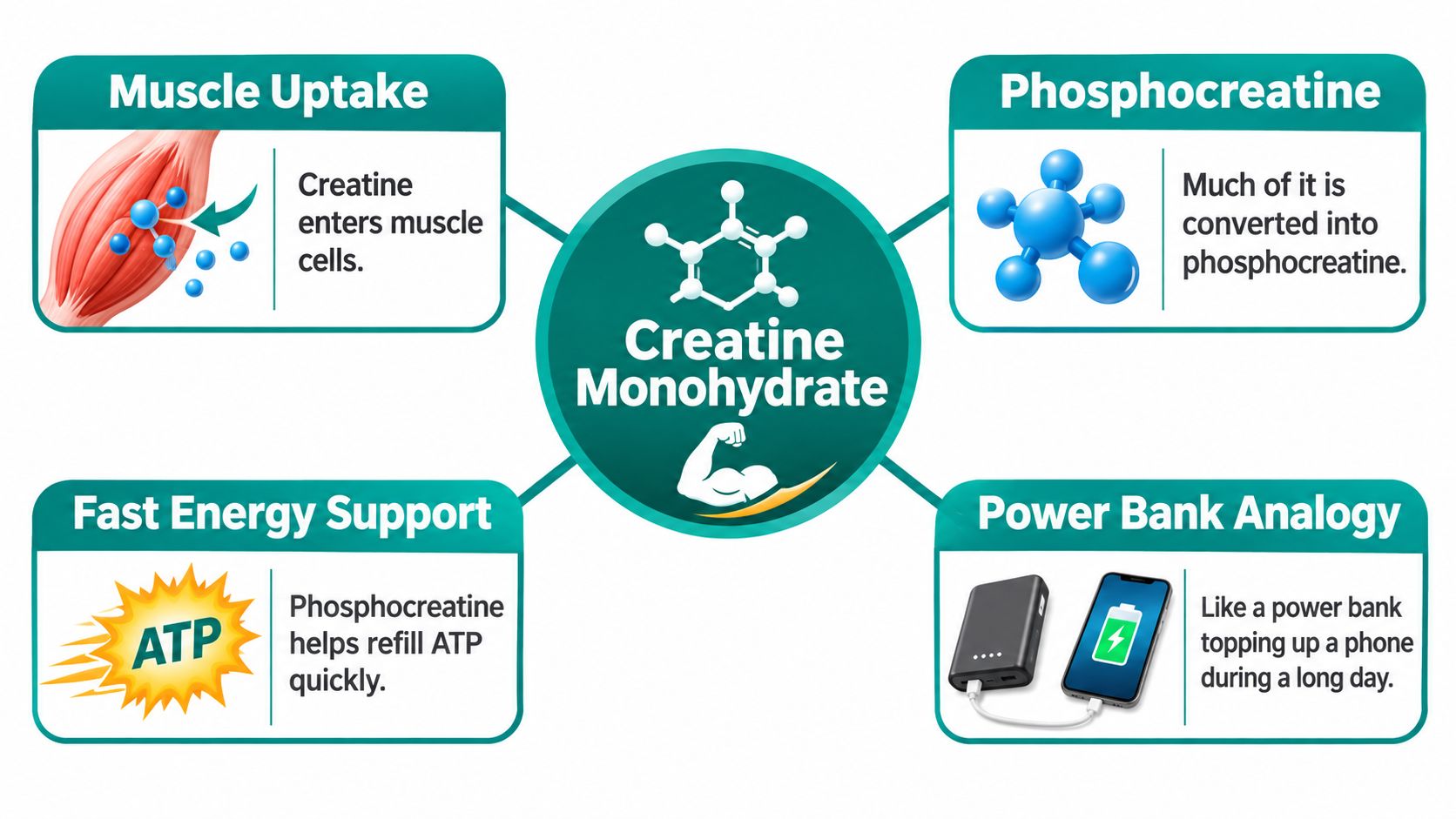
From Powder to Phosphate Donor
- Muscle uptake. After you take creatine, it becomes available in the blood, and muscle tissue takes some of it into its cells.
- Conversion to phosphocreatine. Inside muscle, some creatine combines with a phosphate group to form phosphocreatine. It acts like a small, quickly accessible energy reserve.
- Rebuilding ATP on demand. During intense effort, ATP breaks down to release energy. Phosphocreatine donates a phosphate group to help rebuild ATP, so the muscle can keep powering short, hard efforts.
- Excretion of the surplus. Creatine that the body doesn't retain is converted to creatinine and passed in urine. This is part of normal turnover.
If you'd rather watch the process than read it, this short explainer covers the same ground.
The effect builds as muscle creatine stores rise over days and weeks. A serve taken just before training doesn't act like a quick energy drink: creatine isn't a stimulant, and it doesn't cause the alertness or buzz associated with caffeine.
The daily rule: Take it on training days and rest days alike. A missed session doesn't call for a double dose, and one skipped day won't undo established stores.
Consistency matters more than a precise time. Choose a routine that's easy to remember, such as taking it with breakfast. Regular use over time supports muscle stores; carefully timing each serve around workouts is less important.
Loading and Maintenance Doses Compared
| Approach | Daily dose | Duration | Time to full stores |
|---|---|---|---|
| Loading | 20 g a day, split into four 5 g doses | 5 to 7 days | About 5 to 7 days |
| Then maintenance after loading | 3 to 5 g a day | Ongoing | Stores stay high |
| Maintenance only | 3 to 5 g a day | Ongoing | About 3 to 4 weeks |
Both routes finish in the same place. Loading gets there faster, which is why it's optional rather than compulsory. The loading pattern is well established in local research: an Auckland University of Technology crossover study of trained rugby players used 5 g four times daily alongside repeated Wingate cycling and 40 m sprint tests, and Massey University has run 20 g a day for seven days as four 5 g doses.
If you want to load, the routine is boring on purpose.
- Measure one level 5 g scoop with the spoon in the tub, not a heaped kitchen teaspoon.
- Mix it into a glass of water, juice or your usual shake and drink it straight away.
- Repeat four times across the day, spacing the doses over meals rather than taking them back to back.
- Drop to 3 to 5 g a day once the loading days are done, and stay there.
A large single dose is the usual cause of a queasy hour, so taking each serve with food is the simplest fix. Anyone who'd rather avoid the whole exercise can skip loading entirely and take 3 to 5 g daily, which is cheaper and gentler on the stomach. For a full breakdown of upper limits and timing, this guide to how much creatine per day goes deeper.
What a 250 g Tub Actually Gives You
Do the maths before you choose a size. A 250 g tub with a 5 g serve holds 50 serves. At 3 to 5 g a day that's roughly 50 days of maintenance, or about 12 days if you load at 20 g a day. A 500 g tub doubles both numbers, which usually lowers your cost per serve.
If you've seen buffered, liquid or Kre-Alkalyn versions and wondered whether the extra money buys anything, this comparison of monohydrate and Kre-Alkalyn is a fair place to start.
What Creatine Monohydrate Does for Training, and Where It Stops
Creatine monohydrate is most useful for repeated high-intensity efforts: sprint intervals, repeated jumps, heavy resistance sets and the burst-and-recover demands of team sports. A rugby player may sustain the quality of repeated sprints; a powerlifter may complete an extra rep across a training block. These small improvements can help an athlete do more quality work over time, provided their programme progresses.
Creatine works alongside training, not instead of it. Gains in lean mass are commonly reported when people use creatine while training, but the powder alone does not build muscle. A sound diet and a suitable training programme still matter. Young athletes should focus first on meeting their food needs, with practical guidance such as meal plans for young footballers.
Where the Evidence Stops
Creatine's effects on exercise do not prove that it improves every other outcome. Massey University's CRECOG Trial investigates whether creatine supplementation can improve cognitive function in older adults. The trial documentation describes that research, so it does not establish a separate loading protocol or results for other cognitive and mood measures.
The distinction is useful: a supplement can support a specific type of training without improving unrelated outcomes. Creatine is not expected to improve aerobic capacity, either.
Judge a supplement by the outcome it has been tested against, not the outcome you hope for.
Choose creatine for its potential to support repeated hard efforts and the training volume they allow. For sharper thinking under sleep loss or a bigger engine on long rides, the evidence presented here does not establish creatine as the answer.
Safety, Side Effects and Who Should Ask First
For most healthy adults, the reported issues are mild and manageable.
- Stomach discomfort. Most likely after a large single dose, and usually settling within an hour or two. Splitting the dose into smaller serves or taking it with food fixes most cases.
- A small rise on the scales. Early weight gain comes from water drawn into muscle, not from fat, and it's one reason people mistake creatine for a bulking product.
- No stimulant effect. There's no caffeine-style crash or sleep disruption to plan around, because the mechanism has nothing to do with stimulation.
Then there are the groups who should get advice before starting. Anyone with an existing kidney or liver condition, anyone taking prescription medicines, and anyone pregnant or breastfeeding should talk to a doctor or pharmacist first rather than rely on a label. If you're weighing up the kidney question specifically, this explanation of whether creatine damages kidneys covers what creatinine readings do and don't mean.
Younger Users and Drug-Tested Athletes
New Zealand's Ministry of Health identifies creatine powders among the dietary supplements discussed in guidance for people aged 13 to 17, and the children and young people dietary guidelines consultation document states that when young people eat a varied diet based on New Zealand dietary guidelines, supplements including creatine powders are generally not needed unless prescribed by a doctor or dietitian. That's a clear boundary for a teenager eyeing a parent's tub.
For drug-tested athletes, the risk isn't creatine itself. It's everything else that ends up in a blend. A single-ingredient monohydrate with an independent batch certificate is the safer purchase than a flavoured all-in-one with a dozen unlisted extras.
Stop and speak to a doctor or pharmacist if symptoms persist, or if anything about a medical condition worries you. That advice isn't a formality, and no label should talk you out of it.
Choose a Creatine Monohydrate You Can Check
Start with what "NZ approved" means, because the answer surprises people. Medsafe states that dietary supplements in New Zealand are not subject to a pre-market approval process. The sponsor remains responsible for quality, safety and legal compliance, and products aren't assessed for compliance before they go on sale. Legal to sell is not the same as government tested, and no creatine label should be read as evidence that Medsafe has checked that specific tub.
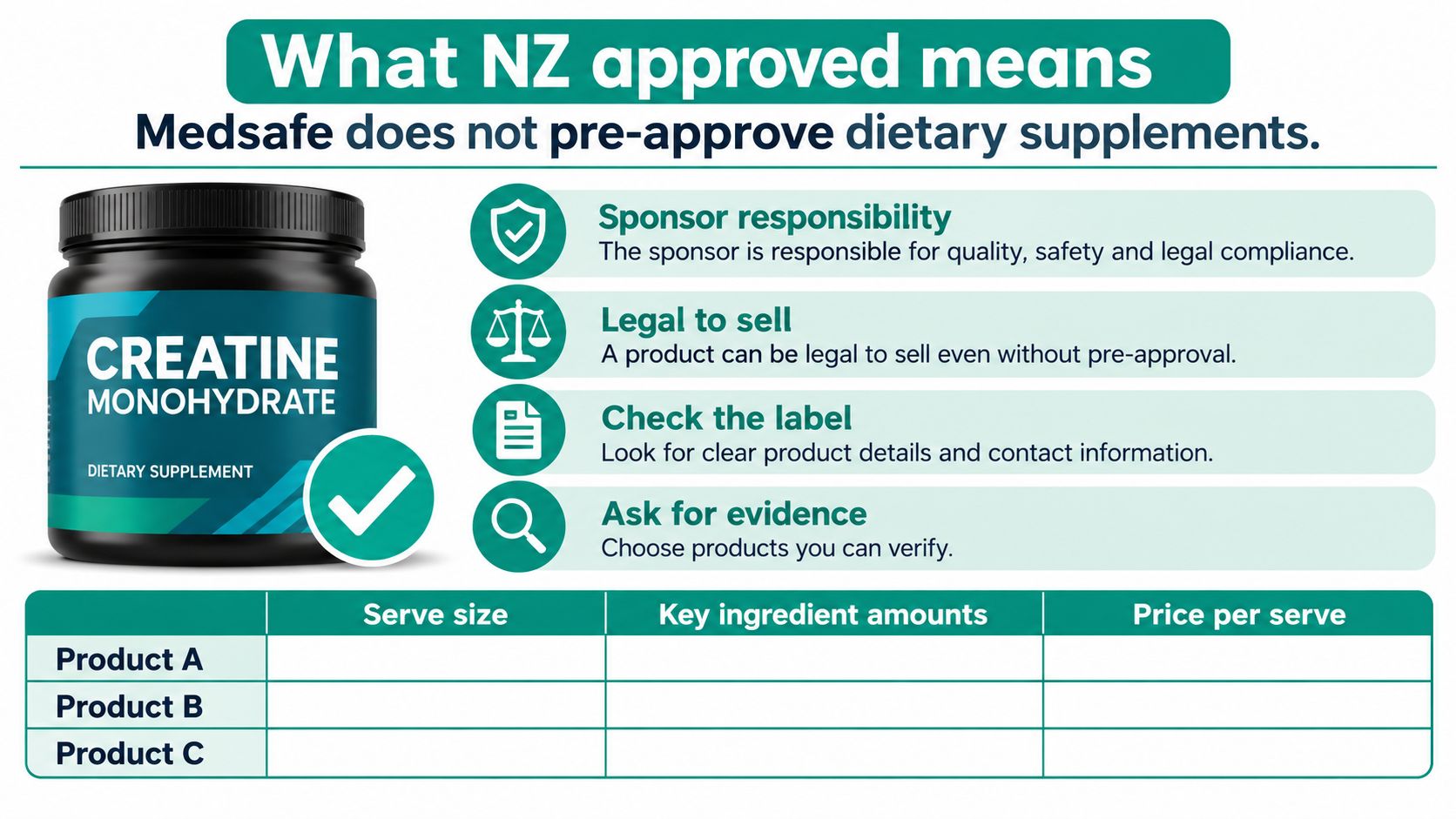
The rules themselves are ordinary. A Ministry of Health briefing notes that orally consumed sports supplements such as creatine powder are generally regulated as dietary supplements under the Dietary Supplements Regulations 1985, administered by Medsafe, with manufacturing requirements under the Food Act 2014 handled by the Ministry for Primary Industries. The label should show an ingredient declaration, serving information, net quantity and supplier details. New Zealand has no separate legal category called "sports supplement", and a product making therapeutic claims or containing a scheduled substance can be investigated as an unapproved medicine.
The Five-Point Label Check
- Full ingredient panel. It should name creatine monohydrate and nothing unexplained. Proprietary blends hide doses.
- Serve size in grams. A 5 g serve of powder is a normal dose. A product that won't state grams per serve is telling you something.
- Lot or batch traceability. A batch code lets a seller trace a tub back to a manufacturing run if something goes wrong.
- Sealed original packaging. Buy tubs sealed by the brand, not decanted into unlabelled containers.
- Independent certification. If you're drug tested, look for Informed Sport, Informed Choice, NSF Certified for Sport or HASTA rather than trusting the word "pure". Our guide to batch tested creatine in NZ explains what each scheme covers.
Cost per serve takes ten seconds. Divide the pack size by the serve size to get the number of serves, then divide the price by that number. A 250 g tub at $38.85 with 5 g serves gives 50 serves, which is about 78 cents a serve. Compare that figure, not the sticker price, when two tubs look similar.
A label making therapeutic claims, or listing a scheduled substance, is the clearest red flag there is. A Ministry of Health information release records 13 different products seized from New Zealand suppliers because they contained scheduled substances or made therapeutic claims, with examples including octodrine, methylhexanamine and 1,3-DMAA.
Here's how three of our single-ingredient options line up on the numbers that matter.
| Product | Serve size | Key ingredient | Price per serve |
|---|---|---|---|
| Athletech Purest Creatine Monohydrate Unflavoured 250 g, 50 serves | 5 g | 5 g creatine monohydrate, unflavoured | About 78c ($38.85 a tub) |
| Nexus Creatine Monohydrate Unflavoured 500 g, 100 serves | 5 g | 5 g micronised creatine monohydrate, single ingredient with no fillers | About 64c ($63.85 a tub) |
| Swoleys Sour Creatine Gummy Bears Peach 30 serves | 1 serve | 5 g creatine monohydrate, 15 calories, 4 g carbs, 0 g sugar | About $1.65 ($49.45 a tub) |
If you want the simplest possible start, browse the full range of unflavoured creatine monohydrate in NZ and pick the tub whose cost per serve fits your month.
NZ Supps exists to make this comparison quick. Every tub we sell arrives sealed by the brand, is stocked in our Palmerston North warehouse and comes with per serve pricing shown up front, so you can weigh a 250 g tub against a 500 g tub without a spreadsheet. If you're subject to drug testing, the Tested for Sport filter narrows the shelf to independently batch-tested products before you spend a cent. Start with NZ Supps and compare labels side by side.
Shop all creatine in NZ and pick the tub that matches how you'll take it.