SHOP NOW, PAY LATER













 Informed Sport
 Informed Choice
 NSF Certified for Sport
 HASTA Certified

For most New Zealand shoppers, micronised creatine and standard creatine monohydrate come down to texture, mixability and price rather than effectiveness. Both forms supply the same active ingredient, so the label tells you most of what you need to know.
Start by browsing the creatine monohydrate NZ range, then run through the points below before any tub goes in your basket.
Table of Contents
- The Short Answer on Micronised Versus Monohydrate
- Quick Answer: Micronised Creatine vs Standard Monohydrate
- What Micronisation Changes and What It Does Not
-
Common Creatine Myths and What the Evidence Shows
- Micronised Creatine Absorbs Much Faster
- Micronised Creatine Makes You Twice as Strong
- You Need a Loading Phase to Work
- Creatine Only Works on Training Days
- A Pricier Tub Means More Creatine
- Monohydrate Is the Best-Studied Form
- Choosing Between the Two Forms
- Work Out the Cost per 5 g
- Read This Table by Grams First
- When a Higher Price Makes Sense
- Which Creatine Suits Your Training Routine
- Checklist for Choosing a Creatine Powder
- Frequently Asked Questions About Creatine Forms
The Short Answer on Micronised Versus Monohydrate
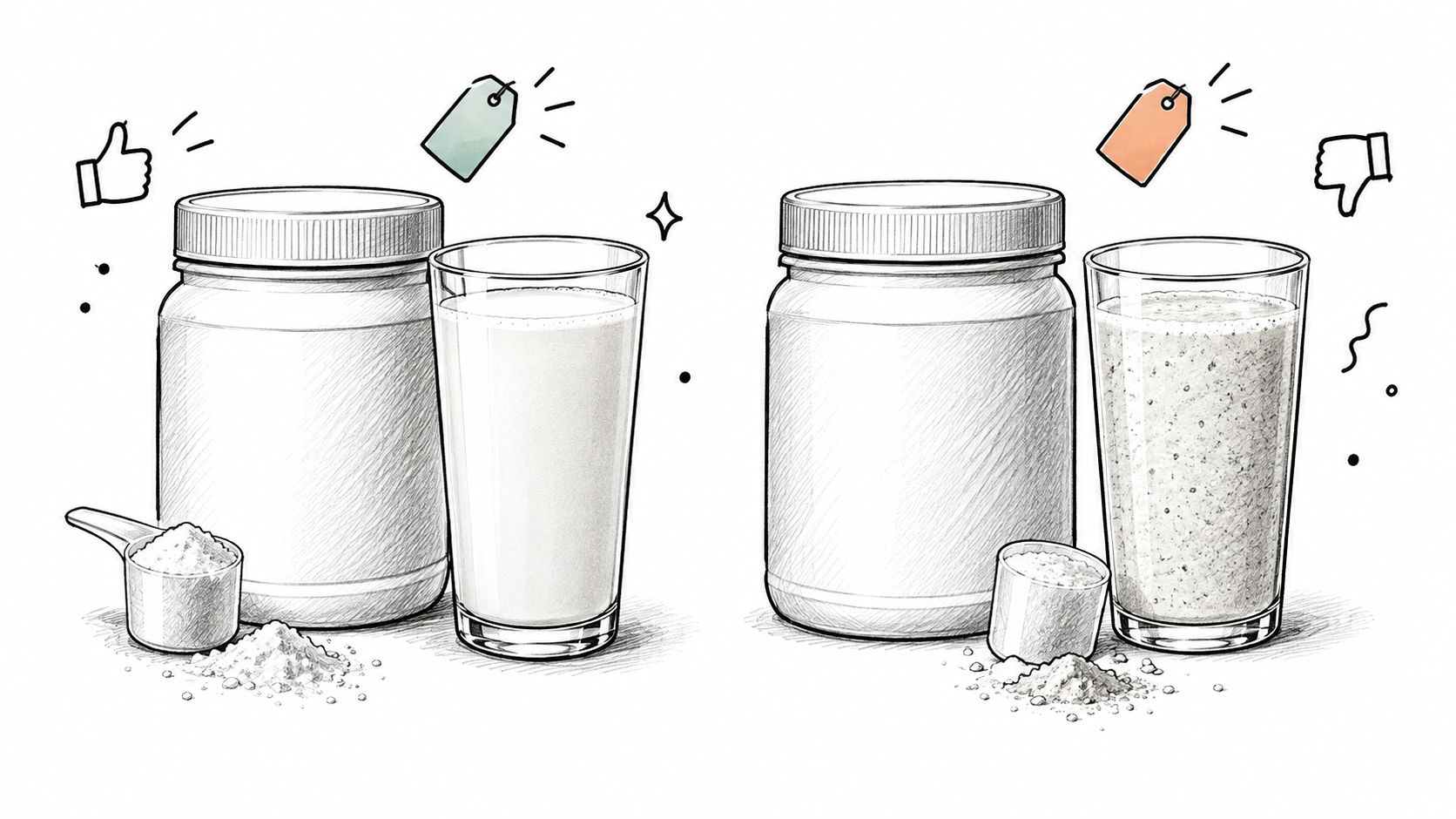
Micronisation is a physical process. The powder is ground into finer particles, which helps it disperse more easily in water and feel less gritty in your shaker. The creatine molecule itself stays the same.
Before you add anything to your basket, check three things on the pack:
- Grams of creatine monohydrate per serve, often around 5 g per scoop
- The ingredient list for added flavourings, sweeteners or fillers
- The price per serve, which tells you more than the price of the tub
Those three checks will reveal more than the front label does. The table below sets the two product types side by side.
Quick Answer: Micronised Creatine vs Standard Monohydrate
Think of this table as a label-reading checklist. It shows the differences you can actually verify on a tub, and what each one does and doesn't change.
| Factor | Micronised Creatine | Standard Creatine Monohydrate | What It Means for You |
|---|---|---|---|
| Serve size | Varies by brand | Varies by brand | Compare grams, not scoops. A scoop is a volume, not a dose. |
| Creatine per serve | Usually 5 g | Usually 5 g | Blends can contain less, so check the panel. |
| Price per serve | Often slightly higher | Often lower | Divide the tub price by servings. This doesn't change the dose. |
| Mixing | Smoother, less grit | Can settle, needs stirring | This affects comfort, not performance. Test it in cold water. |
| Active ingredient | Creatine monohydrate | Creatine monohydrate | Same molecule, so the gram count matters most. |
Most of the difference sits in the mixing row. Everything else comes down to what the label says, so read the numbers before you read the marketing.
Micronisation changes how the powder mixes, not what the active ingredient is.
Think of it like two bags of the same flour, one sifted and one not. The sifted bag blends into batter more smoothly, but the flour underneath is identical.
Next, we look at what micronisation changes in practice, how to read dosing, and which option suits different training routines and budgets. Keep the label in front of you as you go.
What Micronisation Changes and What It Does Not
When you see "micronised" on a tub, it usually means the creatine monohydrate has been ground into smaller particles. That changes how the powder feels and mixes. Beyond that, it changes less than the packaging suggests.
Why Smaller Particles Mix More Easily
A finer powder spreads through water more evenly. Plenty of people notice less grit and less sediment at the bottom of the shaker, which makes the drink easier to finish.
Think of icing sugar versus caster sugar. Both are sugar, but the finer grains dissolve into a cold drink with much less effort.
What Smaller Particles Do Not Do
Smaller particles don't automatically mean a bigger dose, quicker uptake into muscle or better strength. Once creatine monohydrate is dissolved, it follows the same general absorption pathway, whatever the particle size.
So the comparison comes down to convenience and experience, not a proven gap in absorption speed. In New Zealand, the real difference between micronised creatine and standard creatine monohydrate is particle size and mixability, not a different active ingredient. Learn more about NZ supplement findings.
Reading the Dose on the Label
Most creatine monohydrate labels suggest somewhere around 3 to 5 g a day. Don't rely on the scoop alone. Check the scoop weight and the creatine per serve on the supplement panel, not the claims on the front.
If the panel shows 5 g per serve and the directions say one serve daily, you're within the usual range. Count grams rather than scoops, every time.
A Real-World Tub Comparison
Picture two tubs side by side on the same shelf. Tub A has a 5 g scoop with 5 g of creatine monohydrate per serve and nothing else in the powder.
Tub B is a flavoured micronised blend with a 10 g scoop. Its panel also lists 5 g of creatine monohydrate per serve, with the rest made up of flavouring, sweetener and other additions.
| Tub A | Tub B | |
|---|---|---|
| Scoop size | 5 g | 10 g |
| Creatine monohydrate per serve | 5 g | 5 g |
| Other ingredients | None | Flavouring, sweetener, additions |
A quick glance at the scoop suggests Tub B gives you twice the creatine. The panel says otherwise. Both deliver 5 g per serve, so the dose is the same.
Check the directions before you buy. Confirm that one serve matches the daily amount you plan to take, rather than assuming one scoop equals one standard dose.
Three Label Checks Before You Buy
- Find the grams of creatine monohydrate per serve on the supplement panel.
- Note the scoop size in grams, since some flavoured tubs use larger scoops.
- Compare the price per serve, not the sticker price of the tub.
Where Micronisation Makes the Most Sense
The benefit shows up most for people who mix creatine into water, dislike grit, or use a small bottle with little room for stirring. In a thick whey shake, the difference is harder to notice.
Once the grams line up, the decision is about texture and taste rather than dose. That's a sensible place to start, because it ties your choice to what the label actually supplies. Keep the panel in view while you compare tubs on the shelf.
Common Creatine Myths and What the Evidence Shows
Gym chats and product pages make creatine sound far more complicated than it is. Most of the popular claims about micronised tubs fall apart once you look closely at the label or the research.
Micronised Creatine Absorbs Much Faster
The myth: A finer powder gets absorbed faster, so it kicks in sooner.
The fact: Micronisation changes how quickly the powder dissolves in your shaker, not how quickly your body takes it up. Studies have not documented any absorption advantage over standard monohydrate.
Micronised Creatine Makes You Twice as Strong
The myth: Finer particles double your strength gains compared with a standard tub.
The fact: Both forms deliver the same active ingredient at the same dose. Strength gains come from muscle slowly filling up with creatine, not from how finely the powder was ground.
Same molecule, same dose, same result. The grind changes the mixing, not the muscle.
You Need a Loading Phase to Work
The myth: Skip the loading phase and creatine won't work.
The fact: Loading saturates muscle in about five to seven days. Taking 3 to 5 g daily gets you there more slowly, usually within three to four weeks, so you end up in the same place either way.
Creatine Only Works on Training Days
The myth: You only need creatine on heavy training days.
The fact: Creatine builds up in muscle over time, so daily consistency matters far more than what you did at the gym today. Missing a single day rarely undoes your progress.
A Pricier Tub Means More Creatine
The myth: A higher price always means you're getting a bigger dose.
The fact: Price only tells you something once you divide it by the grams of creatine monohydrate per serve. Check the panel before you compare tubs.
Monohydrate Is the Best-Studied Form
Creatine monohydrate is the most widely studied form of supplemental creatine. That gives it the deepest body of training research, which is why every other form gets measured against it.
The most reliable buying signal is the label, not the adjective on the front of the tub.
If you want the wider picture on how creatine fits into training, read The Real Benefits of Creatine and Who It's Actually For.
Choosing Between the Two Forms
This comes down to preference more than performance. If you're unsure, start with the cheaper option, which is usually unflavoured monohydrate, and switch to micronised if the texture bothers you.
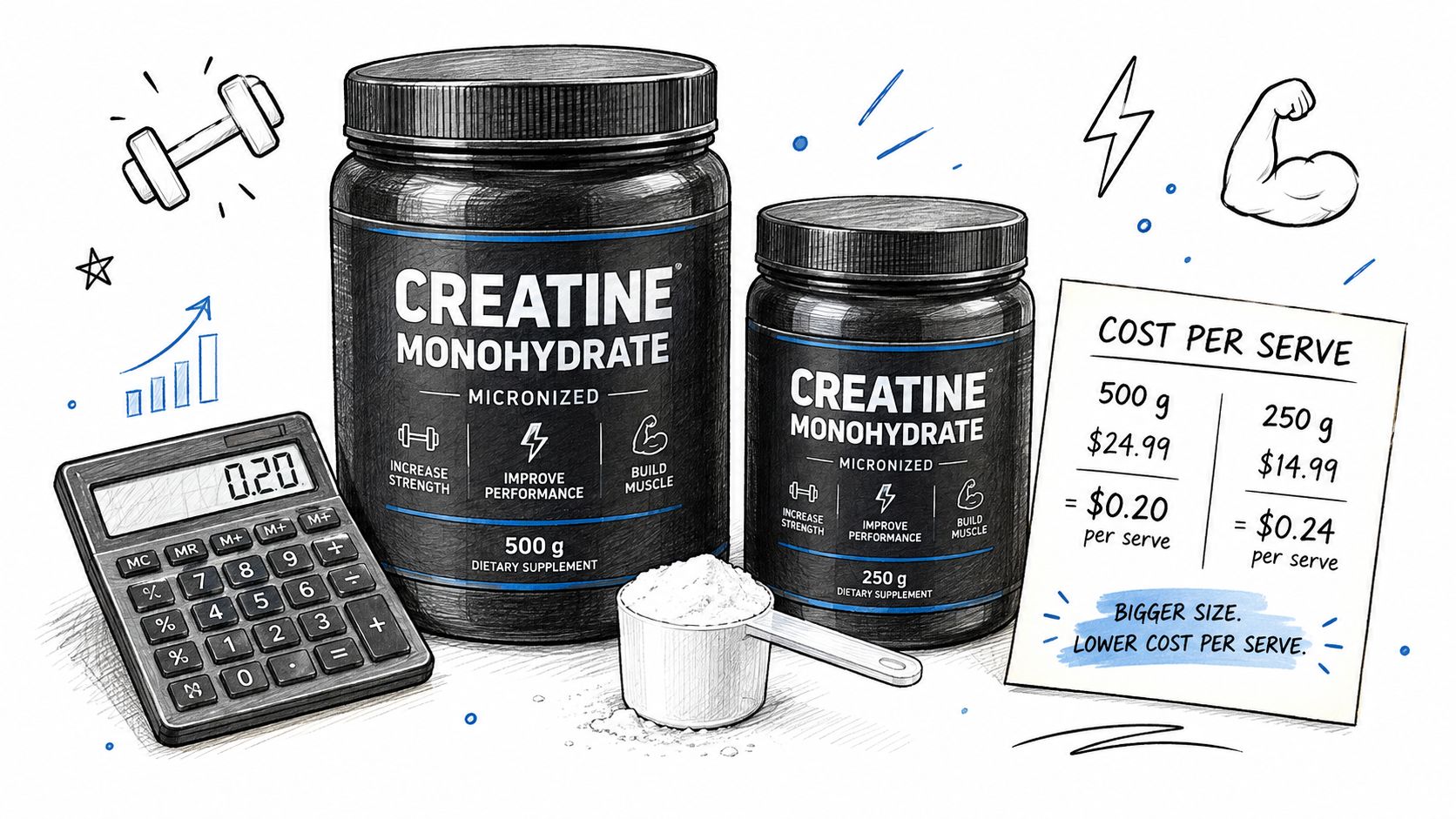
The sticker price on a tub doesn't tell you much by itself. Container sizes vary, scoops vary, and flavoured formulas carry weight that isn't creatine at all. Price per serve is a much fairer way to compare creatine micronised vs monohydrate, because it ties the cost to what you actually take each day.
Work Out the Cost per 5 g
Use the same two-step method for every product in the creatine monohydrate range at NZ Supps. It takes a few minutes, and it stops marketing from doing the maths for you.
- Divide the tub price by the number of servings shown on the label.
- Check how many grams of creatine monohydrate sit in each serve, not just how big the scoop is.
- Convert that figure to a cost per 5 g so products with different serve sizes line up.
Take a $40 tub with 80 serves. That works out to $0.50 per serve, and if each serve lists 5 g creatine monohydrate, you're also paying $0.50 per 5 g. A second tub at $36 with 60 serves costs $0.60 per serve. It looks cheaper on the shelf, but it's the more expensive option per dose.
Compare cost per 5 g of creatine monohydrate, not cost per tub or cost per scoop.
Read This Table by Grams First
The table below reflects typical label patterns from current listings at the time of writing. Prices and tub sizes do change, so check the live product page before you buy.
Cost per Serve Comparison for Creatine Monohydrate Products
| Product Type | Serve Size | Creatine Monohydrate per Serve | Price per Serve (NZD) |
|---|---|---|---|
| Standard unflavoured monohydrate | 5 g | 5 g | $0.50 example |
| Micronised unflavoured monohydrate | 5 g | 5 g | $0.60 example |
| Flavoured micronised blend | 10 g | 5 g | $0.75 example |
The flavoured row is the one that catches people out. A 10 g scoop might list only 5 g of creatine monohydrate, with the rest taken up by flavouring and sweetener. That isn't a dealbreaker, but you should be paying for the taste on purpose, not by accident.
A bigger scoop doesn't mean a bigger dose. Always check the creatine figure on the panel.
When a Higher Price Makes Sense
Different situations justify different choices:
- Go with the cheaper per-gram option if you mix creatine into a shake and don't mind a bit of texture.
- Consider micronised powder if you mix with plain water and grit makes you skip days.
- Consider a flavoured option if taste is what keeps you on a daily routine, and you're comfortable with the extra ingredients.
In New Zealand, supplement rules focus on composition and labelling, and they restrict misleading statements. That makes the full label, including ingredients, serving size and directions, the most reliable basis for comparing micronised and standard creatine. Micronisation on its own doesn't show that a product has been independently tested for prohibited substances. For the official rules, see the MPI guidance on supplemented food labelling.
Check labels before checkout.
Which Creatine Suits Your Training Routine

Your daily habits count for more than your training week, so choose the form you'll actually stick with. Below are four common profiles, each with a sensible starting point.
Budget-Focused Gym-Goers
Training three times a week and don't mind an unflavoured powder? Standard creatine monohydrate is the obvious place to start. It's usually the cheapest per gram, and it stirs easily into water, juice or your post-workout shake. The catch is a slightly grittier drink that takes a bit more stirring.
Strength Trainees Who Want Fast Mixing
Gritty drinks put you off? Micronised creatine is worth a look. The finer particles disperse more readily, so it mixes faster and leaves less sediment in the shaker. You'll pay a little more per serve for that smoother texture, but the active ingredient is the same.
Team-Sport Athletes with a Simple Daily Routine
If electrolytes or protein already go into your shaker, the easiest routine is to add creatine there too. If you share a shaker with a flavoured protein, flavoured creatine can be simpler, since the taste is already covered. The downside is a few extra additives and often a bigger scoop, so read the label before you commit.
Drug-Tested Competitors Checking Certification
Competing under drug testing? Look for independent batch testing, such as Informed Sport or NSF Certified for Sport. Micronisation on its own tells you nothing about testing, so check the certification against the exact batch you're buying. Certified products often cost more, so compare the price per serve first.
Quick Profile Comparison
| Profile | Usually Suits | Main Trade-Off |
|---|---|---|
| Budget-focused gym-goers | Standard monohydrate | Grittier texture, more stirring |
| Fast-mixing strength trainees | Micronised creatine | Higher price per serve |
| Team-sport athletes | Flavoured or shaker-friendly options | Extra additives, larger scoop |
| Drug-tested competitors | Independently batch-tested products | Higher cost for certification |
Pick the form you'll take consistently, every single day.
Matching the Form to Your Habits
A sensible rule is to choose the form you'll mix and take without skipping days. Creatine works by building up in muscle over time, so a cheaper tub you finish beats a premium one gathering dust in the cupboard. If you're unsure, start with unflavoured monohydrate and switch only if the texture bothers you.
Those who prefer no additives can stick with unflavoured monohydrate and skip flavourings and sweeteners altogether. For the numbers on dosing, read how much creatine per day to take, which walks through them step by step. Then compare the tubs in the creatine monohydrate NZ range that fits your routine right now.
Checklist for Choosing a Creatine Powder
Don't just grab the first tub you see. Run through these checks in order on the product page. Each one takes under a minute.
Start with the Ingredient and Dose
- Confirm it is creatine monohydrate. It should be named plainly on the panel, not buried in a creatine blend or proprietary mix.
- Check the grams per serve. Look for 5 g of creatine monohydrate on the supplement facts. Scoop size on its own means nothing.
- Read the directions. Make sure one serve actually equals the daily dose you plan to take. Don't assume one scoop is standard.
Check Servings and Flavourings
- Compare serves per container. Two tubs can look identical online but hold a very different number of serves.
- Scan for sweeteners and flavourings. Unflavoured monohydrate has the shortest label, which most daily users prefer. If you go flavoured, check you are happy to take those sweeteners every day.
Working Out Value Before You Buy
- Work out the cost per 5 g. Divide the tub price by serves, then adjust for grams per serve.
| Tub Price | Serves | Per Serve | Cost per 5 g |
|---|---|---|---|
| $36 | 50 | 5 g | $0.72 |
| $36 | 50 | 3 g | $1.20 |
Same price, very different value once the dose lines up.
Note for Drug-Tested Athletes
If you compete under testing, use the Tested for Sport filter and look for independent batch testing. Micronisation alone proves nothing about testing, so check the logo and batch details yourself. You might be interested in our guide on batch-tested creatine in NZ.
Why Genuine Stock Matters
NZ Supps sources genuine, brand-sealed stock, held and shipped from Palmerston North. No grey-market imports, so what you order is what lands at your door. Orders over $70 ship free.
Micronisation changes the texture. Batch testing and a full label tell you what is actually inside.
Put Two or Three Tubs to the Test
Jump into the creatine monohydrate NZ range and shortlist two or three in-stock tubs. Score each against the steps above, then line up the cost per 5 g side by side.
The cheapest tub is rarely the best buy once grams are equal. Nail the shortlist here, and the questions below will sort the last details.
Micronised creatine doesn't outperform standard monohydrate at the same dose. It's the same creatine monohydrate, just milled finer, so the real difference is how it mixes, not how hard it works.
Frequently Asked Questions About Creatine Forms
Does Micronised Creatine Work Better?
Not where it counts. There's no solid proof it delivers better results, so it's not worth paying extra for that reason alone.
The particle size comparison is about smoother stirring, not better uptake. That absorption benefit just hasn't been established.
Compare grams of creatine monohydrate per serve first. If those line up, go by cost per serve and whether you actually care about a finer, less gritty texture.
Pay for a mixing preference, not an assumed boost in effectiveness.
Will It Dissolve Completely in Cold Water?
Often not fully. Micronising helps it disperse faster, but it doesn't fix creatine monohydrate's limited water solubility, especially in a cold drink.
An icy shaker can still leave a bit of grit at the bottom. Try room-temperature water, give it a good stir, then swirl and drink the last bit instead of leaving part of your serve behind.
Make Dosing and Ingredients Your Final Checks
Do I Need a Loading Phase?
No. Creatine dosing guidance supports 3 to 5 g daily with no loading, it just fills muscle stores a little more slowly. Stick to your product's directions rather than treating extra scoops as mandatory.
Is Flavoured Creatine Suitable if I Want No Additives?
Usually not. Flavoured versions can include sweeteners, flavouring and acids, so pick a product that lists only creatine monohydrate if you want to keep it plain.
Before checkout:
- Confirm the ingredient list, including your chosen flavour.
- Check the creatine amount, not just the total scoop weight.
- Compare like-for-like serves on current price.
Visit NZ Supps to compare ingredient panels and serving details before choosing your powder with confidence.
Shop all creatine monohydrate in NZ.