SHOP NOW, PAY LATER









 Informed Sport
 Informed Choice
 NSF Certified for Sport
 HASTA Certified

Creatine HCL is not worth extra money over monohydrate for almost anyone. Monohydrate is the form behind essentially the entire creatine evidence base, it costs as little as $0.50 a serve in the current NZ range, and no published head-to-head trial shows HCL outperforming it on strength, muscle or performance. HCL's real pitch is a smaller, more soluble dose that may sit easier in a sensitive stomach, and you can usually solve that with monohydrate for free by splitting the dose.
The HCL sales script is polished: better solubility, smaller doses, no loading, no bloat. Some of it is even true. Creatine hydrochloride is genuinely more soluble in water. The leap from "dissolves better in a glass" to "works better in a muscle" is the part the evidence has never backed up.
Here is the comparison without the script, and why the NZ Supps range deliberately stocks monohydrate.
Creatine HCL vs monohydrate at a glance
| Question | Monohydrate | HCL |
|---|---|---|
| Research base | Hundreds of human trials over 30 years | A handful of small studies |
| Proven performance benefit | Yes, extensively | Works, but never shown superior to monohydrate |
| Typical cost per effective dose | From about $0.50 | Usually two to three times more |
| Solubility in the glass | Fine with a stir, can settle | Better |
| Stomach comfort | Good for most; split doses fix most issues | Marketed gentler; evidence is thin |
What the evidence actually says
The International Society of Sports Nutrition position stand is blunt: creatine monohydrate is the most extensively studied and clinically effective form of creatine, and no other form has consistently shown greater benefit. Newer forms reach the market faster than the research reaches the journals, and HCL is a textbook example.
The Australian Institute of Sport creatine fact sheet takes the same line, building its dosing guidance entirely around monohydrate. When both major sports-science bodies anchor on one form, and that form is also the cheapest, the buying decision is unusually easy.
The "smaller dose" claim deserves its own sentence. HCL products often direct 1 to 2g serves and argue the improved absorption makes up the difference. The trials proving muscle creatine saturates equally well on those small doses do not exist in any convincing volume. Meanwhile 3 to 5g of monohydrate daily has decades of measured muscle-saturation data behind it.
The stomach argument, tested honestly
Some people genuinely do get bloating or gut grumbles from creatine, almost always from large single doses. The fix costs nothing: skip loading entirely, take 5g a day or split it into two 2.5g serves with food. A controlled dosing study found gut trouble concentrated in big single hits, not in normal daily serves.
If you have tried split monohydrate doses with meals and your stomach still objects, HCL is a reasonable personal experiment. That is the one buyer profile where the premium can earn itself. For everyone else it is a solution auditioning for a problem you can fix free.
The creatine and water guide covers the related myths, including the bloating one, in more depth.
Why the range is monohydrate-only
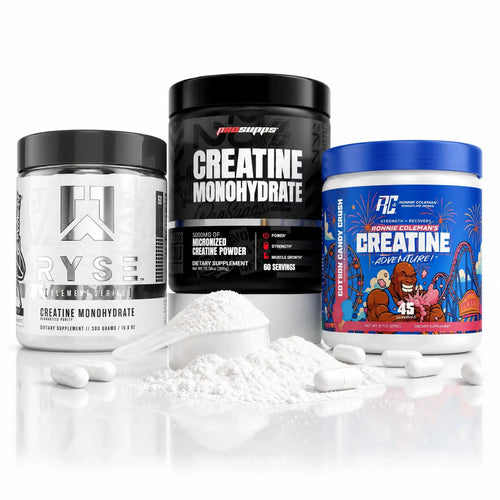
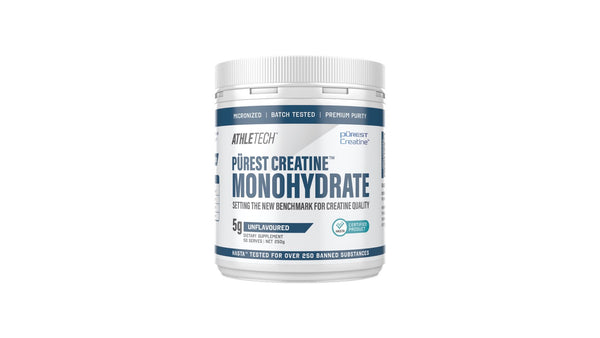
You will not find creatine HCL in the NZ Supps creatine collection, and that is deliberate rather than an oversight. Every tub stocked is monohydrate at a labelled 5g serve, because that is the form and dose the evidence supports, and the price war between monohydrate brands works entirely in your favour.
The full creatine comparison ranks the current tubs from $0.50 a serve. Micronised versions mix noticeably better than old-school powder, which quietly removes most of the solubility argument HCL trades on. If mixing is your gripe, micronised monohydrate in a protein shake solves it for fifty cents.
Gummies are the other legitimate format choice for people who hate powder entirely; the gummies vs powder guide prices that convenience honestly.
Keep the decision boring. Buy a plain monohydrate from the creatine range, take 5g daily including rest days, and put the HCL premium toward literally anything else. If you are still deciding whether creatine belongs in your routine at all, start with the benefits guide.
Is creatine HCL better than monohydrate?
No published head-to-head evidence shows better strength, muscle or performance outcomes from HCL. It dissolves more easily and is marketed as gentler, but monohydrate remains the reference form in every major sports-science position stand.
Why is creatine HCL more expensive?
Newer patented forms carry manufacturing and licensing costs, and the smaller-dose marketing supports a premium price per tub. Per gram of proven benefit, monohydrate is dramatically cheaper.
Does creatine HCL cause less bloating?
That is the claim, and some users report it. Controlled evidence is thin, and most monohydrate bloating traces to oversized single doses. Splitting a normal daily dose usually fixes it without paying the HCL premium.
Can you switch from HCL to monohydrate?
Yes, immediately and with no transition. Take 3 to 5g of monohydrate daily and your muscle stores will sit at saturation within a few weeks if they were not already. No loading required, as the creatine guide's loading FAQ explains.
Sources and note
- ISSN position stand on creatine supplementation
- Australian Institute of Sport creatine fact sheet
- Controlled study of creatine dose and gastrointestinal distress
This is general information, not medical advice. Prices referenced were checked 6 August 2026 and change without notice; anyone with kidney conditions, on medication, pregnant or under 18 should get clinical advice before using creatine.