SHOP NOW, PAY LATER
















 Informed Sport
 Informed Choice
 NSF Certified for Sport
 HASTA Certified

There's no single best time to take creatine, because it works by daily muscle saturation, not as an acute same-day stimulant. Consistent intake for anyone of 3–5 g every day, including rest days, matters far more than the hour on the label.
That's why the usual pre-workout obsession misses the point. If you can remember it with breakfast, in a shake, or with dinner, that routine is usually better than chasing a narrow training window.
Table of Contents
- Why Creatine Timing Is Less Important Than Consistency
- How Creatine Works in Your Muscles
- Pre-Workout Versus Post-Workout Creatine
- Creatine Dosing Protocols Explained
- Timing for Different Training Schedules
- Creatine for Drug-Tested Athletes in New Zealand
- How to Build a Simple Daily Creatine Routine
Why Creatine Timing Is Less Important Than Consistency
The pre-training habit gets too much credit. Creatine is about keeping muscle stores topped up, not forcing a same-day effect, so the focus should be on daily use and steady saturation. A 2021 peer-reviewed review in the Journal of the International Society of Sports Nutrition found no strong basis for treating timing around training as the main factor, which is why the practical focus should stay on consistent intake rather than chasing a narrow pre- or post-workout window. If you want creatine to pay off over time, it has to become part of the week, not just part of one session.
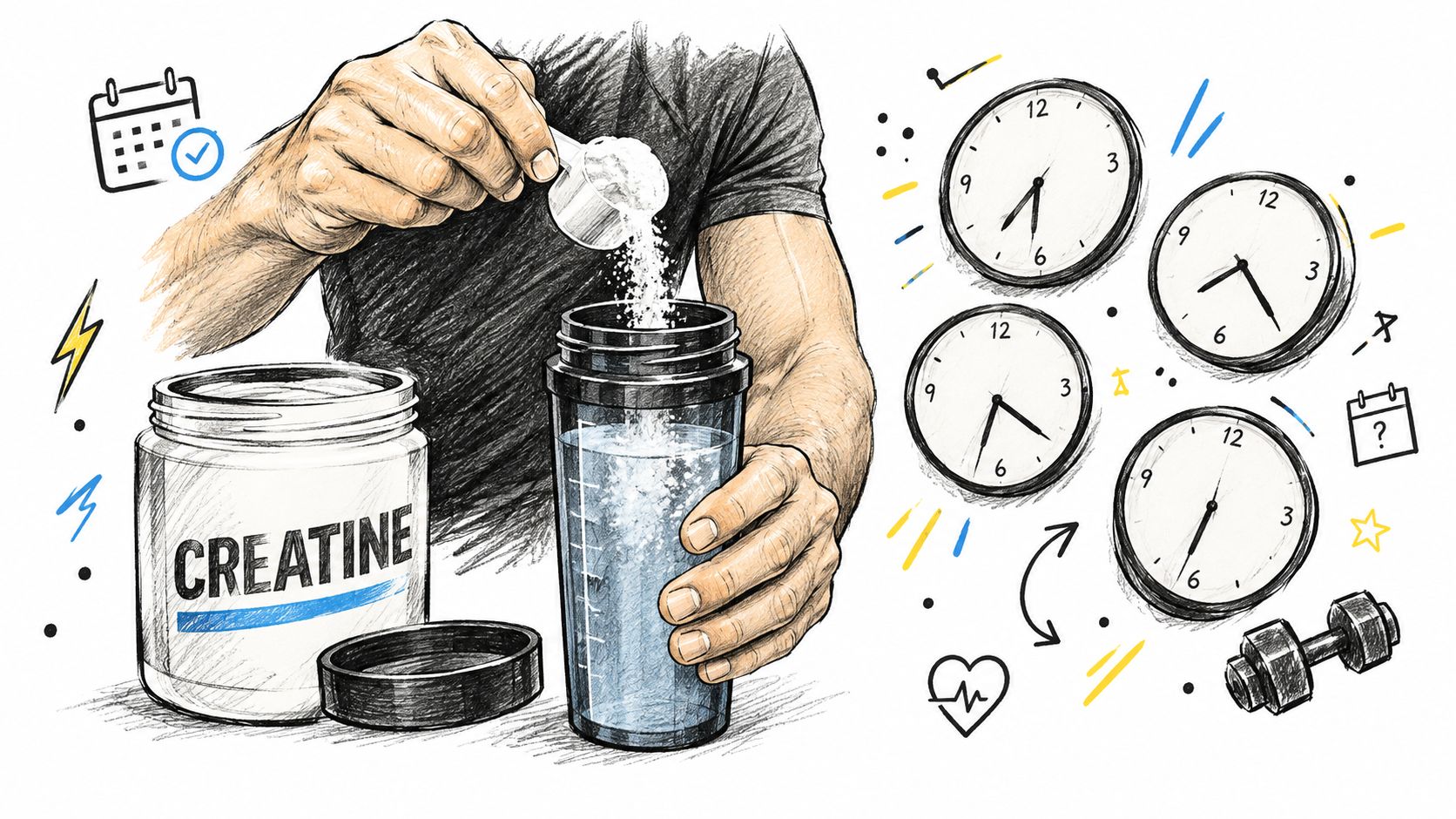
The clock matters less than the habit
Creatine behaves like a maintenance supplement, because it works by keeping muscle stores full. Taking it at the same time every day is usually easier to stick with than trying to line it up with one session. For NZ athletes, the better question is simple, what routine will you consistently repeat?
Practical rule: pick one daily anchor, then stop negotiating with yourself about the minute.
That anchor can be breakfast, a post-training shake, or dinner. The best routine is the one that fits your day without friction. If the habit is awkward, the tub stays in the cupboard and the timing debate becomes an excuse to skip it.
If you want the longer answer on uptake and expected results, how long creatine takes to work is the more useful question than asking for a perfect clock time.
Rest days still count
Rest days are part of the same saturation cycle. NZ guidance also points to keeping the dose going every day, including non-training days, because muscle stores do not stay full on workout days alone (Xplosiv creatine growth and recovery guide). That matters for lifters who train three or four times a week, since the off-days are part of what keeps the system topped up.
For drug-tested athletes in New Zealand, the timing debate should sit behind product choice. Daily consistency matters, but so does choosing an independently tested creatine that fits your risk profile and the standards of your sport. Once that is in place, the main job is boring and effective, take it every day and keep the habit automatic.
How Creatine Works in Your Muscles
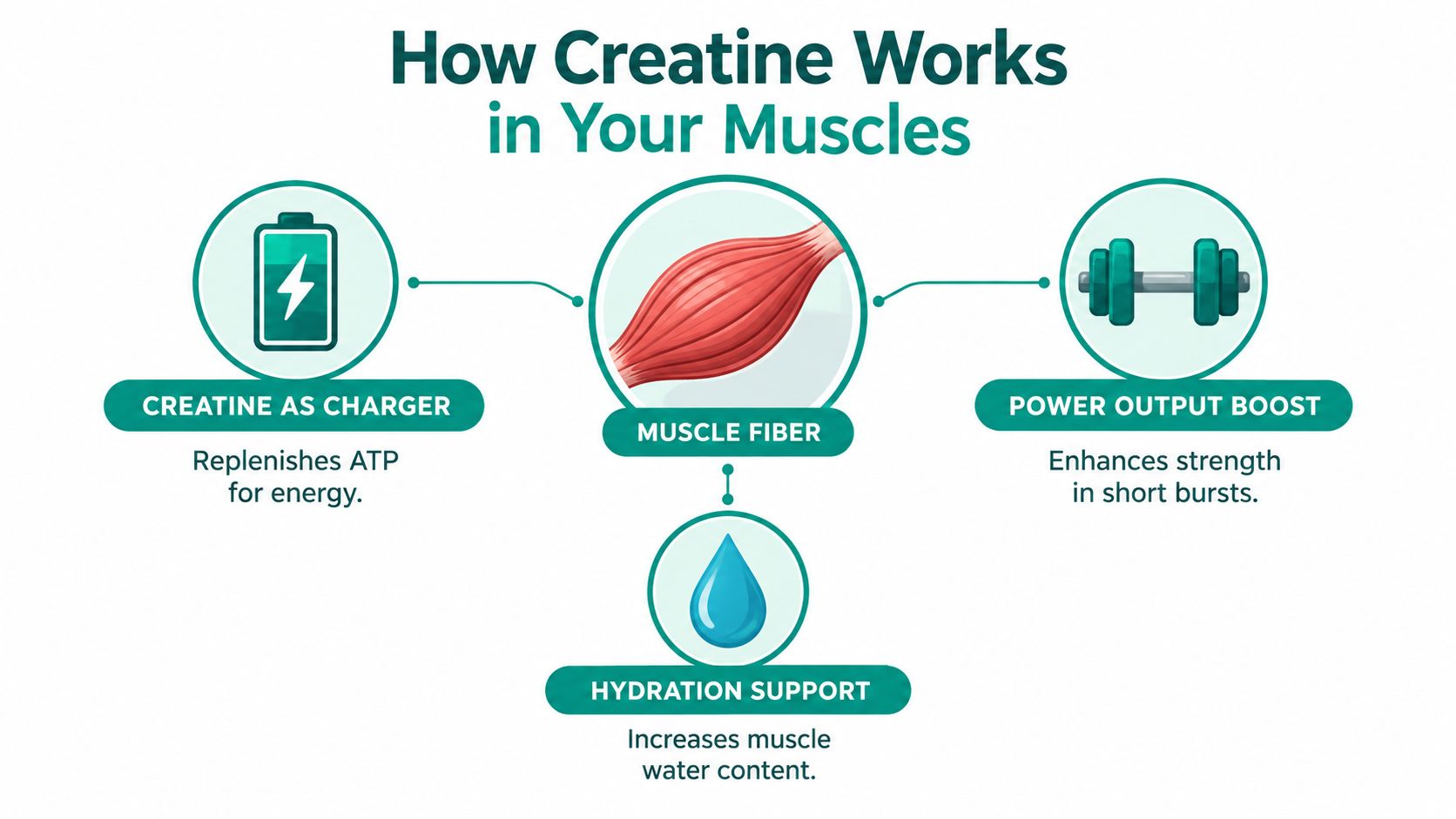
Creatine works by supporting phosphocreatine stores in muscle, which helps regenerate ATP during short, intense efforts. That is why it suits sprints, heavy sets, repeated efforts, and hard team-sport bursts.
Think storage, not stimulation
Creatine works like a rechargeable battery system used again and again during training. The aim is not a big same-day spike. The aim is to keep muscle stores topped up so the system is ready when effort rises.
That is why workout timing has limited value. The benefit comes from muscle stores built over days and weeks, not from a sudden rush the moment you walk into the gym. If stores are already full, taking creatine right before training does not create a special window. If stores are low, a steady daily dose helps refill them.
Why the body responds over weeks
NZ consumer guidance reflects this storage model, with common advice pointing to 3–5 g per day, every day, including rest days because creatine works by keeping muscle stores full rather than acting acutely on training day (Xplosiv creatine guide). Local guidance also notes a loading phase of about 20 g per day split into four doses for 5–7 days can saturate stores faster, while a steady 3–5 g per day approach reaches similar muscle saturation in about 3–4 weeks (Xplosiv growth and recovery guide).
Creatine is a storage strategy first. The pre-workout switch never existed.
For drug-tested athletes in New Zealand, that is only half the job. Daily consistency matters, and so does choosing an independently tested creatine that fits your sport's standards and your risk profile. Once that is sorted, the routine is simple, take it every day and keep the habit automatic.
Pre-Workout Versus Post-Workout Creatine
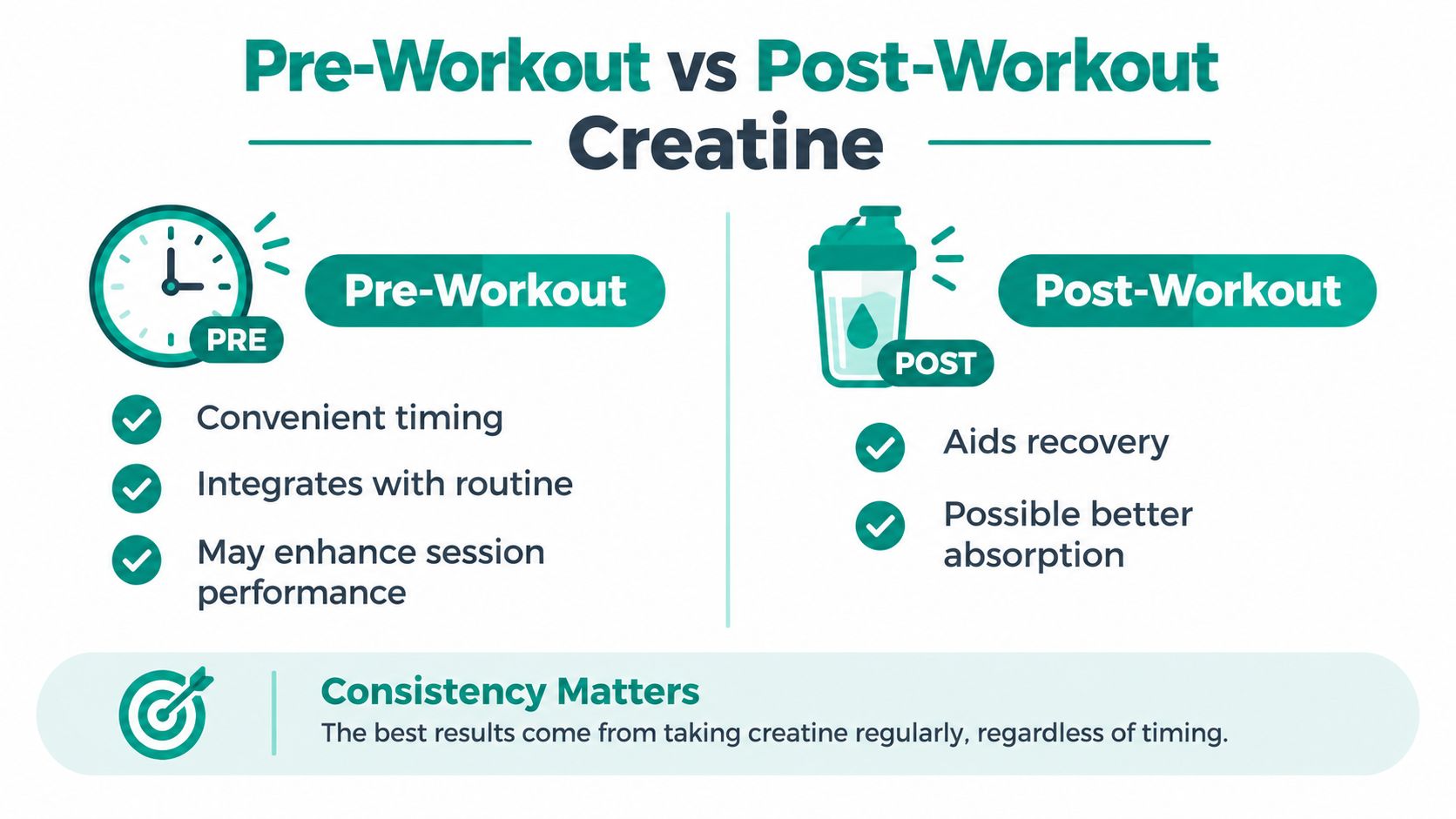
Pre-workout creatine feels neat because it fits the gym mindset. Post-workout creatine feels logical because it can be paired with a shake or meal. In practice, the difference is small, and the evidence doesn't give either side a decisive edge for long-term saturation.
What pre-workout gets right
Taking creatine before training is convenient if your routine already starts with supplements. It's easy to remember, especially if you pair it with a warm-up drink or pre-session snack. For athletes who like clean habits, that convenience alone can be enough to make it the better choice.
What post-workout gets right
NZ consumer and sports-nutrition sources note that taking creatine post-workout or with a carbohydrate-containing meal may improve tolerance and uptake, but the practical advantage is small compared with taking it every day (Sportsfuel creatine guide). If a shake is already part of your post-training routine, that can be the easiest place to put it.
For athletes who also want a broader recovery context, a fitness CBD guide can be useful for thinking about how different supplements are commonly placed around training. The main lesson still holds, though, convenience usually beats theory.
The real decision
The choice is less about physiology and more about friction. Pre-workout works if it stops you forgetting. Post-workout works if it's attached to a meal you always eat. If neither is reliable, pick breakfast or dinner and move on.
The video angle gets discussed a lot because people want a neat answer, but the meaningful answer is still consistency. If the daily habit sticks, the exact edge of the workout window doesn't matter much for long-term outcomes.
Creatine Dosing Protocols Explained
There are two practical ways to dose creatine. One gets you to saturation faster, the other is easier to stick with. Both work because daily dosing builds muscle stores over time.
Creatine loading phase details are useful if you want the faster route, but the choice still comes down to how you train and how much routine friction you can handle.
The loading route
The loading approach uses smaller, repeated serves across the day for a short period, then drops into a maintenance amount. It suits athletes who want to fill muscle stores quickly and do not mind carrying a shaker or pouch through the day. The trade-off is simple. More doses mean more chances to miss one.
A common way to run it is to start with a short loading phase, then settle into a daily maintenance serve. That makes sense before a new training block, or when an athlete wants the dose underway before competition prep starts. It is less tidy than the steady route, but it gets the job done faster.
The steady route
The steady route is the easier one to live with. Take a normal daily serve from day one, and keep it going on rest days as well. Saturation takes longer, but the routine is cleaner and easier to keep inside a real week of work, training, and travel.
For most serious gym-goers, that simplicity matters. One scoop is easier to attach to breakfast, a post-training shake, or dinner, and fewer moving parts usually means fewer missed doses.
A shift worker can make this very practical. If your roster changes, keep the serve linked to the first meal you always eat, or to the same shaker you already use after training. A 5 g scoop is easy to remember, easy to pack, and easy to repeat whether you are on days, nights, or split shifts.
How to choose
- Choose loading if you want faster saturation and can manage several smaller doses.
- Choose steady daily intake if you want the most reliable habit with the least hassle.
- Keep rest days in the plan because creatine works by building stores, not by acting only on training days.
- Use the same product consistently so one scoop and one routine do the work.
The main mistake is overthinking the window and ignoring the dose. Creatine works best when the serving is consistent and the product is one you can trust.
Timing for Different Training Schedules
Late-night lifters, early commuters, rotating shift workers, and team-sport athletes all need different routines. The supplement doesn't care which lane you're in, but your habits do. If the time you choose clashes with real life, you'll miss doses and lose the benefit of consistency.
A New Zealand expert explainer notes that timing with food, sleep, and training context often matters more in practice than the pre-or-post debate, and that bedtime use is generally fine if it suits the user and doesn't cause discomfort (Prevention creatine timing tips).
Early sessions and morning routines
Morning lifters usually do best by attaching creatine to breakfast or the first shake of the day. That keeps it out of the training rush and avoids the “I'll take it later” trap. If you train before work, the session itself is already demanding enough without adding one more decision.
Evening training and late meals
For people who train after work, post-session intake can be convenient because the shake or meal is already part of the night routine. If dinner is the only meal you never skip, place creatine there and leave it alone. Bedtime is also acceptable if it fits your routine and doesn't upset your stomach or sleep.
Rotating schedules and team-sport weeks
Rotating schedules are where timing debates usually break down. If one week starts at 5 a.m. and the next ends at 9 p.m., trying to build a “perfect” supplement window creates more friction than benefit. Put the dose somewhere stable, such as with the first meal of the day or the last meal before sleep.
If your schedule changes, the habit should stay fixed.
That's the simplest way to use creatine practically. Match the dose to the routine that already survives your week, not the routine you wish you had.
Creatine for Drug-Tested Athletes in New Zealand
For drug-tested athletes, the biggest issue isn't whether creatine goes down before or after training. It's whether the product is what the label says it is. In New Zealand, that means prioritising sealed, independently tested products and a transparent supply chain over timing experiments.

A major underserved point in creatine coverage is that many athletes still ask the wrong question. The useful one is not “What exact minute should I take it?”, it's “Which product can I trust, and can I take it every day without stress?” Independent reviews and expert explainers keep coming back to the same answer, there is no single best time of day because creatine works by saturating muscle over weeks, not as a same-day stimulant (Medical News Today creatine timing article).
That matters even more for competing athletes because consistency over clock time only helps if the product itself is dependable. If you're in a tested sport, a sealed and batch-tested supply chain matters more than a five-minute pre-workout ritual. Batch-tested creatine in NZ is the kind of filter worth using when compliance matters.
What to look for on the label
- Independent certification such as Informed Sport, Informed Choice, NSF Certified for Sport, or HASTA.
- Sealed product supply, with clear brand packaging and no grey-market sourcing.
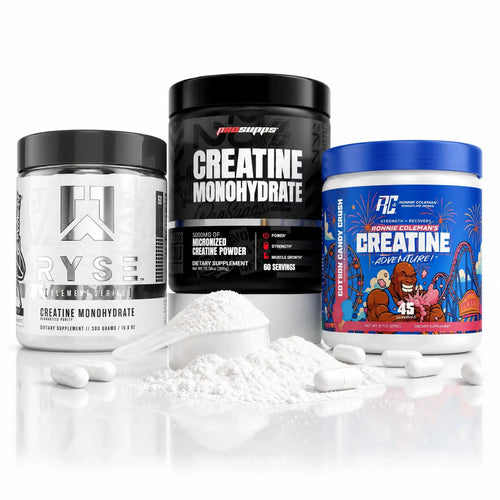
- Simple creatine monohydrate formulas when you want fewer moving parts.
- Transparent serving instructions so daily use stays easy.
That approach is more defensible than chasing a narrow workout window. For NZ athletes, the safest routine is usually the boring one, a tested product, one daily serve, and no guesswork.
How to Build a Simple Daily Creatine Routine
Start with one decision, not five. Pick the daily moment you already repeat without thinking, then attach creatine to it. Breakfast, a post-training shake, or dinner usually wins because those are habits that already exist.
A helpful way to think about this is to design the routine the same way you'd design your adherence routine, by tying the new action to something stable and visible. That's the key difference between a supplement that gets used and one that gets forgotten.
A simple framework
-
Choose one anchor.
Breakfast is easiest for many people, dinner works well for late trainers, and a post-gym shake is perfect if you never miss it. -
Use the same dose every day.
Keep it steady rather than improvising based on the workout. -
Don't skip rest days.
Your muscle stores still need maintenance when you're not training. -
Keep the tub visible.
Put it near the coffee machine, shaker, or pantry shelf you open daily.
Common issues worth knowing
Some people notice mild stomach discomfort if they take creatine too quickly or on an empty stomach. If that happens, pair it with food and make sure you're following the product's labelled serve. The fix is usually a routine change, not a timing overhaul.
Creatine doesn't need a complicated cycle, and it doesn't need a special pre-event ritual. It needs repetition. Once you choose a daily anchor, the best time to take creatine is the time you can keep taking it.
NZ Supps stocks creatine options alongside other sports nutrition products, with a focus on sealed, genuine brands and locally held inventory. If you want to keep your routine simple and choose a product that fits your training schedule, visit NZ Supps and compare the options that match your goals.