SHOP NOW, PAY LATER
















 Informed Sport
 Informed Choice
 NSF Certified for Sport
 HASTA Certified


Whey protein before or after workout matters far less than whether you hit your total daily protein target and spread it across the day. The better timing is the one that fits your meal schedule and your gut comfort, because a shake is a tool for closing a protein gap, not a magic minute on the clock.
A lot of Kiwi athletes still get trapped by the old 30-minute panic. That's a poor way to plan training nutrition, especially when early starts, split sessions, shift work, and long commutes shape the day more than any textbook rule.
| Option | Serve size | Key ingredient amounts | Price per serve |
|---|---|---|---|
| NZ Supps whey products | Varies by product | Check label for protein grams per serve and total serving size | Varies by product |
| Whey isolate | Varies by product | Higher protein density, usually lower lactose | Varies by product |
| Whey blends | Varies by product | Mix of whey forms for flexible daily use | Varies by product |
Table of Contents
- The Truth About the Anabolic Window
- What NZ Athletes Actually Eat and Drink
- When to Take Whey Before Training
- When to Take Whey After Training
- Gut Tolerance and Co-Nutrient Strategies
- Choosing the Right Protein at NZ Supps
The Truth About the Anabolic Window
The old story says you've got 30 minutes after training or you've missed the boat. That's not how muscle protein synthesis works in real life, and it's not how most athletes eat. The stronger view is simpler, protein can be useful before, during or after exercise, and the exercise-related rise in muscle protein synthesis lasts for at least 24 hours, then gradually tapers off (ISSN position stand).
What actually matters
The practical question is whether you're getting enough protein across the whole day. If you train hard, one shake doesn't rescue a weak day of eating, and missing a narrow post-workout window doesn't ruin a good one. That's why a sensible routine beats obsession with the clock.
Practical rule: if your next proper meal is close, the shake timing is flexible. If your meal gap is long, the shake becomes more useful.
The gap in a lot of sports advice is that it treats whey like a ritual instead of food. A better comparison is whether the shake helps you reach your daily protein target without forcing down a full meal you can't tolerate.
For a broader view on how nutrition and supplementation fit together, the article on AloeCure on exercise and supplementation makes a useful companion read.
The simple planning rule
A pre-workout shake can work just as well as a post-workout one when it helps you hit the day's protein target. That's the logic behind the guidance on protein timing on NZ Supps, and it lines up with what athletes manage when schedules get messy. The best timing is the one that keeps your intake consistent and your stomach calm.
What NZ Athletes Actually Eat and Drink
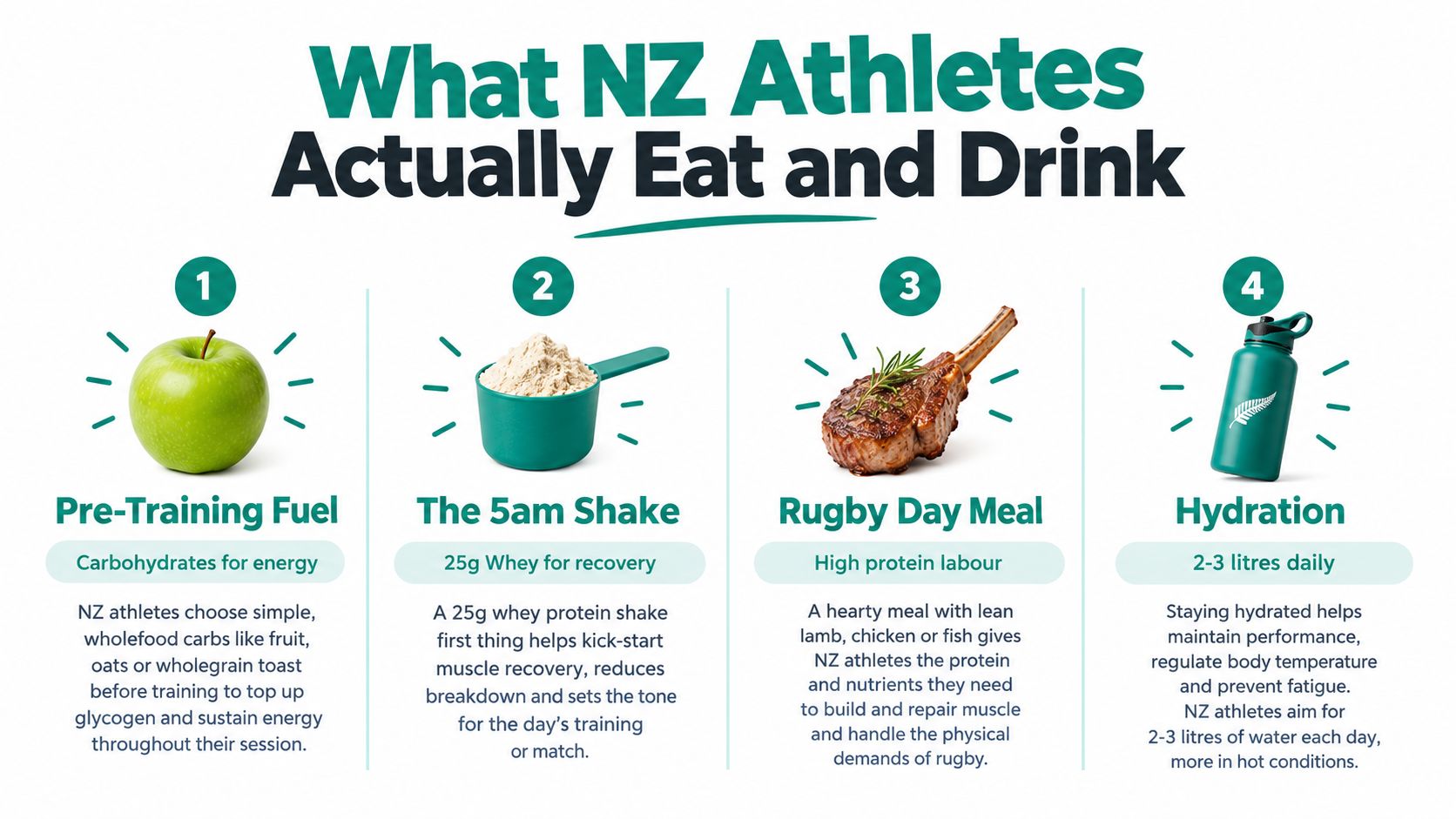
Local eating patterns are messy, and that is the point. In New Zealand rowers, protein intake was often decent without being perfectly spread through the day. Female rowers averaged 1.6 ± 0.6 g/kg/day and male rowers averaged 2.0 ± 0.5 g/kg/day, yet only 60.9% of females and 83.3% of males cleared the sports-nutrition benchmark of 1.3 g/kg/day (New Zealand rower study). Many athletes still need help covering the full day, and a shake is often the easiest way to do it.
Why the daily total beats the clock
That is where whey earns its keep. If breakfast is light, lunch gets delayed, or training starts before work, a shake can fill the gap without forcing down a heavy meal too early. Healthify NZ points athletes toward roughly 1.2 to 1.7 g/kg/day for many strength and endurance goals, with smaller protein-rich meals spread across the day rather than one large serve (Healthify NZ).
Rugby data points the same way. A provincial rugby intervention found protein intake rising significantly at breakfast, after gym work, and at snacks, and total protein intake also increased significantly, with p < 0.001. Another New Zealand rugby dataset found protein clustering at dinner instead of being evenly spread across breakfast, lunch, snacks, and evening eating occasions.
The practical lesson is simple. A shake helps most when it makes the day add up.
For rugby and rowing athletes, that usually means thinking in meals, not moments. A pre-training shake makes sense when the last proper protein meal was hours earlier. A post-training shake works better when dinner is still a long way off. The choice is about schedule, stomach comfort, and whether you can still hit your protein target without forcing food at the wrong time.
When to Take Whey Before Training
If you train early, work split shifts, or have a long gap since your last meal, whey before training can be the better call. The point is simple. It puts amino acids in the system when food timing would otherwise leave a gap. does fasted lifting build muscle is a useful companion reading for anyone weighing up training on an empty stomach.
When pre-workout wins
The pre-session shake earns its place when it solves a timing problem. A 5 am gym slot, a commute before breakfast, or a hard session after work all make it harder to eat well at the right time. In those cases, whey can be easier than forcing down a full meal that sits heavy or leaves you sluggish.
A good test is to look at the gap between your last protein meal and training. If that gap is long, a shake before training can make the session easier to fuel and the rest of the day easier to manage. For rugby and rowing athletes who often train around work, travel, or early starts, that kind of practicality matters more than chasing a perfect window.
What the pre-workout shake is doing
The shake is not special because it arrives before the session. It helps because it adds protein when your normal meal pattern would otherwise leave you short for the day.
That matters most for athletes who start training before breakfast, or for anyone whose next proper meal will be delayed. A pre-workout shake can also take pressure off the stomach when a full meal feels like too much before hard work.
In practice, keep it straightforward. Use a serve that fits your daily protein target, and do not overcomplicate the timing. For many Kiwi athletes, especially on early morning or double-session days, the key win is steady protein intake across the day, not a race to the nearest shake.
When to Take Whey After Training
Post-workout whey still works well, but mostly because it's convenient, not because the body slams shut if you wait. In a 12-week New Zealand study in untrained women, adding 24 g of post-exercise whey increased total daily protein intake by about 20.5 g/day, yet the main driver was the higher total available protein, not some magical post-gym clock (MDPI study).
When after training is the better call
After training usually wins when your appetite is low, your next meal is delayed, or you've just finished a hard session and don't want solid food straight away. That's common after fasted cardio, heavy lifting, or team-sport sessions where people are knackered and food is still an hour or two away. The shake becomes a bridge, not a finish line.
The practical guide on what to eat after training is useful here because whey rarely needs to stand alone. If dinner is coming later, the shake buys time and keeps protein intake moving.
How I'd use it in real life
For a strength athlete, a 20 to 30 g shake after training is a tidy recovery dose when dinner isn't immediate. For an endurance athlete, it makes sense when it helps you eat again sooner without forcing a big meal too early. For team-sport players, it's often the easiest way to start recovery while you're still on the way home.
The key point is simple. If you missed the chance to eat before training, take the shake after. If you already had protein close to the session, the exact minute matters far less than what you eat next.
Gut Tolerance and Co-Nutrient Strategies
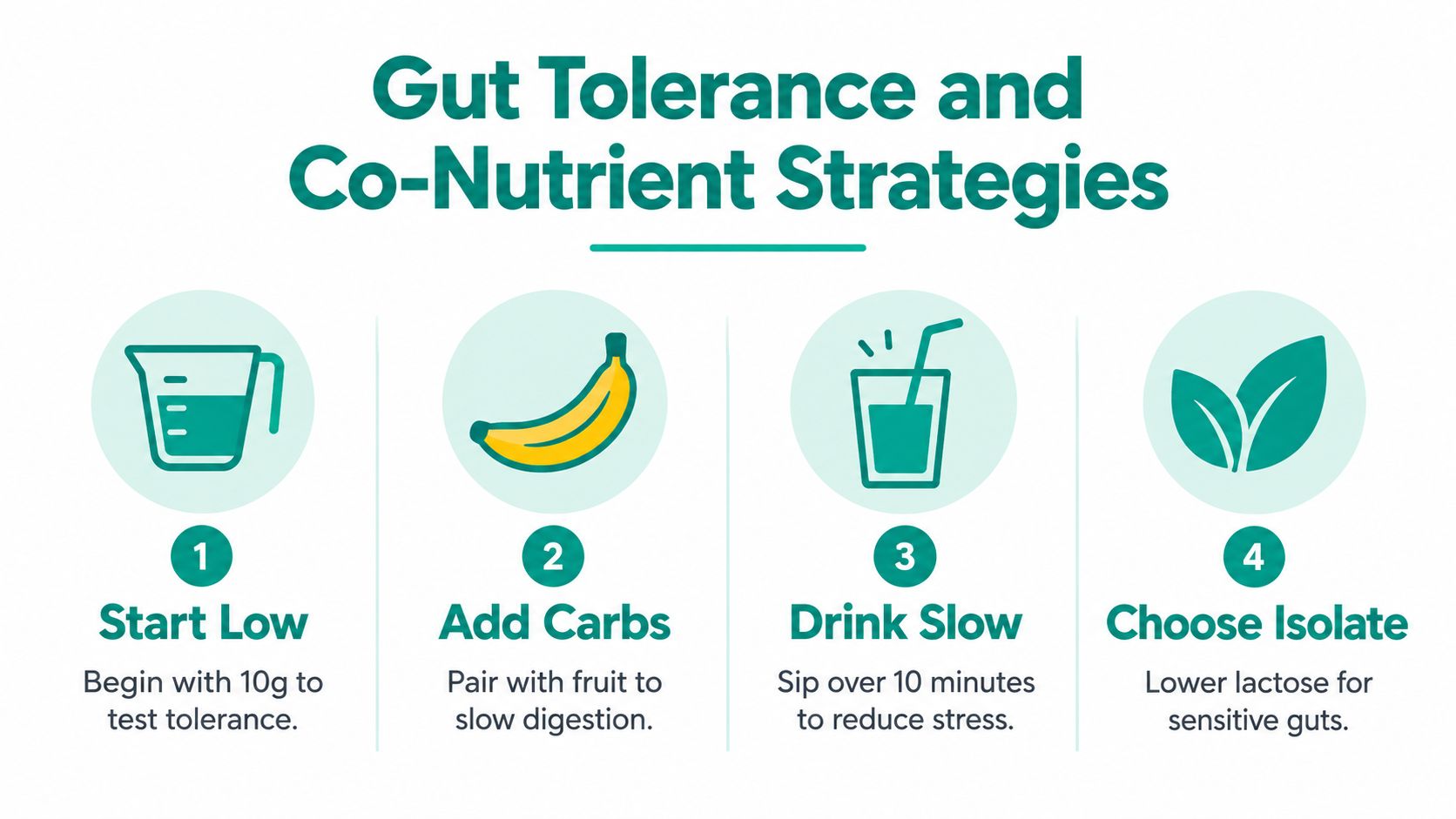
Gut comfort can decide the timing. A Massey University trial found that a 20-minute run at 80% of maximal oxygen uptake raised gut-permeability markers by about 20 to 23 percent, and a small whey dose taken for 14 days did not stop that exercise-related response (Massey University trial). For athletes who train hard, that means the stomach gets a vote. Early-morning runners, rowers, and rugby players often need to choose the timing that keeps the session tolerable, not just the one that sounds ideal on paper.
If whey upsets your gut
Some athletes handle whey before training, others do not. Lactose sensitivity, milk-protein allergy, reflux, or a rough gut on run days can make a pre-session shake a poor choice. A smaller serve, a dairy-free protein, or a shake after the session is often the better call.
The practical NZ guide on protein powder for lactose intolerance fits that problem well. The aim is steady protein intake without turning a training day into a gut test.
Why carbs matter with whey
Hard sessions call for more than protein alone. After demanding rugby or endurance work, whey often sits better when it is paired with carbohydrate, especially if the next training block is close and the athlete needs to restore fuel as well as recover muscle. The nutrient-timing position stand supports combining carbohydrate with protein after exercise.
If the session was brutal and the next one is soon, do not reach for the shake by itself. Pair it with carbs.
That can be as simple as whey with fruit, or whey alongside the next proper meal. If a shake leaves you bloated before running, save it for later. If you struggle to eat after training, take it then. The best option is the one that fits the session, the gut, and the rest of the day's food.
Choosing the Right Protein at NZ Supps
The label matters because the right protein fits your day, not just your shaker. If you train early, split sessions, or struggle to eat straight after lifting, a tub with a sensible serve and clear protein count is easier to use consistently. The point is simple, daily protein needs are easier to hit when the product matches your routine.
What to check on the tub
Start with protein per serve, then look at the serving size itself. A tidy whey product should show exactly what you are getting, without making you do mental maths at the gym bag. If you are buying for sport where testing matters, check the certification details before you hit add to cart.
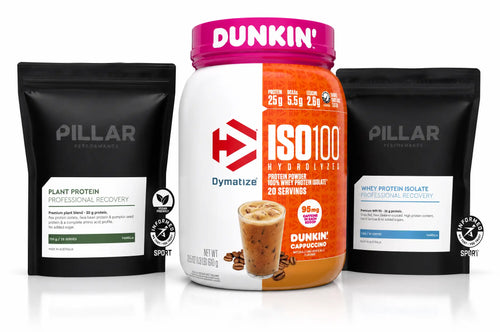
NZ Supps stocks whey options, including isolates and blends, and the product pages make it easier to compare what each tub gives you. If you want a clearer breakdown of whey isolate vs concentrate, the guide on whey isolate vs concentrate covers the practical differences.
NZ Supps protein comparison
| Product Type | Protein Per Serve | Best For | Certification |
|---|---|---|---|
| Whey isolate | About 25 to 27 g per 30 g serve | Fast, lean top-ups around training | Informed Sport options available |
| Whey blend | About 20 to 24 g per serve | Flexible daily use and mixed meal timing | Product-dependent certification |
| Plant protein | About 20 to 25 g per serve | Dairy-avoiding shoppers and sensitive guts | Product-dependent certification |
A good daily stack is usually plain and practical. It gives you enough protein, fits the timing of your training, and sits well enough to use again tomorrow. If you are training early, whey can cover the gap before work. If you are training late, it can sit after the session and help you get the day's total in without forcing another heavy meal.
If the label is clear, the serve size suits your target, and the product matches your stomach, you are making the right call.