SHOP NOW, PAY LATER










 Informed Sport
 Informed Choice
 NSF Certified for Sport
 HASTA Certified

A purpose-built electrolyte drink in New Zealand must contain at least 10 mmol/L of sodium, while coconut water is a natural drink and isn't automatically classified that way. So the answer to coconut water vs electrolyte drink is simple, coconut water can suit lighter training and everyday hydration, but a formulated electrolyte drink is the better label-level choice when sodium and carbohydrate targets matter.
What's the gap in the usual conversation? People keep arguing natural versus artificial, when the more useful test is whether the drink matches your sweat losses, session length, and fuel needs.
| Drink | Serve size | Key ingredient amounts | Price per serve |
|---|---|---|---|
| Coconut water | Check the bottle label | Look for sodium, potassium, carbohydrate, and sugars per 100 mL and per serve | Compare on pack |
| Electrolyte drink | Check the bottle label | Look for at least 10 mmol/L sodium, and the carbohydrate range required under NZ standards if it's sold as an electrolyte drink | Compare on pack |
Table of Contents
- Understanding the Regulatory Difference
- Sodium and Potassium Breakdown
- Reading Labels and Understanding Claims
- Hydration Science and Performance Outcomes
- Practical Use Cases and Recommendations
- DIY Solutions and Product Selection
Understanding the Regulatory Difference
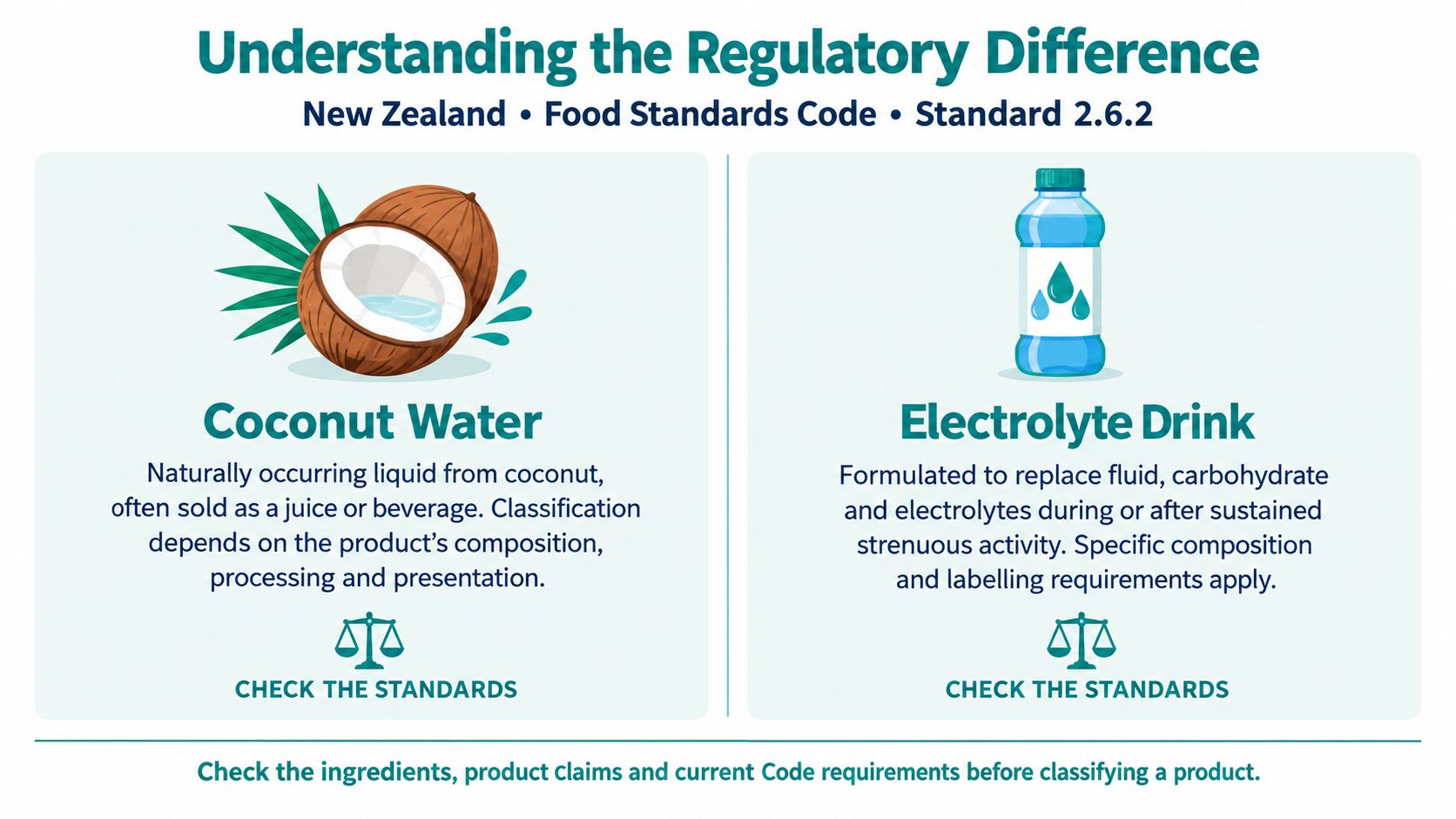
In New Zealand, the label standard decides the category, not the marketing story. Under Standard 2.6.2 of the Australia New Zealand Food Standards Code, a product sold as an electrolyte drink must contain at least 10 mmol/L of sodium, about 230 mg/L, and between 50 and 100 g/L of specified carbohydrates. An isotonic claim is only allowed when osmolality sits between 250 and 340 mOsm/L. That is the practical line between a purpose-built sports drink and a coconut-based beverage that may or may not suit exercise needs the food standards notice.
What that means at the shelf
Coconut water can be a useful drink, but it does not become an electrolyte drink just because it contains minerals. New Zealand food law treats composition and claims as the deciding factors. If a product wants to sit in the electrolyte category, it has to meet the prescribed sodium and carbohydrate thresholds, and that changes what shoppers should expect from it.
Practical rule: check whether the drink is built to replace sweat sodium or simply offer a refreshing fluid option.
For athletes in New Zealand, that rule should sit ahead of the front label. For day-to-day activity, plain water is often enough, while sports drinks make more sense for sustained endurance work and harder sessions. A local athlete comparing coconut water vs electrolyte drink should use that same filter, the one that asks whether the drink meets the needs of the session in front of you.
Front-of-pack claims can be persuasive, but the Nutrition Information Panel gives the decision data that matters. If the drink does not state meaningful sodium and carbohydrate, do not assume it behaves like a proper electrolyte formula. If you also want a clearer look at what trustworthy product testing looks like, learn how NZ Supps tests supplements for banned substances before you trust a label at face value.
Sodium and Potassium Breakdown
Sodium is the main differentiator, not the fact that coconut water is natural. The New Zealand Food Composition Database lists unsweetened coconut water at about 28 mg sodium and 0.61 g potassium per 100 g, which works out to roughly 280 mg sodium and 610 mg potassium per litre NZ Food Composition Database. That is a useful mineral profile, but it is still potassium-forward rather than sodium-forward.
Why sodium matters more than the marketing label
Sweat loss is not just about fluid, it's about sodium replacement. Coconut water can give you fluid and some carbohydrate, but it does not automatically deliver enough sodium for long sessions, hot conditions, or athletes who lose a lot of salt in sweat. That's why a formulated electrolyte drink is easier to use when the goal is consistent sodium intake rather than general refreshment.
A good way to judge the two drinks is to ignore the front label and compare the actual mineral profile. Coconut water may be perfectly reasonable after lighter training, but if you're doing long field sessions, interval work in summer, or any event where your shirt dries white with salt, sodium becomes the limiting factor. That's the part many shoppers miss when they see “electrolytes” on the pack.
| Electrolyte Profile Comparison | Sodium per 100 mL | Potassium per 100 mL | Primary Use Case |
|---|---|---|---|
| Unsweetened coconut water | 28 mg | 0.61 g | Everyday hydration, lighter exercise |
| Formulated electrolyte drink | Check the label | Check the label | Sweat replacement, longer sessions |
Rule of thumb: if the drink is mostly about potassium, it's not automatically a good sodium replacement for long, sweaty training.
For people who want a structured way to think about hydration and sodium, a practical nutrition framework like personalised DASH nutrition coaching can be useful because it pushes the focus onto sodium awareness instead of vague wellness language.
read more about sodium for hydration
Reading Labels and Understanding Claims
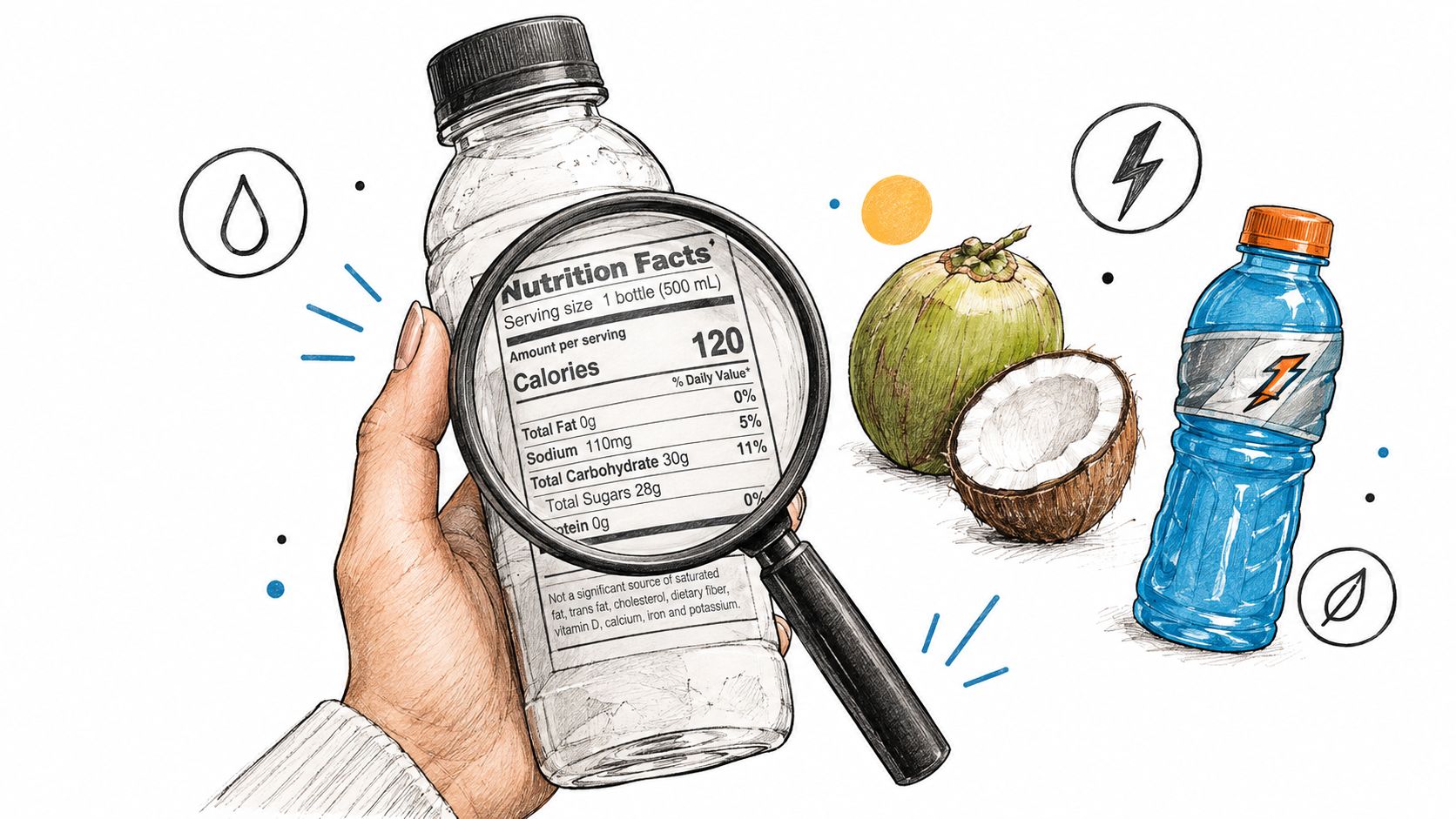
If you want to compare coconut water with an electrolyte drink properly, start with the Nutrition Information Panel. In New Zealand, packaged drinks must list the average quantity per serving and per 100 mL of energy, protein, fat, saturated fat, carbohydrate, sugars and sodium. They must also show the number of servings in the pack and the serving volume in millilitres MPI labelling guidance. That gives you a fair way to compare products even when the bottle sizes differ.
What to check first on the label
Look at sodium per serving before you get distracted by “natural” claims. Then check carbohydrate and sugars, because a proper electrolyte drink is often built to do two jobs at once, replace fluid and provide fuel. Coconut water, by contrast, usually offers a lighter profile and may not reach the sodium level you need for prolonged sweating.
MPI also notes that only magnesium and potassium have pre-approved general-level health claims relating to hydration MPI electrolytes survey. That matters because a product can mention electrolytes without meeting the compositional standard that makes it useful for exercise hydration.
Best practice: compare products by the numbers on the panel, not by the words on the front.
A simple label scan should answer four questions. How much sodium is in the serve? How much carbohydrate is in the drink? How big is the serve? Does the product meet the job you need it to do? If you're buying powder or sachets as well, the same logic applies, which is why clear pack reading matters as much for hydration products as it does for supplement labels explained.
For shoppers who want a real-world analogy, what the cider numbers really mean is a useful reminder that label literacy always beats the front-of-pack story.
Hydration Science and Performance Outcomes
Coconut water can support rehydration after exercise, but it does not solve every performance problem. The practical split is between hydration, fuel, and electrolyte replacement. Once those are treated as separate jobs, the choice becomes clearer.
What the exercise evidence shows
A crossover trial in 19 experienced cyclists compared coconut water with a commercially available sports drink during 90 minutes of cycling followed by a 20 km time trial. The study found no significant differences in physiological or performance outcomes, although blood glucose was lower with coconut water and the other differences were mostly trivial trial paper. Coconut water can work, but it is not automatically better because it is natural.
Coconut water can be fine for rehydration, but performance nutrition is about matching the drink to the session.
For moderate exercise, coconut water may be adequate and can feel easier to drink than a more aggressively formulated product. For longer efforts, the sodium and carbohydrate profile of a sports drink matters more, because the drink is doing more than replacing fluid. It is helping sustain effort under sweating conditions.
The useful question is what kind of work you need the drink to do, because coconut water “working” is not the right test. A broader look at drink categories in compare IV drips and energy drinks shows why context matters more than buzzwords.
New Zealand guidance points in the same direction, plain water for most sessions, and a more deliberate sports drink when exercise is long, hot, or sweat-heavy. That matches what athletes notice on the ground when fatigue and fluid loss start to change how a session feels.
The bottom line is simple. Choose for the session, not the label story.
Practical Use Cases and Recommendations
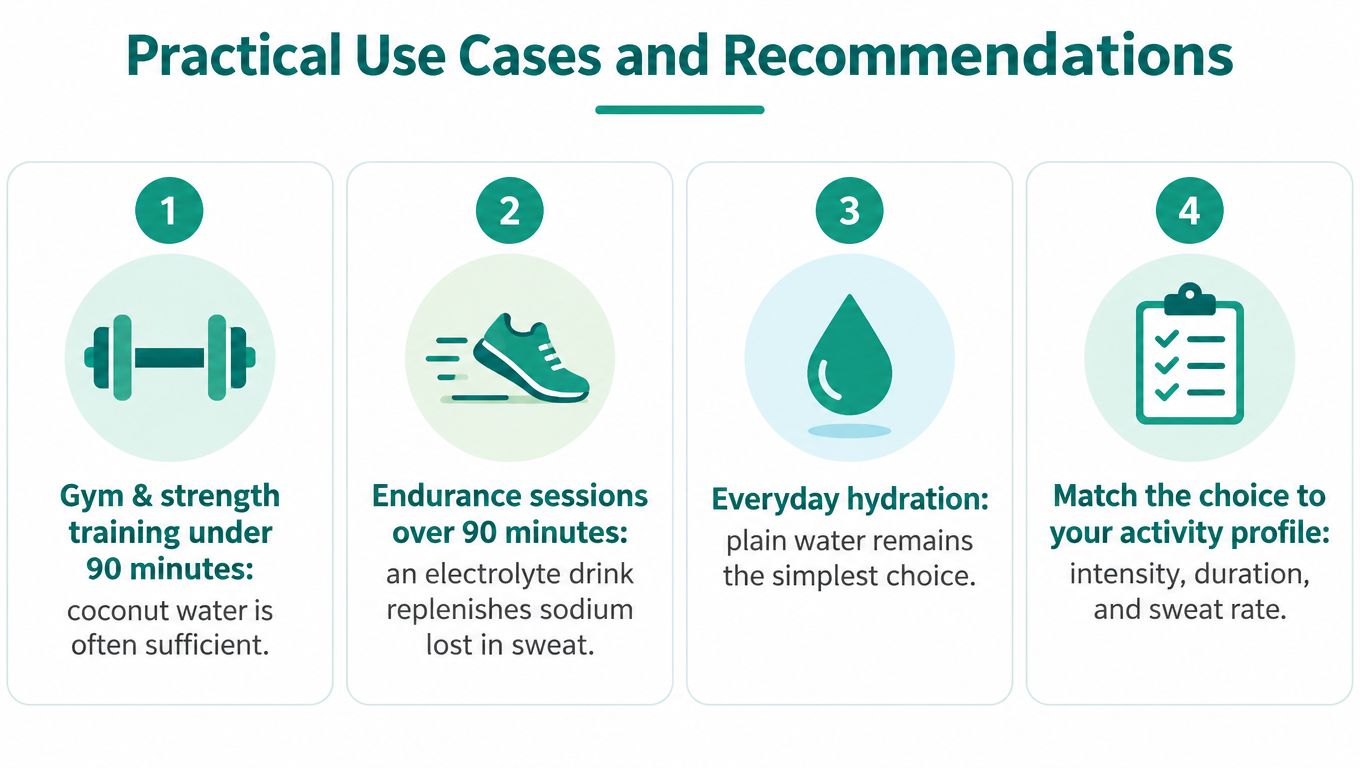
Coconut water is the easier choice when the session is short, the sweat loss is modest, and you mainly want something refreshing. A formulated electrolyte drink earns its place when the session runs long, the weather is hot, or the athlete is clearly losing a lot of sodium. Plain water still covers a lot of everyday hydration needs and shouldn't be pushed aside just because it's less exciting.
Match the drink to the training block
For a gym session, strength block, or casual team sport that finishes under about 90 minutes, coconut water is often enough if you tolerate it well and the label makes sense for your needs. For endurance work, field sport in heat, or very sweaty outdoor training, a drink with clearly defined sodium and carbohydrate is the safer practical choice because you know what you're getting every time.
The easiest mistake is choosing by lifestyle identity instead of training demand. People buy “natural” drinks because they sound cleaner, but the body doesn't care about branding during a long run in summer. It cares about sodium, fluid, carbohydrate, and what your gut can handle.
A simple decision rule
- Short session, low sweat: plain water or coconut water usually does the job.
- Long session, heavy sweat: choose a formulated electrolyte drink with clear sodium on the label.
- Mixed training day: use coconut water if you want a lighter option, then eat a salty meal later.
- Unsure what you need: compare the panel, not the front-of-pack promise.
If you like coconut water but know your training is sweaty, don't force an all-or-nothing decision. Pair the drink with sodium from food or choose a stronger electrolyte product when the session demands it. That way you're using the product for the job it does well.
DIY Solutions and Product Selection
If you want to keep coconut water in the mix, you can make it more suitable for harder sessions by adding sodium through food or combining it with an electrolyte powder. That keeps the taste many athletes like, while improving the drink's usefulness when sweat losses are higher. The point is not to turn coconut water into a sports drink by wishful thinking, it's to make the sodium profile more relevant to the session.
For athletes who want convenience, sealed products with transparent ingredient lists are usually the better route. A good electrolyte product should tell you exactly how much sodium and carbohydrate you're getting, and it should do that consistently from serve to serve. That's especially important for drug-tested athletes and anyone who wants the label to match the contents.
When you shop, keep three checks in mind. First, sodium per serve. Second, carbohydrate per serve. Third, total fluid volume. If any of those are unclear, the product isn't making your decision easier.
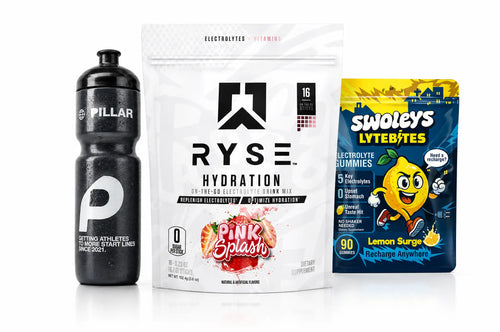
NZ Supps stocks hydration products alongside other sports nutrition categories, and it's a sensible place to compare options if you want sealed, locally held product with clear per-serve details. A practical starting point is to browse the electrolytes collection, then compare a few products side by side before you buy.
If you want help choosing the right hydration product for your training, visit NZ Supps and compare the electrolyte range against coconut water with the label rules in mind. You'll get clearer ingredient details, locally held stock, and a simpler way to match the drink to your sport, your sweat rate, and your budget.