SHOP NOW, PAY LATER










 Informed Sport
 Informed Choice
 NSF Certified for Sport
 HASTA Certified

You've got frozen berries, milk, yoghurt and a blender on the bench, but the protein shelf still leaves you wondering which tub will really work. For most New Zealand smoothies, choose a whey concentrate for everyday value, a whey isolate when you want a higher-protein, lower-lactose option, or a plant blend when you avoid dairy or eat vegan. The right answer depends less on the loudest label claim and more on how the powder behaves with your recipe, your digestion, your daily protein target and the price per serve.
Table of Contents
- What Makes a Protein Powder Work in a Smoothie
- Whey, Isolate, Hydrolysate and Plant Blends Explained
- How to Read a NZ Protein Label Like a Smoothie Shopper
- Smoothie Ratios and Blending Tips for Three Real Goals
- Comparing the Top NZ Smoothie Powders on Price and Protein
- Batch-Tested Powders for Drug-Tested Athletes in NZ
- Matching Your Pick to Your Daily Protein Target
What Makes a Protein Powder Work in a Smoothie
You have the fruit, milk or yoghurt ready, but the powder can still ruin the drink. A useful smoothie powder dissolves without grit, suits the liquid and ingredients in your recipe, and provides a clear amount of protein per serve. It must also match the job: a post-training drink, breakfast smoothie and smaller snack do not need the same formula.
Use this shortlist:
- Whey concentrate for everyday smoothies: Choose it when dairy suits you and you want a practical balance of protein, creamy texture and cost.
- Whey isolate for higher protein density: Pick it when you want more protein from the powder and less lactose than standard concentrate.
- Plant blend for dairy-free or vegan smoothies: A pea and rice blend fits dairy avoidance, vegan eating or specific allergen concerns, although it can produce a heavier texture.
Build around the finished recipe. Milk and yoghurt add protein and energy. Oats, seeds and nut butter thicken the drink and make it more filling, while fruit adds sweetness and bulk. A powder that tastes good with water may become overly sweet or heavy beside yoghurt, oats and banana.
The right serve also depends on your daily target. A powder can help close a protein gap, but the smoothie's milk, yoghurt, seeds and other ingredients count too. Check the total recipe before deciding whether you need a full scoop or a smaller serve.
Practical rule: Choose the powder for the finished smoothie, not the tub on its own.
New Zealand's Nutrition Information Panel lists energy, protein, fat, carbohydrate, sugars and sodium per serving and per 100 g or 100 ml. Use the per-serve figures to estimate what your smoothie provides, then compare the per-100 g figures when scoop sizes differ.
Price belongs in the same check. Divide the tub price by the number of serves, then judge that cost against the protein your recipe delivers. The useful test is whether the grams, ingredients, digestion, texture and price suit the smoothie you will drink.
Whey, Isolate, Hydrolysate and Plant Blends Explained
The smoothie in your blender should decide the powder on your shelf. Whey concentrate suits a creamy mix with milk, yoghurt, fruit or oats, and usually delivers a satisfying texture without much recipe adjustment. It retains more of the original milk components than isolate, so expect a fuller mouthfeel and more lactose.
Whey isolate is filtered further, leaving a higher proportion of protein and less lactose than concentrate. Concentrate works like milk in a strong cup of tea, while isolate is a lighter splash that still brings the main flavour. Choose isolate when dairy agrees with you but standard whey feels heavy, or when the rest of your recipe already contains plenty of flavour and texture.
Hydrolysate has been processed to break some protein into smaller chains. In a smoothie, that can produce a lighter, less creamy mouthfeel. It suits shoppers who prioritise a lighter formula, but concentrate or isolate usually offers a better balance of taste, value and satisfaction for an everyday drink.
Plant blends commonly combine pea and rice proteins, giving the formula a broader amino-acid profile than a single plant source. Their main trade-off is texture. Beside oats, chia, nut butter or frozen banana, a plant powder can make the drink thick and sometimes grainy. Add more liquid, blend for longer and let the smoothie rest briefly before drinking. These ways to make plant protein less gritty can improve the result before you reject the category.
Compare the powder with the recipe
| Powder type | Protein % | Lactose | Mixability | Best smoothie use |
|---|---|---|---|---|
| Whey concentrate | Moderate to high, check the NIP | Contains lactose | Creamy and easy with dairy or fruit | Everyday smoothies |
| Whey isolate | High, check the NIP | Lower than concentrate, but check the label | Light, smooth and protein-dense | Higher-protein, lower-lactose recipes |
| Whey hydrolysate | Varies by product | Usually lower than concentrate, check the label | Light texture, can be less creamy | Readers prioritising a lighter formula |
| Pea and rice blend | Varies by product | Dairy-free | Thicker and sometimes grainier | Vegan or dairy-avoiding smoothies |
For dairy recipes, compare the whey range. For vegan or dairy-free recipes, compare the plant collection by protein content, flavour and expected texture. A powder that tastes good with water may become too sweet or heavy once yoghurt, oats and banana join the glass.
Price also belongs in the decision. Divide the tub price by its number of serves, then compare that per-serve cost with the protein your actual smoothie provides. A cheaper tub can offer poor value if it needs a larger serve to reach your target. A dearer isolate may make sense when you want more protein and less lactose in a smaller, lighter recipe.
For how these ranges translate into a daily target, see the protein-target section below. Your smoothie can help close that gap, but the milk, yoghurt, seeds and other ingredients count toward the recipe's total. Choose the powder for the finished smoothie, then set the serve size around what the drink still needs.
How to Read a NZ Protein Label Like a Smoothie Shopper
Start with the serving size, because scoop sizes vary. A front label can look stronger just because one brand uses a larger scoop than another. Compare the grams of powder, protein per serve and protein per 100 g before judging value.
The per-serve figure shows what the powder contributes to your smoothie. The per-100 g figure shows how concentrated it is beside another product. Use both measures. If your recipe needs 25 g of protein, weigh the powder you use rather than assuming one scoop equals the labelled serve.
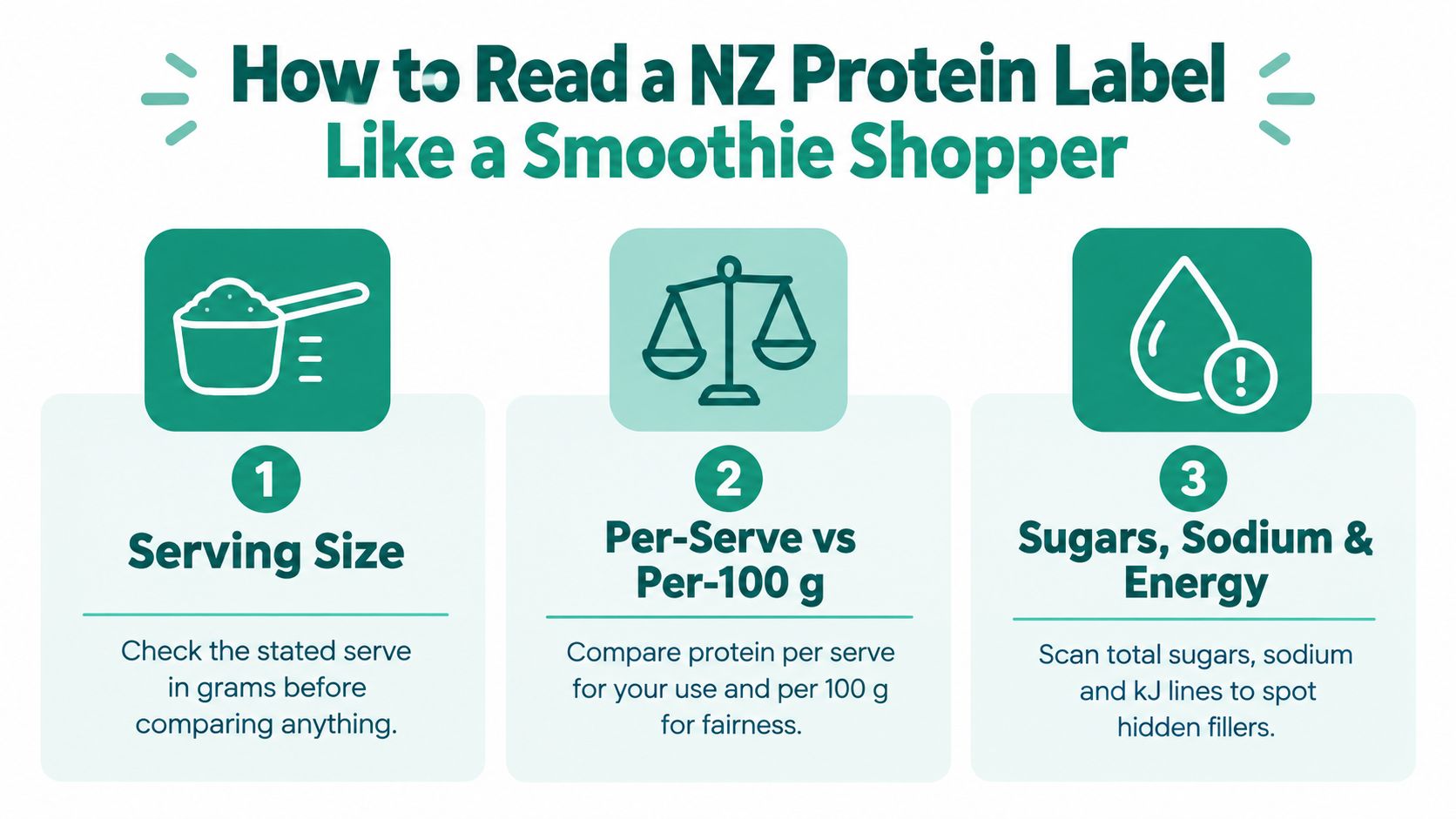
Read the panel from top to bottom
- Energy: Check the powder against the full recipe. Milk, yoghurt, oats, seeds and nut butter can raise the smoothie's total energy quickly.
- Protein: Compare per serve and per 100 g. Ignore the biggest front-of-pack number until you confirm the serving size behind it.
- Sugars: Judge the finished drink, including fruit and flavoured yoghurt, rather than the powder alone.
- Sodium: Compare this when choosing between strongly flavoured or multi-ingredient formulas.
- Ingredients: Ingredients are listed by weight, so the first entries show what makes up most of the powder.
Some protein products use a supplemented food format rather than presenting the same information as a standard everyday food label. That makes the product name, serving directions, ingredient list and any nutrition claims especially important. A claim such as “high protein” still needs to be checked against the actual protein amount and the recipe you plan to blend. For a plain-English guide to serving sizes, ingredient order and claims, see this explanation of supplement labels.
Allergens need equal attention. Common smoothie-related allergens include milk, soy, egg, wheat, sesame, peanuts and tree nuts. Gluten from wheat, rye, barley, oats, spelt and triticale must also be identified. Check the ingredients list and the Contains statement, especially when your recipe includes soy beverage, oats, peanut butter or almond butter.
Work out the powder's cost per labelled serve by dividing the pack price by the number of serves. If the product page shows $60 and 30 labelled serves, the calculation is $60 ÷ 30 = $2 per serve. Then compare that figure with the protein your actual smoothie needs. Check current product-page details before buying, since prices and pack sizes can change.
Use the product page to shortlist options, then confirm the tub's label before purchase. The package gives the final details for your serve size, ingredients and claims.
Smoothie Ratios and Blending Tips for Three Real Goals
The same powder can work in three very different drinks. Start with the protein amount, choose the liquid around the texture you want, then add the food ingredients that match the occasion.
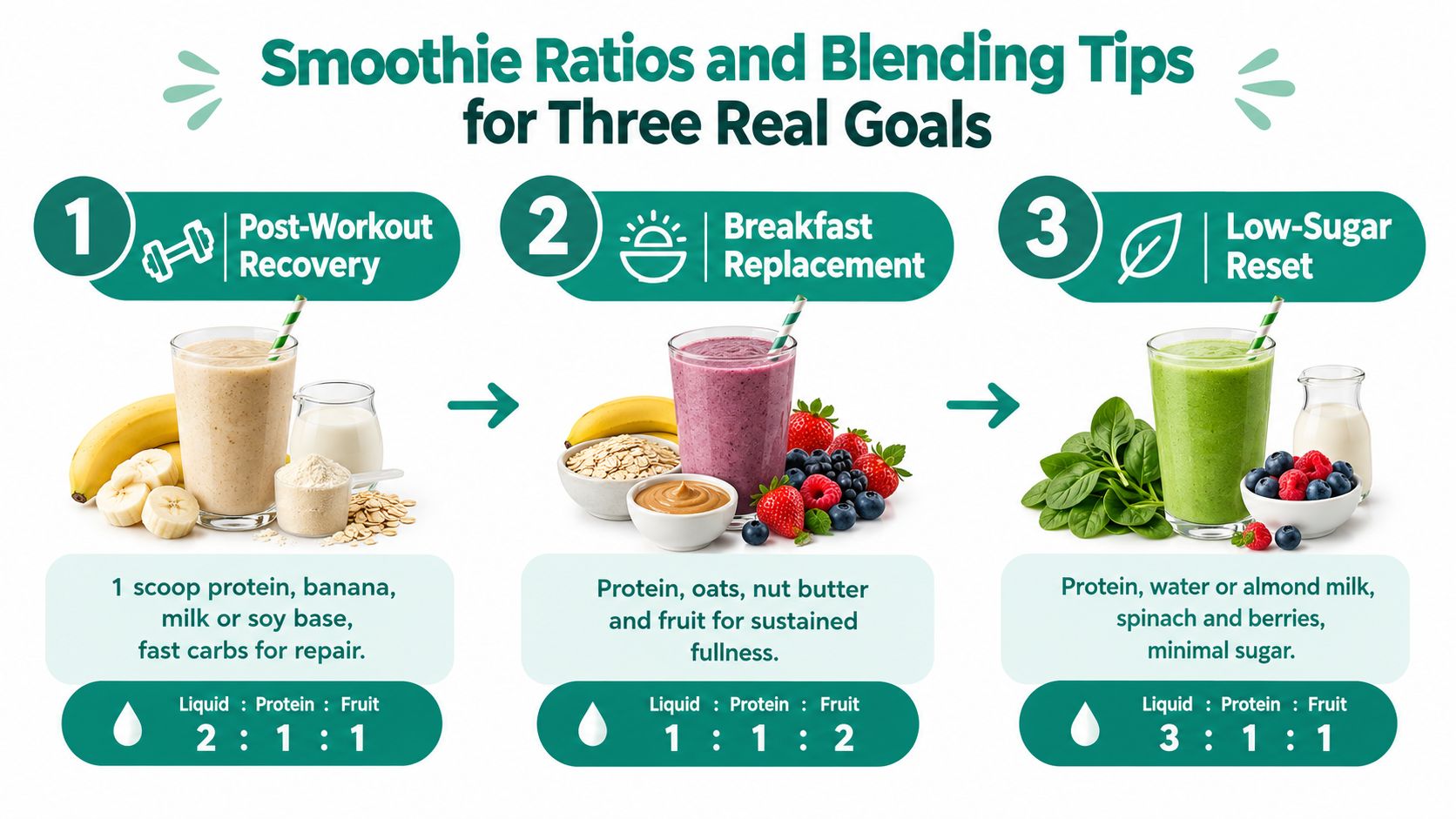
Post-training smoothie
Aim for roughly 25 to 30 g of protein, using a whey concentrate, isolate or plant blend. Add milk or soy beverage, banana and ice. Start with enough liquid to keep the drinkable texture loose, then add more if oats, yoghurt or frozen fruit thicken it.
This is the place for faster carbohydrates from fruit if your training session leaves you wanting a substantial drink. If you're already using milk and yoghurt, reduce the powder or liquid only after checking the total protein, because the base contributes to the finished recipe.
Breakfast replacement smoothie
Use roughly 20 to 25 g of protein, then add oats, yoghurt, fruit and a measured amount of nut butter. Whey concentrate gives this style a creamy finish, while a plant blend creates a thicker bowl-like texture.
Blend the liquid and powder first, then add oats and frozen ingredients. That simple order helps prevent dry pockets around the blades. This smoothie can become much heavier than a snack because the ingredients contribute carbohydrate, fat, fibre and additional energy, so judge it as a complete meal rather than as “just a shake”.
Low-calorie snack smoothie
Use roughly 15 to 20 g of protein with water or an unsweetened almond-style beverage, berries and ice. Isolate suits shoppers who want a lighter dairy option, while a plant blend works when dairy isn't on the menu.
A chalky smoothie usually has too much powder for the liquid. Add liquid first, blend the powder with it, then introduce ice and fruit. A split texture often comes from too much acidic fruit beside dairy. Reduce the citrus or sour fruit, use a neutral base, and blend the powder with the liquid before adding the acidic ingredients.
Here's a useful visual demonstration of the blending process:
For cafés and bakeries serving blended drinks, the cup matters as much as the recipe workflow. This guide to smoothie cups for cafes and bakeries is useful when you're matching presentation and packaging to a menu.
Comparing the Top NZ Smoothie Powders on Price and Protein
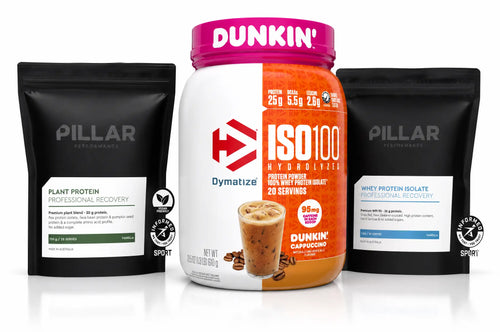
I'd rank the three options by use case, not by a universal winner. The concentrate is the everyday pick, the isolate is for shoppers who want a lighter dairy formula, and the plant blend is for people who avoid dairy or choose vegan ingredients.
Use the current NZ Supps product page and label to fill in the exact price-per-serve calculation before purchasing. Retail prices, pack sizes, flavours and formulations can change, so I won't invent figures that aren't visible in the verified product data.
| Product | Serve size | Protein per serve | Key macros | Price per serve |
|---|---|---|---|---|
| Whey concentrate | Check current product label | Check current NIP | Compare energy, sugars and sodium on the NIP | Pack price ÷ labelled serves |
| Whey isolate | Check current product label | Check current NIP | Compare energy, sugars and sodium on the NIP | Pack price ÷ labelled serves |
| Pea and rice plant blend | Check current product label | Check current NIP | Compare energy, sugars and sodium on the NIP | Pack price ÷ labelled serves |
My recommendation for each shopper
Choose whey concentrate if dairy suits you, you blend regularly and you want a reliable creamy texture without paying for extra filtering. It works particularly well with milk, yoghurt, banana, berries and oats.
Choose whey isolate if you want a high-protein powder with less lactose than concentrate, or if a large breakfast smoothie already feels too rich. It's a strong match for water, unsweetened dairy alternatives, berries and ice.
Choose a plant blend if you're vegan, dairy-avoiding or managing a milk-related allergen concern. Expect a thicker texture, and give the blend enough liquid and blending time. The recipe matters more here than a direct whey-versus-plant ranking.
If powder doesn't fit your week, stop forcing it. A ready-to-drink shake, yoghurt, milk or another ordinary high-protein food may be more practical for the days when you're rushing out the door.
Cafés and food businesses making the same decision at larger volume may also benefit from reading about matching equipment to your menu style. The same principle applies at home: choose the equipment and powder around the drinks you normally make.
Batch-Tested Powders for Drug-Tested Athletes in NZ
If you compete under drug-testing rules, certification outranks flavour, tub design and small macro differences. The Sport Integrity Commission warns that supplements, including protein powders, can contain prohibited substances, that labels may not accurately disclose every ingredient, and that no supplement can be guaranteed safe without laboratory testing of the individual container as stated in its supplement guidance.
Independent batch testing means a specific production batch has been assessed against a prohibited-substance risk standard. Look for current, independently verifiable certification such as Informed Sport, Informed Choice, NSF Certified for Sport or HASTA where available.
Use a simple evidence trail
- Check the exact product and batch: Certification needs to match the container you bought, not merely the brand.
- Keep the packaging: Retain the tub, batch number and label.
- Save the purchase record: A receipt or order record helps establish where the product came from.
- Avoid unclear formulas: Proprietary blends and incomplete ingredient lists make informed checking harder.
Certification reduces risk, but it doesn't turn a supplement into a guarantee. Follow the same discipline for a protein smoothie you drink daily as you would for any other supplement.
You can read how Informed Sport protein powder works in New Zealand before choosing a tested product. If you're not drug-tested, the full protein range gives you more freedom to prioritise flavour, texture, ingredients and price.
Matching Your Pick to Your Daily Protein Target
Start with your body weight and training type. Sport New Zealand's guidance gives approximately 1.2 to 1.7 g/kg/day for strength-training athletes and 1.2 to 1.6 g/kg/day for endurance athletes in its nutritional guidance.
For a 60 kg strength trainee, that means an indicative 72 to 102 g daily range. An 80 kg strength trainee has a range of 96 to 136 g. For endurance training, the equivalent ranges are 72 to 96 g for 60 kg and 96 to 128 g for 80 kg. Use these as planning figures, not personal prescriptions.
A smoothie supplying 25 to 30 g of protein can cover one part of that target alongside meals and snacks. Check the base before choosing a powder. Milk, yoghurt and soy beverage add protein, while fruit, juice and water generally do not.
New Zealand population data gives useful context. The Ministry of Health reported median usual daily intakes of 102 g for males and 71 g for females. Protein supplied 16.4% of energy for males and 16.5% for females, within the recommended 15 to 25% energy range in the cited New Zealand nutrition guidance. These are population medians, not athletic targets.
Older adults, people on restricted diets and anyone recovering from illness should seek personalised advice from a qualified health professional. Otherwise, match the powder to your recipe and digestion, then compare protein per serve and the actual cost per smoothie.
NZ Supps lists whey, isolate and plant options with label and per-serve information. Visit NZ Supps, choose the formula that suits your base, and check the serving cost before buying.