SHOP NOW, PAY LATER










 Informed Sport
 Informed Choice
 NSF Certified for Sport
 HASTA Certified

You're looking for the best cookies and cream protein powder in NZ, and my direct answer is this: choose a product with strong protein density, a short and clearly disclosed ingredient list, and a sensible price per serve, rather than the tub with the sweetest biscuit flavour. For most shoppers, a relatively simple whey isolate or whey blend is a better everyday choice than a heavily loaded dessert formula.
You've probably reached this point after comparing tubs that all promise a creamy cookies-and-cream taste, while the labels tell a different story. One has cookie pieces, another uses a blend of concentrate and isolate, and a third looks affordable until you divide the tub price by the number of serves. The flavour matters, but gluten, milk, soy, protein density, serving size, and actual cost per serve matter more.
Table of Contents
- Finding the Right Cookies and Cream Protein in NZ
- The Reality of Cookies and Cream Formulations
- Top Cookies and Cream Protein Powders Compared
- Matching the Right Protein to Your Training Goals
- How to Read NZ Supplement Labels for True Value
- Mixing Tips and Recipe Ideas for Better Texture
- Why Buying Local Stock Matters for NZ Shoppers
Finding the Right Cookies and Cream Protein in NZ
The right product starts with the label, not the front of the tub. A good cookies and cream powder should give you a meaningful amount of protein for its serving size without relying on a long list of cookie inclusions, oils, starches, or flavouring ingredients.
Use this order when comparing products:
- Check the protein grams and serving size together. A large protein number means little if the serving is also unusually large. Divide protein grams by serving grams to calculate protein density.
- Identify the primary protein source. Whey isolate generally gives you a more protein-dense formula, while concentrate-based blends can offer better value and a fuller texture.
- Read the allergen statement. Milk is expected in whey, but cookies and cream flavours may also include soy and gluten. Don't assume a whey powder is gluten-free just because the base protein comes from dairy.
- Calculate the price per serve. A cheaper tub isn't automatically better value if it contains fewer serves or less protein per serve.
- Check the intended use. A powder for daily shakes should be judged differently from a mass gainer, dessert mix, bar, or ready-to-drink product.
New Zealand's sports nutrition market was estimated at about USD 55 million in 2025 and is projected to reach USD 65 million by 2032, with a projected 2.42% CAGR for 2026 to 2032, according to New Zealand sports nutrition market data. Sports protein products reportedly hold roughly 90% of that market, so cookies and cream sits inside the dominant protein format rather than being a niche novelty.
My buying rule: If the label makes the protein source, allergens, serving size, and number of serves difficult to find, move on.
For a practical starting point, compare whey protein options in NZ by label and serving economics before you compare flavour reviews. The best choice is the tub that suits your digestion and routine consistently.
The Reality of Cookies and Cream Formulations
The dessert flavour can hide a weaker formula. Cookies, cream flavourings, cocoa, biscuit pieces, sweeteners, thickeners, and texture agents occupy space that could otherwise hold protein. A high protein claim on the front of the tub does not show how efficiently the finished powder delivers protein.
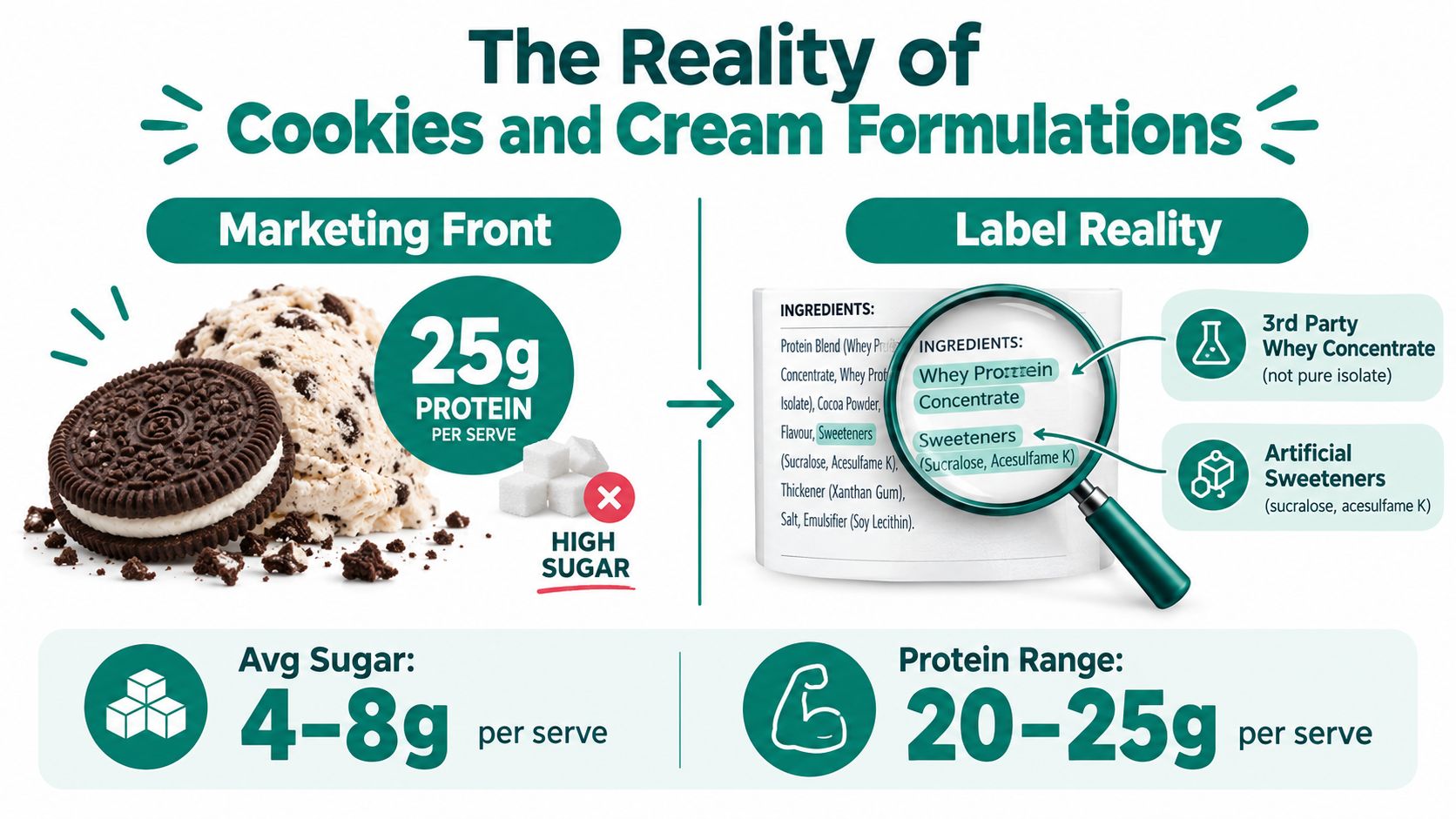
A cookies and cream whey product sold in New Zealand provides 23.4 g of protein per 31.25 g serve, equal to roughly 75% protein by weight. The same serving contains 128 kcal, 3.4 g carbohydrate, 2.2 g fat, and 51 mg sodium, and the flavour includes gluten, according to the cookies and cream protein product label.
That is a useful reality check. You are paying for the protein plus the ingredients responsible for biscuit flavour, sweetness, colour, and mouthfeel. A larger scoop can also make the protein-per-serve figure look stronger while leaving the powder less protein-dense overall.
Protein density tells the clearer story
A local comparison places mainstream whey isolates at around 78% to 81% protein by weight, whey blends at 64% to 69%, and plant protein at about 67%. One local whey listing reports 74.8 g protein per 100 g for cookies and cream, as shown in NZ whey protein comparison information.
That result sits near the lower end of isolate-level density and above many blend-style formulas. Use the finished product's figures, not the word “whey” on the front label. The cookies and cream protein range listing also shows why the exact flavour panel matters. Different flavours in one range can carry different ingredients and allergen warnings.
Allergens deserve a closer check
Cookies and cream can bring more allergen exposure than a simpler or unflavoured powder. New Zealand listings show potential milk, soy, and gluten concerns, while the whey example above specifically identifies gluten in its flavour system. Biscuit pieces and cereal-derived ingredients are the main reasons shoppers who avoid gluten need to read the allergen statement carefully.
Dairy remains relevant even when the label says whey isolate. Both whey concentrate and whey isolate come from milk, although their lactose content can differ by formula. Soy may come from the flavour system or other added ingredients, so check the full declaration rather than assuming a dairy-based powder is soy-free.
For a clearer explanation of how NZ protein powder blends work, compare the protein sources and their proportions before judging flavour value. A richer cookies and cream profile can mean lower protein density, more allergens, and a longer ingredient list. Choose it for taste only when those trade-offs fit your diet and routine.
Top Cookies and Cream Protein Powders Compared
A cookies and cream powder can look impressive on the front label while delivering less protein per gram and more allergen exposure than a simpler flavour. Use the finished nutrition panel, ingredient list, and current price to compare products available in New Zealand. The table below gives you a practical starting point.
| Product Name | Serve Size | Protein per Serve | Protein Density | Price per Serve |
|---|---|---|---|---|
| Cookies and cream whey reference sample | 31.25 g | 23.4 g | Roughly 75% | Check current listing |
| Whey isolate cookies and cream option | Check label | Check label | Calculate from label | Tub price ÷ serves |
| Whey blend cookies and cream option | Check label | Check label | Calculate from label | Tub price ÷ serves |
| Plant-based cookies and cream option | Check label | Check label | Calculate from label | Tub price ÷ serves |
The reference sample provides 23.4 g protein from a 31.25 g serving, which works out to about 74.9%, or roughly 75% protein by weight. Its flavour system identifies gluten, so the example also shows why protein density cannot be separated from allergen checks. A larger scoop may contain more total protein while still providing a weaker proportion of protein.
For cost, divide the tub price by the number of servings to find price per serve. Then divide that result by the grams of protein per serve to find cost per gram of protein. This calculation gives a fairer comparison than shelf price alone.
My ranking criteria
Best everyday option: Choose a whey formula with a named protein source, a sensible serving size, and density close to the stronger local options. A less intense flavour can be the better purchase if it means fewer cookie inclusions, a shorter ingredient list, and clearer allergen information.
Best for maximum protein density: Start with isolate-led products, then verify the finished formula. The local whey comparison guide places whey isolates around 78% to 81% protein by weight, while blends sit around 64% to 69%. Those figures are useful context, but the product's own label decides its actual value. Check protein per 100 g and per serve instead of trusting “isolate” on the front.
Best value: Compare price per serve with protein per serve, then calculate the cost per gram of protein. A premium tub earns its place when the formula offers higher density or a clearer ingredient profile. A higher shelf price by itself proves nothing.
Best for allergen-aware shoppers: Select the product with clear milk, soy, gluten, and cross-contact information. Biscuit pieces and cereal-derived ingredients make gluten a specific concern, while whey remains milk-derived even when the formula uses isolate.
NZ Supps lists product details and per-serve information across its range. Check the live listing before buying because product names, prices, serving counts, and flavour-specific allergen statements can vary between concentrates, isolates, plant powders, gainers, bars, and desserts.
Matching the Right Protein to Your Training Goals
You train before work, need a shake you can drink every day, and want cookies and cream flavour without paying for a tub full of biscuit pieces. Choose the formula for that routine, not for the flavour name alone. Texture, allergens, protein density, and price per serve all affect whether the powder earns its place.
For daily shakes and strength training
A standard whey blend suits regular shakes when you want a creamy texture and familiar dessert-style flavour. It can offer a practical balance of cost and mixability. Compare the price per serve with the protein provided, and avoid paying a premium solely for a more intense flavour.
Check the full label before buying. The serving size, protein amount, milk and soy declarations, gluten information, and ingredient order should be clear. Cookies and cream recipes may include biscuit pieces, cereal ingredients, sweeteners, or extra flavouring that reduce protein density and increase allergen concerns. If you tolerate whey but avoid gluten, a simpler flavour from the same range may be the safer choice.
For a protein-dense option
Choose an isolate-led formula when you want more protein from a smaller serving or prefer a leaner shake. Isolate is a useful starting point, not a guarantee of a superior finished product. Cookies, cream flavouring, sweeteners, and other inclusions can still make the product less protein-dense than the category suggests.
Calculate protein density from the label using protein per serve divided by total serve weight. Compare that result with the unflavoured or simpler version from the same range. The NZ whey comparison reference provides useful local context, but the specific cookies and cream label should decide the purchase.
For gaining size
A mass gainer is built for extra energy and carbohydrate alongside protein. It suits someone deliberately increasing calorie intake, not someone wanting a straightforward protein top-up. Compare the whole nutrition panel rather than choosing by protein grams alone.
Bars, wafers, frozen desserts, and ready-to-drink products serve different needs. Their convenience can help, but they often bring more carbohydrate, fat, or added ingredients than a basic powder. Pay for that convenience only when you will use it.
For drug-tested athletes
Competitive athletes should choose a product with independent batch-testing certification where possible. Check programmes such as Informed Sport, Informed Choice, NSF Certified for Sport, or HASTA, and confirm that the exact product and flavour are covered.
For competitive athletes: Certification applies to the specific product and testing programme, not to every supplement sold by a brand.
How to Read NZ Supplement Labels for True Value
Start with the nutrition information panel, then work towards the ingredient list. New Zealand labels must be attached to the food or part of its packaging, easy to read, written in English, and compliant with the relevant food standards. They also need a lot or batch identification for traceability.
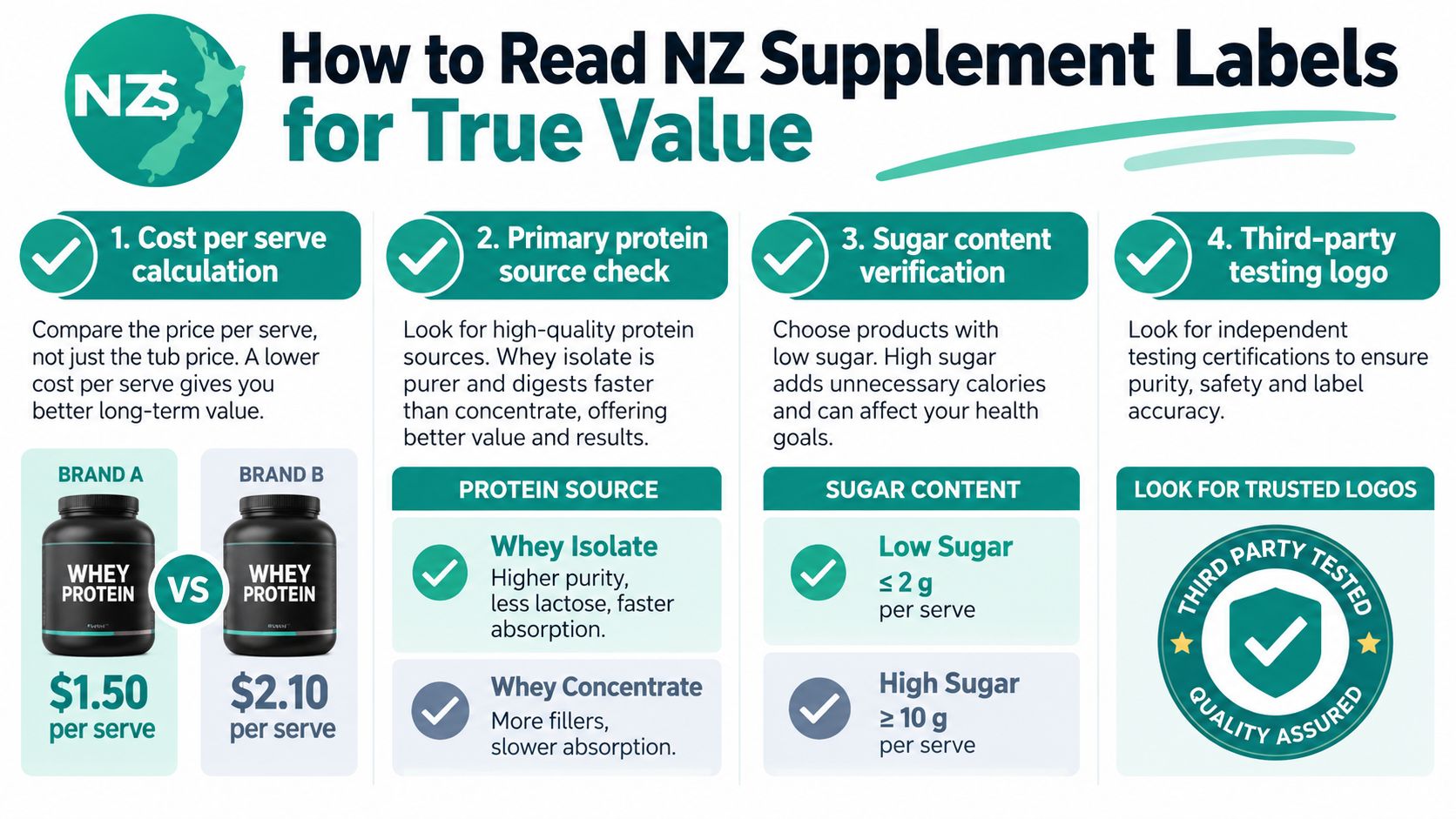
The nutrition panel should show energy, protein, fat, saturated fat, carbohydrate, sugars, and sodium per serving, as well as the required comparison basis, as set out in MPI's food labelling guidance.
Calculate density yourself
Use this formula:
Protein density = protein grams per serve ÷ total serve grams × 100
For the verified sample, that calculation is 23.4 g ÷ 31.25 g, which is roughly 75% protein by weight. This is more useful than comparing scoops, because scoop sizes vary between products.
Then calculate cost per serve:
Price per serve = tub price ÷ number of serves
Finally, calculate the cost of the protein itself:
Cost per gram of protein = price per serve ÷ protein grams per serve
A product can have a lower price per serve but provide less protein in that serve. You need both figures before deciding whether it's good value.
Read the fine print
Check the primary protein source, flavour inclusions, sweeteners, allergen statement, batch details, date mark, and preparation instructions. New Zealand dietary supplement labels also need the product description, net weight or volume, trader name and address, the words “DIETARY SUPPLEMENT”, a batch number, a date mark, and relevant warnings or preparation information under the Dietary Supplements Regulations.
The label isn't decoration. It's the information you need to compare the tub.
For more detail on the practical checks, use this guide to reading supplement labels. Don't rely on the product name when the nutrition panel can answer the question directly.
Mixing Tips and Recipe Ideas for Better Texture
Cookies and cream powders can mix differently from plain whey because biscuit pieces and thickeners affect the texture. Start with cold water or milk in the shaker, add the powder afterwards, and shake thoroughly before adding ice. Very cold liquid can help the drink feel smoother, but a blender is better if the formula includes noticeable cookie pieces.
A shaker works well for a standard drink. A blender suits thicker recipes, particularly if you're making a bowl with yoghurt or oats. Add liquid gradually when you want a spoonable texture, because it's easier to loosen a thick mixture than rescue a watery one.
Three simple uses
- Overnight oats: Stir the powder through prepared oats once they've cooled. Add liquid in small amounts so the mixture stays thick.
- Yoghurt bowl: Mix a modest amount of powder through plain yoghurt, then leave it briefly to thicken before adding fruit or seeds.
- Protein dessert: Blend the powder with yoghurt and a small amount of liquid, then chill it until the texture firms.
Keep extra ingredients aligned with your purpose. Biscuits, spreads, syrups, and large toppings can quickly change the nutrition profile of an otherwise simple shake. If you want to bake something alongside your shake, this tasty low-sugar cookie recipe gives you a more controlled option than relying on extra cookie pieces in the powder.
For more ideas, see how to cook with protein powder. The practical goal is consistency. If you enjoy the texture and can prepare it quickly, you're more likely to use the product as intended.
Why Buying Local Stock Matters for NZ Shoppers
A local supply chain makes it easier to check what you're buying and how quickly it can reach you. NZ Supps is a New Zealand-owned online retailer with inventory held in Palmerston North, where orders are dispatched domestically. It sells sports nutrition products including whey, isolate, plant-based protein, bars, snacks, and other protein formats.
That matters for cookies and cream powders because flavour-specific stock can change, and an overseas listing may not show the same label, serving size, allergen statement, or formulation as the product available in New Zealand. A sealed-by-brand product from a transparent supply chain also gives you a clearer starting point for checking batch information and freshness.
MPI allows whey protein and similar protein powders to enter New Zealand when they don't contain fresh fruit. The limit is 1 kg for an accompanied consignment and 10 kg for an unaccompanied consignment, such as a mailed parcel, under MPI's guidance on bringing food into New Zealand. Those rules are useful for travellers and people ordering from overseas, but local stock avoids the need to deal with that process for an ordinary purchase.
Buy locally when you want clearer delivery tracking, easier customer support, and a product that's already within the New Zealand retail system. Before checkout, confirm the current flavour, serve count, price per serve, ingredient list, and allergen statement.
NZ Supps offers locally held protein powders and related sports nutrition products, with product comparisons and per-serve information to help you assess cookies and cream formulas properly. Visit NZ Supps to compare current options by protein type, serving value, flavour, and label details before choosing your next tub.