SHOP NOW, PAY LATER










 Informed Sport
 Informed Choice
 NSF Certified for Sport
 HASTA Certified

You're standing in the supplement aisle, staring at a tub that says banana and wondering if it's a real protein powder or just a flavoured shake with a bit of fruit branding. The short answer is that banana protein powder is usually a proper protein base, most often whey or a plant blend, with banana flavour added. If the product is made from banana flour instead, it behaves more like a carb and fibre ingredient than a true protein powder, so the label matters more than the flavour name.
Table of Contents
- What Banana Protein Powder Is
- Comparing Whey, Isolate and Plant Bases
- Reading the Label and Checking Certifications
- Matching the Right Protein to Your Goals
- Practical Mixing Tips and Recipe Ideas
- Buying Locally and Getting the Best Value
- Final Thoughts on Choosing Your Banana Protein
What Banana Protein Powder Is
A shopper sees banana on the front and may assume the powder is built from dried fruit. In most cases, the banana is there for flavour, while whey, isolate, or a plant protein blend provides the protein you are paying for.
Flavour is not the same as base protein
That difference matters because fruit powder on its own will not deliver the amino acid density you want from a gym supplement. A NZ whey isolate sample gives 27.9 g protein per 31.25 g serve and 89.4 g protein per 100 g (whey isolate sample sachet), which is the sort of concentration you want when protein is the main job.
A New Zealand green banana flour listing shows 0.7 g protein per serving and 3.5 g per 100 g, with 12.5 g fibre per 100 g and 75 g carbohydrate per 100 g (green banana flour listing). That works better as a fibre-rich carb ingredient than as a primary protein source.
Practical rule: if the front of the tub says banana, turn the pack around and look for whey, isolate, or pea protein in the ingredients list before you decide it is a true protein powder.
What Kiwi buyers should expect
The banana flavour can make a shake easier to drink, especially with milk or oats, but the value still comes from the base protein. If banana flour sits high in the ingredient list, the product may taste fine and still fall short for training use unless it has added dairy or plant protein to lift the amino acid profile.
That is why the stronger options in this category are usually flavoured versions of standard sports protein, not fruit flours trying to pass as protein. If you want banana taste without losing macro quality, stay in that lane.
Comparing Whey, Isolate and Plant Bases
A banana label can look friendly on the shelf, but the important choice is still the protein base. Flavour affects drinkability, yet the base decides texture, lactose content, and how much protein you get in each serve.
The three bases behave differently
Whey concentrate sits in the middle. It usually tastes fuller and mixes well, though it can carry more lactose and a little more fat or carbohydrate than isolate.
Whey isolate is the leaner option. A local NZ whey isolate example gives 27.9 g protein per 31.25 g serve and 1.1 g carbohydrate per serve (whey isolate sample sachet), which suits buyers who want a high protein share in a small serve.
Plant-based blends suit dairy-avoiding shoppers, but the texture can be thicker and the banana flavour can stand out more. That trade-off is acceptable if you need a dairy-free tub, but it is worth checking the ingredient list and the protein total per serve. For a broader ingredient comparison, read more about pea protein powder.
The table below compares the kind of products Kiwi shoppers usually see on shelf. I have left out price per serve because local pricing changes by retailer, pack size, and whether you are buying a single tub or a sample pack. For value, compare the shelf price against the serve size on the label.
| Banana Protein Powder Comparison | Product | Serve Size | Protein per Serve |
|---|---|---|---|
| Banana Protein Powder Comparison | NZ Whey Isolate Banana sample sachet | 31.25 g | 27.9 g |
| Banana Protein Powder Comparison | Banana whey product example | 25 g | 17.7 g to 18.2 g |
| Banana Protein Powder Comparison | Plant-based banana-style protein example | varies by product | varies by product |
The gap between these products is easy to miss if you only look at the front of the tub. One NZ banana whey page positions the product as a recovery and lean-muscle option with 17.7 g to 18.2 g protein per 25 g serve (Wholeheart banana whey product), while another banana product positions itself as a nutritionally complete shake using real organic banana and NZ whey (banana whey product line). Flavour is only part of the comparison. The bigger question is how much protein each scoop delivers, and whether the formula is built for training, casual use, or a dairy-free routine.
A better banana tub gives you the protein density you need and still tastes good enough that you will keep using it.
Reading the Label and Checking Certifications
You can judge a banana protein powder by the front, but you buy it on the back. In New Zealand, the label has to carry the facts, and banana flavour does not change that.
What the label must show
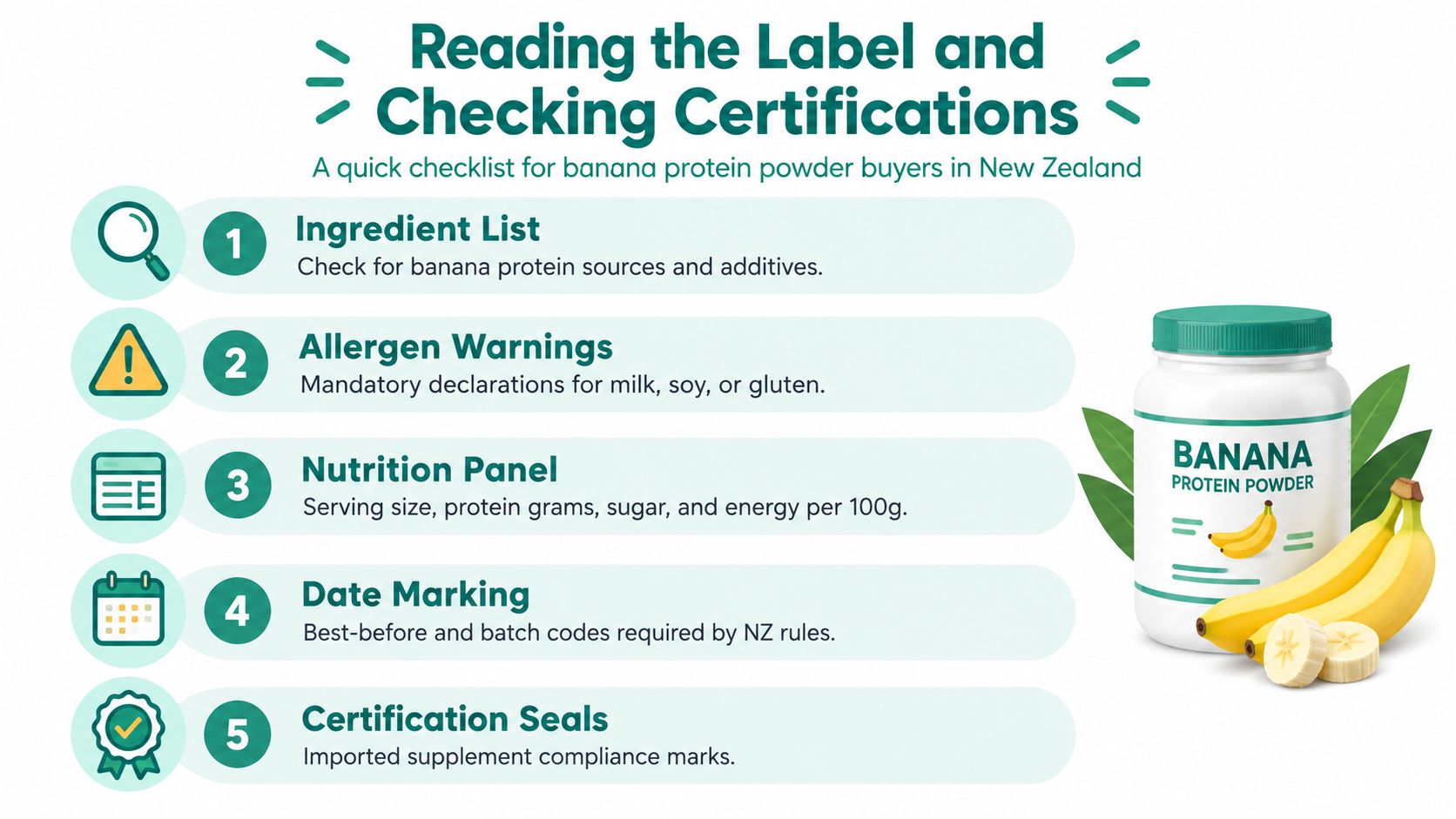
NZ dietary supplement labels must include the words “DIETARY SUPPLEMENT”, the net weight or volume, the trader's name and address, a batch number, a date mark, preparation instructions where needed, and text that is at least 1.5 mm high, or 0.75 mm on very small packs (NZ dietary supplement labelling rules). For sports foods, the panel should also state average quantities of energy, protein, fat, saturated fat, carbohydrate, sugars, and sodium for a serving and a unit quantity (nutrition and health claims consultation paper.pdf)). That is why a clean label makes it easier to compare two tubs on serve size and per-serve macros, not just flavour.
What to check for allergens and testing
MPI requires food labels to clearly declare allergens, and if a food contains a common allergen or an ingredient sourced from it, that has to be shown clearly on the label. That matters with whey because milk is the obvious issue, and with plant formulas that may bring in soy or other allergens. MPI also lists advisory statements for ingredients such as caffeine, aspartame, phytosterols, and some sugar alcohols, so a shopper should check those warnings as part of the same label read (MPI allergen declarations).
If you buy for drug-tested sport, look for batch-testing marks such as Informed Sport, Informed Choice, NSF Certified for Sport, or HASTA on the pack. The certification mark tells you more than the marketing line on the front.
Before you hit checkout, use supplement labels explained to sanity-check the panel against a compliant product.
Matching the Right Protein to Your Goals
The right banana protein powder depends on how you train and what you tolerate. A fast whey isolate suits one kind of buyer, while a plant blend or a more traditional whey concentrate suits another.
Fast recovery, dairy-free use, and everyday shakes
If you want a light shake after training, whey isolate is usually the cleanest fit because it keeps the protein high and the carbs low. That makes it easier to pair with other food if you want a fuller recovery meal, or to keep the shake simple if your appetite is already low.
Plant-based shoppers need to look for a formula that gives enough protein per serve and a complete amino acid profile. The banana flavour can help soften the earthy edge some plant powders carry, but it doesn't replace good formulation.
For athletes trying to match protein intake to training volume, a useful outside reference is find your optimal protein amount. Use that as a planning tool, then compare the serve sizes on banana powders so you know whether one scoop or two gets you there.
If the tub looks cheap but the serve is small and the protein count is modest, you may need more powder than you expected to reach the intake you actually want.
Who should favour which base
- Whey isolate: Best fit for shoppers who want a higher protein share per serve and a leaner shake.
- Whey concentrate: A solid option if you want a fuller mouthfeel and don't mind a less stripped-back profile.
- Plant blend: The practical choice for dairy-free or vegan buyers who want banana flavour without whey.
For drug-tested athletes, the base protein matters, but the certification mark matters just as much. For lactose-sensitive shoppers, the decision comes down to whether you want dairy-free by default or a low-lactose whey style product that still mixes well.
Practical Mixing Tips and Recipe Ideas
Banana flavour works because it's familiar. It also plays well with ingredients you probably already keep at home, which makes the tub easier to use more often.
I've seen banana powders shine most when they're mixed into milk or oat milk instead of plain water. Water is fine if you want the lightest possible shake, but milk gives more body and oat milk often adds a rounder texture that suits banana better.
Use this clip if you want to see how a banana shake comes together in a blender, then keep the same basics in mind when you're making it at home.
Simple ways to make it work better
- Start with liquid first: That helps the blades pull the powder through instead of trapping it on top.
- Shake before blending: If you're using a shaker, mix harder and longer with plant-based powders because they can settle thicker than whey.
- Use oats for breakfast: Banana protein blends into morning oats without fighting the flavour profile.
- Bake it into pancakes: It works well in protein pancakes when you want something less repetitive than another shaker bottle.
A banana shake also works nicely as a base for a simple smoothie. Frozen banana, a scoop of powder, and milk gives you a thicker finish than fruit alone, while a small amount of peanut butter can make it taste more like a proper breakfast than a quick supplement.
The only thing I'd avoid is overcomplicating it. If you need six extras to make the powder taste good, the base formula probably isn't strong enough on its own.
Buying Locally and Getting the Best Value
Ordering protein from overseas can turn a simple purchase into a wait, and fruit ingredients can complicate import eligibility. MPI says protein powder and similar products such as whey protein are allowed into New Zealand if they do not contain fresh fruit, and the weight limits are 1 kg for accompanied consignments and 10 kg for unaccompanied consignments (MPI bringing food to NZ). For a banana-flavoured product, that means the ingredient list matters more than the flavour name.
How to buy with less guesswork
A local retailer gives you a faster path to comparison because the product data is already in NZ format and the stock is held here. NZ Supps stores inventory locally in Palmerston North, and its catalogue lets you compare per-serve pricing, ingredients, and tested-for-sport filters without digging through overseas listings.
That matters when you're choosing between banana whey, isolate, and plant options, because the cheapest tub on the shelf isn't always the cheapest serve. The useful comparison is protein per scoop, not just headline pack size.
If you're buying locally, use the product filters first, then check the serving panel second. That sequence keeps you from paying for a flavour you like but a formula that misses your actual target.
Value is more than flavour
A banana powder that tastes great but needs two scoops to feel useful can end up costing more per drink than a cleaner isolate. A more focused product with a tighter macro profile can be the better buy even if the tub price looks higher.
When you're browsing locally stocked options, choose products that show the serving size clearly, list the protein grams plainly, and make the base protein obvious. That's how you avoid paying for branding and end up paying for the formula.
Final Thoughts on Choosing Your Banana Protein
A banana-flavoured tub only earns its place if it keeps you using a protein that fits your routine. The flavour helps, but the base still does the work. Whey, isolate, and plant blends each bring different texture, digestibility, and serve value.
Read the label like a buyer, not a brand fan. Check the protein source, the serving size, the allergen statement, and any tested-for-sport certification if you compete.
If you want to compare banana whey, isolate, and plant options without guesswork, NZ Supps lists the current range with per-serve pricing and product details in one place. That makes it easier to choose a banana protein powder that fits your training, tolerance, and budget.