SHOP NOW, PAY LATER










 Informed Sport
 Informed Choice
 NSF Certified for Sport
 HASTA Certified

Three things matter on any supplement label: the Supplement Facts panel, the “other ingredients” list, and proof of outside quality checks. Skip the marketing copy on the front of the bottle. Go straight to whether the dose matches clinical amounts, whether the product carries third-party testing or a Certificate of Analysis, and whether it’s free of anything you’re allergic to. The FDA’s own labeling rules and the NIH Office of Dietary Supplements back up exactly why those three checks come first.
TL;DR:
- Check that the supplement’s dose matches clinical recommendations and compare total daily intake across products to avoid underdosing or overdosing.
- Verify third-party testing or a Certificate of Analysis to ensure product quality and confirm label accuracy, especially for active ingredients and contaminants.
- Review “other ingredients” for allergens, unnecessary additives, and the order of ingredients by weight to assess product purity and transparency.
- Be cautious of proprietary blends with undisclosed doses, unverified health claims, vague marketing language, or missing manufacturer contact details.
- Consider storage conditions and expiration dates, as heat, light, and time can degrade supplement potency and effectiveness.
Table of Contents
- Reading the Supplement Facts panel line by line
- Judging the dose: serving size, units, and %DV
- What “other ingredients” and additive order actually tell you
- Claims and terminology: what’s regulated, what’s marketing
- Verifying quality: GMPs, third-party seals, and Certificates of Analysis
- Allergens, special diets, and who should double-check with a doctor
- Red flags that should stop a purchase
- A step-by-step checklist for choosing a supplement
- How NZ Supps supports transparent label reading
- Expiration dates and storage: why they affect potency
- Recommended intake versus the upper limit you shouldn’t cross
- Synthetic versus natural nutrient forms: does it matter?
- Reading dosage instructions and timing on the label
- What actually deserves your attention on a label
- Sources
- FAQ
Reading the Supplement Facts panel line by line
The front of a bottle is advertising. The Supplement Facts panel is the legal document. That’s the distinction most shoppers miss: bold claims like “clinically proven” or “maximum strength” live outside the panel and carry no regulatory weight on their own, while everything inside the box has to meet specific labeling requirements set by the FDA.
Every panel starts with serving size and servings per container. Below that sits a list of dietary ingredients, the amount per serving, and, where a Daily Value has been established, the % Daily Value. The FDA requires this structure along with the product name, net quantity, manufacturer’s name and address, and directions for use to appear somewhere on the label, according to its nutrition labeling guide.
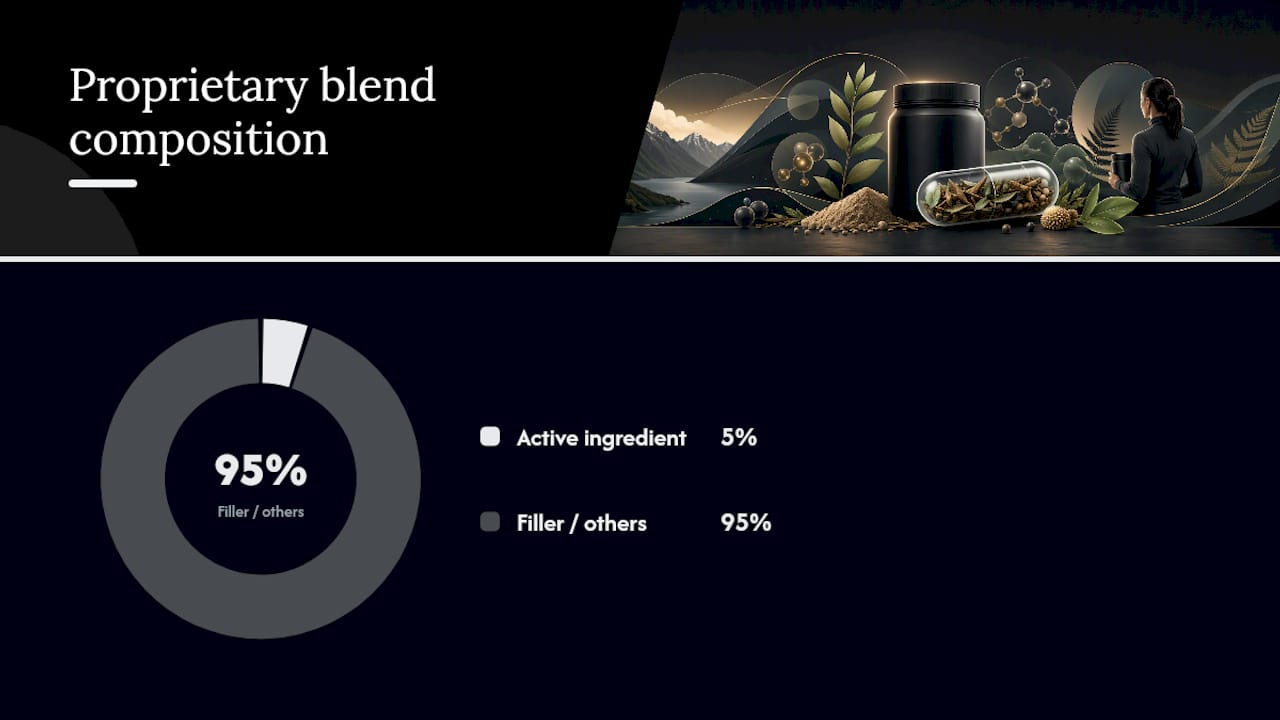
Botanical ingredients add another layer. Manufacturers are required to list plants by their standardized scientific name and, when it matters, the part of the plant used, so “Panax ginseng, root” tells you something that “ginseng” alone doesn’t. Watch for proprietary blends. These let a company list the blend’s total weight and its ingredients in order of predominance without disclosing how much of each ingredient is actually in there.
That matters more than it sounds:
- A blend might be 95% filler and 5% active ingredient, and the label wouldn’t have to tell you.
- Ingredients near the bottom of a proprietary blend list could be present in amounts too small to do anything.
- Comparing two proprietary-blend products head to head is close to impossible unless one lists individual amounts.
Once you understand the panel’s structure, the rest of the label reading process is mostly about interpreting numbers.
Judging the dose: serving size, units, and %DV
Serving size is where labels quietly mislead people. A tub of powder might list “1 scoop” as a serving without clarifying that real clinical doses often require larger amounts. Always check the amount per serving, not just the ingredient name on the front panel, and compare the total daily dose across products rather than counting tablets or capsules. A two-capsule serving with 500 mg per capsule beats a one-capsule serving at 400 mg, even though the second bottle looks like the better deal on shelf.
Units trip people up next. Labels use grams (g), milligrams (mg), micrograms (mcg or µg), and international units (IU), plus specialized units like mcg DFE for folate and mcg RAE for vitamin A, according to NIH’s dietary supplement guidance. Mixing these up is easy: 1,000 mcg is 1 mg, not 1 g, and IU conversions vary by nutrient, so a vitamin D dose in IU doesn’t translate cleanly to a vitamin E dose in IU.
%DV helps you gauge how much of a nutrient one serving provides relative to general recommendations, but it has real limits. It’s built around average intake targets, not your personal needs, sex, age, or health status, and some ingredients (many herbs, most amino acids) have no established Daily Value at all, so the %DV column simply shows an asterisk. When you want a real read on dose, cross-check the absolute amount against clinical research or a source like Pure Blue’s explainer on serving sizes rather than leaning on the percentage alone.
What “other ingredients” and additive order actually tell you
Below the Supplement Facts panel sits the “other ingredients” list, and this is where fillers, binders, coating agents, and flavors show up. None of these are inherently bad. Magnesium stearate helps machines fill capsules consistently. Cellulose adds bulk so a dose isn’t a barely visible speck of powder. Natural or artificial flavoring makes a protein powder tolerable to drink daily.
The rule that matters here: ingredients are listed in order of predominance by weight, heaviest first. A short, recognizable list is a good sign. A long list where the third or fourth ingredient is an obscure gum, dye, or preservative is worth a second look, especially if you’re sensitive to additives.
A few things worth flagging as you scan this list:
- Artificial colors or dyes with no functional purpose beyond appearance.
- Vague terms like “flavors” or “botanical extract blend” with no further detail.
- Stimulant-sounding ingredients hidden under unfamiliar chemical names, which sometimes signal an undisclosed caffeine source.
- Sugar alcohols or sweeteners stacked high enough to suggest the product leans more “candy” than “supplement.”
Consumer guides consistently point to this section as the fastest way to separate a clean formula from a padded one, a point echoed in NCOA’s guide to reading supplement labels.
Claims and terminology: what’s regulated, what’s marketing
Not every phrase on a bottle carries the same legal weight. Health claims link a nutrient or food to reduced disease risk and require FDA authorization to appear. Nutrient content claims describe levels of a nutrient, like “high in vitamin C.” Structure/function claims, the most common type on supplement labels, describe how an ingredient affects the body’s structure or function, something like “supports immune health,” and by law must carry a disclaimer stating the claim hasn’t been evaluated by the FDA and the product isn’t intended to diagnose, treat, cure, or prevent disease, per NIH’s consumer fact sheet.
Marketing terms sit in a different category entirely. “Natural,” “whole-food,” and similar phrases carry no standardized legal definition for supplements the way “organic” does under USDA certification. “Non-GMO” tells you about sourcing, not safety or effectiveness. “Clinically studied” sounds authoritative, but it can refer to a single small study on the specific ingredient, not the finished product at the dose on your label.
Proprietary blends compound this problem. Combine a vague marketing claim with a blend that hides individual amounts, and you’re left trusting the brand’s word rather than checking the numbers yourself.
Verifying quality: GMPs, third-party seals, and Certificates of Analysis
Look for a mention of Current Good Manufacturing Practices (CGMP) on the label or the brand’s site. It signals the product was made in a facility following FDA-mandated controls for identity, purity, strength, and composition. It doesn’t mean the product was tested for what’s actually inside the bottle after manufacturing. That’s a separate, voluntary step.
That’s where third-party testing comes in. Independent programs test finished products for label accuracy and contaminants, and a verification seal from one of these programs is a stronger signal than CGMP language alone. The USP Verified mark is one of the most recognized, confirming that what’s on the label matches what’s in the bottle and that the product has been screened for harmful contaminant levels. NSF Certified for Sport is another common mark, particularly relevant for competitive athletes worried about banned substances.
A genuine Certificate of Analysis (COA) goes further still. It should show the specific batch or lot number, the tested amount of each active ingredient, and results for contaminants like heavy metals, microbes, or pesticides. Reputable brands link COAs directly from product pages or attach a QR code on the bottle.
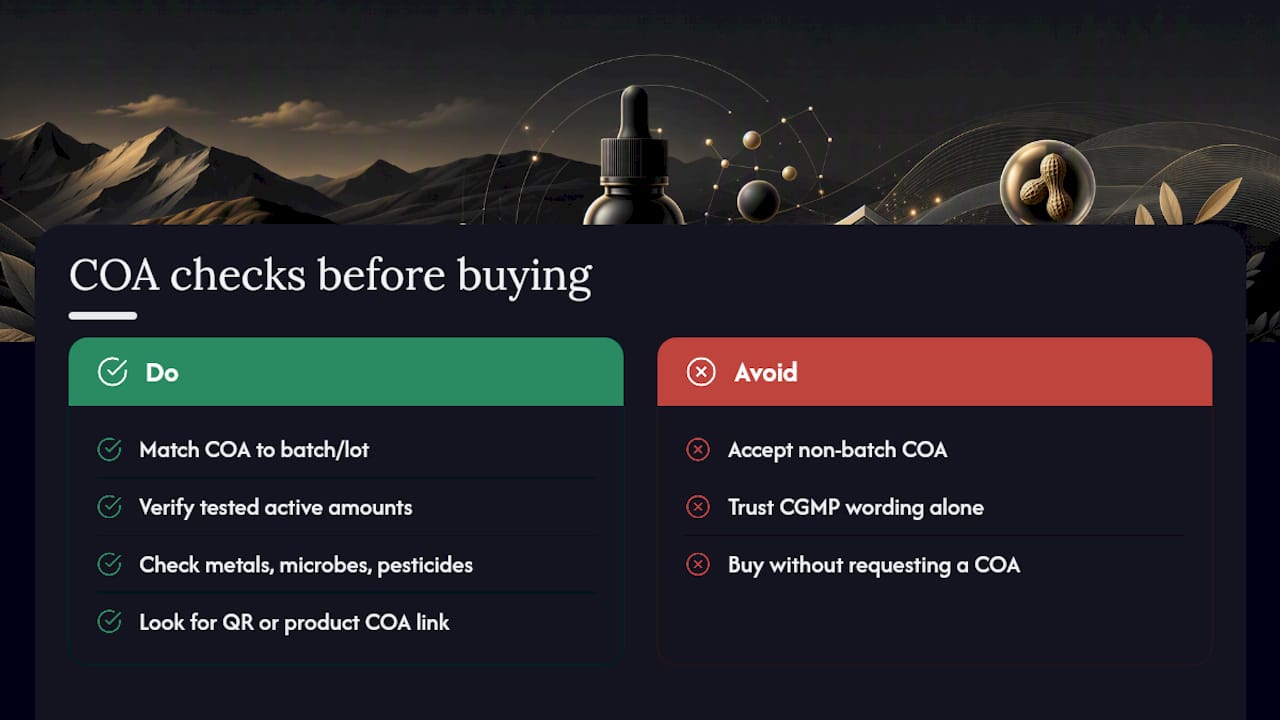
Pro Tip: Before you buy, search the product name plus “COA” or check for a QR code on the label. If a brand can’t produce a batch-specific COA on request, treat that as a real gap, not a minor inconvenience.
Because the FDA does not pre-approve most supplements for safety or effectiveness before they reach shelves, this outside verification is the closest thing shoppers get to a second opinion, a point peer-reviewed regulatory reviews raise directly. A detailed guide on how to check whether a supplement is tested walks through the process in more detail if you want a step-by-step version.
Allergens, special diets, and who should double-check with a doctor
Allergen declarations sit near the ingredient list, usually flagging milk, soy, egg, tree nuts, peanuts, wheat, and shellfish, the most common triggers under FDA allergen guidance. What the FDA notes on food allergens applies just as much to supplements: the absence of an allergen warning doesn’t guarantee the product is free of trace amounts, since cross-contamination can happen in shared manufacturing facilities even when it isn’t disclosed.
Claims like “gluten-free” or “vegan” aren’t automatically backed by certification. A genuine third-party certification (look for a specific certifying body’s mark, not just the word on the label) carries more weight than a brand’s self-declared claim. A breakdown of what to look for in a vegan protein powder covers this in the context of protein products specifically.
If you’re pregnant, breastfeeding, over 65, managing a chronic condition, or taking prescription medication, check with a clinician before starting any new supplement, regardless of how clean the label looks. Dose thresholds that are safe for a healthy adult can interact differently with medications or existing conditions.
Red flags that should stop a purchase
A handful of label patterns should make you close the tab, no matter how good the branding looks.
- Disease-treatment language. Legitimate supplements can’t legally claim to cure, treat, or prevent a specific disease. If a label promises to reverse diabetes or cure anxiety, that’s an illegal claim, not a bonus feature.
- Undisclosed doses inside proprietary blends with no COA to back up what’s actually in there. Combine the two and you have zero way to verify what you’re taking.
- Testimonials that sound too dramatic to be real, especially paired with before-and-after photos and no clinical data.
- Missing manufacturer contact information. Every legitimate label should carry a real company name and address.
- A long list of unfamiliar additive names, particularly ones that resemble stimulant compounds under alternate chemical names, which sometimes signal undisclosed caffeine analogs.
A step-by-step checklist for choosing a supplement
Run through this sequence on the label before you buy:
- Check the active ingredient and dose against clinical research or a trusted reference, not just the ingredient name on the front.
- Look at serving size and servings per container to figure out real cost per dose, not just cost per bottle.
- Confirm third-party testing or a COA, and check that the manufacturer’s contact information is listed and real.
- Scan “other ingredients” for allergens and additives you’d rather avoid.
- Run through the red-flag list above: disease claims, hidden doses, exaggerated testimonials.
- Calculate price per dose if cost matters, since a cheaper bottle with a smaller serving size can cost more per effective dose than a pricier one.
How NZ Supps supports transparent label reading
NZ Supps lists full ingredient panels on every product page, so you can check serving size, dose, and other ingredients before checkout rather than after the bottle arrives. The pre-workout cheat sheet breaks down common pre-workout ingredients and their clinical dose ranges, useful for a category where proprietary blends are common. For verifying test results and batch numbers directly, the supplement testing guide walks through what to look for and where to find it on a product page.
Expiration dates and storage: why they affect potency
An expiration or “best by” date isn’t just a legal formality. Active ingredients degrade over time, and that degradation speeds up with heat, light, and humidity. A fish oil capsule past its date can smell rancid because the oils have oxidized. Probiotic products lose live organism counts steadily after manufacturing, so a bottle near its expiration date may deliver a fraction of the colony count printed on the label.
Storage instructions on the label matter more than most people assume. “Store in a cool, dry place” isn’t boilerplate. Bathroom medicine cabinets, for instance, are one of the worst places to keep supplements because of the heat and humidity from showers. Refrigeration requirements for certain probiotics or fish oils exist for the same reason: potency drops faster at room temperature.
A few practical habits help here:
- Buy from a retailer with visible turnover, since older stock sitting on a shelf for months loses potency before it even reaches you.
- Check the date at the point of purchase, not just when you get home, especially for anything already discounted.
- Store capsules and powders away from direct sunlight and kitchen humidity, even if the label doesn’t explicitly call it out.
None of this shows up in the Supplement Facts panel, but it directly affects whether the numbers on that panel still mean anything by the time you take the product.
Recommended intake versus the upper limit you shouldn’t cross
Two different numbers matter for any nutrient, and labels rarely explain the difference. The Recommended Dietary Allowance (RDA) or Adequate Intake (AI) represents the amount most healthy people need to avoid deficiency. The Tolerable Upper Intake Level (UL) is the highest daily amount unlikely to cause harm with regular use. These aren’t the same target, and confusing them leads to two opposite mistakes.
Some shoppers assume more is always better and stack multiple products containing the same nutrient, unaware that a multivitamin, a fortified protein powder, and a standalone supplement can push a fat-soluble vitamin like vitamin A or D well past the upper limit. Fat-soluble vitamins build up in tissue over time rather than flushing out, so chronic overuse carries real risk in a way that excess vitamin C, which the body simply excretes, typically doesn’t.
Other shoppers see a %DV under 100% and assume the product is underdosed, when in fact some ingredients, particularly minerals like magnesium or calcium, are deliberately dosed below the full daily target because the full amount in one serving would cause digestive discomfort. The label’s %DV reflects one serving, not necessarily the full amount you’re meant to get from diet plus supplementation combined.
If you’re taking more than one product containing overlapping nutrients, add up total daily intake across all of them before assuming any single label is safe in isolation. This matters especially for anyone already managing a health condition or taking medication, where even nutrients with a wide safety margin can interact.
Synthetic versus natural nutrient forms: does it matter?
Labels don’t always make clear whether a nutrient came from a synthetic process or a whole-food source, and the distinction affects both absorption and cost. Vitamin E, for example, appears in two forms: natural (d-alpha-tocopherol) and synthetic (dl-alpha-tocopherol), and the natural form is generally considered more bioavailable per milligram. Folate versus folic acid follows a similar pattern. Folate is the naturally occurring form found in food, while folic acid is the synthetic version used in most fortified products and supplements, and the two are processed differently by the body.
Mineral forms matter just as much. Magnesium oxide is cheap and common but poorly absorbed compared to magnesium glycinate or citrate. Iron as ferrous sulfate absorbs differently than iron bisglycinate, and the gentler forms tend to cause less digestive upset. None of this makes synthetic automatically worse. Synthetic vitamin C is chemically identical to the vitamin C found in an orange, and the body doesn’t distinguish between the two once absorbed.
What actually matters is checking the specific form listed in the Supplement Facts panel, not just the nutrient name, and comparing that against what research supports for absorption and effect. A label that only says “calcium” without specifying calcium carbonate versus calcium citrate is giving you less useful information than one that spells it out.
Reading dosage instructions and timing on the label
The “directions for use” section tells you more than just how many capsules to take. Timing instructions, like “take with food” or “take on an empty stomach,” usually relate to how a nutrient is absorbed or how it affects digestion. Fat-soluble vitamins (A, D, E, K) absorb better with a meal that contains some fat. Iron absorbs better on an empty stomach but is more likely to cause nausea that way, which is why some labels suggest taking it with a small amount of food instead.
“Do not exceed” language on a label isn’t a suggestion. It reflects the upper intake threshold the manufacturer has determined is safe for regular use, and exceeding it, especially with fat-soluble nutrients or minerals like zinc, carries a real risk of toxicity over time.
Split-dosing instructions, common with magnesium, vitamin C, and creatine, exist because the body can only absorb or use so much of certain nutrients at once. Taking one large dose instead of two smaller ones spread across the day can mean a portion of the nutrient goes unused. If a label specifies “twice daily” rather than “once daily,” that’s usually based on how the ingredient behaves in the body, not just a convenient dosing schedule.
What actually deserves your attention on a label
Most of what’s printed on a supplement bottle is designed to be skimmed, not scrutinized. The Supplement Facts panel, the other ingredients list, and a verifiable COA are the only three things that genuinely determine whether a product does what it claims. Everything else, the front-panel buzzwords, the lifestyle photography, the bold claims about “maximum absorption,” is packaging.
If you remember one rule from all of this: check the dose against clinical research first, verify testing second, and scan for allergens third. In that order. A perfectly dosed ingredient from an unverified source is a gamble. A verified product at a dose too low to matter is a waste of money either way. For deeper checks on specific product categories, the internal resources on testing and ingredient breakdowns are worth bookmarking before your next purchase.
— Blake
This article is general information, not a substitute for advice from a qualified doctor. Consult a qualified healthcare professional about your own circumstances before acting on anything here.
Sources
- Dietary Supplement Labeling Guide: Chapter IV. Nutrition labeling | FDA
- Dietary Supplements - Consumer | NIH Office of Dietary Supplements
- Dietary supplements: regulatory challenges and consumer information (example NCBI review)
FAQ
How do I read a supplement label?
Start with the Supplement Facts panel for serving size, amount per serving, and %DV, then check “other ingredients” for fillers and additives. Confirm the product carries third-party testing or a Certificate of Analysis before comparing it against clinical dosing.
What should I avoid on a supplement label?
Avoid products claiming to treat or cure a specific disease, since that’s an illegal claim under FDA rules. Also skip proprietary blends with no COA, missing manufacturer contact details, and long lists of unfamiliar additives.
How do I read a nutrition label if I’m just getting started?
Focus on three numbers first: serving size, amount per serving for the ingredient you care about, and %DV where it’s listed. Ignore front-of-package marketing language entirely and treat the Supplement Facts panel as the only section with real legal weight.
Why are vitamin D, calcium, iron, and potassium listed on labels?
These nutrients are commonly under consumed or over consumed relative to recommended intakes, which makes them useful reference points for comparing products. Regulatory guidance from NIH requires standardized units for these nutrients so amounts can be compared consistently across brands.
What’s the difference between a nutrition label and a supplement label?
A nutrition label on packaged food shows nutrient content per serving of that food. A Supplement Facts panel serves a similar function for dietary supplements but follows separate formatting rules and can include dietary ingredients, like herbal extracts, that don’t appear on standard food labels at all.