SHOP NOW, PAY LATER














 Informed Sport
 Informed Choice
 NSF Certified for Sport
 HASTA Certified

Cooking protein powder does not simply erase its protein. Heat changes protein structure, and the effect on digestibility depends on the conditions. For everyday cooking, texture is often the first change you notice. Avoid the opposite exaggeration too: unlimited heat cannot be assumed to leave every nutritional property untouched.
Use a recipe designed for the powder you have, follow its cooking directions and calculate nutrition from the ingredients. You do not need to eat raw batter to protect the protein.
The short answer
- Denaturation means a change in protein structure, not that the food now contains zero protein.
- Heat, moisture, time and other ingredients can change how a powder behaves.
- Treat recipe nutrition as an estimate from ingredient labels, not a laboratory test of the finished meal.
What denaturation means in the kitchen
Think of denaturation as a change in how a protein is folded. That can alter its texture, solubility and behaviour in food. It is not the same statement as "the amino acids have all been destroyed".
Laboratory work on beta-lactoglobulin, a whey protein, found that different heat treatments changed digestion in a simulated digestive system. The direction and extent of change depended on treatment. That is useful evidence against a blanket claim that heated whey becomes nutritionally useless, but it does not supply an exact digestibility number for your pancakes. See Deng and colleagues.
In practice, separate two questions: does this recipe taste and feel right, and what can its ingredient labels tell me about nutrition? A rubbery muffin may be disappointing without being protein-free.
Why "heat never matters" is also too simple
More severe processing can affect amino-acid availability. A laboratory study of whey heated with lactose showed that time, temperature and moisture conditions affected the outcome, with damage under excessive treatments. It would be wrong to use those experimental conditions as a universal home-oven cutoff. See Desrosiers and Savoie.
An oven setting is not the temperature of every part of a wet batter. The food changes during cooking, and the outside and centre are not identical environments. That is why a neat internet claim such as "all protein dies above one temperature" is a poor cooking rule.
The sensible takeaway is ordinary recipe care: avoid unnecessary prolonged heating or burning, and do not assume that adding more powder always improves the result.
Adding powder to porridge or another cooked dish
For texture, a practical starting point is to mix the powder with a little cool liquid before stirring it into the cooked food. Take the pan off the heat first and add liquid gradually if the mixture becomes too thick. These are troubleshooting suggestions, not a claim that NZ Supps has tested your particular combination.
Follow the powder's directions if it has specific preparation instructions. Different thickeners, flavours and protein types can give different results. A recipe that works with one powder may need adjustment with another.
Our protein oats guide offers meal ideas. This article answers the heat question; it does not replace the recipe's quantities, cooking instructions or food-safety steps.
Baking is more than swapping flour for protein
Protein powder and flour are not automatically interchangeable. If you replace a large portion of a recipe with powder, the result can change in ways the original recipe was not designed to handle. Start with a recipe that specifically names a suitable protein type and amount. A no-bake protein ball recipe is an easy place to start.
When troubleshooting, change one thing at a time. Record the powder, measured amount, liquid and cooking time. If you change all four together, a better or worse result will not tell you which change mattered.
| What happened | A useful next check |
|---|---|
| The mixture became much thicker | Check powder amount and the recipe's intended protein type |
| Lumps appeared | Try dispersing powder in a little cool liquid before combining |
| The flavour became too sweet | Use a recipe designed for flavoured powder or reduce a separate sweetener appropriately |
| The bake was dry | Check whether you replaced too much of the original recipe |
| The centre is undercooked | Follow the recipe's doneness and food-safety instructions; extra protein is not a shortcut |
Calculate the recipe, then divide the portions
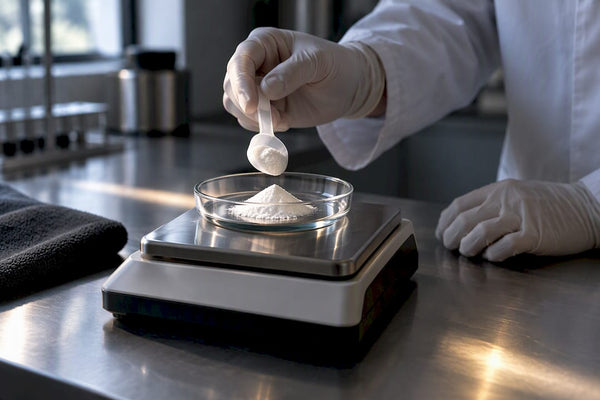
Start with the measured amount of powder rather than a vague scoop. Suppose your label lists 24g protein per 30g powder and you use 60g powder in a recipe. That powder contributes an estimated 48g protein to the whole batch. These numbers are an illustrative label example, not the specification of a stocked product.
If you divide the batch into six equal portions, the powder contributes about 8g protein per portion. Add the protein from the other ingredients separately. Milk, eggs, yoghurt, oats and other additions may contribute too; use their labels or a suitable food-composition entry.
The calculation is 60 divided by 30, multiplied by 24, then divided by six. It estimates label-based protein per portion, not exact amino-acid availability after cooking. FSANZ explains the per-serving and per-100g basis of nutrition panels.
Portions matter. If you make four large pieces instead of six equal ones, the same powder contributes 12g per piece. If the batter is unevenly divided, the portions will not all contain identical amounts. Weighing the completed batch and the portions can make your food log more consistent.
Keep food safety separate from protein maths
A protein powder ingredient does not make an uncooked recipe safe, preserve a prepared dish or remove the need for refrigeration. Follow the safety requirements of the whole recipe, including eggs, dairy and any other perishable ingredients.
New Zealand Food Safety provides household cooking and storage guidance. Cool and store prepared food appropriately rather than leaving a batch on the bench because the dry powder came from a shelf-stable tub.
For hot drinks, use a cup and stir or whisk. Do not seal hot liquid in a shaker to force lumps out. Texture troubleshooting should never create a spill or pressure hazard. Our guide to a protein hot chocolate that does not clump walks through the method.
Where NZ Supps fits
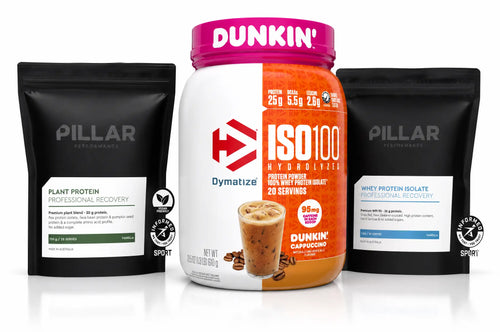
Browse whey protein or plant protein with the intended recipe in mind. Check flavour, ingredients and preparation directions rather than choosing only the largest protein number. You can also keep a powder for cold drinks if you prefer its texture that way; cooking it is an option, not an obligation.
Frequently asked questions
Does microwaving protein powder remove all the protein?
No. Microwaving heats the mixture, and heating can change structure and texture. Use an appropriate recipe and avoid interpreting denaturation as zero protein.
Should I add powder before or after cooking oats?
Adding it after cooking, often dispersed in a little cool liquid, can be a useful texture starting point. Follow the specific recipe and product directions.
Can protein powder replace all the flour?
Do not assume that substitution will work. Use a recipe designed for the intended type and amount of powder.
Can I count the label protein in a cooked recipe?
You can use it to estimate the nutrition contributed by the ingredient. It is not a laboratory measurement of the finished food or its amino-acid availability.
Does a dry protein muffin mean the protein was destroyed?
No. An unappealing texture is not evidence that the protein disappeared. Review the recipe proportions and cooking method.
Can I shake protein powder into hot milk?
Do not put hot liquid in a sealed shaker. Use a suitable cup and stir or whisk, following the product directions.
Sources
Deng et al.: heat treatment and beta-lactoglobulin digestion
Desrosiers and Savoie: whey heated with sugar