SHOP NOW, PAY LATER











 Informed Sport
 Informed Choice
 NSF Certified for Sport
 HASTA Certified

Whether pre workout breaks a fast depends on the label, not the category name. A zero-kilojoule caffeine-only formula is unlikely to break a calorie-focused fast, but a flavoured, amino-loaded, or carbohydrate-containing pre-workout usually will.
Table of Contents
- The Quick Answer Before Anything Else
- What Breaking a Fast Actually Means
- Each Pre-Workout Ingredient and What It Does to a Fast
- How to Read the Label on an NZ Pre-Workout
- NZ Pre-Workouts Worth a Look During a Fast
- Practical Rules for Training in a Fasted State
- What Drug-Tested Athletes in NZ Should Look For
- A Simple Decision Framework Before You Sip
The Quick Answer Before Anything Else
The blunt answer is this, check the label, not the tub. If the formula is basically caffeine plus non-caloric helpers, it's usually compatible with a calorie-focused fast. If it contains carbohydrate, sugar, protein, amino acids, milk ingredients, or meaningful kilojoules, it breaks a strict fast.
That's the part most advice gets wrong. People talk about "pre-workout" like it's one thing, but the fasting result comes down to what the scoop contributes. New Zealand guidance frames intermittent fasting as alternating fasting and non-fasting periods, not as a magical state that every supplement either preserves or destroys, and it does not set a universal calorie line where every fast ends.
So read this like a label-checking job, not a philosophy debate. If your goal is fat loss, you care about energy intake. If your goal is autophagy-style fasting, you need to be much stricter. If you train in a fasted window, you also need to think about total stimulant load across the day.
You'll get a straight answer for each fasting goal, a breakdown of the ingredients that matter, a label-reading method for NZ products, a few real product styles to compare, and a practical note for drug-tested athletes. No scare talk, no supplement folklore, just the parts that actually decide the issue.
What Breaking a Fast Actually Means
Many people use “fasting” as if it only means one thing. It doesn't. A pre-workout can leave one fasting goal untouched and wreck another, which is why blanket advice online is so messy.
Think of it as four separate locks. One lock is calories, one is insulin and blood glucose, one is autophagy-style strict fasting, and one is keeping training performance steady without food. A product might leave the calorie lock shut, but still open the insulin or autophagy lock if it brings in amino acids or other active ingredients.
Calorie lock
If your fasting rule is “keep energy intake out of the window”, then kilojoules matter first. New Zealand's retail labelling expects you to check the Nutrition Information Panel for energy, carbohydrate, sugars, protein, fat, and sodium per serve, and per 100 g or 100 ml where relevant. A product with measurable energy technically ends a strict zero-calorie fast.
Insulin lock
If you're aiming to keep blood glucose and insulin steady, the ingredient list matters just as much as the energy line. Amino acids are the big watch-out here, especially when they're added as free-form ingredients rather than coming from a full meal. That's why a tub can say “zero sugar” and still not suit a strict metabolic fast.
Autophagy lock
If you're treating fasting as a very strict clean window, then you need the harshest rule set. That means water-only logic, or close to it. Anything beyond that starts to shift the game from “fasting” into “modified fast”.
Muscle and training lock
If your main target is gym performance while training without food, a caffeine-based pre-workout may still fit. That doesn't mean every scoop does. It means the ingredient profile decides whether it stays in your lane or not.
Practical rule: the label decides which lock the product opens, not the word “pre-workout” on the front.
Each Pre-Workout Ingredient and What It Does to a Fast
Kilojoules and serving size
Start with the energy line. If a pre-workout has kilojoules listed, it's contributing something, even if the number looks tiny. That matters most when you're keeping a tight calorie window, because the serving you drink is the serving that counts.
NZ shoppers also need to watch the double-scoop trap. If the scoop is one serve but you take two, you've doubled everything on the panel, including energy, carbohydrate, and any amino acids. That's not a label loophole, that's just maths.
Carbohydrate and sugar
Carbohydrate is the clearest fast-breaker in this category. Sugar, dextrose, maltodextrin, and similar carriers add energy and push a pre-workout out of strict fasting territory fast. A “zero sugar” claim doesn't change that if the formula still contains other energy sources.
Protein and amino acids
Protein is obvious, but free-form amino acids deserve special attention. BCAAs and EAAs are the usual culprits, and they matter because they're not just flavour fillers. Amino acids can be relevant to insulin response, so a stimulant-free BCAA product can still conflict with a strict metabolic fast even if it looks clean on the front of the tub.
Sweeteners and flavour systems
Sweeteners are the grey zone. They can make a powder taste sweet without loading it up with the same carbohydrate hit as sugar, but sweetness alone doesn't tell you whether the fast is still intact. Treat sweeteners as a label detail, not a fasting guarantee.
Caffeine
Caffeine itself doesn't provide dietary energy. That's why caffeine-only formulas are the closest thing to a fasting-friendly pre-workout. But caffeine is still a stimulant, not a free pass, and it can matter if you're sensitive to jitters, nausea, reflux, or a racing heart. If you want a plain explanation of that side of the story, why energy drinks cause palpitations is a useful read.
Electrolytes
Electrolytes like sodium, potassium, and magnesium are a different category again. On their own, they're about hydration and mineral balance, not energy. That makes them far easier to fit into a fast than flavour-heavy amino blends.
For a clean NZ label check on caffeine itself, this NZ Supps guide to pre-workout caffeine content in NZ is worth reading once.
How to Read the Label on an NZ Pre-Workout
Forget the marketing panel. The front of the tub is just advertising. The Nutrition Information Panel and ingredient list tell you whether the powder fits your fast.
NZ retail labelling usually shows energy in kilojoules, then carbohydrate, sugars, protein, fat, and sodium, with amounts per serve and per 100 g or 100 ml. That layout is your first filter. If the per-serve energy is not basically negligible, it's not a clean fasting pick.
Here's the order I'd use at the bench.
- Energy per serve. If this is more than negligible, the product isn't a strict fast candidate.
- Carbohydrate and sugars. These are the obvious break points.
- Protein and amino acids. If you see BCAA, EAA, or other amino ingredients, treat it as a non-strict fast product.
- Caffeine per serve. Useful for stimulant planning, but it doesn't tell you whether the product is calorie-free.
- Sweeteners and flavour systems. These can be fine for some fasting goals and a no-go for others.
If a product looks “clean” on the front but the ingredient panel lists amino acids or energy carriers, trust the panel every time.
A simple worked example from a typical NZ-style pre-workout label is enough to show the trap. If the serving says 5 kcal and you double-scoop it, you've turned that into 10 kcal before you've even factored in any extra caffeine or flavour compounds. That doesn't matter much for a loose calorie-controlled window, but it matters if you're trying to keep a strict fast clean.
Use this three-question check before you buy or sip:
- Does the serve list meaningful kilojoules, carbohydrate, protein, or amino acids?
- Am I taking the label dose, or am I doubling it?
- Does my fasting goal allow anything beyond water and plain caffeine?
If the answer to the first question is yes, the product is not a strict fast-friendly option.
NZ Pre-Workouts Worth a Look During a Fast
The right product depends on the fasting goal, not the hype on the front. A high-stim powder can still suit a calorie-controlled window, while a stim-free pump formula is the better call if you want to stay stricter about ingredients.
The table below keeps it simple. I've listed product types NZ shoppers compare, and the key thing to watch is whether the formula stays in the low-energy lane or starts bringing in amino-style extras.
| Product | Caffeine per serve | Approx. kilojoules | Key non-stim actives | Price per serve |
|---|---|---|---|---|
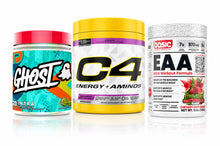
| Cellucor C4 Original | Labelled on pack | Low, but not zero-style in every serving format | Beta-alanine, citrulline-style performance ingredients | Check product page |
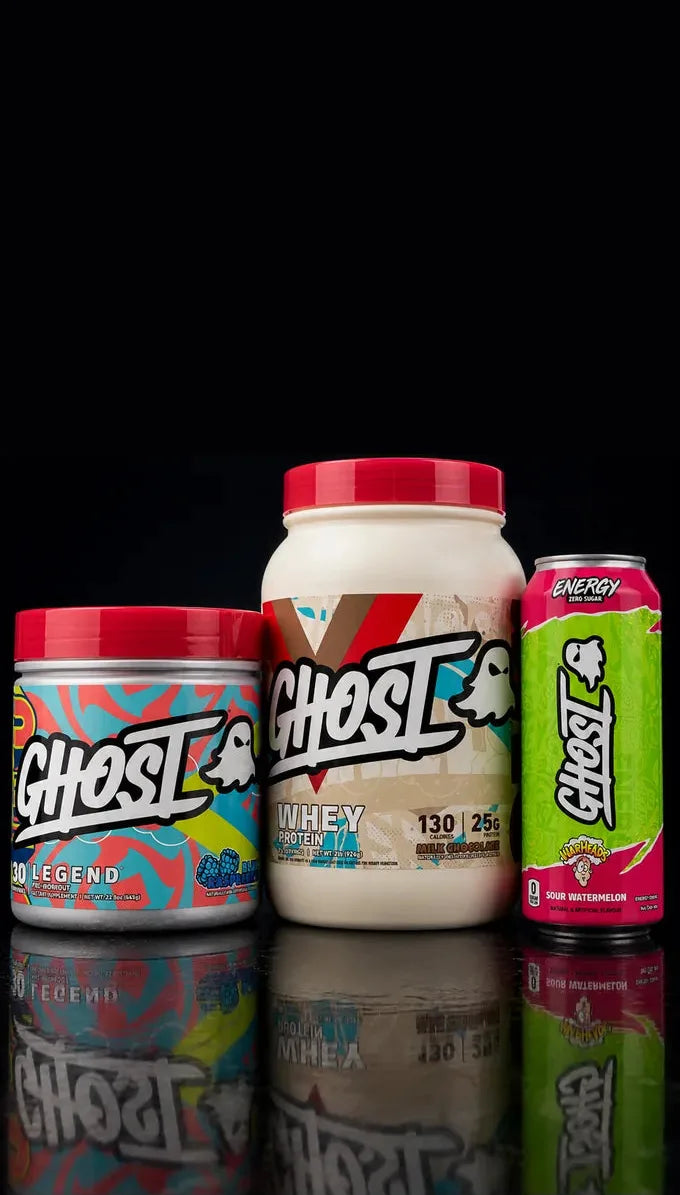
| Ghost Legend | Labelled on pack | Low, but formula-dependent | Pump and focus ingredients, flavour system matters | Check product page |
| CBUM Stim Free | None | Low, formula-dependent | Pump-style non-stim actives | Check product page |
For exact serve details, price, and current label information, use the individual product pages at NZ Supps, including Cellucor C4 Original, Ghost Legend, and CBUM Stim Free. If you want to compare more options by style, compare pre workouts in NZ and read the panel before you buy.
A stim-free pre-workout is the safer choice if you want to avoid caffeine stacking. A caffeine-forward formula makes more sense if your fast is mainly about routine and appetite control, not about staying ultra-strict. If you want the deeper breakdown, this NZ Supps guide to stim-free pre-workout in NZ is the cleanest companion read.
Practical Rules for Training in a Fasted State
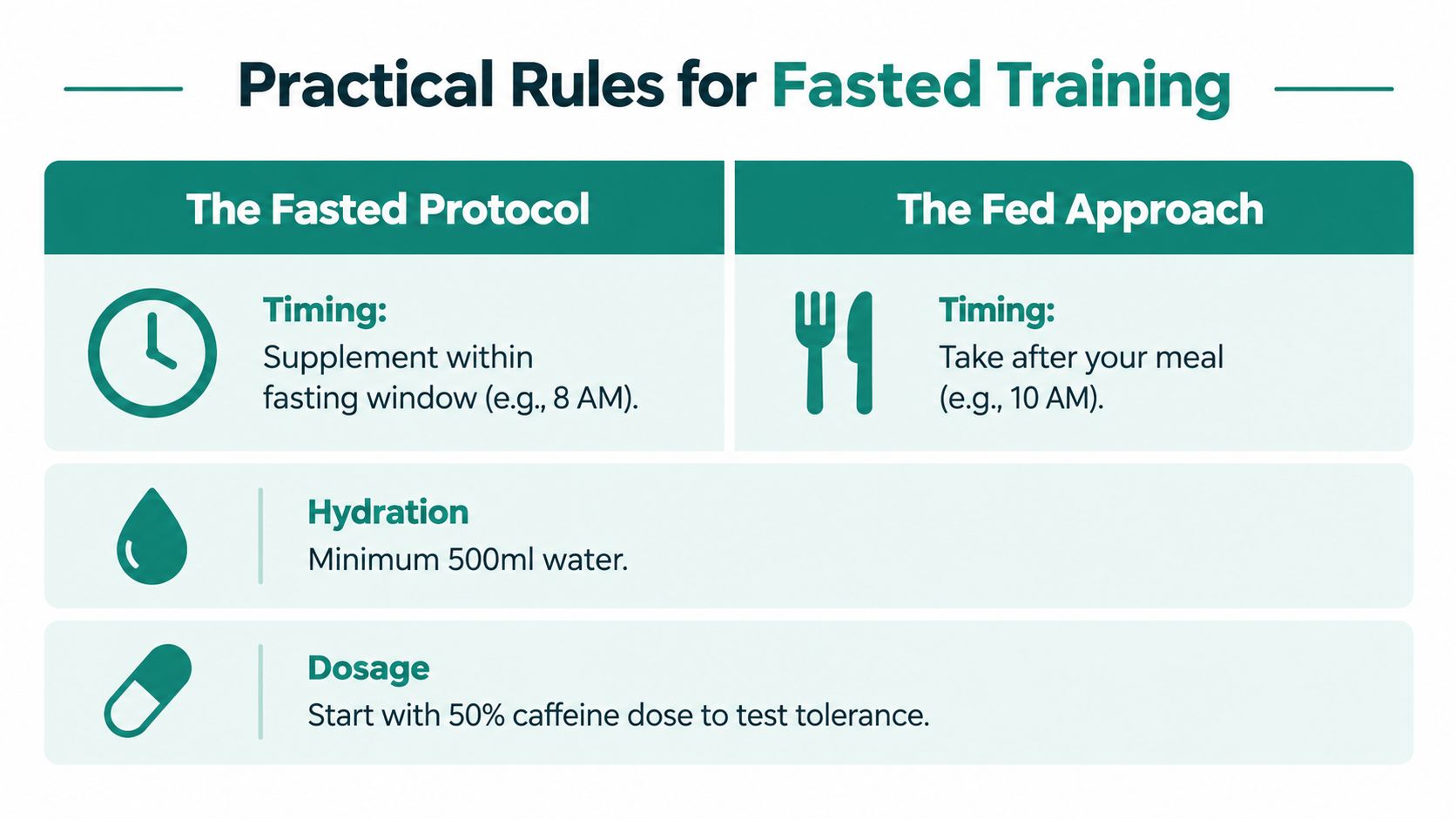
Take the scoop inside the fasting window if that's the plan, but don't pretend every fasted session needs the same dose. If you've never used that exact product without food, start lighter than usual and see how your stomach handles it. Caffeine hits harder for some people on an empty stomach, and that's where the trouble starts.
The NZ research is useful here because it shows caffeine can still work in a fasted setting. Massey University reported that 6 mg/kg caffeine taken about 60 minutes before endurance exercise improved time-trial performance by approximately 1.8% in recreationally trained male athletes, with the second half improving by about 2.4%. A separate University of Auckland study used a 12-hour overnight fast and found caffeine prevented the slowdown in response times after fatiguing exercise. Those are useful performance signals, not a licence to copy the research dose blindly.
For a plain English rule set, use this:
- Do: take the smallest useful caffeine amount first.
- Do: drink water with it.
- Do: count all your caffeine for the day, not just the pre-workout.
- Don't: stack coffee, energy drinks, and a high-stim scoop without thinking.
- Don't: assume the research dose is a normal serving.
- Don't: debut a new formula on a hard training day.
If you want a broader perspective on lifting while fasting, Cartwright Fitness intermittent fasting advice gives a useful lifting-focused angle. Keep the conclusion simple: fasted training works better when you control the stimulant dose, not when you chase the biggest hit.
What Drug-Tested Athletes in NZ Should Look For
For a drug-tested athlete, fasting compatibility is only half the job. The other half is batch testing. A formula can be fast-friendly and still be a bad bet if it isn't independently screened for contamination risk.
That's why Informed Sport, Informed Choice, NSF Certified for Sport, and HASTA matter. Those batch-testing systems don't make a product magical, but they do reduce risk compared with a generic tub that hasn't been independently checked. A stimulant-free or fully disclosed low-stim formula is usually the safer default when training fasted ahead of a tested event.
NZ shoppers can use the NZ Supps Tested for Sport filter to narrow the field quickly. If a product is on your shortlist, don't stop at the badge. Check the label, check the caffeine amount, and check whether the formula contains amino blends, flavour carriers, or anything else that conflicts with your fasting rule.
New Zealand rules for supplemented foods with caffeine above a level needed for a technological function also require the label to state the average caffeine quantity per serving and per 100 ml or 100 g, plus an advisory statement that the food contains caffeine and isn't recommended for children, pregnant or lactating women, or people sensitive to caffeine. That label detail helps you verify dose instead of guessing from hype words like “high stim”.
Trial it in training. Never debut a new pre-workout on competition day.
A Simple Decision Framework Before You Sip
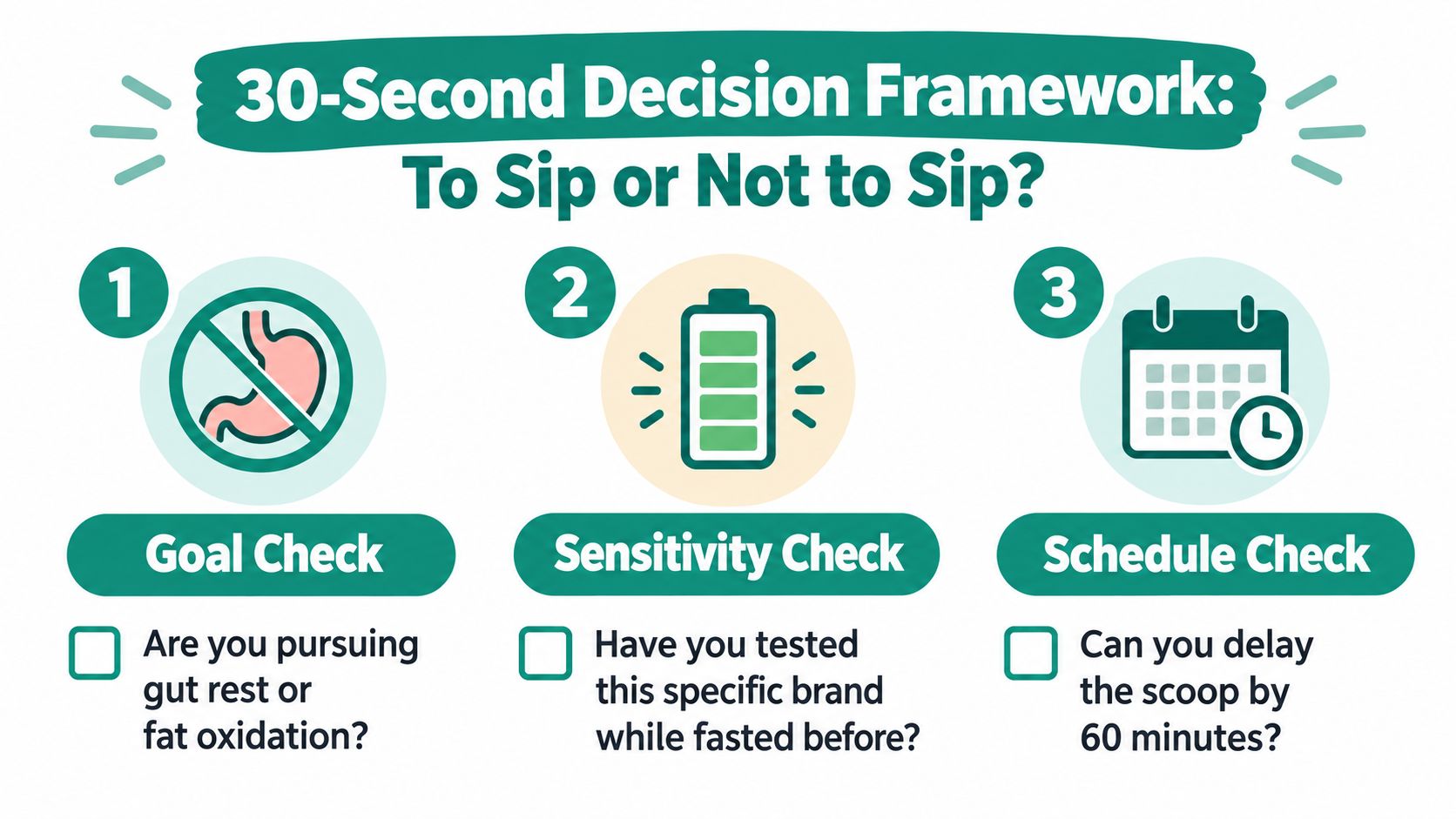
If your fast is water-only, skip the pre-workout unless it's plain caffeine and your rules allow that. If your fast is calorie-controlled but time-restricted, a caffeine-only or very low-energy formula can fit, but the panel still needs to stay clean. If your fast is about insulin control or autophagy-style strictness, don't mess around with amino-loaded tubs or flavour-heavy blends.
The easiest swaps are boring, which is exactly why they work:
- Black coffee
- Unflavoured micronised creatine
- Electrolyte-only mixes
- Fully disclosed low-stim pre-workouts
The habits that cause problems are just as clear:
- Doubling scoops
- Stacking caffeine sources
- Copying experimental doses from research
- Trusting “zero sugar” without checking the rest of the panel
If you want to compare cleaner options beyond pre-workout, browse electrolytes in NZ and match the formula to your fasting rule, not to the marketing line. The answer never comes from the category name, it comes from the label.
If you want a cleaner way to shop this stuff, NZ Supps makes it easy to compare per-serve ingredients, caffeine, and product styles without guessing. Use the label-first approach here, then pick the formula that matches your fast, your training time, and your tolerance.