SHOP NOW, PAY LATER











 Informed Sport
 Informed Choice
 NSF Certified for Sport
 HASTA Certified

Use straps when you need to remove your grip as the weak link but still want your hands doing real work. Use hooks when you need maximum, near-instant assistance and don’t care about training grip at all. Straps reinforce your natural grip by cinching your wrist to the bar, so your fingers still engage but don’t fail first. Hooks replace your grip almost entirely, letting a rigid curve under your fingers carry the load while your hand barely closes.
- Straps fit: deadlifters doing volume work, rowers chasing back fatigue, anyone rehabbing a mild grip issue who still wants some hand engagement.
- Hooks fit: shrug specialists loading heavy weight, lifters with hand injuries or arthritis, athletes who need fast bar transitions in circuits.
- Both fit: strongman competitors and powerlifters who rotate tools depending on whether the day is a strength block or a hypertrophy block.
Pro Tip: Don’t pick one tool for your whole program. Use double-overhand grip on warm-ups, save straps or hooks for your heaviest top sets, and rotate which one you reach for based on whether that week’s goal is loading the target muscle or just surviving volume.
Key Takeaways
Straps reinforce your grip for versatile, high-volume pulling, while hooks replace your grip entirely for maximum assistance and speed.
| Point | Details |
|---|---|
| Default to straps | Use straps for deadlifts, rows, shrugs, and pulldowns when you want your hands still engaged. |
| Reach for hooks | Choose hooks for max shrug loads, hand injuries, or fast transitions in circuit training. |
| Skip both on warm-ups | Train double-overhand on lighter sets to protect long-term grip and shoulder stability. |
| Avoid straps in Olympic lifts | Cleans and snatches need instant bar release, which straps prevent by design. |
| Support recovery with nutrition | Nzsupps’ protein and creatine lines help fuel the extra volume straps and hooks make possible. |
Table of Contents
- Lifting Straps vs Hooks: Comparing the Key Decision Factors
- What Are Lifting Straps and How Do You Use Them?
- What Are Lifting Hooks and When Should You Use Them?
- Which Tool Fits Which Lift?
- Grip Strength, Shoulder Stability, and Safety Notes
- How to Choose the Right Straps or Hooks
- Why I Rotate Between Straps and Hooks, Not Just One
- Gearing Up for Heavy Pull Days
- Sources
Lifting Straps vs Hooks: Comparing the Key Decision Factors
The two tools solve the same problem in opposite ways. A strap reinforces your existing grip by looping around your wrist and the bar, while a hook essentially takes your hand out of the equation. That single mechanical difference explains almost every trade-off below.
Straps win on versatility. You can use the same pair for deadlifts, rows, shrugs, and pull-ups, and they pack flat in a gym bag. Hooks win on speed. Slide your wrist in, hook the bar, lift. There’s no threading, no cinching, no fumbling between sets when you’re racing the clock on a superset.
Comfort splits the two down the middle. Straps put pressure across the back of your wrist and can dig in in high-rep sets if they’re too thin. Hooks concentrate pressure at the cuff and the base of the hook itself, which some lifters find worse under maximal loads. On failure modes, straps can slip on smooth or heavily chalked bars if the material doesn’t match the knurling, while hooks risk metal fatigue at the weld point if they’re cheaply made.
- Setting up straps too loose is the most common mistake. A loose wrap slips mid-set and can cost you a rep or a plate.
- Hooking too far from center on the bar creates uneven loading and can twist your wrist under heavy weight.
- Wearing straps or hooks on every single set, including warm-ups, is a fast way to lose raw grip strength over a training cycle.
Competition rules matter here too. Powerlifting and strongman federations generally ban straps in competition deadlifts and most pulling events, though hooks show up occasionally in strongman medley events. If you compete, train your competition grip without either tool for a chunk of your programming.
What Are Lifting Straps and How Do You Use Them?
A lifting strap is a length of cotton, nylon, or leather webbing that loops around your wrist, wraps around the bar, and cinches tight so the bar pulls into your palm instead of relying on your fingers. Most come in two styles: loop straps, which have a fixed loop you slide your hand through, and lasso straps, which wrap around your wrist like a cinch cord for a more adjustable, snugger fit.
Here’s how to use them correctly:
- Slide your dominant hand through the loop (or wrap the lasso strap around your wrist) so the tail hangs down toward your palm.
- Wrap the tail once or twice around the bar, moving away from your body.
- Tuck the tail under the wrap and pull it snug so there’s no slack between your wrist and the bar.
- Close your hand around the bar and strap together, keeping your grip loose but present.
- After the set, release by rotating your wrist slightly and unwinding the tail.
Straps genuinely earn their reputation for versatility. You can use the same pair on deadlifts, rows, shrugs, lat pulldowns, and rack pulls without changing your setup. Because your hand still closes around the bar, you get better carryover to your target muscles during heavy pulling, and the thumb pressure that makes hook grip miserable simply doesn’t exist. For high-volume back days, straps let you push sets to real muscular failure instead of grip failure.
The downsides are real too. Straps take longer to set up than hooks, which matters in circuits or when you’re racing the clock between exercises. Used on every set of every session, straps can blunt your own grip development over time, since your fingers never have to work hard enough to adapt. And on bars with worn or polished knurling, cheap nylon straps can slip.
Pro Tip: New cotton straps are stiff and slippery for the first few sessions. Break them in by wetting them slightly before a workout. Cotton grips knurling better than nylon once broken in, which is why most powerlifting-focused brands still default to cotton for their heavy-duty straps.
Check stitching at the loop and the tail regularly. That’s where straps fail first, usually fraying after months of heavy use. Hand wash and air dry rather than tossing them in a machine wash, since heat and agitation break down cotton fibers faster. Replace a strap the moment you see thread pulling loose at a seam.
What Are Lifting Hooks and When Should You Use Them?
A lifting hook is a rigid metal or composite hook mounted on a padded wrist cuff. Instead of your fingers gripping the bar, the hook slides underneath it and carries the load directly, while your hand does little more than stabilize position. The cuff transfers force to your wrist and forearm rather than your fingers, which is exactly why hooks feel so different from straps under heavy weight.
Setting them up takes seconds:
- Strap the cuff snugly around your wrist, tight enough that it won’t rotate under load.
- Position the hook so it sits just below the bar, angled slightly forward.
- Keep your wrist in a neutral, straight line rather than bent back or to the side.
- Hook the bar and lift, letting the rigid hook carry the pulling force.
- Release by tilting your wrist forward slightly to unhook, ready for the next rep or transition.
Hooks are the fastest grip aid on the market for setup, and they offer maximum assistance when your fingers physically can’t close hard enough to hold the bar, whether from fatigue, arthritis, or a hand injury. Lifters coming back from a broken finger or a hand surgery often lean on hooks specifically because they don’t require full finger flexion. High-rep shrug work is another obvious fit, since hooks remove grip fatigue from the equation entirely.
The trade-off is carryover. Because your fingers barely engage, hooks offer close to zero grip strength benefit compared to straps or bare-handed pulling. Under very heavy loads, the cuff can dig into the wrist and create a genuine pressure point, and hooks feel awkward on movements like pull-ups or thick-bar work where there’s no clean angle for the hook to sit.
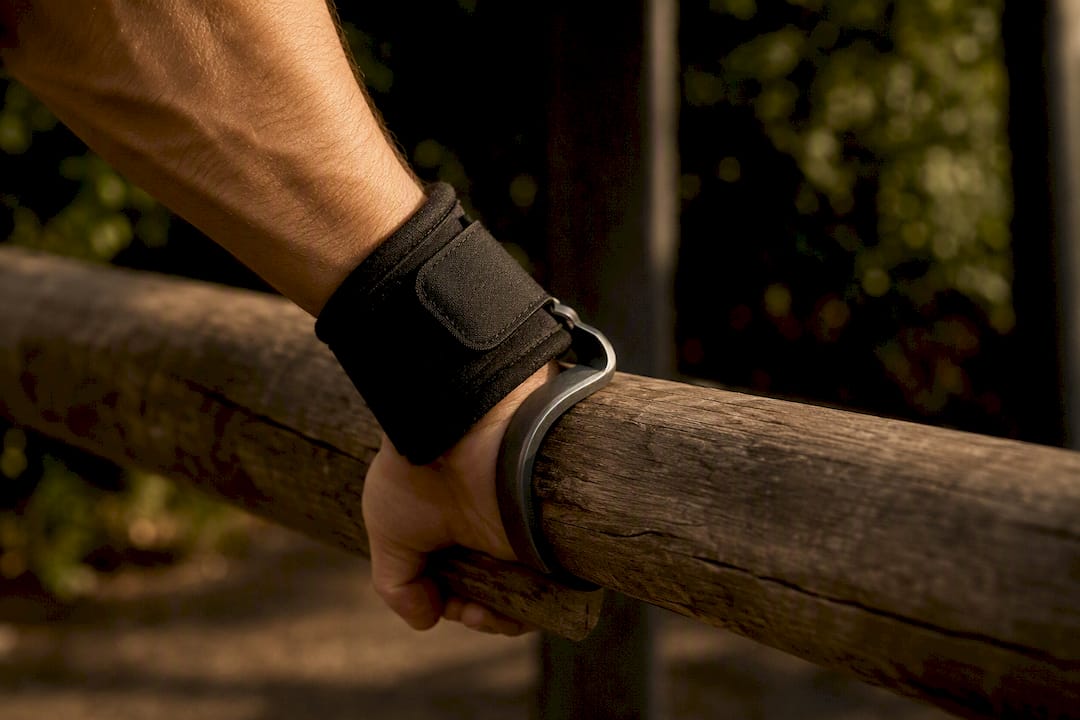
Pro Tip: Wrist impingement almost always comes from hooking the bar at the wrong angle. Keep your wrist straight, not cocked back, and position the hook so the load pulls straight down through your forearm instead of at a diagonal. If your wrist bends noticeably under load, the hook is positioned wrong, not your form.
Inspect the hook itself every few months for cracks or bending at the base, especially on budget models with thin metal. Check the cuff padding for compression or tearing, since flattened padding is what causes wrist pain to show up in the first place. Replace immediately if you see any hairline cracks near the weld.
Which Tool Fits Which Lift?
Deadlifts: Train double-overhand or mixed grip on lighter sets to build raw grip strength, then bring in straps for volume work or hooks for true one-rep max attempts where grip absolutely cannot be the limiter.
Rows and shrugs: Straps generally win here because rows benefit from higher rep ranges where grip fatigues fast. Hooks make more sense for lifters managing a hand injury or doing extended isometric holds at the top of a shrug.
Pull-ups and pulldowns: Straps work well for weighted pull-ups once bodyweight reps are no longer the limiting factor. Hooks feel awkward here since there’s rarely a clean bar angle to hook against.
- Use hooks for fast circuit transitions between shrugs and rows.
- Skip both tools on deadlift warm-up sets to keep training your natural grip.
- Avoid straps entirely on Olympic lifts.
Olympic lifts: Straps are a poor fit for cleans and snatches because the bar needs to release instantly at the top of the pull, something a cinched strap actively prevents. Most Olympic lifters use hook grip instead, wrapping the thumb under the fingers for a secure hold that still allows a fast release.
Grip Strength, Shoulder Stability, and Safety Notes
Coaching guidance from Starting Strength warns that leaning on straps or hooks for every set creates a mismatch: your back muscles keep getting stronger while your grip and stabilizer muscles stall out. Over a long enough training cycle, that gap shows up as a real weak point, not just an inconvenience.
There’s a physiological reason this matters beyond just grip. Peer-reviewed research connects grip strength to shoulder and rotator cuff function, suggesting your hands and your shoulder stabilizers are more linked than most lifters assume. Neglect one and the other can quietly lose ground too.
Grip strength and shoulder stabilizer function appear mechanistically linked, which means training tools that remove grip demand entirely, used without limits, can slow adaptation in stabilizing muscles you’ll need for injury-free heavy lifting down the road.
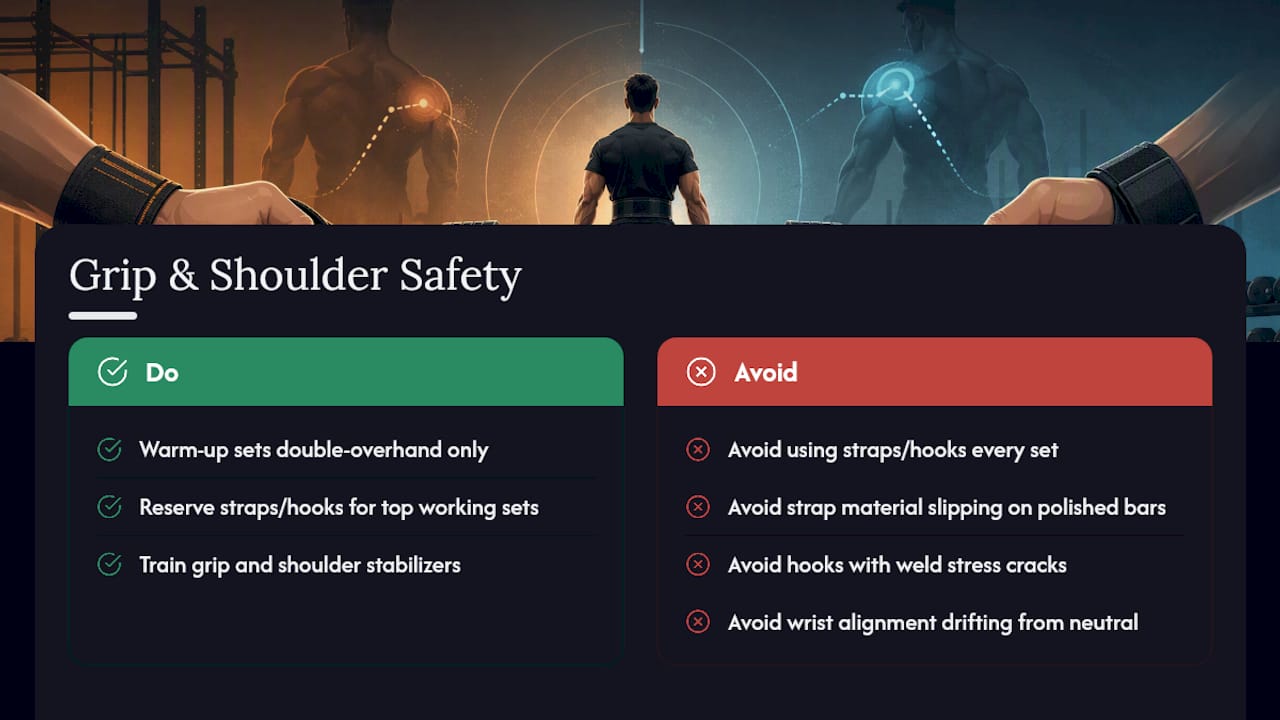
Watch for these failure points regardless of which tool you use: wrist alignment drifting out of neutral under hooks, cuff pressure building over long sets, hook welds showing stress cracks, strap material slipping on polished bars, and mismatched bar diameters that neither tool was designed for.
Pro Tip: Set a simple rule and stick to it: warm-up sets are always double-overhand, no exceptions. Save straps or hooks strictly for your top working sets. That one rule alone protects most of your grip development over a full training year.
How to Choose the Right Straps or Hooks
Material and length matter more than most buyers realize. Cotton straps grip knurling better than nylon but wear out faster; nylon lasts longer but can slip on worn bars. Look for double or triple stitching at the loop, since that’s the first place a cheap strap fails. For hooks, check that the jaw shape matches your typical bar diameter, and make sure the cuff padding is thick enough that you won’t feel the wrist pressure on your third heavy set.
- Choose padded, double-stitched straps over thin single-layer versions, which fray within months of regular use.
- Avoid hooks with visibly rough or unfinished aluminum edges. That’s a sign of corner-cutting in manufacturing.
- Check for a return policy or warranty before buying online. Reputable brands stand behind stitching and weld quality.
- Skip cheap padding on cuffs. It compresses fast and stops protecting your wrist within weeks.
If you’re buying your first grip aid, start with a versatile pair of padded loop straps. They cover deadlifts, rows, shrugs, and pulldowns in one purchase. Add hooks later only if you’re managing a hand injury, chasing max shrug loads, or need faster transitions in circuit-style training.
Why I Rotate Between Straps and Hooks, Not Just One
I reach for straps on volume days when the goal is fatiguing my back, not testing my grip. Hooks come out on heavy shrug days or when a hand niggle makes closing my fist painful. One recent session had both: straps for rows, hooks for a shrug finisher where grip would’ve ended the set two reps early.
Gearing Up for Heavy Pull Days
Whichever tool you land on, what happens after the set matters just as much. Heavy pulling sessions with straps or hooks tend to run longer, since you’re pushing target muscles past the point grip alone would allow, and that extra volume demands real recovery support.
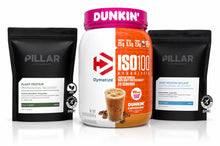
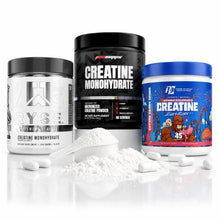
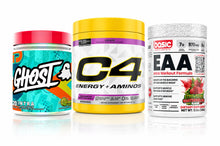
Nzsupps stocks the protein and creatine that back up the extra training volume straps and hooks make possible, plus hydration and pre-workout options to keep your sessions consistent. If you’re loading up on padded loop straps or a hook set from your usual gear supplier, pair that purchase with a protein isolate suited to your recovery needs after high-volume back and pull days. Check the product page for serving details and storage instructions before you buy, and look at Nzsupps’ return policy if you’re trying a flavor or format for the first time.
Sources
- Hook grip vs. straps | Starting Strength
- Wrist straps vs wrist wraps | Eleiko
- PMC article on grip strength and upper-limb function
- Lifting hooks vs straps: Which grip tool wins for barbell training? Dumbbells Direct