SHOP NOW, PAY LATER












 Informed Sport
 Informed Choice
 NSF Certified for Sport
 HASTA Certified

Tart cherry helps with recovery, but only in specific situations, not as a blanket fix. The strongest evidence points to reduced muscle soreness and faster neuromuscular recovery when athletes pre-load for several days around a high-demand event, like a tournament or a heavy training block. Effects on strength and inflammation markers are real in some trials but inconsistent across others. Watch the sugar and calorie load in juice forms, and treat this as a short-term tool rather than a daily habit.
TL;DR:
- Tart cherry supplementation shows the most consistent benefits for reducing muscle soreness and accelerating neuromuscular recovery within 24 to 96 hours post-exercise, especially when pre-loaded for 5 to 7 days.
- Its effectiveness appears more pronounced following eccentric-heavy exercise and during high-stress periods like tournaments or intense training blocks, rather than in regular low-load training.
- Molecular research confirms anthocyanins in tart cherries interact with inflammatory and oxidative pathways, but cellular changes do not always translate into immediate functional improvements.
- Optimal dosing involves multi-day pre-loading rather than single doses, with careful attention to polyphenol content, serving size, and caloric load, especially with juice forms.
- Tart cherry works best as part of a periodized recovery strategy during high-demand phases and should be paired with other recovery nutrition instead of used year-round.
Table of Contents
- What Do Trials and Reviews Say About Tart Cherry Juice for Muscle Recovery?
- How Does Tart Cherry Reduce Inflammation and Soreness?
- How Much Tart Cherry Should You Take and When?
- Should You Choose Tart Cherry Juice, Concentrate, or Powder?
- Which Athletes Benefit Most From Tart Cherry Supplementation?
- Is Tart Cherry Safe? What Are the Limitations of the Research?
- How Do You Trial Tart Cherry and Know If It’s Working?
- NZ Supps’ Take on Recovery Products and Tart Cherry Use
- Why Periodized Use Beats the “Take It Every Day” Advice
- Ready to Build Your Recovery Stack?
- Key Research on Tart Cherry and Recovery
- Sources
- FAQ
What Do Trials and Reviews Say About Tart Cherry Juice for Muscle Recovery?
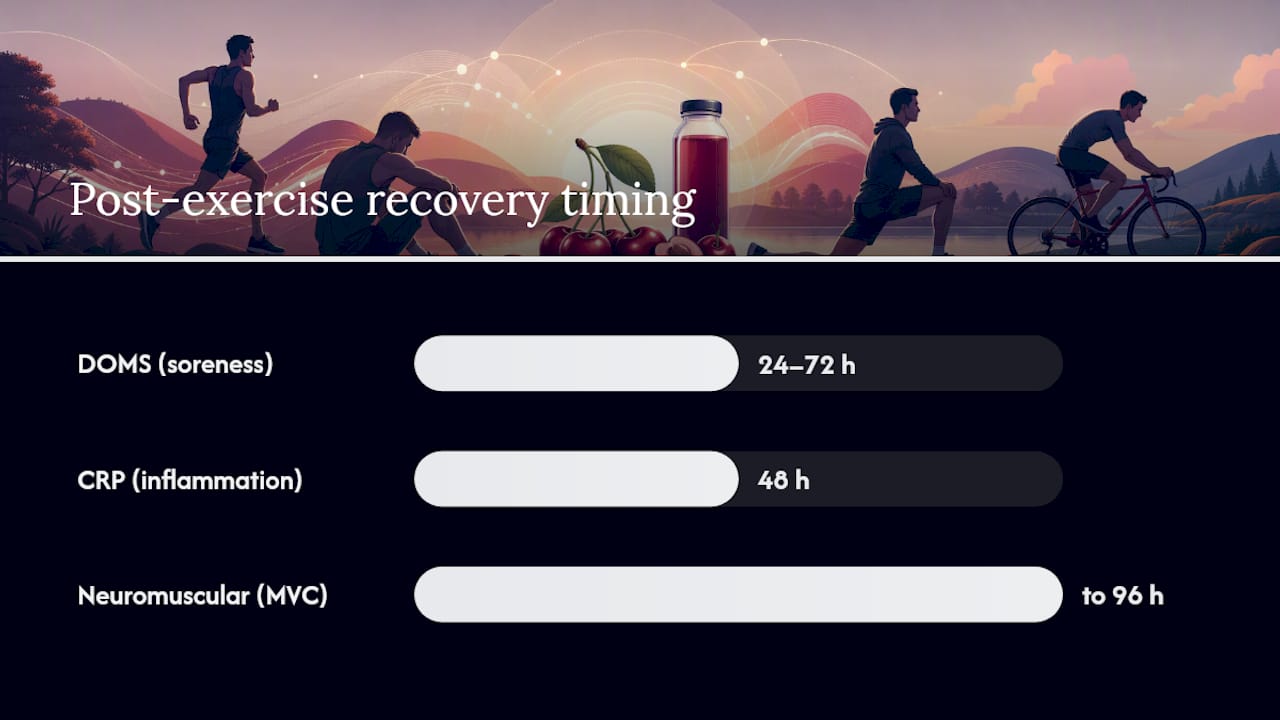
The most repeatable finding across tart cherry research is a reduction in delayed-onset muscle soreness, typically measured in the 24 to 72-hour window after hard exercise. That timing matters because it’s exactly when soreness peaks and interferes with training quality. Beyond soreness, the picture gets more complicated, and understanding why requires looking at what different trials actually measured.
One trial found that tart cherry juice supplementation improved neuromuscular recovery, specifically maximum voluntary contraction (MVC), across time points extending to 96 hours post-exercise, and it was linked to lower C-reactive protein (CRP) in the first 48 hours. That’s a meaningful signal: strength returning faster and a common inflammation marker dropping sooner than in a placebo group. But not every study finds the same thing.
A separate body of research found evidence for tart cherry’s effect on DOMS to be genuinely mixed. Some trials show significant reductions in perceived soreness, while pooled data across different exercise protocols comes out inconsistent. The honest conclusion from that work is that tart cherry functions as a context-dependent adjunct rather than something that works the same way for every athlete in every situation.
Why the inconsistency? A few factors keep showing up:
- Exercise model varies widely. Eccentric-heavy protocols (downhill running, drop jumps) stress muscle differently than steady-state cardio, and tart cherry’s benefit seems to track more closely with eccentric damage.
- Dosing and form differ between studies. Some use whole juice, others concentrate or powder, and the actual polyphenol content per serving is rarely standardized.
- Timing protocols aren’t uniform. Pre-loading for a week versus starting on race day produces different plasma phenolic levels.
- Sample sizes are often small. Many trials run 10 to 20 participants, which makes it easier for a few high or low responders to skew results.
- Comparator matters. A 2024 trial on cyclists found tart cherry juice performed no differently than a standard sports drink for some recovery and performance outcomes, which tells you the benefit isn’t universal even within endurance sport.
A narrative review pulling together this evidence lands on a similar takeaway: benefits are most repeatable for soreness and perceptual recovery in that 24 to 72 hour window, with the review recommending scenario-based use rather than constant supplementation.
Quick stat check: Neuromuscular recovery improvements have been tracked out to 96 hours post-exercise, and CRP reductions have shown up as early as 48 hours in trial data, according to the same PubMed-indexed research. That’s a tighter recovery window than many athletes assume tart cherry needs to work.
How Does Tart Cherry Reduce Inflammation and Soreness?
Tart cherries are dense in anthocyanins and other polyphenols, plant compounds that give the fruit its deep red color and appear to do real biochemical work once absorbed. These compounds reduce oxidative stress and interact with inflammatory signaling pathways that get activated after muscle-damaging exercise. That’s the theoretical basis for why soreness and some biochemical markers respond to supplementation.
Recent molecular research adds a layer of nuance here. A 2026 trial using 7 days of tart cherry pre-loading found measurable changes in the skeletal muscle proteome and macrophage infiltration, meaning the supplement was doing something detectable at the cellular level. But that same study did not find accelerated muscle function recovery. The muscle was responding biologically, but that response didn’t translate into faster strength return in that particular protocol.
That gap between molecular change and functional outcome is worth sitting with. It tells you three things:
- Mechanism plausibility is strong: anthocyanins clearly interact with inflammatory and oxidative pathways in measurable ways.
- Molecular change doesn’t guarantee a performance win. Cells adapting is not the same as an athlete jumping higher or lifting more 48 hours later.
- Pre-loading raises plasma phenolic metabolites, including compounds like hippuric acid, that correlate with strength measures in some datasets, which supports why timing (not just dose) shapes outcomes.
The practical lesson: tart cherry has a defensible biological story, but that story doesn’t automatically promise a stopwatch-level result every time. It explains why the human trials are mixed rather than uniformly positive, and it argues for testing the supplement in your own training rather than assuming guaranteed benefit.
How Much Tart Cherry Should You Take and When?
Researchers haven’t landed on one universal number, but the pattern across trials is consistent enough to build a practical approach. Most positive results come from pre-loading for several days before the demanding event, not from taking tart cherry only after the fact.
- Pre-load duration: Trials showing benefit commonly start supplementation 5 to 7 days before a race, match, or heavy training session, sometimes continuing for a day or two afterward.
- Why pre-loading works better than post-only dosing: it takes time to build up plasma phenolic metabolites to levels associated with reduced oxidative stress and inflammation. A single dose the morning of competition doesn’t give your body that runway.
- Continuation window: Some protocols extend supplementation for 24 to 48 hours after the event, matching the window where CRP reductions and soreness improvements are most often observed.
- No single magic number: Because juice concentration, powder potency, and anthocyanin content vary by brand, matching a specific milligram target across products isn’t realistic. Match the form to your goals instead of chasing an exact number.
Quick stat check: MVC (maximum voluntary contraction) improvements have been documented up to 96 hours after exercise in trials using pre-load protocols, reinforcing that the timing window extends well past the day of competition.
One study using a tart cherry extract taken for several days prior to resistance exercise found reduced markers of oxidative stress and creatine kinase, along with preserved handgrip strength compared to placebo, in a powdered extract protocol. That result matters for anyone weighing juice against a more concentrated form, which the next section breaks down.
The takeaway for timing: think in terms of a multi-day window bracketing your hardest training block or competition, not a single serving. Precision on the exact dose matters less than consistency across those days.
Should You Choose Tart Cherry Juice, Concentrate, or Powder?
Form matters more than most athletes assume, mostly because of calories and consistency. Juice was the form used in many of the earliest and most cited trials, so it has the deepest evidence base behind it. But it’s also the least convenient option if you’re tracking calorie intake or trying to standardize your dose.
- Juice: Palatable and directly backed by a large share of the clinical trial data, but calorie-dense, often 150 to 200 calories per serving, and sometimes includes added sugar depending on the brand.
- Concentrate: More potent per milliliter, so smaller servings can match the polyphenol content of a larger juice serving, which helps if you’re managing total sugar intake.
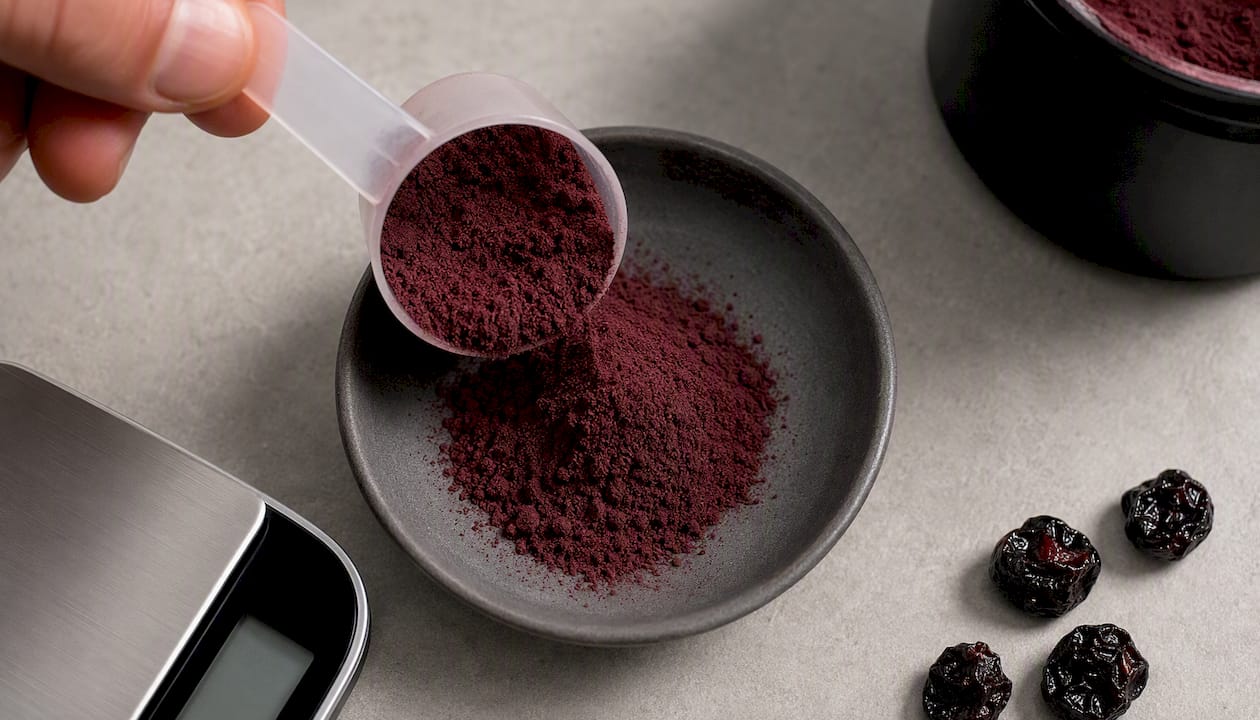
- Powdered extract: Easiest to standardize across days, generally lowest in calories, and practical for weight-class athletes or anyone managing energy balance carefully. One trial using a 500 mg powdered extract dose found reduced muscle damage markers and preserved strength over a 7-day pre-load, which suggests powders aren’t a lesser option, just a different delivery method.
When you’re reading labels, three things matter more than the marketing copy on the front of the bottle:
- Anthocyanin or polyphenol reporting. If a label doesn’t state polyphenol or anthocyanin content, you’re guessing at dose.
- Serving size relative to trial doses. A serving that’s half the size used in the research won’t necessarily produce half the benefit; it might produce none.
- Sugar content per serving, especially for juice and concentrate blends marketed as recovery drinks.
Pro Tip: If you’re stacking tart cherry with other recovery supplements, a low-calorie powder gives you more room in your daily intake for a protein shake or BCAA blend without stacking excess sugar on top of sugar.
Which Athletes Benefit Most From Tart Cherry Supplementation?
Tart cherry earns its keep during specific windows, not as a year-round staple. The scenarios where trial evidence lines up best all share one trait: back-to-back physical stress with limited recovery time between sessions.
- Tournament and congested fixture schedules. Team-sport athletes playing multiple matches within days, where soreness accumulates faster than normal training allows for full recovery.
- Travel-heavy competition blocks. Road cyclists and athletes competing across consecutive days benefit from the same short recovery windows where tart cherry’s soreness and CRP effects have shown up in trials.
- Peak competition windows for elite and semi-pro athletes. Many road cyclists and team-sport competitors trial tart cherry specifically during championship or playoff stretches, not during base training.
- Heavy eccentric-loading blocks, like a strength cycle emphasizing negatives or a trail race with significant downhill running, where muscle damage is more pronounced.
Where it’s less useful: regular, low-load training weeks where the goal is adaptation, not just survival. This is where the adaptation-blunting theory becomes relevant. Chronic, high-dose antioxidant supplementation might interfere with the body’s own signaling that drives training adaptations, since some oxidative stress is a normal part of getting stronger. That theoretical concern is one reason periodized use, on during high-pressure stretches, off during base building, makes more sense than daily use for months on end.
Is Tart Cherry Safe? What Are the Limitations of the Research?
Tart cherry is generally well tolerated, but a few practical issues deserve attention before you build it into a routine.
- Calories and sugar. Juice-based products can add 150 to 200 calories and meaningful sugar per serving, which matters if you’re cutting weight or tracking intake closely. Powdered extracts sidestep most of this.
- The adaptation-blunting question. Some researchers raise a theoretical concern that chronic, high-dose antioxidant intake could dull the very inflammatory signals your body uses to adapt to training. This is a reason to favor short, targeted pre-loads over indefinite daily use.
- Interactions and individual response. As with any polyphenol-rich supplement, people respond differently, and anyone on medication affecting inflammation or blood clotting should check with a healthcare provider before adding a new supplement regimen.
The research itself has real gaps. Study designs vary in exercise model, dose, and timing, which makes cross-study comparison difficult. Sample sizes tend to be small, often under 20 participants per arm, and polyphenol content reporting is inconsistent from one trial to the next. Reviews synthesizing this literature have specifically called for standardized reporting of polyphenol content and harmonized recovery windows to make future comparisons cleaner.
Pro Tip: If you’re unsure whether tart cherry is doing anything for you personally, run it only during a defined high-stress block, like a tournament week, rather than year-round. That’s the only way to isolate its effect from normal training fluctuation.
How Do You Trial Tart Cherry and Know If It’s Working?
Testing tart cherry on yourself doesn’t require a lab, just a short, structured trial and a couple of objective measures you already have access to.
- Pick your window. Use a 5 to 7 day pre-load before a tournament, competition, or planned heavy training block. If you’re short on time, a 3-day protocol starting immediately before the stress period is a reasonable-compressed version, though evidence is thinner for shorter windows.
- Establish a baseline. Before starting, record a simple DOMS rating (0 to 10 scale), a countermovement jump (CMJ) height or a basic strength benchmark like MVC, and your typical session RPE for a standard workout.
- Supplement consistently through the window. Stick to the same form and timing daily rather than switching products mid-trial, which muddies your ability to judge the response.
- Re-test at 24, 48, and 72 hours post-event. Compare DOMS scores, jump height, and how your training sessions felt (RPE) against your baseline and, ideally, against a similar high-stress period where you didn’t supplement.
- Apply a simple decision rule. If soreness scores drop faster, jump height or strength returns closer to baseline sooner, or you complete a higher percentage of planned training sessions during the trial window, continue using it periodically. If none of those move, it’s reasonable to conclude tart cherry isn’t giving you a personal edge worth the cost and calories.
Quick stat check: The 24 to 72 hour window keeps showing up across the research because that’s when both perceptual soreness and neuromuscular measures like MVC show the most trial-documented movement, with some MVC effects tracked to 96 hours.
This kind of single-microcycle test, paired with objective measures like CMJ or MVC, gives you actionable evidence about how your body specifically responds, which matters more than any population-level average.
NZ Supps’ Take on Recovery Products and Tart Cherry Use
Nzsupps focuses on performance and recovery nutrition, and tart cherry protocols fit into a broader recovery stack rather than standing alone. Athletes running a pre-load week ahead of competition often pair it with a complementary amino or protein product to support the same muscle repair process from a different angle. A BCAA recovery blend or a clean protein source can round out the nutritional side of a recovery week without adding unnecessary sugar load.
If you’re evaluating a tart cherry product, whether standalone or as part of a stack, the same label checks apply across any recovery supplement: does it report actual polyphenol or active ingredient content, what’s the serving size relative to what trials actually used, and how many calories are you taking on per dose. Some retailers provide transparent ingredient listings across their product catalogs to help consumers compare supplements without guessing.
This article is informational, not a substitute for individualized nutrition advice. It’s meant to help you evaluate tart cherry with the same scrutiny you’d apply to any supplement claim, using what trials actually measured rather than marketing language on a label.
Why Periodized Use Beats the “Take It Every Day” Advice
The conventional wisdom on tart cherry treats it like a vitamin: take it daily, forever, for general health. The evidence doesn’t support that framing. What the trials actually show is a tool that earns its place during specific stretches of high recovery demand, then should probably step back during normal training.
That’s a harder sell than “drink this every morning,” but it’s the more honest read of the research. The mixed DOMS results and the null finding in the 2026 proteome study both point to the same conclusion: tart cherry isn’t a guaranteed win, it’s a probabilistic edge that shows up more reliably in some contexts than others.
What should you prioritize first? Skip the debate over exact dosing and focus on timing and monitoring instead. Run a short trial during your next high-pressure competition block, track soreness and a simple strength or jump test, and let your own data decide whether it stays in your routine. That beats guessing based on what worked for someone else’s training schedule.
— Blake
Ready to Build Your Recovery Stack?
If tart cherry earns a spot in your routine, it works best alongside the rest of your recovery nutrition, not as a replacement for it. Certain suppliers offer recovery-focused products with labels that clearly show serving size, active ingredients, and calorie counts, allowing consumers to assess whether a product aligns with trial dosages.
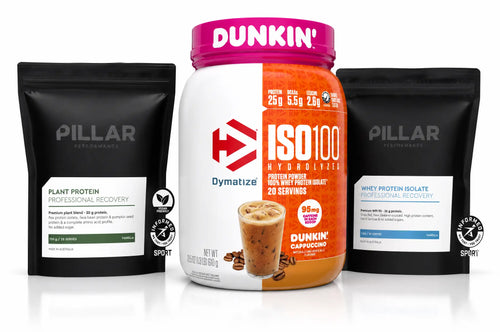
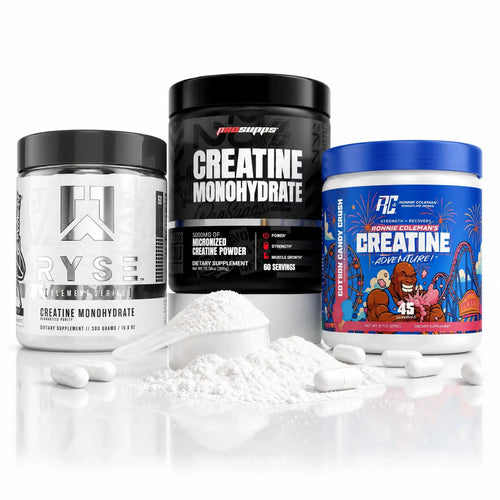
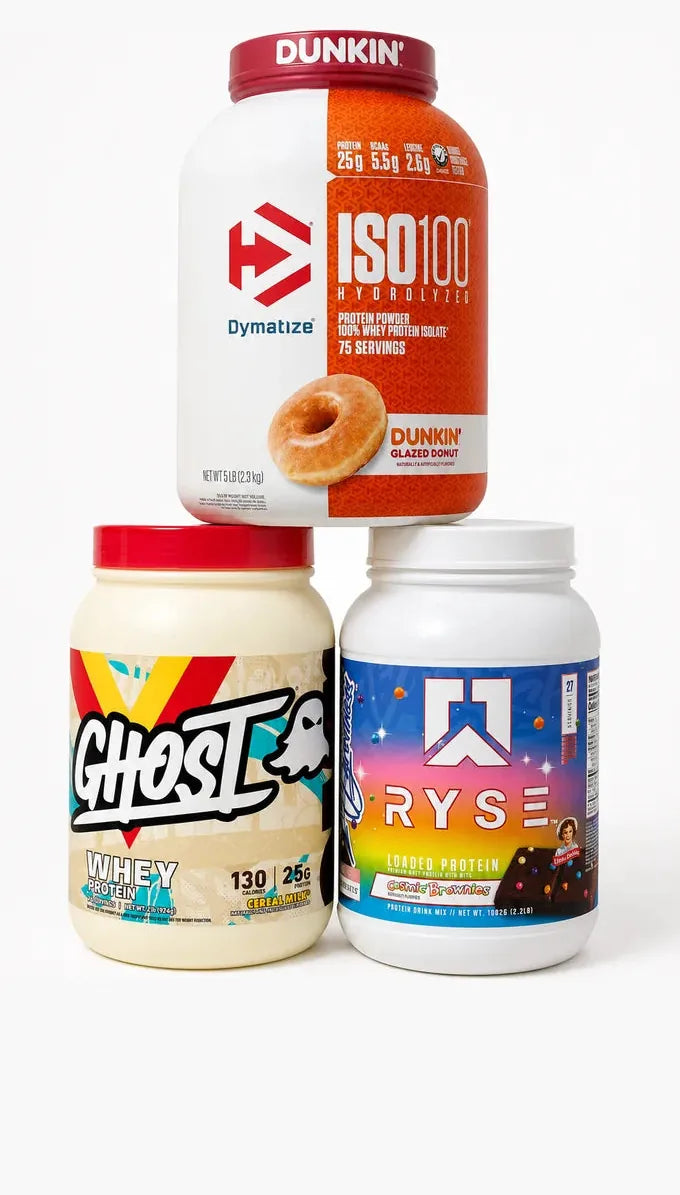
When you’re checking out a recovery product, apply the same label checks covered above: does it disclose polyphenol or active compound content, what’s the calorie load per serving, and does the dose line up with what’s shown to work in trials. Beyond tart cherry itself, pairing a pre-load window with a solid protein source like Dymatize ISO100 or a creatine product for strength maintenance rounds out a complete recovery approach during your heaviest training or competition blocks. Browse the full recovery and supplement range and build a stack around what your own trial data tells you actually works.
Key Research on Tart Cherry and Recovery
The findings in this article draw on a mix of randomized trials, narrative reviews, and recent molecular research:
- PubMed record (ID 41945263) on neuromuscular recovery and CRP reduction
- PubMed record (ID 41956499) on mixed DOMS outcomes
- “Precovery” versus recovery review (PMC9306613) on scenario-based, periodized use
- Frontiers 2026 proteome study on molecular changes without accelerated function
- PLOS One 2024 cycling trial comparing tart cherry to a sports drink
- Journal of the International Society of Sports Nutrition study on powdered extract dosing
- Broader recovery supplement overview for additional context on the recovery supplement category
Sources
- PubMed record (ID 41945263)
- PubMed record (ID 41956499)
- “Precovery” versus recovery: Understanding the role of cherry juice in exercise recovery (PMC9306613)
- Tart cherry supplementation causes differential regulation of skeletal muscle proteome after eccentric exercise (Frontiers, 2026)
FAQ
Is tart cherry good for muscle recovery?
Tart cherry can support recovery in specific situations, especially reducing muscle soreness and supporting neuromuscular recovery when used as a multi-day pre-load around demanding events. Evidence is mixed for some outcomes, so it works best as a targeted tool rather than a guaranteed fix.
What does tart cherry do for your body?
Tart cherry delivers anthocyanins and polyphenols that reduce oxidative stress and interact with inflammatory signaling pathways activated by hard exercise. Trials have linked it to lower CRP levels within 48 hours of exercise and improved strength recovery measures out to 96 hours in some studies.
What is the best drink for muscle recovery?
There’s no single best drink; the right choice depends on your goals. Tart cherry juice has solid trial support for soreness reduction, but a protein-based recovery drink addresses muscle repair through a different mechanism, and many athletes use both depending on the training demand.
Why do bodybuilders drink tart cherry juice?
Bodybuilders and strength athletes often use tart cherry juice around heavy eccentric-loading phases, since that’s when muscle damage and soreness peak and tart cherry’s soreness-reducing effect has the most trial support. Some also pair it with low-calorie extract forms to manage sugar intake during cutting phases.
How long should you take tart cherry before it works?
Most trials showing benefit use a pre-load period of 5 to 7 days before the demanding event, sometimes continuing for a day or two after. A single dose on the day of competition hasn’t shown the same consistent results as a multi-day lead-in.