SHOP NOW, PAY LATER










 Informed Sport
 Informed Choice
 NSF Certified for Sport
 HASTA Certified

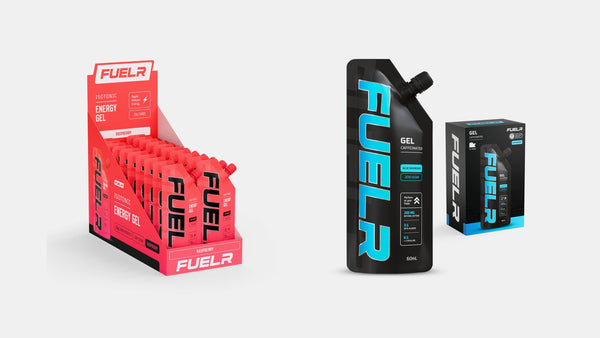
FUELR Isotonic and FUELR Caffeinated look like two flavours of the same gel, but their labels point at different jobs. Isotonic is the carbohydrate pouch. Caffeinated is a caffeine and performance-ingredient pouch. If you swap one for the other in a long-session plan without reading the panel, you may remove 25g carbohydrate and add 200mg caffeine without meaning to.
The short answer
- FUELR Isotonic lists 25g hydrolysed carbohydrate per gel on the official product page. Use that figure when counting fuel, subject to the current local pouch label.
- FUELR Caffeinated lists 200mg caffeine, 3g beta-alanine and 6g citrulline per full gel on its official page. Its pouch front says zero sugar, and FUELR does not list a carbohydrate amount for it.
- Choose Isotonic for a carbohydrate contribution. Consider Caffeinated only as a separate stimulant decision after checking its physical NZ label and your other caffeine sources.
- Both come in resealable pouches, but convenience does not make the formulas interchangeable.
When the Isotonic pouch fits
During a long run, ride or event, carbohydrate is something you can count across gels, drinks and food. FUELR's Isotonic Cola and the Raspberry, Grape and Orange versions each represent the isotonic line in the NZ Supps catalogue. The official current formula says 25g carbs per pouch. That makes them relevant when you need a portable way to add carbohydrate to an established plan.
The word "isotonic" refers to the gel's concentration. FUELR says its formulation can be taken without extra water at the moment of consumption. Do not turn that into "no water needed for the session." Hydration still depends on heat, duration, sweat and other drinks. A gel can also feel different at race pace from how it feels on a walk, so practise opening, consuming and carrying it during training.
When the Caffeinated pouch fits
FUELR's Caffeinated Lemon Lime and Blue Raspberry are a separate formula. The official page describes 200mg caffeine from green tea extract and includes beta-alanine and citrulline. The 60ml pouch is labelled zero sugar and FUELR does not list a carbohydrate amount for it. This should not be counted as a 25g fuel pouch unless the current NZ product label says otherwise. The brand's own page does not present it as a 25g-carb product.
Caffeine can help alertness, but a full 200mg pouch is a substantial addition if you already use coffee, energy drinks or pre-workout. FUELR suggests trying half a gel if you are caffeine sensitive. Its resealable cap allows that in principle, but a half pouch also changes every other ingredient dose and requires sensible handling of the opened product. Follow the physical pack's directions. Do not first test a full pouch on race day.
Beta-alanine tingles are a separate issue
The Caffeinated formula also includes beta-alanine. The brand lists 3g per full gel. Beta-alanine can cause a temporary skin-tingling sensation; caffeine does not cause that particular effect. A tingle is not a signal that carbohydrate has reached your muscles. Nor is it proof that one serving will improve endurance immediately. Beta-alanine's proposed performance role depends on repeated intake over time. If you dislike the sensation, the Isotonic line is the more relevant FUELR option to inspect, subject to its own label.
Do the arithmetic before replacing a gel
Suppose you planned two FUELR Isotonic pouches for a training period. Based on the official Isotonic figure, those contribute 50g carbohydrate. If you replace one with a Caffeinated pouch, you can count only the remaining Isotonic pouch's 25g carbohydrate, and you have added 200mg caffeine. That is a very different plan. Check the physical NZ labels before using exact numbers, and count anything else you eat or drink. The point is to compare ingredients, not packaging shape.
For a general carbohydrate target and timing method, use NZ Supps' intra-workout carbs guide. For testing a race plan and training your gut, see gut training for runners. This comparison stays with the FUELR product choice. The FUELR collection shows the current local flavours.
FAQ
Is FUELR Caffeinated just Isotonic with caffeine added? No. The official product pages describe distinct formulas. Isotonic lists 25g carbohydrate; Caffeinated lists caffeine, beta-alanine and citrulline.
How much caffeine is in one Caffeinated gel? FUELR lists 200mg per full gel. Account for any coffee, energy drink or pre-workout you use as well.
Does the Caffeinated gel provide carbs for a run? The pouch is labelled zero sugar, and the brand does not state a carbohydrate amount for Caffeinated. Check the current NZ pouch before counting it as fuel.
Can I use both formulas in one session? They can serve different parts of a plan, but count Isotonic carbohydrate and Caffeinated caffeine separately. Test your routine in training and follow each pouch label.
Why might the Caffeinated gel tingle? Its listed beta-alanine can cause a temporary skin tingle. That is separate from caffeine alertness and from carbohydrate delivery.
Which FUELR flavours are available at NZ Supps? Isotonic: Raspberry, Grape, Orange and Cola. Caffeinated: Blue Raspberry and Lemon Lime. Check each live page for current stock.