SHOP NOW, PAY LATER










 Informed Sport
 Informed Choice
 NSF Certified for Sport
 HASTA Certified

You're standing in front of a row of tubs, comparing big protein numbers, unfamiliar certifications and prices that seem to change every time you shop. The best whey isolate in NZ is the product that combines high protein density, a transparent ingredient panel, reliable batch verification where required, and a fair cost per actual gram of protein. It isn't automatically the most expensive tub or the one with the loudest “clean” claim.
Table of Contents
- Finding the Best Whey Isolate in New Zealand
- Understanding Whey Isolate Versus Other Proteins
- Reading the Nutrition Panel for True Protein Density
- Navigating Whey Prices and Global Market Pressures
- Verifying Banned Substance Testing for Athletes
- Comparing Top Isolate Options and Timing Your Dose
- Your Final Buying Checklist and Common Questions
Finding the Best Whey Isolate in New Zealand
A tub can look impressive on a New Zealand shelf, yet deliver poor value once you check the scoop size, protein yield and testing record. Start with the back label. Compare protein per serve, protein per 100 g, serving weight, fat, carbohydrate, lactose information where provided, sweeteners, thickeners and the exact form of whey used. For drug-tested athletes, check batch-level sport testing separately. A short ingredient list does not prove that the powder is safe for competition.
New Zealand has a broad sports nutrition market, giving shoppers plenty of access to whey products (New Zealand sports nutrition market data). That choice also creates room for weak value claims. Global whey inflation can appear as a higher shelf price, a smaller tub or a formula padded with flavouring and other non-protein ingredients. Compare the protein you purchase, not the container size.
Protein products account for a large share of local sports nutrition sales (New Zealand protein market overview). Labels therefore compete heavily on words such as “pure”, “clean” and “natural”. Treat those terms as marketing descriptions until the nutrition panel and testing documentation support them.
A four-point buying filter
- Confirm the protein form. “Whey protein” may mean concentrate, isolate, hydrolysate or a blend. The ingredient list should identify the main source clearly. A product marketed as isolate deserves closer inspection if concentrate appears prominently.
- Calculate density. Divide protein grams per serve by serving size, then compare the result with protein per 100 g. NZ isolate examples sit around 90 to 94 g of protein per 100 g, depending on formulation (NZ whey isolate product data). A lower figure may reflect flavouring or added ingredients rather than a problem, but it changes the price per usable gram.
- Price the usable protein. Check total serves, scoop weight and protein per serve before comparing tubs. A cheaper container can cost more for the same protein if the serving is oversized or the powder contains substantial non-protein content.
- Verify sport status separately. “Quality tested” does not automatically mean every batch was screened for prohibited substances. Look for a named certification or batch-specific documentation that applies to the product you are buying.
Practical rule: Buy the label you can verify, not the marketing promise you can remember.
New Zealand's dairy expertise supports a strong protein supply base, but it does not guarantee low prices, clean formulation or sport-safe testing. Those require separate checks.
Understanding Whey Isolate Versus Other Proteins
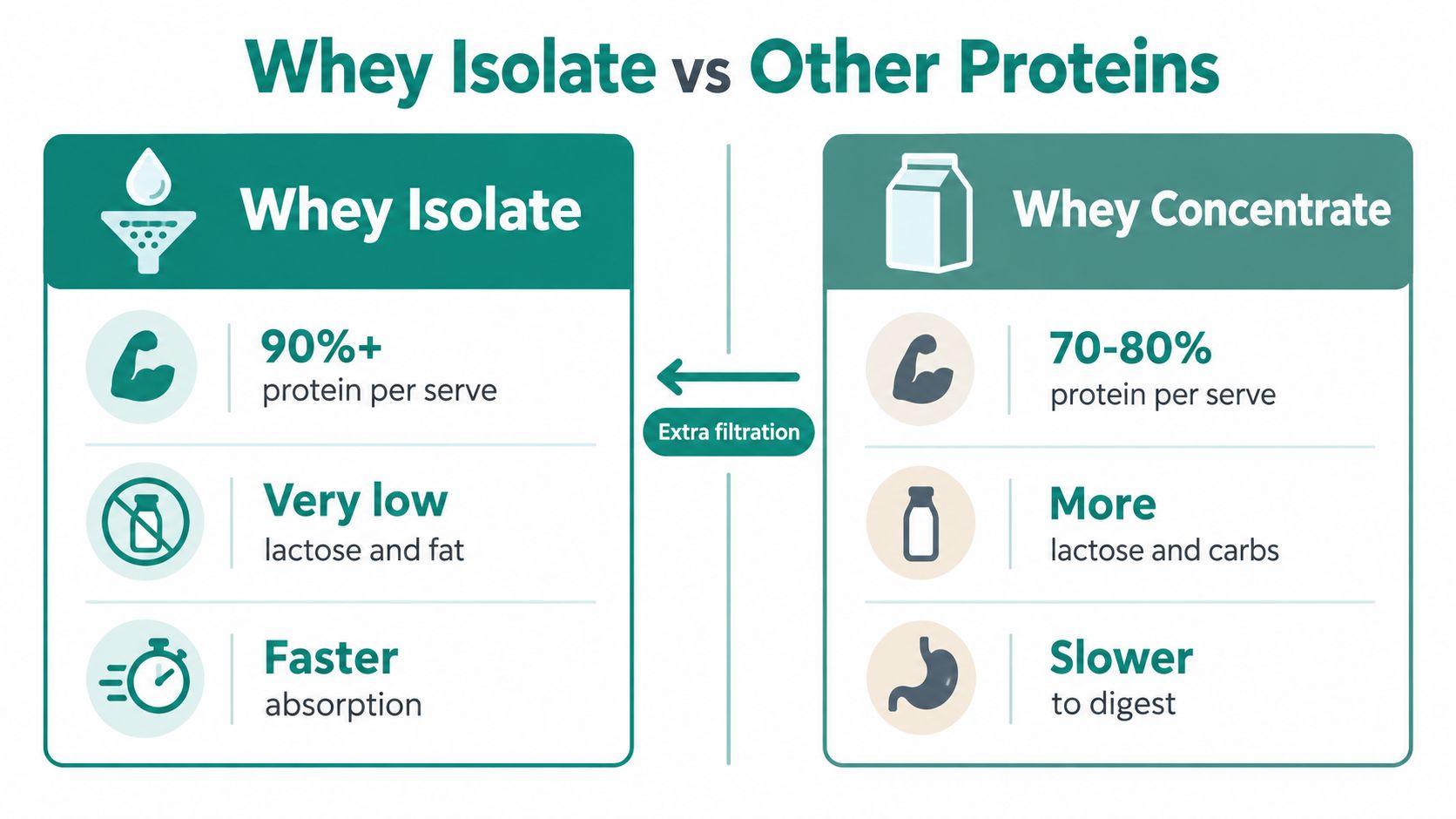
Whey concentrate and whey isolate begin with the same dairy-derived liquid. The difference is what happens afterward. Concentrate undergoes less filtration, so more of the original milk components remain. Isolate receives additional processing to remove more fat, carbohydrate and lactose, producing a powder with a greater proportion of protein by weight.
What changes between the formats
Whey isolate suits buyers who want less lactose, fewer non-protein macros or a smaller amount of powder in each serving. The extra filtration can improve mixability and make the product easier to fit into oats, smoothies or small meals. It does not remove the need to inspect the ingredient list. Flavour systems, sweeteners and added ingredients still affect the finished formula.
A concentrate keeps more lactose, fat and carbohydrate because it undergoes less filtration. That is not automatically a weakness. If you tolerate dairy and the label supplies the protein you need, concentrate can offer better value without paying for processing that does not solve a problem for you. A practical comparison of whey isolate versus concentrate can help clarify the trade-offs before you compare tubs.
Hydrolysed whey is partially broken down during processing. Some specialised sports formulas use it, but hydrolysis alone does not prove better value or performance. Check the formula, taste, protein amount and price rather than treating extra processing as a guarantee of quality.
Plant proteins create a separate comparison. Pea, rice, soy and blended powders can suit people avoiding dairy, but texture, flavour, amino acid profile and serving size require their own assessment. A front-of-pack protein claim does not make a plant powder directly comparable with an isolate.
When isolate is worth the premium
Isolate earns its higher price when lactose content, macro precision, mixability or protein density matters to your routine. It can also reduce the amount of powder needed for a planned protein intake. The premium becomes harder to justify when a concentrate has a clearly disclosed formula, you digest dairy comfortably and the cost difference is large.
Global whey inflation can push that premium higher even when the underlying processing has not changed. Compare the cost of usable protein, not just the tub price, and check whether the product offers a real benefit for your diet.
A clean ingredient label is only one part of a sport-safe purchase. “Quality tested” may describe manufacturing or formulation checks without confirming batch screening for prohibited substances. Athletes should look for named certification or batch-specific documentation covering the exact product. Guidance on using whey protein isolate explains the format in practical terms, but testing status still requires a separate verification.
Reading the Nutrition Panel for True Protein Density
A tub can promise “pure isolate” on the front while giving you relatively little protein for its serving size. The nutrition information panel provides the better starting point because it shows how much of the powder is protein.
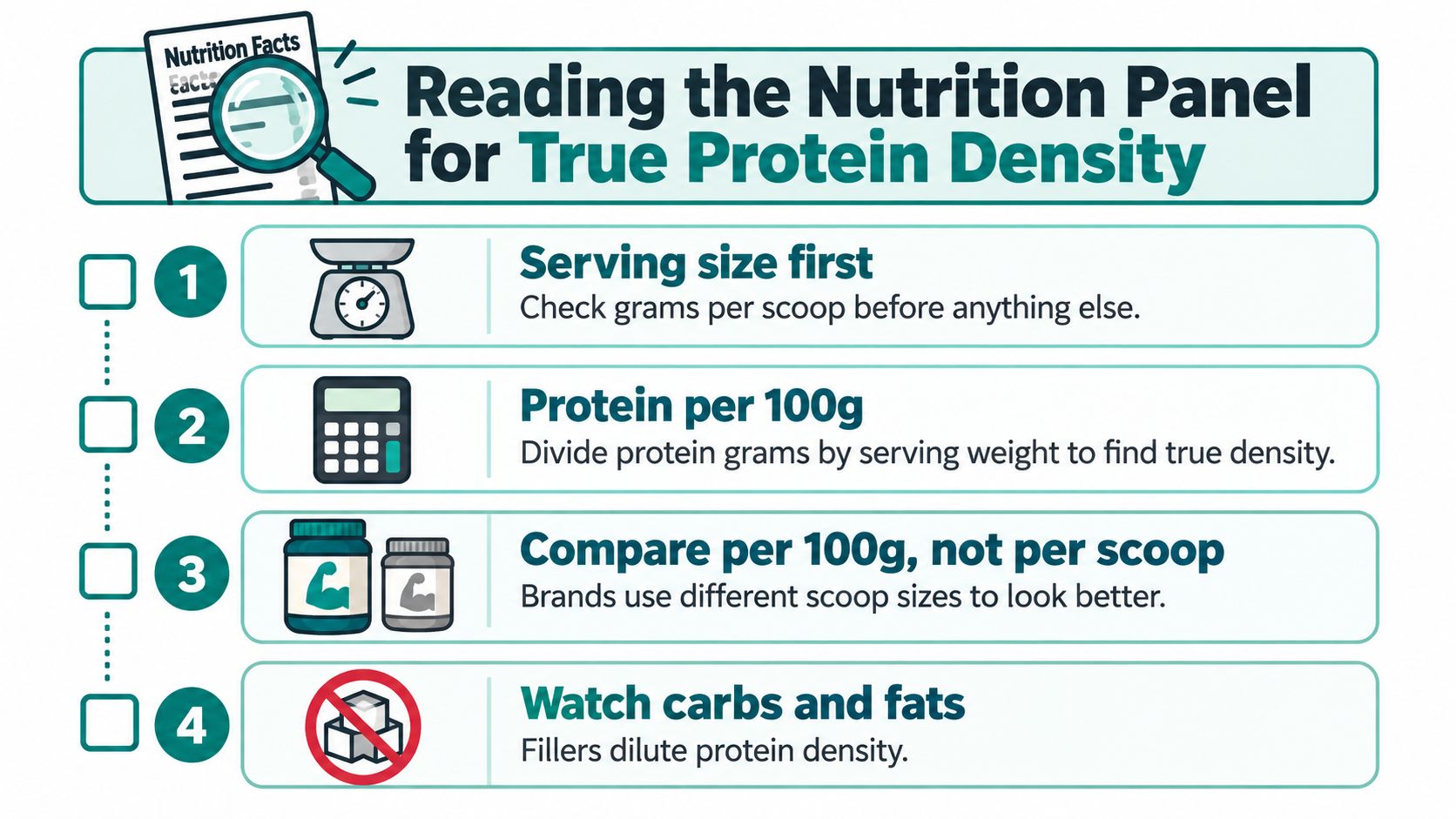
Check the serving weight before comparing scoops. A product providing 27 g of protein from a 30 g serve has a different density from one providing the same 27 g from a 40 g serve. The first contains 90 g of protein per 100 g, while the second contains 67.5 g per 100 g, before considering rounding. These are arithmetic examples, not claims about a particular product. They show why protein per scoop can give a distorted comparison when serving sizes differ.
The label maths that matters
Use this calculation:
Protein density = protein per serve ÷ serving size × 100
A label that already lists protein per 100 g gives you the quickest comparison. NZ products provide useful reference points. One isolate lists 28.2 g protein per serve and 90.3 g per 100 g, while another lists 27.0 g per 30 g serve and 89.9 g per 100 g. Treat these figures as label examples, not proof that either product is automatically the right choice.
See how to decode claims and panels in the supplement labels explained guide.
Read across the rest of the panel:
- Fat and carbohydrate: Higher amounts can indicate more non-protein material, although flavour ingredients may explain part of the difference.
- Ingredient order: The first ingredients should fit the product description. An isolate deserves closer scrutiny when other protein sources or substantial additions appear ahead of it.
- Amino additions: Added amino acids do not automatically prove amino spiking, but they make the total protein figure worth examining carefully.
- Thickeners and flavour systems: These can improve texture and taste, while adding weight without adding protein. A powder you use consistently can still offer good value if the panel makes that trade-off clear.
- Allergen declaration: Whey comes from milk. Check the allergen statement and the manufacturer's handling information if you have a relevant dietary concern.
New Zealand label checks
Protein powders sit within the Australia New Zealand Food Standards Code, administered in New Zealand by New Zealand Food Safety. Review the nutrition information panel, ingredients, allergen declaration and claims instead of relying on terms such as “premium” or “ultra clean”. The New Zealand supplement label guide explains the practical distinction between isolate and concentrate, while stressing that the specific product panel remains decisive.
A clean label also has limits. It can show what the product contains, but it does not by itself confirm sport-safe batch testing. Athletes should separately look for named certification or batch-specific documentation covering the exact product.
New Zealand dietary supplements must show the product's common name or a description of its true nature, net weight or volume, the seller or manufacturer's trading name and business address, the words DIETARY SUPPLEMENT, a consumer information panel and an overdose warning where relevant (New Zealand dietary supplements regulations). Supplement-ed food labels have separate requirements, including the words supplemented food, the food's true nature, lot identification unless exempt, and a New Zealand supplier name and address (MPI supplemented food requirements).
For claims on supplemented foods, MPI says the relevant standard determines which parts of the Food Standards Code apply, and an FA5 form is required for making a claim (MPI claims guidance).
Navigating Whey Prices and Global Market Pressures
A New Zealand-made tub can become more expensive even when the formula, factory and scoop look unchanged. The price may reflect imported whey inputs, packaging, labour, freight, currency movements and compliance costs. Local production can support supply and traceability, but it does not shield shoppers from global commodity pricing.
Industry commentary in late 2025 and 2026 reported sharp increases in whey isolate replacement costs, with some brands describing cost-base rises of more than NZ$10 per kilogram. The same whey price market commentary reported WPC 80 prices rising by nearly 90% year on year. These increases can reach consumers through higher shelf prices, smaller tubs, fewer serves or reduced promotional discounts.
The comparison shoppers should use
Headline tub price tells you little when serving sizes differ. Use the label and receipt together:
- Write down the listed price.
- Record the number of serves in the tub.
- Divide the price by the serve count.
- Divide the price per serve by the labelled protein grams per serve.
- Multiply the result by 25 to estimate the cost of 25 g of actual protein.
For a worked check, take the exact tub in front of you, enter its printed price and serve count, then use its protein figure from the nutrition panel. This exposes the difference between a cheap-looking scoop and a genuinely economical dose. A product with fewer protein grams per serve, or fewer serves in the tub, can cost more for the same amount of protein.
Shipping belongs in the calculation too. An overseas tub may look cheaper until freight, delivery uncertainty and exchange-rate exposure are included. NZ-held stock usually makes the final cost easier to predict, especially if you need a repeatable supply rather than a one-off bargain.
Why “NZ-made” needs context
New Zealand has substantial dairy processing capability and a strong sports-nutrition manufacturing base. That local capacity can improve availability and traceability, but it does not remove international whey inflation. The cost of the raw ingredient still matters before the product reaches a local warehouse or retailer.
Treat local origin as one buying factor, not a price guarantee. Compare the protein panel, serve count, delivered cost and batch documentation together. A clean-looking label may justify confidence in the formula, while per-serve pricing shows whether the purchase works financially. Those are separate checks, and both matter for New Zealand athletes managing regular protein use.
Verifying Banned Substance Testing for Athletes
A tub can display a clean ingredient list and still fail to provide sport-safe assurance. “No unnecessary fillers” describes the formula. It does not show that an independent laboratory tested the finished batch for prohibited substances.
That difference matters for athletes subject to anti-doping rules. Shared equipment, ingredient handling and supply-chain mistakes can introduce contamination even when every listed ingredient looks acceptable. Good manufacturing practice is useful, but a general quality statement does not replace batch-specific evidence for a tested competitor.
What independent verification should show
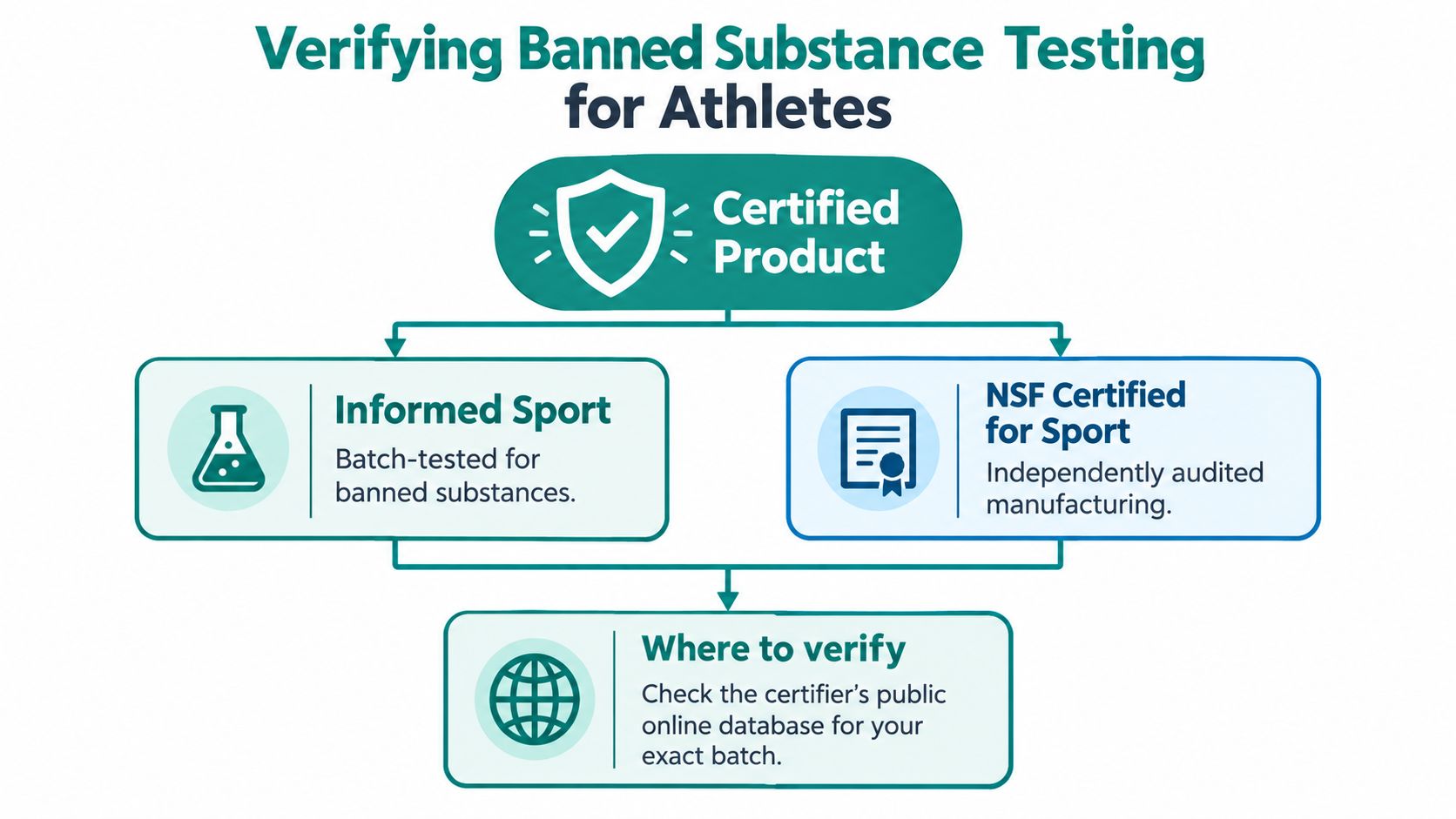
Start with a recognised certification mark, then confirm the product through the certifier's public database. Match the brand, exact product, flavour and batch information against the tub in your possession. A logo printed on packaging is only a starting point.
Athletes may encounter several certification schemes:
- Informed Sport: Check whether the relevant product and batch have been tested for banned substances.
- NSF Certified for Sport: Look for independent certification and audited manufacturing controls.
- HASTA: Confirm the product listing and applicable batch details through its certification system.
- Informed Choice: Check the exact product and the scope of its certification rather than relying on the mark alone.
A product can publish its full ingredient list and manufacturing information without holding sport certification. That transparency may suit general gym use, but it does not make the formula competition-safe by default. Clean formulation and tested-batch status answer different buying questions.
For tested athletes, certification isn't a flavour preference. It's part of product selection.
A 2022 New Zealand athlete concept test found that 100% of sampled elite athletes preferred a protein concept combining NZMP whey protein isolate with a cognition or stress ingredient (New Zealand athlete protein concept test.pdf)). That finding indicates interest in functional formulation, not proof of banned-substance safety. Added ingredients and athlete appeal remain separate from independent batch verification.
A safer purchasing routine
Before opening the tub, photograph the front label, certification mark and batch code. Learn how supplements are tested for banned substances, then search the Informed Sport, NSF or HASTA database that applies. Compare the listing with the packaging, screenshot the matching result and keep the receipt. If the batch is absent, expired or unclear, contact the manufacturer before use or choose a product with clearer documentation.
NZ Supps provides a Tested for Sport collection filter covering standards such as Informed Sport, Informed Choice, NSF Certified for Sport and HASTA. Use the filter to narrow the products you inspect, then complete the batch check yourself. Retailer filters save time, but they cannot verify the exact tub in your hand.
Higher-purity and lower-lactose whey preferences do not settle the sport-safety question. Clean label, high protein density and certified batch testing are three different checks. Keep all three separate when buying for competition use.
Comparing Top Isolate Options and Timing Your Dose
Product selection becomes simpler once you stop comparing slogans. Compare the isolate source, label density, flavour system, certification status and delivered cost. The table below is designed for that process, using stocked isolate options and leaving live price fields for the current product listing because whey prices and promotions change.
| Product | Serve Size | Protein per Serve | Price per Serve |
|---|---|---|---|
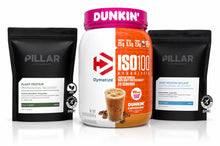
| Dymatize ISO100 | Check current product label | Check current product label | Current listed price ÷ listed serves |
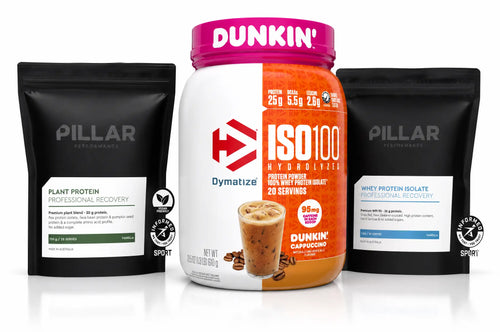
| Pillar Performance Whey Isolate | Check current product label | Check current product label | Current listed price ÷ listed serves |
| Isopure Zero Carb | Check current product label | Check current product label | Current listed price ÷ listed serves |
The table's blank-looking fields are intentional. A product page can change its flavour, pack size, serving count or promotional price, and inventing a static figure would make the comparison less reliable. Write the current values into the table when you shop, then calculate price per 25 g of labelled protein rather than trusting the tub price.
Choosing between the options
Dymatize ISO100 is the type of product to inspect when you prioritise an isolate-focused formula and a widely recognised performance range. Confirm the exact flavour's serving size and protein amount, because flavour systems can change the panel.
Pillar Performance Whey Isolate deserves the same scrutiny. Check whether the current listing provides the sport certification information you need, then verify the exact product and batch through the certifier rather than assuming that performance branding equals certification.
Isopure Zero Carb should be judged on its current nutrition panel and total delivered cost. “Zero carb” is a formulation descriptor, not a substitute for checking protein density, ingredients or testing status.
Timing is less complicated than many labels suggest. Use isolate when it fits your day, such as with breakfast, after training or in a snack. The useful question is whether the serve helps you meet your planned protein intake without making the rest of your diet harder to manage. You don't need to treat a shaker as a narrow post-training ritual.
Mixing it with water gives the most direct label comparison. Milk changes the overall nutrition, flavour and texture, while oats, yoghurt or fruit turn the powder into a larger meal or snack. For broader context on combining supplements, this resource on protein and creatine for athletes is useful, but keep each ingredient's label and purpose separate when calculating your intake.
Your Final Buying Checklist and Common Questions
A tub can look clean, mix well and still leave important questions unanswered. Global whey price pressure can also appear as smaller tubs, altered serving sizes or a cheaper formula with less protein per dollar. Use this check before paying:
- Protein density: Compare protein per 100 g, not just per scoop.
- Serving maths: Confirm the number of serves and the exact flavour's serving size.
- Ingredient clarity: Check that the primary protein source is clearly named.
- Non-protein weight: Account for carbohydrate, fat, thickeners and flavour ingredients.
- Allergens: Read the milk declaration and handling information.
- Sport testing: A clean label does not prove sport safety. If you are drug-tested, verify the exact product and batch through the relevant certification register.
- Delivered price: Include shipping when calculating cost per serve.
- Routine fit: Choose a flavour and texture you will actually use.
Does isolate always digest better? No. Isolate is generally lower in lactose and fat than concentrate, but tolerance still depends on the person, sweeteners, flavourings and serving size.
How can you reduce clumping? Add liquid first, use a clean shaker and let the powder disperse before adding ice or thick ingredients. A blender suits oats or fruit. Water usually needs only a shaker.
What if a shake causes discomfort? Stop using the product and review its serving size, sweeteners, flavour ingredients and dairy content. If symptoms continue or concern you, seek advice from an appropriately qualified health professional.
How should NZ shoppers handle dispatch? Check the retailer's current delivery information before ordering, particularly when protein is needed for an upcoming event. Domestic stock and clear tracking may be more useful than a lower advertised price paired with uncertain freight.
The strongest purchase is the isolate that passes this check: clear protein maths, a sensible delivered cost and batch verification where your sport requires it. Front-of-tub claims cannot replace those checks.
NZ Supps offers whey isolate products, comparison tools and a Tested for Sport collection that groups products by certification standard. Visit NZ Supps to compare current labels, serving costs and available stock.