SHOP NOW, PAY LATER











 Informed Sport
 Informed Choice
 NSF Certified for Sport
 HASTA Certified

You're halfway through a hard interval. The first minute feels fine. Then the burn shows up, your legs go heavy, and the last stretch turns into a fight to hold pace. That's usually the moment people start searching for beta alanine in NZ.
Most athletes aren't really asking, “What is beta-alanine?” They're asking something more practical. Will it help in my sport, is it worth paying for, and if I compete in drug-tested sport in New Zealand, is it worth the extra supplement risk at all?
That's the right way to look at it.
Beta-alanine can be useful, but it isn't a general performance booster for every athlete and every session. Its value depends a lot on how long your hardest efforts last, how often you repeat them, and whether you need to be careful about contamination risk from supplements. In New Zealand, that last part matters more than many retailer pages admit.
Table of Contents
- Introduction to Beta Alanine in New Zealand
- How Beta Alanine Works Inside Your Muscles
- Who Benefits Most and Who Sees Little Effect
- Dosing Timing and How to Load Correctly
- Side Effects Safety and Managing the Tingle
- Buying Beta Alanine in NZ for Drug Tested Sport
- Making the Right Choice for Your Training Goals
Introduction to Beta Alanine in New Zealand
A common NZ scenario looks like this. A club rower, rugby player, CrossFit athlete, or footballer hears that beta-alanine helps with the “burn” and starts comparing tubs online. The labels look similar. The promises sound broad. One says pre-workout, another says endurance, another says muscular stamina. It's easy to assume they all do the same job.
They don't.
Beta-alanine is a targeted supplement. It makes the most sense for hard efforts that sit in a fairly specific zone, not for everything from max lifts to long easy endurance work. That's why some athletes rate it and others try it once and never buy it again.
New Zealand adds another layer. Local supplement rules don't treat products like ordinary retail goods. A New Zealand food-sector consultation paper notes that dietary supplements sit within a controlled framework, and that some sports supplements may instead fall under the Supplemented Food Standard. In New Zealand, beta-alanine products are sold as dietary supplements under the Dietary Supplements Regulations 1985 rather than as general foods, which is why careful label checking matters for this category.
That sounds technical, but the takeaway is simple. In New Zealand, reading the label properly isn't fussy behaviour. It's basic self-protection.
Practical rule: Don't buy beta-alanine in NZ based only on flavour, hype, or a “pre-workout” label. First decide whether your sport actually fits the use case.
There's also the clean-sport angle. Beta-alanine itself isn't treated as a prohibited substance in NZ retail guidance, but that doesn't remove the contamination risk that comes with supplements in general. For tested athletes, the key question isn't “Is beta-alanine banned?” It's “Is this product worth adding to my risk list?”
If your hardest efforts usually last around a couple of minutes, this guide will probably help. If they don't, that answer may save you money.
How Beta Alanine Works Inside Your Muscles
A hard two-minute effort often falls apart in a very specific way. Your legs or shoulders are still producing force, but the burn ramps up fast and the pace starts slipping before your lungs or motivation give out.
Beta-alanine is used for that kind of problem.
It acts as a raw material your muscles use to make more carnosine over time. Carnosine helps manage the rise in hydrogen ions that builds during hard work. In plain terms, it helps your muscles keep working when the burn is part of what is slowing you down.
The simple version
The easiest way to understand beta-alanine is to separate it from stimulant products. Caffeine changes how alert or switched-on you feel on the day. Beta-alanine works more like a slow-charge battery. It builds up gradually through repeated daily use, then helps during hard efforts that sit in the rough 1 to 4 minute range.
That matters in New Zealand because the buying decision is not just about possible benefit. It is also about whether the benefit is big enough to justify adding another supplement to your clean-sport risk list. If your key efforts rarely land in that middle zone, creatine or caffeine often deserve attention first because their use cases are broader.
Why the pre-workout label confuses people
A lot of athletes first meet beta-alanine inside a pre-workout, so they assume timing is the main thing.
That's the wrong framing.
The tingle can make it feel like an instant-performance ingredient, but the sensation is not the result you are buying. Muscle carnosine rises with steady intake across weeks, not from one sharp hit before training. If you want a plain-language breakdown of that endurance role, this explainer on how beta-alanine boosts muscular endurance is a useful companion.
That is also why a single scoop can mislead buyers. You can feel beta-alanine within minutes and still get very little practical value if your sport does not regularly produce the right kind of effort.
What this means in practice
Beta-alanine makes sense when local muscular fatigue is a real limiter in repeated or sustained hard efforts.
It makes less sense when you are chasing an obvious boost from one dose, or when your training is dominated by very short explosive work, long steady endurance, or general gym sessions where other supplements give more return for less complication.
A useful question is: do your hardest sessions regularly include efforts where the burn, rather than skill or fresh-power output, decides the outcome?
If yes, beta-alanine moves up the list.
If no, it often stays below creatine or caffeine, especially for NZ athletes who need batch-tested products and who should be selective about every supplement they add.
Who Benefits Most and Who Sees Little Effect
A New Zealand club rower doing a hard 2-minute piece often feels the race change in the second half. The first minute is controlled. Then the legs and lungs start arguing, and holding pace becomes the whole job. That is the kind of effort where beta-alanine is most relevant.
The useful filter is effort duration.
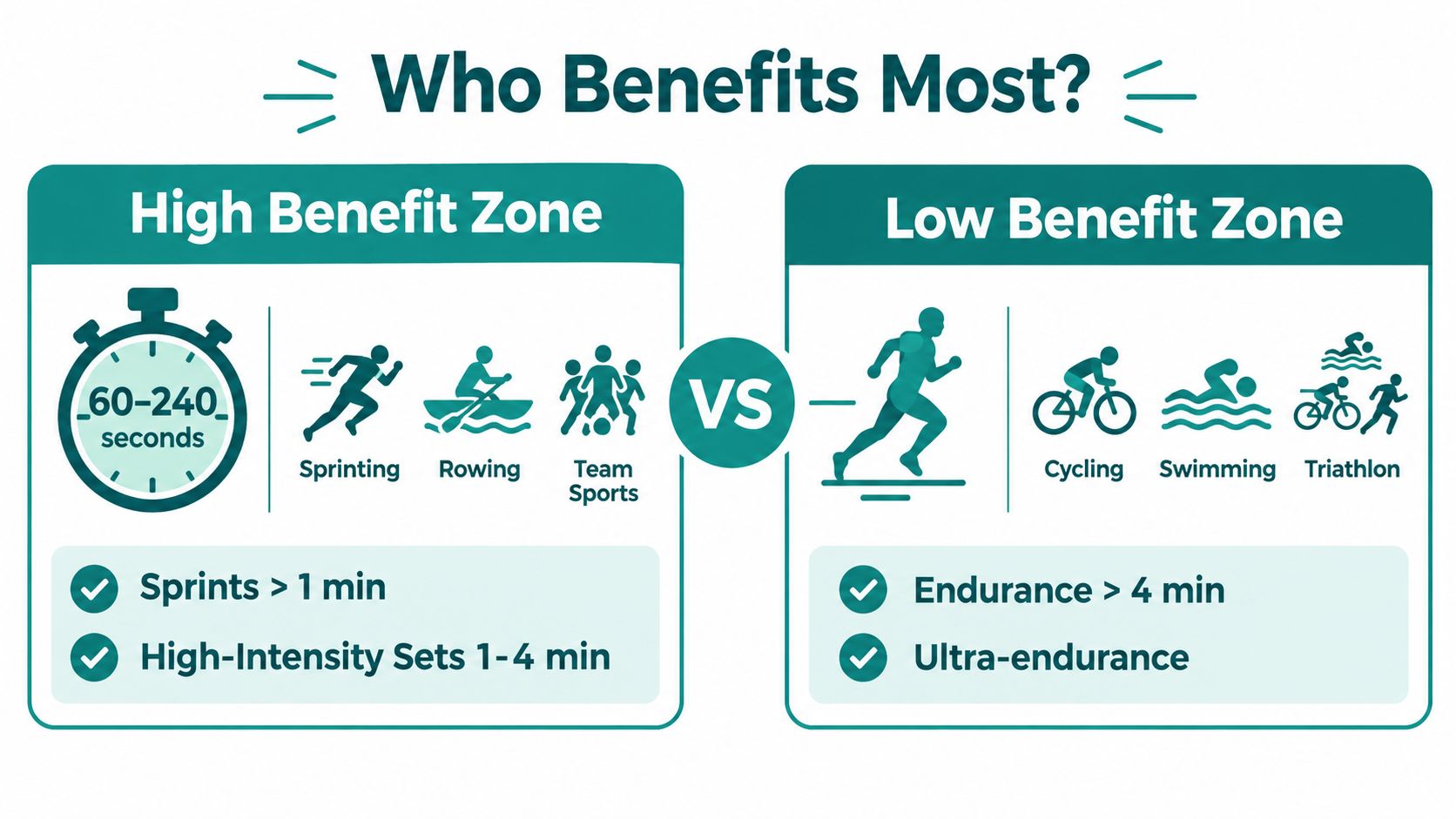
As noted earlier, the strongest results tend to show up in hard efforts lasting about 60 to 240 seconds. Below that, the effect is less convincing. Well beyond that, the benefit often becomes smaller and easier to overrate.
That matters because athletes often buy by sport label instead of by effort pattern. A rugby player may have some passages that fit. Another rugby player may spend far more time in short accelerations, skill work, and positional demands where beta-alanine is not a priority. The same sport can produce two different supplement decisions.
Who is more likely to notice a real benefit
Beta-alanine tends to suit athletes whose training regularly includes that uncomfortable middle zone where muscle burn limits output before the session is over.
Examples include:
- Rowers and kayakers: Hard race segments and erg pieces often sit in the right range.
- Track cyclists and swimmers: Some events and repeated training reps match the profile well.
- Combat sport athletes: Longer exchanges and repeated high-intensity rounds can fit better than people expect.
- Field and court athletes doing repeated conditioning work: Some intervals, shuttle sets, and repeated efforts create the right demand.
The common thread is simple. Your hard efforts need to last long enough for acid-related fatigue to matter, but not so long that pacing, fuelling, and aerobic efficiency dominate the result.
Who often sees little effect
Some athletes buy beta-alanine because it appears in pre-workouts, not because it fits their event.
That is where disappointment starts.
If your main goal is a very short burst, such as a heavy lift, a jump, or a brief sprint, beta-alanine is often low on the list. If your event is long and steady, it can also slide down the priority order.
These groups should be cautious:
- Pure strength and power athletes: Creatine often makes more sense.
- Long endurance athletes: Fuelling, pacing, recovery, and race-day caffeine strategy may offer more return.
- General gym users: If sessions are mixed and not especially limited by sustained muscular burn, the payoff may be small.
- Anyone adding supplements without a clear reason: Extra products mean extra cost and extra clean-sport checking.
The NZ clean-sport question
For a drug-tested athlete in New Zealand, beta-alanine is never just a physiology decision. It is also a risk-versus-value decision.
Sport Integrity Commission guidance states that supplements carry risk for clean athletes because contamination with banned substances cannot be ruled out, and the commission does not approve supplement use Sport Integrity Commission supplement guidance. So the question is not only "can this help?" The better question is "is this narrow benefit worth adding another product to my plan?"
That comparison sharpens the buying decision.
If your training and competition regularly live in the 60 to 240 second zone, beta-alanine can earn its place. If they do not, creatine often gives a broader return for strength, repeated power, and lean mass support, while caffeine may be the simpler choice for alertness and race-day intensity.
In plain terms, beta-alanine belongs in a narrower lane than many NZ buyers expect. The closer your event sits to that lane, the more sensible the cost, loading effort, and contamination risk become.
Dosing Timing and How to Load Correctly
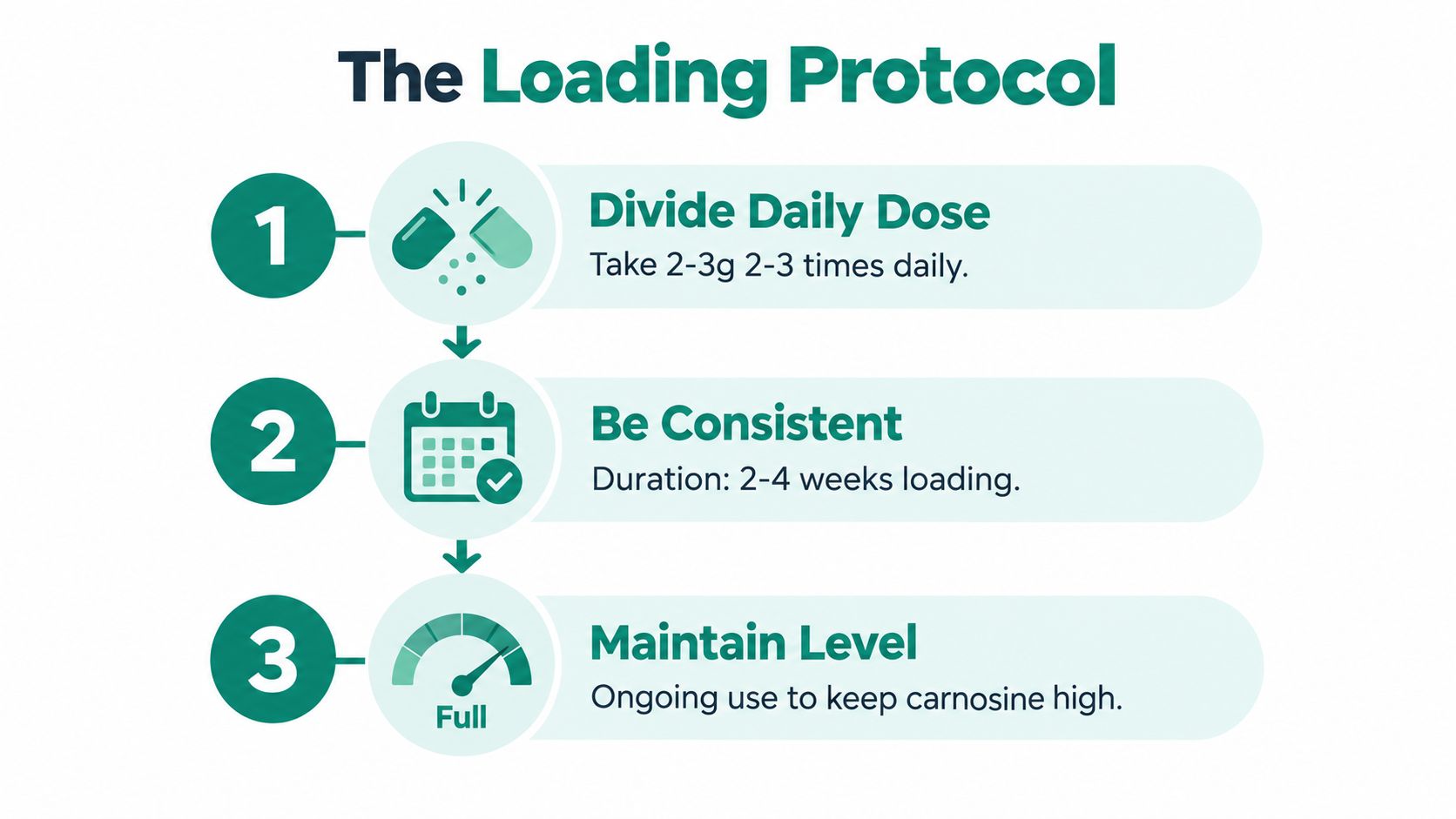
The main dosing mistake is treating beta-alanine like a pre-training hit. The better mindset is load, maintain, repeat.
New Zealand product guidance commonly uses a daily benchmark around 3.2 g, with examples such as 1.2 g once or twice daily or 1.6 g per serve, taken consistently to build muscle carnosine over several weeks SiS beta-alanine guidance.
A simple way to organise it
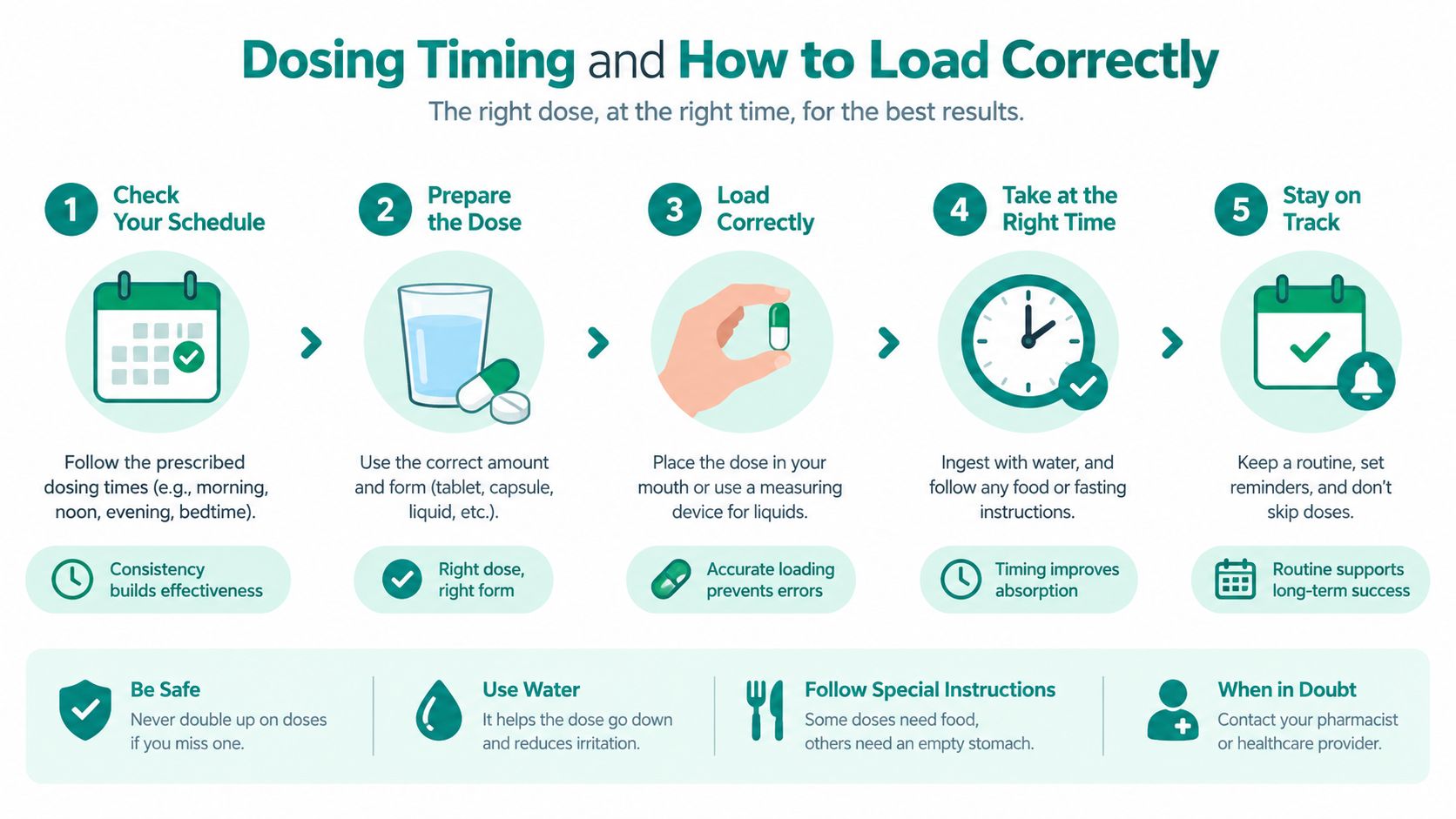
You don't need a complicated system. A routine that attaches beta-alanine to meals or fixed daily habits works well.
Try a structure like this:
- Pick a daily target: Aim around the commonly used daily benchmark.
- Split it up: Smaller serves are often easier to tolerate.
- Use it every day: Rest days still count.
- Keep it boring: Breakfast and dinner beats random gym-bag dosing.
- Adjust if you tingle too much: Dose-splitting usually helps.
A practical example is someone taking 1.6 g with lunch and 1.6 g with dinner. Another person might use 1.2 g with breakfast and 1.2 g later in the day, depending on the product format and how they tolerate it.
Timing matters less than consistency
That's the piece people often miss.
Taking beta-alanine right before your session isn't harmful if it helps you remember it, but the pre-workout timing isn't what drives the benefit. The accumulation of carnosine is the bigger story.
This video gives a useful visual explanation of how people often use loading-style supplementation:
What to do on training and rest days
Keep the schedule the same if you can. The easier it is to repeat, the more likely you are to stay on it long enough to judge whether it helps.
- Training day: Take your planned divided serves.
- Rest day: Do the same.
- Travel day: Pack serves in advance so you don't miss a run of days.
Load first, judge later: If you use beta-alanine inconsistently, you're testing your memory, not the ingredient.
If you only want something for race day or a one-off hard session, beta-alanine usually isn't the first thing to look at.
Side Effects Safety and Managing the Tingle
You finish a hard set, sip a pre-workout, and 15 minutes later your face and hands start buzzing. For plenty of NZ athletes, that moment is less about danger and more about confusion. Is it working, is it too much, or is it a sign this supplement may not be worth the hassle?
The common side effect is paraesthesia. That is the prickly, warming, or tingling feeling some people notice after a serve of beta-alanine. It can feel strange the first time, especially if you were expecting a standard energy boost like caffeine. Beta-alanine does not work that way, and the tingle is not proof of better performance.
As noted earlier, beta-alanine is generally considered safe for short-term use in the amounts commonly used for loading. The main practical issue is comfort. Tingling tends to show up more when a serve is large relative to your body size, or when the dose hits all at once instead of being spread across the day.
Why the tingling happens
A simple way to picture it is speed of delivery.
If you pour water into a funnel too fast, it backs up at the top. Smaller pours go through more smoothly. Beta-alanine is similar. A big serve can create a stronger sensory response, while smaller serves are often easier to tolerate.
The sensation often shows up in the face, ears, scalp, or hands. Some athletes barely notice it. Others find it distracting enough that they avoid the supplement altogether.

How to reduce it
You usually do not need to abandon beta-alanine at the first tingle. You need to make the dose easier to live with.
- Split the daily amount into smaller serves. This is often the simplest fix.
- Take it with food. Some people find meals make the sensation less obvious.
- Use sustained-release products if you tolerate them better. They can slow the hit.
- Skip large pre-workout serves if tingling bothers you. Convenience is not the same as a good fit.
If you want a straightforward explanation of what causes that prickly feeling, this guide on pre-workout tingles and beta-alanine explains it in plain language.
When to stop and reconsider
Normal tingling is one thing. Feeling unwell is different.
Pause if the reaction feels stronger than expected, if you have a medical condition that complicates supplement use, or if you are mixing several products and cannot tell which one is causing the problem. A legal supplement still has to be a sensible one for you.
That matters even more in NZ clean sport. Beta-alanine tends to help most in repeated hard efforts lasting roughly 60 to 240 seconds. If your training or event does not live in that window, the trade-off may be poor. You may be paying for a supplement that gives you tingles, adds contamination risk if you buy carelessly, and delivers less value than creatine for strength work or caffeine for race-day alertness.
That does not make beta-alanine bad. It means it should earn its place.
A common side effect does not mean you have to push through it. If the comfort, cost, or supplement-risk trade-off feels wrong, choose something that fits your sport and testing situation better.
Buying Beta Alanine in NZ for Drug Tested Sport
You are a tested athlete in NZ, looking at two tubs that both say beta-alanine. One is cheaper. One shows recognised sport-testing information and a full label. The cheaper option may still be legal to buy, but for clean sport, the question is simpler. Which one gives you fewer ways to get caught out?
Beta-alanine itself is not prohibited. The problem sits around it. Shared manufacturing lines, messy blends, and vague labels can turn a legal ingredient into an avoidable risk. That matters more here than flavour, marketing, or a big pre-workout claim.
A useful way to frame it is to treat supplement buying like tyre choice for a wet road. The tyre is not the race plan. It just changes how much unnecessary risk you carry. If beta-alanine only offers a small possible edge for your event, even a small contamination risk may be a poor trade.
That trade-off is sharper in the NZ clean-sport setting because beta-alanine has a narrower use case than creatine or caffeine. If your sport regularly pushes hard efforts in the 60 to 240 second range, the cost and checking may be worth it. If your main goal is maximal strength, creatine often earns the budget more easily. If you want a race-day lift in alertness or perceived effort, caffeine usually gives a more direct return. Beta-alanine should clear a higher bar before you buy it.
What to check before you click buy
For a tested athlete, label clarity and testing status matter more than brand noise. A plain explanation of how supplements are tested for banned substances can help you sort useful certification from decoration.
Recovery basics deserve the same hard look. If your budget is tight, training quality, sleep, and food may do more for progress than another tub. This SleepHabits guide to post-workout repair is a useful broader read.
NZ Buying Checklist for Beta Alanine
| Check | Why It Matters in NZ | What to Look For |
|---|---|---|
| Certification status | Tested athletes want to lower contamination risk as much as practical | Informed Sport, Informed Choice, NSF Certified for Sport, or HASTA |
| Full ingredient label | Blends can hide extra ingredients you did not mean to buy | A clear panel with beta-alanine listed separately, plus any stimulants or added actives |
| Product type | Standalone powder is usually easier to assess than a loaded pre-workout | Decide whether you want pure beta-alanine or a mixed formula |
| Batch detail | More traceability gives you more confidence in what you are using | Batch number, seal intact, brand contact details, and clear manufacturing information |
| Local handling | NZ-based stock can reduce grey-market surprises and relabelling concerns | NZ dispatch, sealed-by-brand packaging, and straightforward returns information |
| Sport fit | Any supplement risk should match a real performance need | Buy only if your event profile actually suits beta-alanine |
One practical NZ example
If you want a simpler way to compare products, NZ Supps is one local retailer that lists ingredient details, holds stock in Palmerston North, and has a Tested for Sport filter covering standards such as Informed Sport, Informed Choice, NSF Certified for Sport, and HASTA. That is useful if you are deciding between a plain beta-alanine product and a pre-workout that includes it among several other ingredients.
The best buy is often the least exciting one. Clear label. Recognised testing pathway. A use case that fits your sport. If those pieces are missing, beta-alanine is easy to skip.
Making the Right Choice for Your Training Goals
By this point, the decision should feel narrower, not broader.
Beta-alanine makes the most sense when your training or competition regularly includes hard efforts in the 60 to 240 second range, you're willing to take it consistently rather than casually, and the supplement risk is justified by a real performance need. If that description doesn't fit, skipping it is a completely sensible call.
For some athletes, creatine will be the more useful everyday option. For others, caffeine will offer a more direct performance effect around training or competition. Beta-alanine sits between those. It isn't universal, but it can be relevant when your sport repeatedly pushes you into that uncomfortable middle zone where local muscular fatigue decides the outcome.
A few quick filters help:
- Tested athlete: Don't buy unless the use case is clear and the product quality controls are convincing.
- Short explosive sport: Beta-alanine may not be the first priority.
- Long steady endurance: It may matter less than recovery, fuelling, and race-day basics.
- Repeated hard intervals: It's most worth a closer look here.
- Hate the tingle: You may still be able to use it by splitting doses, but you don't have to force it.
If you want to compare where beta-alanine sits among other options, this roundup of top supplements for athletes in 2025 gives a broader decision-making lens.
You don't need more supplement enthusiasm. You need a cleaner yes or no.
If your event profile fits, buy carefully and use it consistently. If it doesn't, save the money and simplify your stack.
If you're comparing beta-alanine options for NZ training and clean-sport needs, NZ Supps makes it easier to check labels, compare per-serve value, and filter for Tested for Sport products in one place. That's useful when you're deciding between a plain beta-alanine product and a pre-workout that only includes a partial serve, and it helps keep the buying decision grounded in your actual sport rather than marketing noise.