SHOP NOW, PAY LATER











 Informed Sport
 Informed Choice
 NSF Certified for Sport
 HASTA Certified

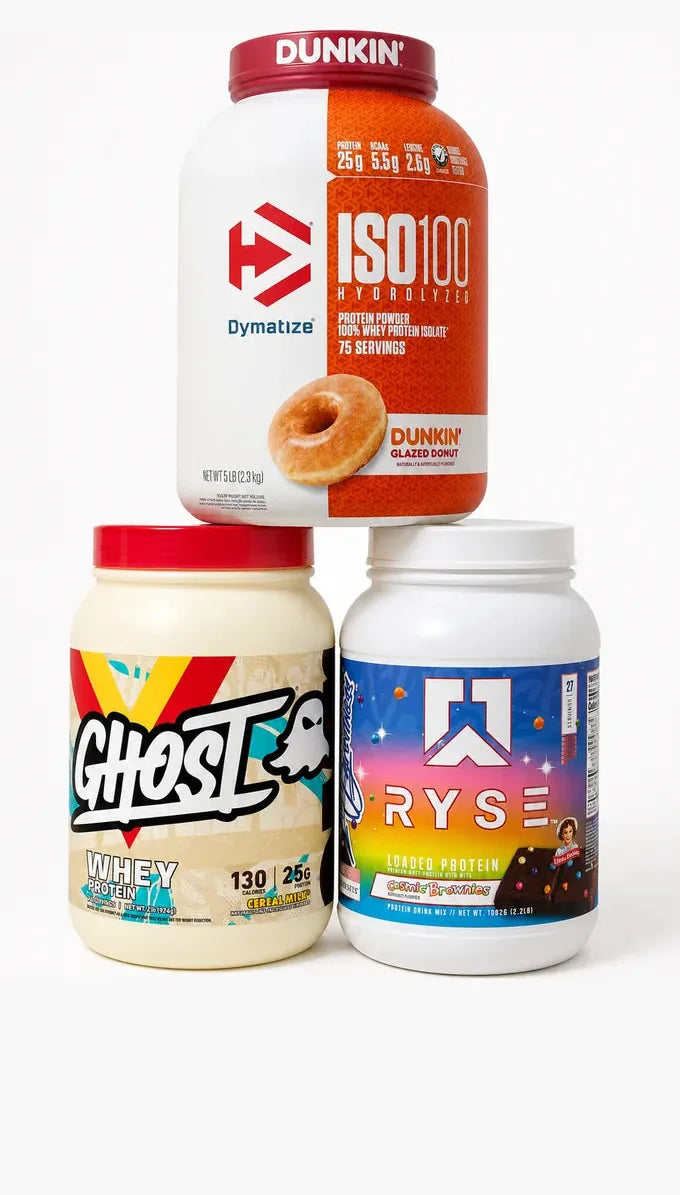
You're probably standing in front of the supplement shelf right now, trying to work out whether nz muscle protein powder is worth buying or just expensive flavoured dust. The short answer is this, buy one only if it solves a real gap in your day, and pick the protein type that matches your food intake, label reading habits, and training goal.
Table of Contents
- What Most NZ Shoppers Need to Decide
- How Much Protein NZ Adults Already Eat
- Whey, Isolate, Casein and Plant Compared
- Reading an NZ Protein Label Properly
- Per Serve Value on Real NZ Supps Products
- Drug-Tested Athletes and What Tested for Sport Really Means
- Using NZ Supps Tools to Match a Powder to a Goal
- Three Filters to Run Before You Buy
What Most NZ Shoppers Need to Decide
You have two calls to make. First, decide whether you need a powder at all. Second, choose the protein family that fits your food intake, training, and tolerance for dairy.
For most NZ shoppers, the split is whey concentrate, whey isolate, casein, and plant protein. Whey concentrate suits regular gym-goers who want a practical, usually cheaper option. Whey isolate suits people who want more protein per serve and less lactose. Casein suits anyone who wants a slower-digesting option between meals or before a long gap. Plant protein is the sensible pick for vegans, dairy-avoiders, and anyone who does not handle milk ingredients well.
Use a New Zealand lens, not brand hype. MPI label rules, local protein intake, athlete contamination risk, and per-serve value matter more than tub art or front-of-pack slogans.
Practical rule: if your normal meals already cover your protein needs, powder is a convenience tool, not a necessity.
The daily protein recommendations resource is a useful cross-check when you compare your own intake against a target. The three filters at the end of this guide turn that shortlist into a 60-second check.
How Much Protein NZ Adults Already Eat
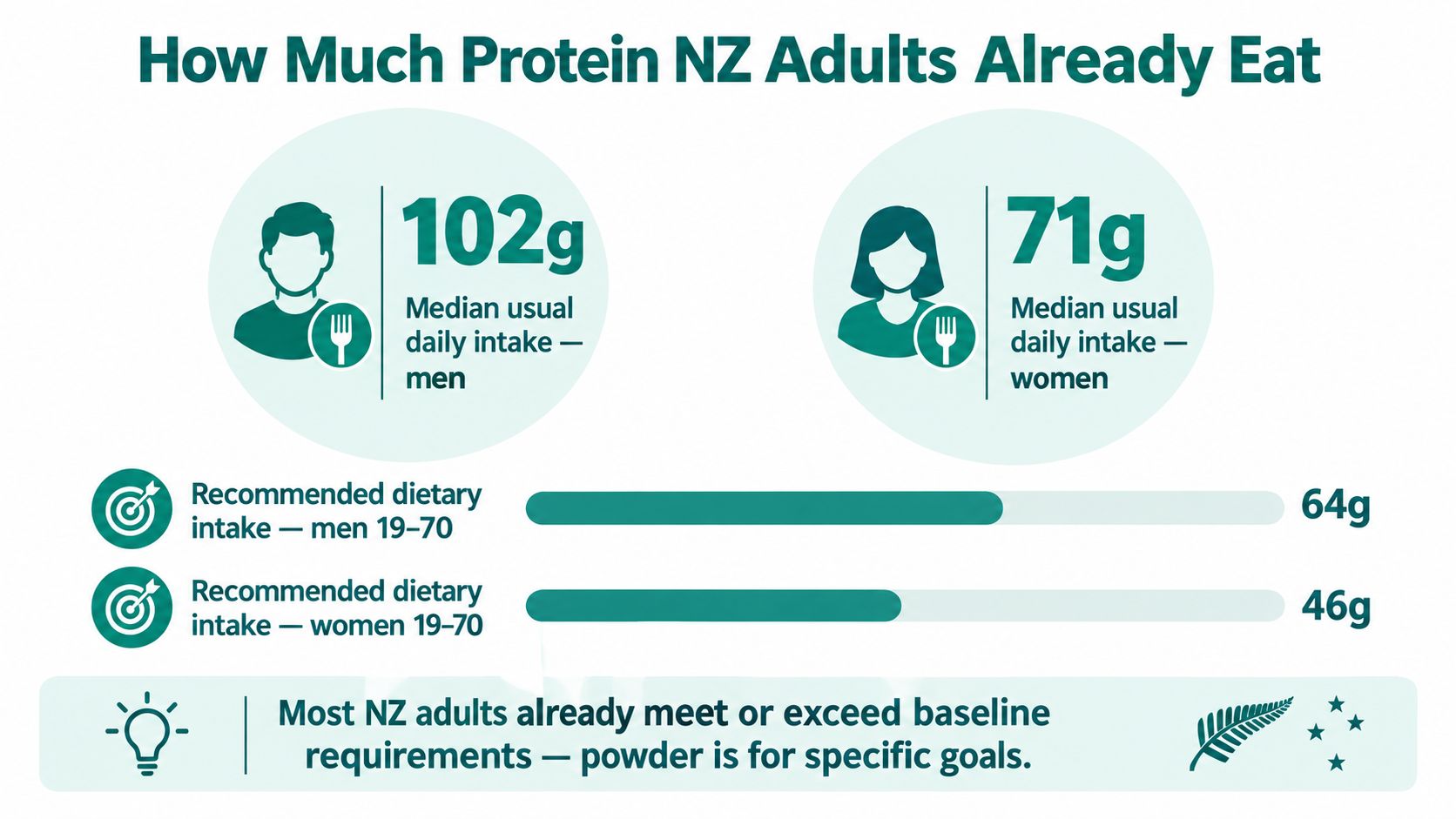
The local baseline matters because it stops you buying powder for no reason. The Ministry of Health reported median usual daily intakes of 102 grams for New Zealand men and 71 grams for New Zealand women, compared with recommended dietary intakes of 64 grams for men aged 19 to 70 and 46 grams for women in the same age range, in the HealthEd guidance on behind the hype on high protein supplements. That works out to roughly 59% above the RDI for men and 54% for women, calculated from the intakes and recommended dietary intakes in the same report.
That is why the national guidance says New Zealanders usually get enough protein for normal physiological needs, and many physically active people do not automatically need a supplement. People who lift weights, play sport, skip meals, or struggle to eat enough can still benefit from powder. The point is simple. It is a tool for a gap, not a default buy.
The confusion problem shows up in the survey numbers too. The Fonterra summary of the 2017 New Zealand survey says 74% of respondents believed protein mattered for health, while only 11% said they knew how much they needed each day, and those answers ranged from 5 grams to 1,200 grams (Fonterra summary of the survey). That gap explains why shoppers get pulled toward headline claims instead of checking total daily intake and meal distribution.
Use this standard. If your meals already sit comfortably above your personal target, powder is convenience. If you are falling short, it becomes a concentrated food, not a magic muscle product. For a local benchmark, the guide on how much protein per day in NZ is worth a read before you choose a tub.
Practical rule: If your meals already cover your target, powder is just a convenience tool.
Whey, Isolate, Casein and Plant Compared
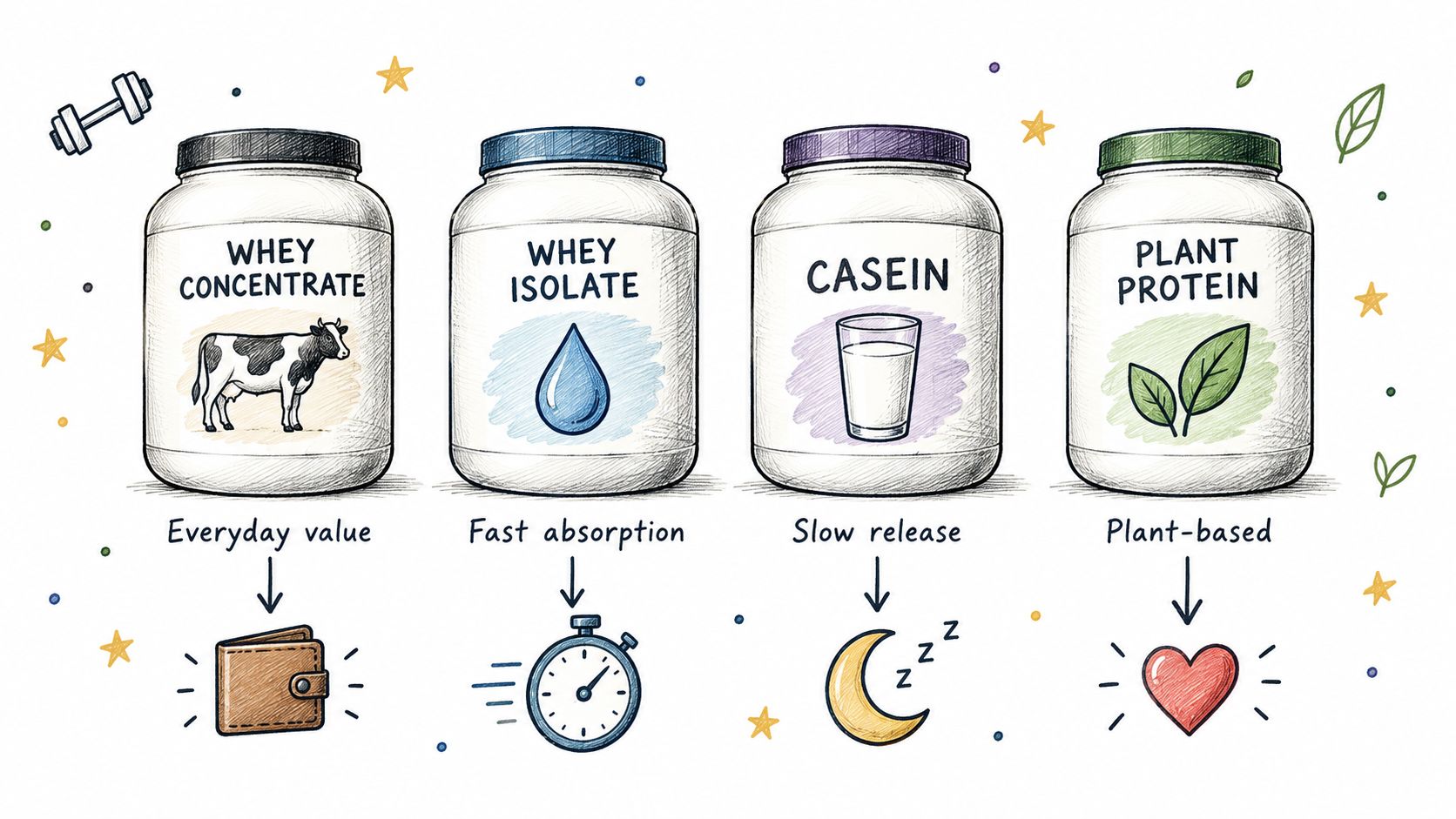
Whey concentrate
Whey concentrate is the straightforward pick. It usually gives you a decent protein hit without the higher price tag or the extra filtering of isolate, so it suits general gym use and post-training shakes where convenience beats fuss. If you're not managing lactose closely and you want a simple daily option, this is the default.
Whey isolate
Whey isolate is the cleaner, tighter option. It's the better call when you want more protein density, less lactose, and a leaner formula that doesn't waste space on extras. People who are dairy-aware often land here first.
Casein
Casein is the slow one. That slower digestion makes it more useful between meals or when you know you'll go a long stretch without food. It's not the flashy choice, but that's the point.
Plant protein
Plant protein is the dairy-free lane. Pea, soy, and rice blends work for vegan shoppers and people who avoid milk ingredients, but the blend matters more than the front label. For a broader comparison of plant versus dairy, the pea protein vs whey protein breakdown is a handy external reference when you want to understand the trade-offs.
The key technical point is that NZ shoppers should benchmark plant formulas against the New Zealand Food Composition Database, not just assume a powder is “complete” because the label says so. That database contains nutrient data for more than 3,400 foods and ingredients, with protein values based mainly on laboratory-measured total nitrogen and food-specific conversion factors (NZ Food Composition Database about page). That makes it a better local reference when you're comparing powders against dairy, soy, legumes, and ordinary meals.
Best-fit shortcut: whey concentrate for everyday value, whey isolate for tighter macros, casein for slow release, plant for dairy-free use.
For shoppers who want the same logic in internal language, the whey isolate vs concentrate guide is the right companion read.
Reading an NZ Protein Label Properly
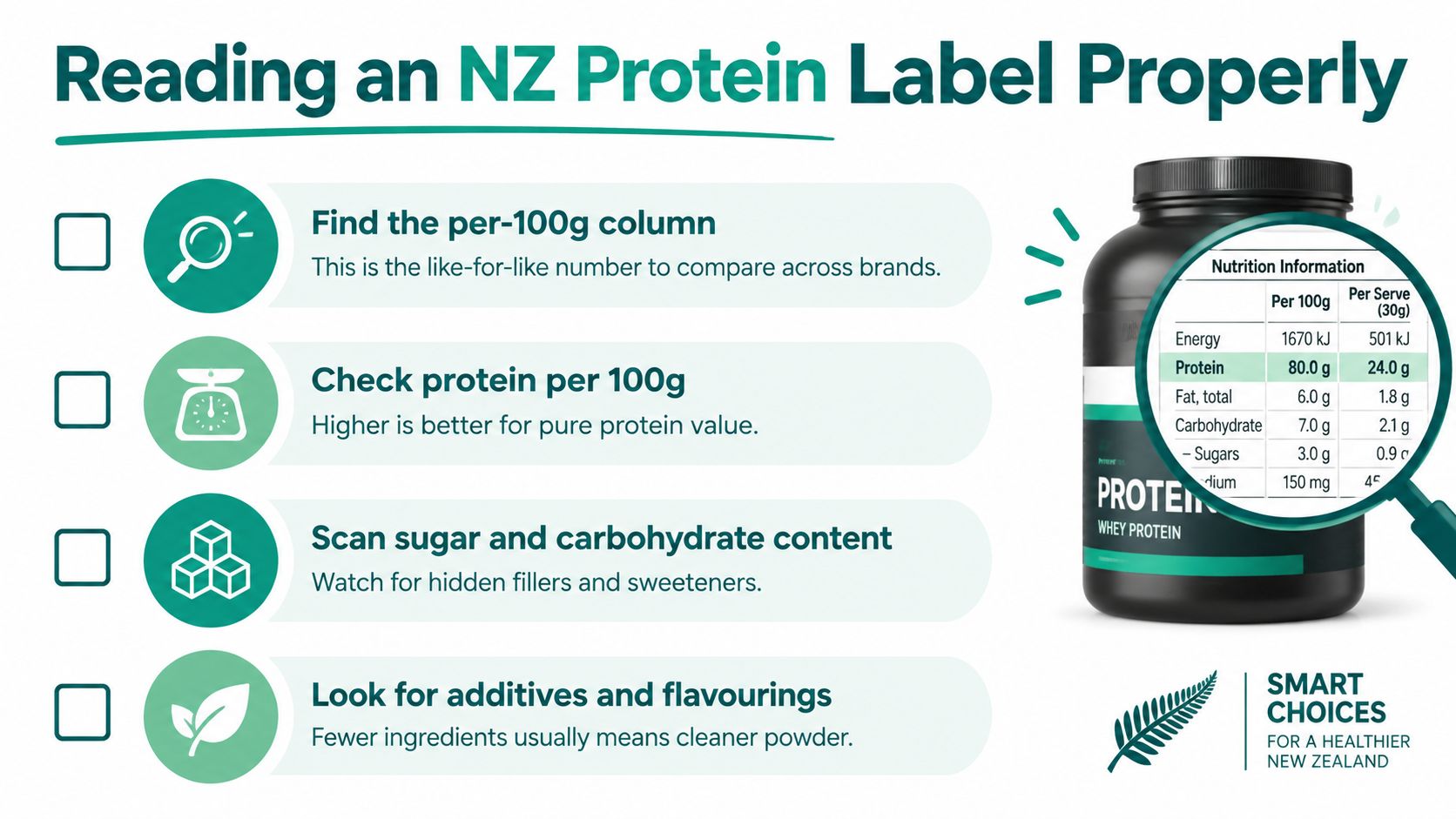
Start with the Nutrition Information Panel, not the front label. In New Zealand, retail food labels generally need to show energy, protein, fat, saturated fat, carbohydrate, sugars, and sodium, both per serving and per 100 g or 100 ml (MPI food labelling guidance). The per 100 g figure is the one that lets you compare powders fairly across different scoop sizes and brand formats.
The per-serving line still matters, because it tells you what one normal scoop gives you. But if you only compare tubs by serving count, you'll get fooled by serving size games. A smaller scoop can look cheap until you realise it delivers less protein.
Allergen declarations matter just as much. MPI requires common allergens, or ingredients sourced from them, to be clearly declared on the label, and allergen-free claims have to be true and provable (MPI allergen declarations guidance). That's why milk-derived whey and casein, plus soy in plant blends, need proper checking. Flavour names don't tell you that.
Nutrition content and health wording is also regulated. MPI says these claims must meet Standard 1.2.7 and the criteria in Schedule 4, and health claims need scientific support plus the right nutrient profiling score (MPI claims guidance). So if a tub says “high protein”, the panel has to back it up.
Some products are sold as supplemented foods, which means the directions on the pack matter. If taking too much could pose a risk, the label must state an appropriate daily consumption amount and warn that exceeding it may cause harm (MPI supplemented foods guidance). Read that line. Don't ignore it.
A quick scan should answer four questions:
- How much protein per 100 g?
- How much protein per serve?
- What allergens are declared?
- Is there a daily-use warning?
That's enough to kill most bad buys in under a minute.
Per Serve Value on Real NZ Supps Products
Walk into the shop with one rule in mind, value is not the sticker on the tub. A cheaper powder can be worse value if it gives you less protein per serve. Judge it by price per 25 g of protein, then check the serve size behind that number.
| Product | Serve size | Protein per serve | Price per serve | Price per 25 g protein |
|---|---|---|---|---|
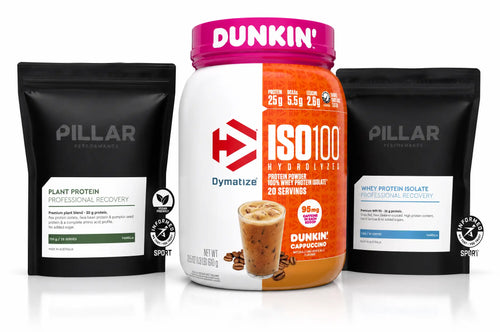
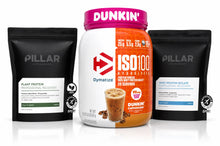
| Dymatize ISO100 | 32 g | 24 g | $2.10 | $2.19 |
| Whey concentrate from the NZ Supps range | 30 g | 27 g | $1.85 | $2.06 |
| Plant-based blend from the NZ Supps range | 35 g | 25 g | $2.40 | $3.36 |
Prices checked October 2026. Per-serve pricing is listed on each product page.
That is the clean way to compare real tubs. Serve size and protein density change the maths fast. A smaller scoop can look efficient on the label, but the only number that matters is how much protein you get for each dollar.
Use this order every time:
- Check protein per serve.
- Check serve size.
- Work out the cost of 25 g protein.
If you are buying powder to cover a missed meal, a tighter training window, or a quick snack, paying a bit more per serve can make sense. If your food intake already covers your protein needs, the bar for extra spend should be higher.
For NZ buyers, the local comparison matters. Powder should stack up against dairy, soy, eggs, legumes, and other foods you can buy here, not against glossy branding. That is the honest test.
Drug-Tested Athletes and What Tested for Sport Really Means
If you're drug tested, a badge on the tub is not a shield. The Sport Integrity Commission Te Kahu Raunui says supplements can pick up banned substances through manufacturing cross-contamination or inaccurate labelling, and athletes are still responsible if a prohibited substance shows up in their sample, even after accidental ingestion (Sport Integrity Commission supplement guidance). In New Zealand, that risk is real.
The right check is simple. Match the certificate to the exact product name, flavour, batch number, and expiry date. One certified flavour does not cover the full range.
The Commission also relays Consumer NZ's 2022 finding of illegal drugs in six supplement products. That does not mean every tub is dodgy. It means guessing is a bad habit.
Use this checklist before you buy:
- Match the batch: compare the certificate with the container in front of you.
- Keep records: save the receipt and batch details.
- Check the standard: Informed Sport, Informed Choice, NSF Certified for Sport, and HASTA are not the same thing.
- Ask early: if your sport has an anti-doping adviser, speak to them before you order.
Batch testing reduces risk. It does not promise zero contamination. That distinction matters when selection, contracts, or a clean sample are on the line.
If you want the finer points of certification, read the guide on Informed Sport protein powder in NZ. It cuts through the sales patter.
Check delivery too. If the seal is broken, the batch code is damaged, or the flavour details do not match, leave it unopened and raise it straight away.
Using NZ Supps Tools to Match a Powder to a Goal
The smartest way to buy is to start with the goal, then let the filters do the work. A quiz that points you toward lean muscle, performance, recovery, or weight control is more useful than browsing every tub in a flat list. So is a comparison tool that lines up two or three powders by serving size, protein density, sweeteners, and cost per serve.
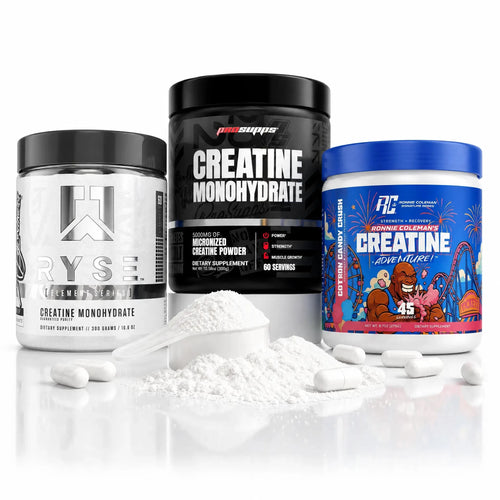
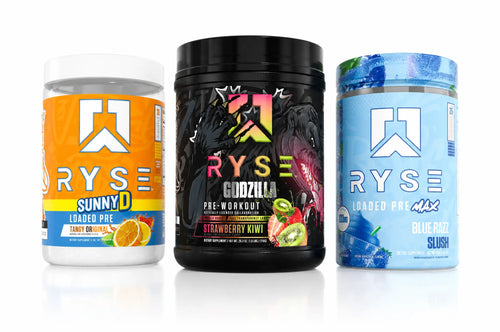
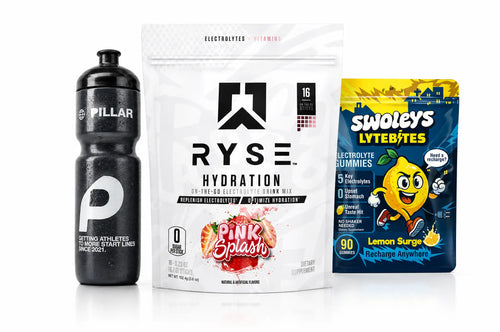
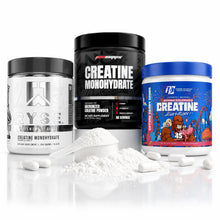
If you're building a bigger stack, it also helps to bundle sensible pairings instead of making separate guesswork purchases. A protein can sit alongside creatine, pre-workout, or electrolytes when that matches your training routine, but only if you need those add-ons. Don't buy a stack because it sounds complete.
The same logic applies to shopping by category:
- Protein
- Whey protein
- Mass gainers
- Creatine
- Pre-workout
- Electrolytes
- Amino and BCAA
- Protein bars
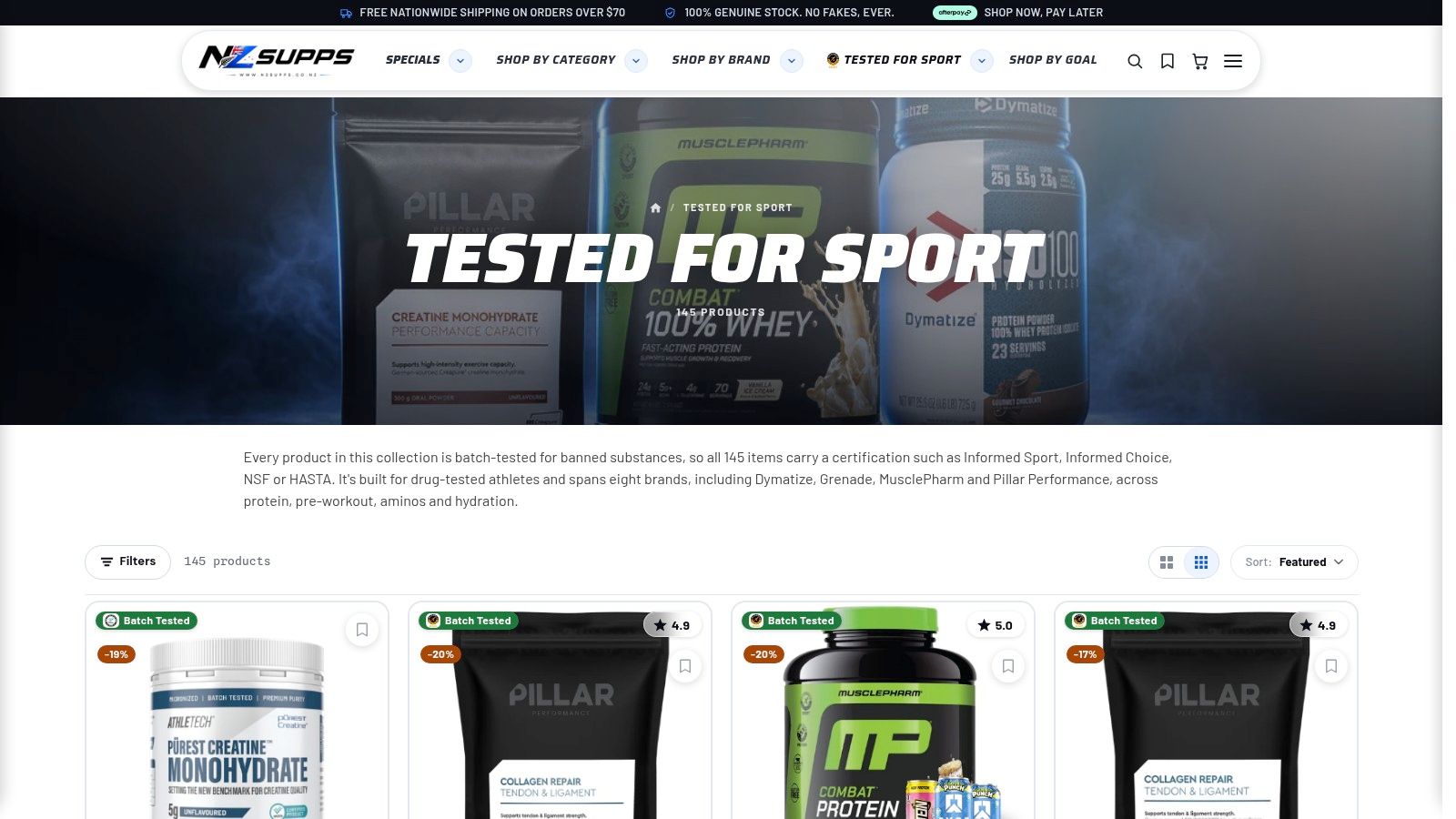
For athletes who need independent testing, the Tested for Sport filter is the one that saves time. It narrows the field before you start comparing flavours and macros, which is how it should be.
Shipping details matter too. NZ-owned, stock held and dispatched domestically from Palmerston North, free delivery over $70, and same-day dispatch on weekday orders placed before 1pm are the sort of practical checks that make a difference when you're planning around training or travel.
Buy the protein family first, then judge the tub on label facts, not marketing gloss.
Three Filters to Run Before You Buy
First, run a personal-intake filter. If your meals already cover your daily protein target, you probably don't need a big tub. If they don't, pick a powder that fills the gap without bloating your calories or adding ingredients you don't want.
Second, run a label filter. Compare protein per 100 g, not just serve size. Check allergens, read the per-serve cost, and look for any daily-use statement if the product is a supplemented food.
Third, run an athlete filter. If you're drug tested, verify the batch, keep your records, and only trust the certification that matches the exact product in your hands. A badge on a webpage is not enough.
If you want a clean shortlist, start with the protein category, move to whey protein if you want dairy-based picks, and use one product page to anchor your comparison against the rest. Pick the protein family, run the three checks, then buy. Our protein powder range shows current prices and stock.
If you want a straight answer on the right powder for your training, NZ Supps gives you the tools to compare protein type, label details, and sport-tested options without the usual fluff. Visit NZ Supps to check the current protein range, compare the tubs properly, and choose one that fits your goals and your label standards.