SHOP NOW, PAY LATER













 Informed Sport
 Informed Choice
 NSF Certified for Sport
 HASTA Certified

Most active people land somewhere between 1.4g and 2.0g of protein per kilogram of body weight per day. That is 98g to 140g for a 70kg person. Sedentary adults need less, hard training and cutting push you toward the top of the range, and everything counts: food first, shakes for the gap. You do not need to hit a magic number to the gram, you need to stop landing 40g short every single day.
Protein targets get argued about endlessly online, but the ranges used by sports nutrition bodies are boringly consistent. The International Society of Sports Nutrition position stand puts general exercising adults at 1.4 to 2.0g/kg/day. The baseline recommended intake for sedentary adults sits far lower, around 0.8g/kg, which is a floor for not losing muscle, not a target for building it.
Quick answer
Most active people need 1.4 to 2.0 g of protein per kg of body weight a day (98 to 140 g at 70 kg), against a sedentary baseline of about 0.8 g/kg. Get most of it from food, then use one scoop of protein powder, about 25 g of protein, for the daily gap. If shakes supply more than a third of your protein, add food rather than more scoops.
Here is how to turn that into actual meals, with the worked examples people search for.
Daily protein targets by goal
| Situation | Guide range | 60kg person | 70kg person | 85kg person |
|---|---|---|---|---|
| Sedentary baseline | about 0.8 g/kg | 48 g | 56 g | 68 g |
| General training | 1.4 to 1.6 g/kg | 84 to 96 g | 98 to 112 g | 119 to 136 g |
| Building muscle | 1.6 to 2.0 g/kg | 96 to 120 g | 112 to 140 g | 136 to 170 g |
| Cutting (keeping muscle) | 1.8 to 2.2 g/kg | 108 to 132 g | 126 to 154 g | 153 to 187 g |
Two notes on the table. Cutting sits highest because sports nutrition guidance sets higher protein targets to help hold on to muscle when calories drop. And the ranges overlap on purpose: precision to the gram is not the point, consistency across the week is.
How much protein per day for a woman?
The same per-kilogram maths, scaled to body weight. A 60kg woman training a few times a week lands around 84 to 96g a day; chasing muscle, 96 to 120g. There is no evidence-based reason to use different multipliers by sex for these goals, and the "women need barely any protein" instinct mostly reflects smaller default portions, not different physiology.
The practical female-specific note is that smaller bodies hit the target with smaller absolute numbers, which makes it very achievable from food plus one shake. The creatine for women guide covers the other half of the most-asked training-supplement questions.
Picking the powder itself? Protein powder for women: what actually matters explains why the tub does not need to say "for her".
What 100g of protein actually looks like
- 3 eggs at breakfast: about 19g
- 200g chicken breast at lunch: about 45g
- 200g Greek yoghurt as a snack: about 20g
- Glass of milk with dinner: about 8g
- Running total: 92g, one shake away from any target in the table
That is the entire trick. Meals built around an actual protein source carry you to within one scoop of the target, and a 25g shake closes the gap for about $2.19 at current prices. The protein per scoop guide shows what each stocked tub really delivers per serve, because scoop weight and protein grams are different numbers.
Protein in one serve
One scoop, bottle or bar as listed on each label. NZ Supps range, September 2026.
Blue bars are powders, one scoop each. Dark bars are single bottles, bars and snacks.
Read it as gap fillers. One scoop of powder adds 20 to 27 g, a 40 g bottle covers a bigger gap in one go, and a 35 g protein chocolate bar at 9.2 g is a snack rather than a shake.
Spread matters a little, too. Protein synthesis responds better to three or four decent hits of 25 to 40g than to a token breakfast and a giant dinner. Do not build a spreadsheet about it; just stop eating 80% of your protein after 7pm. Older adults have their own per-meal targets, covered in our guide to protein powder for older adults.
Can you eat too much protein?
For healthy people, intakes above the ranges here mostly waste money rather than cause harm; research on healthy kidneys has not shown damage from higher protein diets. The practical downsides are budget and crowding out other food. Anyone with kidney disease or under medical dietary management is a different case and should follow their clinician's numbers, not a gym article's.
The other overshoot is the shake-heavy diet. Powders are a top-up, not a food group. If shakes are supplying more than a third of your daily protein, the cheaper and more filling fix is usually meals with more actual food in them.
Hitting the number without hating your life
- Anchor every meal on a protein source: eggs, meat, fish, tofu, dairy, legumes.
- Batch the boring wins: a bag of chicken thighs and a tub of Greek yoghurt cover half a week.
- Keep one whey or plant protein tub for the daily gap. One scoop, done.
- Cutting? Read the cutting protein guide for the leanest per-calorie options.
- Bulking and can't eat enough? That is the one job of a mass gainer.
What you top up with changes what that daily 25 g costs. Powders cost less per gram of protein; bottles and bars cost more but need no shaker. The price per 25 g of protein comparison lines up every tub if you want the full list.
| Format | Example | Protein per serve | Per 25 g of protein |
|---|---|---|---|
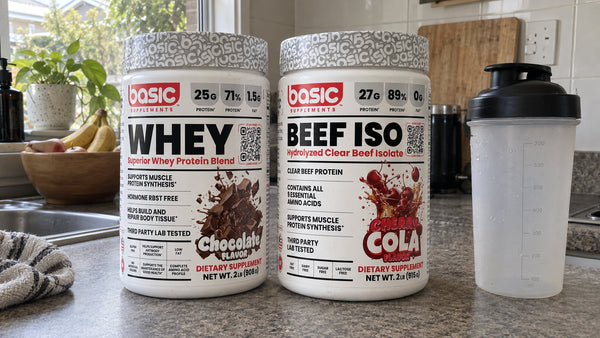
| Beef isolate powder | Basic Supplements Beef Isolate, 1.81kg | 27 g a scoop | $2.11 |
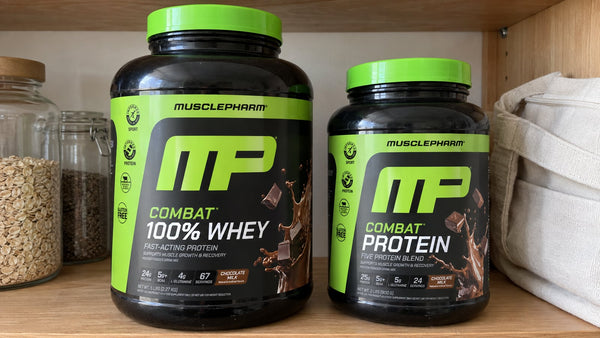
| Whey powder | MusclePharm Combat 100% Whey, 2.27kg | 25 g a scoop | $2.19 |
| Protein water powder | Inspired Protein Water, 750g | 24.3 g a scoop | $3.23 |
| Plant powder | Macro Mike Peanut Plant Protein, 1kg | 25.7 g a scoop | $3.50 |
| Ready to drink | MusclePharm 12-Pack Combat Ready RTD | 40 g a bottle | $5.21 |
| Protein bar | MusclePharm 4-Pack Combat Sport Bar | 20 g a bar | $5.59 |
New to all of this? The protein powder guide for beginners covers choosing a first tub and mixing it, and the best protein powder for muscle gain guide compares tubs for anyone building size.
Know your number now? Multiply your weight by 1.6 as a starting target, eat food first, and grab a tub from the protein range for the daily 25g the fridge keeps failing to supply. The stack finder can sort the rest of the routine in about a minute.
How much protein per day to build muscle?
About 1.6 to 2.0g per kilogram of body weight daily, alongside progressive training. For an 80kg person that is 128 to 160g. More than that has not shown extra muscle growth in controlled research.
How much protein per day to lose weight?
Aim high in the range, about 1.8 to 2.2g/kg, to help keep muscle while calories are down. A 70kg person cutting lands around 126 to 154g. Total calories still decide the weight change; the higher protein target is the guideline for holding on to muscle while you do it.
How much protein per day for a 60kg female?
Roughly 84 to 96g for general training and 96 to 120g when prioritising muscle gain. That is normal meals plus one shake, not a chicken-only existence.
Is 200g of protein a day too much?
For most people it is simply more than needed; for a 100kg lifter it sits within the cutting range. Healthy kidneys handle high intakes, but the extra grams beyond the ranges above buy little. Anyone with kidney conditions needs medical guidance.
Sources and health note
- ISSN position stand: protein and exercise
- Australia and New Zealand nutrient reference values for protein
This is general sports-nutrition information, not an individual prescription. Body composition, age, pregnancy, and medical conditions change protein needs; a registered dietitian can set a personal target. Product prices referenced were checked 24 September 2026.