SHOP NOW, PAY LATER










 Informed Sport
 Informed Choice
 NSF Certified for Sport
 HASTA Certified

You're probably here because you've started training, or you're trying to eat a bit better, and now protein powder keeps popping up everywhere. One mate says you need it. Another says it's a waste of money. Then you walk into a supplement shop or scroll online and suddenly you're choosing between whey, isolate, vegan blends, shaker sizes, flavours, and tubs that all seem to promise the same thing.
The simple truth is this. Protein powder for beginners isn't the starting point. Your actual protein intake is. If your meals already cover your needs, powder may do very little besides make your pantry fuller. If your food intake falls short, though, a shake can be a very useful gap-filler.
Quick answer
Start with food: work out your daily target with our protein per day guide, and if you still land 20 to 30 g short most days, one serve of protein powder is usually enough to close the gap. Buy a smaller tub first and pick by how dairy treats you: whey concentrate if dairy is fine, isolate if it is touchy, plant protein if you avoid it. You can compare all three in our protein powder range.
Table of Contents
- Do You Actually Need Protein Powder as a Beginner
- How to Work Out Your Personal Protein Target
- Choosing Between Whey Concentrate Isolate and Plant Protein
- How to Dose Time and Mix Your Shakes for Best Results
- Common Mistakes Beginners Make and How to Avoid Them
- Your Simple 7 Day Starter Plan and Next Steps
Do You Actually Need Protein Powder as a Beginner
You finish your first few gym sessions feeling motivated, then protein powder starts following you everywhere. Social posts, gym chats, supermarket shelves. It can feel like buying a tub is part of getting serious.
For plenty of beginners, it is not.
New Zealand data gives a useful reality check. In the 2008/09 Adult Nutrition Survey, median usual daily protein intake was 102 g for males and 71 g for females, compared with adult guideline values of 55 g/day for men and 45 g/day for women, according to the Ministry of Health nutrition summary. That does not mean every person is covered. It does mean a lot of adults already get a decent amount of protein from ordinary meals.
The useful question is simple. Are you short on protein, or are you being sold convenience?
Protein powder works like a spare tyre. Handy when you need it. Pointless to use every day if your wheels are already fine.
When food is probably doing the job
If your day already includes a few solid protein foods, you may be closer to your target than you think. Breakfast might be yoghurt and milk. Lunch could be chicken, tuna, tofu, or eggs. Dinner often adds mince, fish, beans, or another protein source. It adds up fast.
That matters because powder is not a beginner requirement. It is a food product with one main job. It helps fill a gap when meals are not enough or not practical.
Practical rule: If you can hit your daily target with normal meals most days, protein powder is optional.
That is the frame worth keeping in your head. You are not choosing between being serious or not serious. You are choosing whether convenience would solve a real problem.
When a shake actually earns its place
A shake can make sense if your day keeps getting in the way of eating well.
- You train, then do not eat for hours. A shake can cover that gap.
- You have a small appetite. Drinking 20 to 30 grams is often easier than chewing another meal.
- Your routine is messy. A scoop in a shaker is easier than relying on perfect meal prep.
- You avoid some protein foods. Vegetarian, vegan, or dairy-free eating can make convenient options more useful.
There is also a cost and trade-off side to be honest about. Powders are convenient, but they are usually less filling than whole foods, often pricier per serve, and easy to overbuy before you know whether you need them. For a beginner, that is worth knowing upfront.
If you are in a special life stage, broad gym advice may not be enough. If that question is specifically about pregnancy, check with your midwife or GP before you buy anything.
A quick beginner check
Before you spend money, run through these:
- Do my meals already include a clear protein source two or three times a day?
- Do I often miss meals or finish training with nothing planned after?
- Would a shake solve a practical gap, not just add extra protein because it feels healthy?
- Could I name the part of my day where powder would help?
If you are nodding yes to that last pair, protein powder may be useful. If not, start with food first. For beginners, that is usually the smarter move.
How to Work Out Your Personal Protein Target
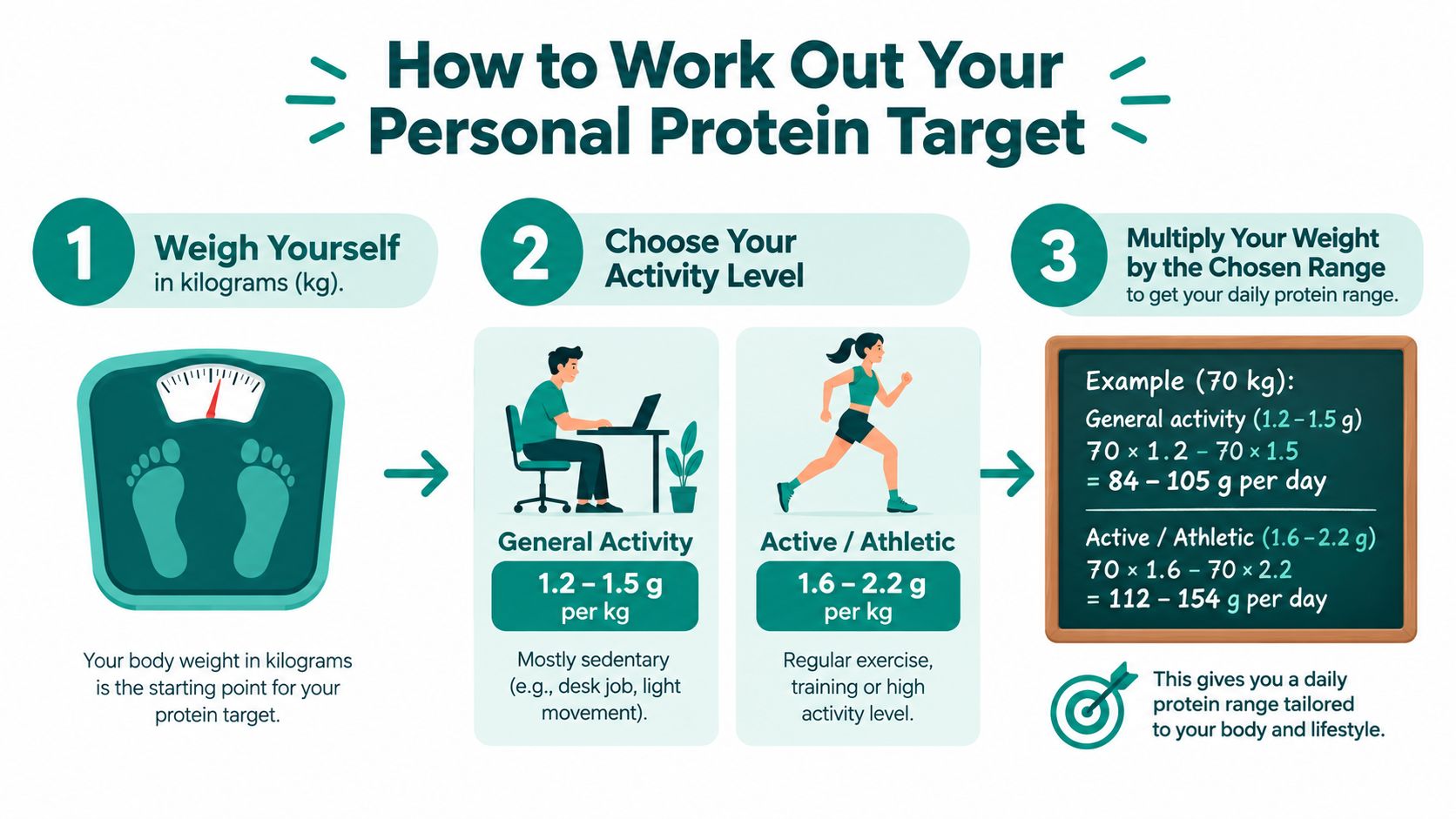
A good protein target should feel usable, not random. The easiest way to get there is to start with your body weight, pick a training level that matches your real week, then check whether food already gets you close.
Start with body weight
Use your body weight in kilograms.
For the average healthy adult, baseline protein needs are much lower than gym protein targets. Once you start training a few times per week, your target usually goes up. The useful beginner question is not “what is the highest number I can hit?” It is “what number fits my current training and is realistic to repeat most days?”
Use this as a practical starting point:
- Not training yet, or only lightly active: start around 0.8 g per kg
- Training 3 times per week at moderate intensity: start around 1.4 g per kg
- Training hard 4 to 5 times per week with muscle gain as a clear goal: work in the 1.6 to 2.0 g per kg range
- Pushing volume hard in a dedicated muscle-building phase: some people go higher, but beginners usually do not need to start there
If you want a fuller NZ-specific explanation, this guide on how much protein per day in NZ breaks the ranges down well.
A simple 70 kg example
Let's use a beginner who weighs 70 kg.
- At 0.8 g/kg/day, that's 56 g/day
- At 1.4 g/kg/day, that's 98 g/day
- At 2.0 g/kg/day, that's 140 g/day
- At 2.2 g/kg/day, that's 154 g/day
Here's the practical bit. If that 70 kg person does three solid gym sessions per week, start at 98 g per day for two weeks. Then check three things: recovery, hunger, and whether that intake is easy to hit from normal meals. If recovery feels poor or you are constantly short, nudge it up. If meals already cover it without stress, you may not need a powder at all.
Match the target to your body size and your actual training week, not to the loudest person in the gym.
Split it across the day
Big daily numbers look harder than they are. Protein works a bit like filling a water bottle across the day. A few decent pours are easier than trying to do it all at once.
Spreading your target over 3 to 5 eating times makes it easier to hit and easier on your stomach. For a target around 98 g/day, that could look like:
- Breakfast: 20 to 25 g
- Lunch: 25 to 30 g
- Snack or shake: 20 to 25 g
- Dinner: 25 to 30 g
That pattern is why protein powder can be useful. Not because everyone needs a shake, but because one serve can tidy up a shortfall if breakfast was light or dinner ends up late.
Audit a normal day
Before you buy anything, check what yesterday already gave you.
Write down your meals and ask:
- Breakfast: did it include a proper protein source, or was it mostly carbs?
- Lunch: was there enough protein to carry you through the afternoon?
- Dinner: was this your only strong protein meal?
- Snacks: could one planned snack fix the gap more easily than adding a whole extra meal?
This step matters. A lot of beginners find they are not wildly low. They are just short by one decent serving. That is a gap-filler problem, not a “buy supplements first” problem.
If your meals already get you near your target, keep it simple and use food. If you keep landing 20 to 30 grams short, a shake starts to make practical sense.
Choosing Between Whey Concentrate Isolate and Plant Protein
Most beginners get stuck. They hear “whey” and “isolate” as if one is for serious lifters and one is for everyone else. It's not that dramatic.
Most of the time, your choice comes down to budget, digestion, and dietary preference. Start there.
The simplest decision guide
If you eat dairy comfortably and want the lowest-cost starting point, whey concentrate usually makes the most sense. If dairy tends to upset your stomach or you want less lactose, isolate is often easier to tolerate. If you avoid dairy altogether, plant protein is the obvious lane.
For a direct side-by-side breakdown, this comparison of whey isolate vs concentrate helps if you're deciding between the two dairy options.
Which Protein Type Fits Your Beginner Needs
| Protein Type | Best For | Watch For | Typical Trade-off |
|---|---|---|---|
| Whey concentrate | Beginners who want a straightforward, budget-friendly option | May not suit people sensitive to lactose | Usually cheaper, but not always the lightest on digestion |
| Whey isolate | People who want a leaner, lower-lactose dairy option | Often costs more per serve | Easier digestion for some, higher price |
| Plant protein blend | Vegans, dairy-avoiding shoppers, or people who simply prefer plants | Taste and texture can vary more between brands | Good fit for dietary needs, but mixability and flavour may be less consistent |
How to think about value
Beginners often make two mistakes here. They either buy the cheapest tub and hate it, or buy the premium option without knowing why.
A better approach is to check:
- Cost per serve: Not just tub price
- Protein per serve: What you get each scoop
- Ingredients: Shorter and clearer is easier to judge
- Tolerance: The one your stomach handles is the one you'll keep using
To see cost per serve worked out for every tub, not just starter sizes, our protein powder price per 25 g comparison puts them side by side.
Budget, stomach, lifestyle
Here's the coach version.
If money matters most, start with concentrate. If your stomach is fussy, try isolate. If you don't eat dairy, use a plant blend and judge it on taste, texture, and whether you'll stick with it.
If you're leaning plant-based and want a plain-English overview before comparing tubs, a beginner's guide to plant protein gives useful background on what to expect.
A beginner doesn't need the fanciest tub. You need the one that fits your diet, your budget, and your routine well enough that you'll actually finish it.
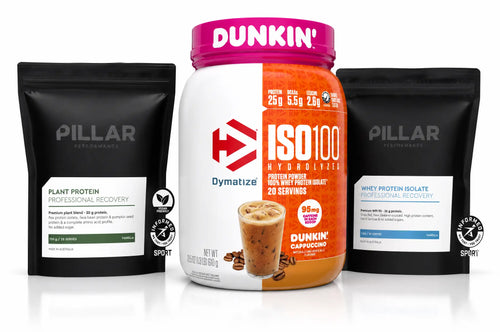
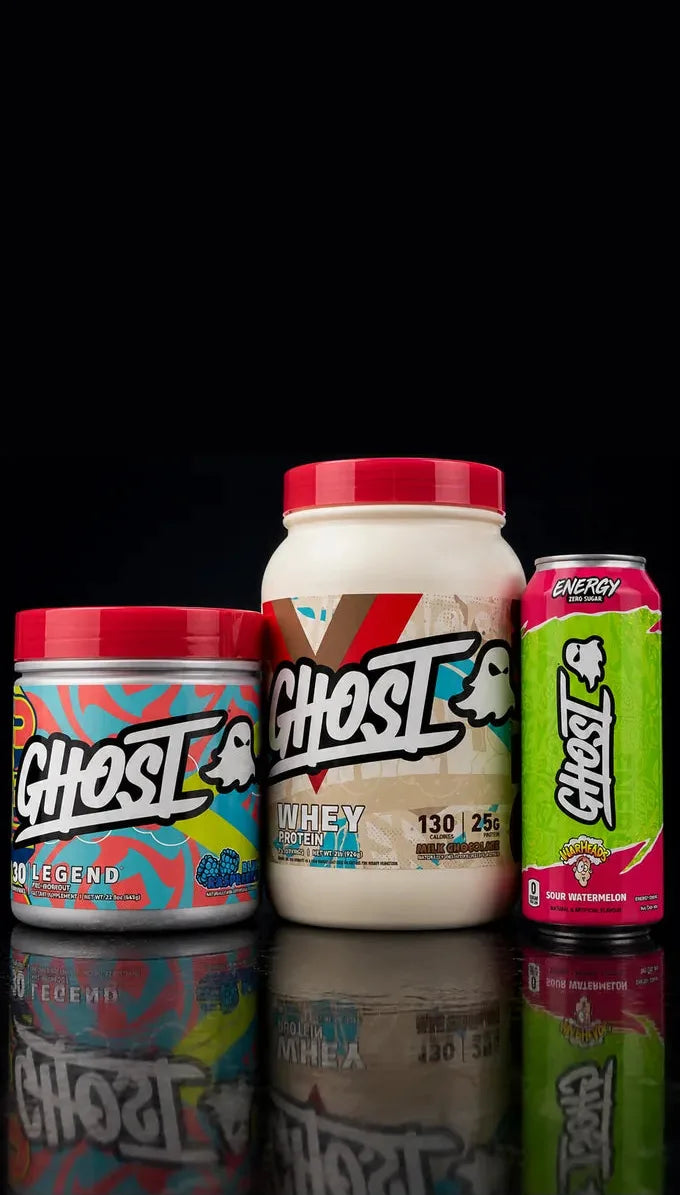
Here is how those lanes look in the NZ Supps range right now, plus a fourth for anyone in tested sport. Protein and price per serve are from each product listing, September 2026.
Whey concentrate
- Usually costs less per serve than isolate
- Whey starter tubs run $2.77 to $3.39 a serve for 25 g of protein
Whey isolate
- Less lactose than concentrate, usually more per serve
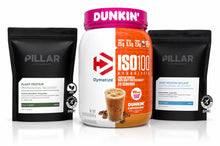
- Dymatize Iso 100 726g: 25 g of protein, $4.16 a serve
Plant protein
- 20 to 21 g of protein a serve in the starter tubs, against 25 g for whey
- Ghost Vegan Protein 896g: $2.93 a serve
- Pillar Performance Vegan Protein Isolate 750g: $3.79 a serve
Tested for sport
- For anyone who competes under anti-doping rules
- Starter tubs on the tested list: MusclePharm Combat Sport, Dymatize Iso 100 and Pillar Performance Vegan Protein Isolate
- Still check the certification for your batch, as covered further down
How to Dose Time and Mix Your Shakes for Best Results
You finish a workout, get in the car, and realise dinner is still hours away. That is the kind of moment a protein shake helps. It fills a gap.
For beginners, the best routine is usually the simplest one. Use a shake when food is not practical, keep the serve consistent, and stop treating every scoop like a science experiment.
How much to use
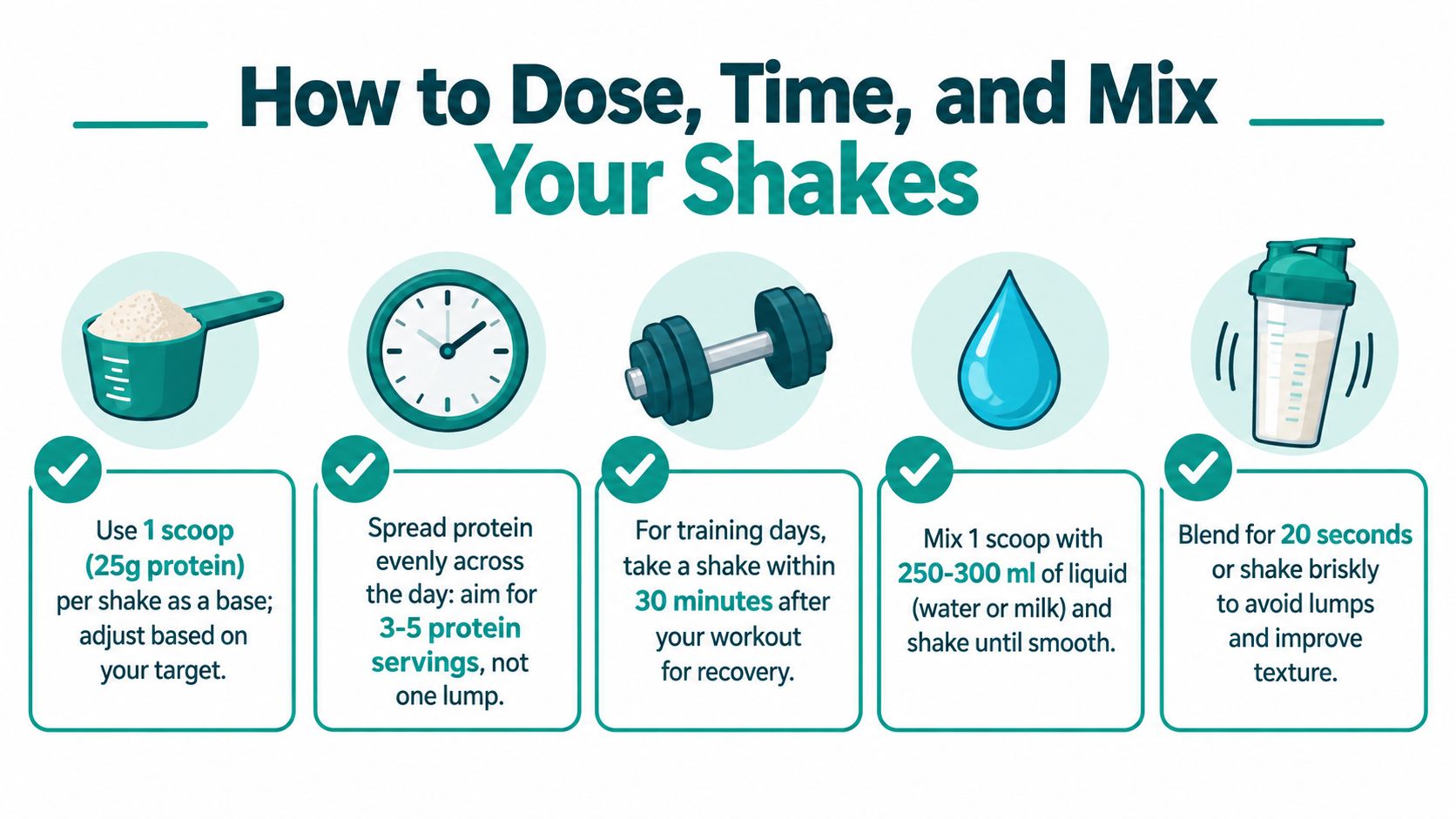
Start with one measured serve from the tub. That gives you a clear baseline and makes it easier to see how the powder fits into your daily protein target.
The goal is not to cram in extra scoops. The goal is to cover the part your meals did not handle.
A simple way to judge it:
- If your meals already cover the day well: save the shake for busy days
- If breakfast is light on protein: use part or all of a serve there
- If you train after work and dinner is late: a shake after training can tide you over
- If a full serve feels too much: split it into two smaller shakes across the day
That last point helps more people than you might think. A smaller shake is often easier on the stomach and easier to stick with.
Timing without overthinking it
Protein timing matters less than many beginners assume. Daily total still does most of the heavy lifting.
So if you train and eat a proper meal soon after, you may not need a shake at all. If your next meal is delayed, a shake is a practical backup. It works a bit like carrying a spare tyre. You hope your meals cover things, but it is useful when the day does not go to plan.
If you want a plain-English explanation of post-workout timing, this guide to protein timing breaks it down well.
Coach's shortcut: Hit your daily target first. Use shake timing to solve real-life gaps.
Mixing tips that make shakes easier to drink
A lot of bad first impressions come from bad mixing.
Use cold water or milk if you want a smoother texture. Pour the liquid in first, then add the powder, because that usually leaves fewer dry clumps stuck at the bottom. If the shake still comes out chalky, blend it or let it sit for a minute and shake again.
Keep your first recipes boring. Plain works.
Once you know you like the powder, then add extras like oats, banana, yoghurt, or peanut butter. If you start with five ingredients and hate the result, you will not know what caused the problem.
Easy ways to use a serve
You do not have to drink every scoop as a standard shake.
- Post-gym shaker: quick and portable
- Mixed through cooled oats: easy breakfast upgrade
- Blended into a smoothie: useful when appetite is low
- Stirred into yoghurt: simple snack option
The best shake is the one that fits your day without replacing proper meals. If your food already gets you there, great. If not, one well-timed serve can patch the gap without making nutrition feel complicated.
Common Mistakes Beginners Make and How to Avoid Them
You finish a workout, feel motivated, and buy a big tub because it seems like the serious gym thing to do. A week later, you are either using too much of it, skipping proper meals, or wondering whether you needed it at all.
That is the pattern to avoid. Protein powder works best as a gap-filler. It helps on days when your food intake falls short. It does not get extra points for being expensive, oversized, or used at every opportunity.
Treating powder like a meal replacement
A shake can add protein. It cannot do the full job of a balanced meal on its own.
Recent NZ reporting notes that adults generally need far less protein than supplement marketing can make it seem, and that powders are best treated as a supplement to food rather than a replacement, as discussed in this 1News report on the protein push.
A simple way to handle this is to build your meals first, then use powder to patch the gaps. Chicken on toast, eggs with yoghurt, mince and rice, beans on wraps. Those meals bring more than protein. They also give you energy, fibre, and nutrients that a scoop alone does not.
Assuming more scoops means better results
Beginners often treat protein like sunscreen. If one layer is good, three must be better. Your body does not work like that.
If your daily target is already covered by food plus one shake, adding random extra scoops usually means extra cost and a fuller stomach, not extra progress. It can also crowd out normal meals, which makes your overall diet worse, not better.
The better question is simple. Did this scoop fill a real gap today?
Ignoring supplement safety
This part matters most if you play tested sport, but it is a good habit for anyone buying supplements. The Sport Integrity Commission guidance on supplement safety says no supplement is completely risk-free and recommends extra care with product choice, including batch-tested options where appropriate.
That does not mean all powders are dodgy. It means labels are not a guarantee. If independent testing matters to you, check for certification instead of trusting the front of the tub. Some retailers, including NZ Supps, list tested-for-sport options and product filters, which can make comparison easier.
A quick explainer can help before you shop:
Buying a giant tub before you know it suits you
This catches heaps of beginners.
A cheap cost per serve looks good until the flavour is awful, the texture is gritty, or your stomach hates it. Then the “bargain” becomes a cupboard ornament. Start with a smaller bag or tub if you can. It is a bit like buying shoes. Fit matters more than getting the biggest box.
Here is that trade-off in real numbers, same product and flavour in two sizes. The starter tub costs $0.25 to $0.76 more per serve, but far less up front if the flavour turns out to be a dud.
Both sizes in stock at NZ Supps, September 2026. Per serve is the tub price divided by listed serves.
| Product | Starter tub | Big tub |
|---|---|---|
| Basic Supplements Beef Isolate, Cherry Cola | 908g: $75.85 ($2.53 a serve) $0.25 more a serve, $61.00 less up front |
1.81kg: $136.85 ($2.28 a serve) |
| MusclePharm Combat Sport, Chocolate Milk | 907g: $77.85 ($2.99 a serve) $0.31 more a serve, $61.60 less up front |
1.81kg: $139.45 ($2.68 a serve) |
| Basic Supplements Whey, Mango Cream | 908g: $74.85 ($2.77 a serve) $0.55 more a serve, $73.60 less up front |
2.27kg: $148.45 ($2.22 a serve) |
| Dymatize Iso 100, Cookie N Cream | 726g: $99.95 ($4.16 a serve) $0.58 more a serve, $164.90 less up front |
2.27kg: $264.85 ($3.58 a serve) |
| Cellucor C4 Pro Whey, Reese's Peanut Butter | 980g: $89.85 ($3.21 a serve) $0.76 more a serve, $72.10 less up front |
2.65kg: $161.95 ($2.45 a serve) |
Using powder before checking your actual intake
This is the mistake underneath a lot of the others.
If you have already done the daily protein maths from earlier in the article, use it. Compare your target with what you eat on a normal day. If breakfast and lunch already get you close, you may not need powder at all. If you keep coming up short by one easy serve, then powder has a clear job.
That is the honest beginner test. Use it to fill a gap, not to play the part of a gym person.
Your Simple 7 Day Starter Plan and Next Steps
If you want to get started without making this complicated, use one week to test the basics.
Days 1 to 3
Work out your target from body weight. Then write down what you normally eat. Don't try to be perfect yet. Just see whether your meals already cover most of the job.
Days 4 to 5
Choose one change only.
- If breakfast is weak, add a protein-focused breakfast or a shake.
- If post-gym food is delayed, place one shake in your bag.
- If dairy doesn't agree with you, choose a type that suits your tolerance.
Days 6 to 7
Review how you feel.
- Energy: Are you less snacky or more steady through the day?
- Recovery: Do sessions feel easier to bounce back from?
- Digestion: Any bloating, heaviness, or flavour fatigue?
- Consistency: Did the plan fit real life?
Keep the first week small. One optional shake a day is plenty for most beginners.
What to buy for a simple start
Your starter list can be minimal:
- One protein powder that suits your diet
- A shaker bottle
- A few easy protein foods for home
- A notebook or phone note for tracking intake
If week one shows a real gap, these starter-size tubs keep your first spend under $100 while you find out which type and flavour you will actually finish.
Starter-size tubs in stock at NZ Supps, September 2026. Protein and serves are from each label. Per serve is the tub price divided by listed serves. Where serves vary by flavour, it uses the flavour with the most serves. All eight list 110 to 150 calories per serve.
| Tub | Price | Protein per serve |
|---|---|---|
| Basic Supplements Whey, 908g (whey) | $74.85, 25 to 27 serves (from $2.77 a serve) | 25 g |
| MusclePharm Combat Sport, 907g (whey) | $77.85, 26 serves ($2.99 a serve) | 25 g |
| Cellucor C4 Pro Whey, 980g (whey) | $89.85, 28 serves ($3.21 a serve) | 25 g |
| Ghost Whey, 1014g (whey) | $94.95, 26 to 28 serves (from $3.39 a serve) | 25 g |
| Dymatize Iso 100, 726g (whey isolate) | $99.95, 24 serves ($4.16 a serve) | 25 g |
| Basic Supplements Beef Isolate, 908g (beef isolate) | $75.85, 30 serves ($2.53 a serve) | 27 g |
| Ghost Vegan Protein, 896g (plant, vegan) | $81.95, 28 serves ($2.93 a serve) | 20 to 21 g |
| Pillar Performance Vegan Protein Isolate, 750g (plant, vegan) | $94.85, 25 serves ($3.79 a serve) | 20.5 g |
When you are ready for a bigger tub, our protein powder comparison covers whey, isolate and blends across the full range.
If your meals already do the job, that might be all you learn from week one, and that's useful. You don't need a supplement just to feel like you're doing fitness properly. You need a plan that matches your actual intake, budget, and training.
If you still have a clear gap after a week, keep the powder. If not, stick with food and save your money.
If you want to compare whey, isolate, and plant options without guessing, NZ Supps lets you check ingredient panels, per-serve value, and tested-for-sport products in one place. That's useful when you've done the protein maths first and just need a practical way to choose a tub that fits your budget, diet, and training routine.