SHOP NOW, PAY LATER















 Informed Sport
 Informed Choice
 NSF Certified for Sport
 HASTA Certified

Take creatine close to your workout, either before or after, and you will cover the bases. The timing debate gets more attention than it deserves. Randomized trials comparing immediate pre- versus post-workout dosing show similar long-term gains in muscle mass and strength, and the evidence base is small enough that no one should be losing sleep over a 30-minute window.
Here is what actually matters right now:
- Take 3: 5 g of creatine monohydrate daily. That is the maintenance dose supported across multiple reviews.
- Time it within 1: 2 hours of your workout on training days, before or after, whichever fits your routine.
- On rest days, take it at the same time each day to build the habit.
- Consistency beats precision. Missing doses because you chased the “perfect” window costs more than any timing edge could give back.
If you want a single rule: pair your creatine with your post-workout shake today and stop second-guessing it.
Key Takeaways
Creatine monohydrate taken consistently at 3 to 5 g/day, timed within 1 to 2 hours of your workout, delivers the muscle and strength benefits the research supports, with timing playing a secondary role to daily adherence.
| Point | Details |
|---|---|
| Daily dose | Take 3 to 5 g of creatine monohydrate every day; loading (~20 g/day for 5 to 7 days) is optional. |
| Timing window | Dose within 1 to 2 hours before or after training; either side of the workout produces similar long-term gains. |
| Co-ingestion benefit | Mixing creatine with protein and carbohydrates may improve muscle uptake via insulin-mediated transport. |
| Consistency first | Missing doses costs more than any timing edge; anchor your dose to an existing daily habit. |
| Nzsupps option | Nzsupps stocks unflavored creatine monohydrate with transparent labeling, available for single purchase or subscription delivery across New Zealand. |
Table of Contents
- What does the research actually say about creatine timing?
- How could timing plausibly matter? The physiology behind peri-workout dosing
- How much creatine should you take, and when?
- Simple routines that make creatine timing easy to stick to
- Who might see less benefit, and who needs extra caution?
- What side effects should you expect?
- How to choose a creatine product in New Zealand
- Nzsupps’ practical recommendation for lifters in New Zealand
- Consistency beats the perfect timing window
- Creatine monohydrate is available at Nzsupps for NZ lifters
- Sources
What does the research actually say about creatine timing?
The direct-comparison evidence is thinner than most articles suggest. Fewer than four randomized trials have put immediate pre- versus post-workout creatine head-to-head, and all of them are small.
The Antonio & Ciccone (2013) trial is the one most often cited as evidence for post-workout superiority. It ran for four weeks in recreational bodybuilders and used magnitude-based inference rather than traditional significance testing. The post-workout group showed a possible advantage for fat-free mass and 1-rep-max bench press, but the sample was small and the duration short enough that the finding should be treated as a signal, not a verdict.
The 2026 randomized crossover pilot cuts the other direction. Eleven participants completed an acute resistance session under three conditions: creatine before, during, or after training. Pre-exercise dosing produced the strongest acute strength performance. The authors were explicit that the results are exploratory and that larger confirmatory trials are needed before any practical recommendation changes.
Taken together, the current consensus from reviews is that pre- and post-workout creatine produce similar long-term muscle and strength gains. The evidence is limited by:
- Small sample sizes across all trials (most under 30 participants per group)
- Short durations (four to twelve weeks), which may not capture long-term divergence
- No intramuscular creatine measures in most studies, so saturation differences cannot be confirmed
- Heterogeneous populations, doses, and co-ingestion protocols that make direct comparison difficult
Statistic callout: A standard maintenance dose of 3 to 5 g/day is enough to meaningfully increase intramuscular creatine stores over several weeks without a loading phase.
How could timing plausibly matter? The physiology behind peri-workout dosing
The mechanistic case for timing creatine around exercise is plausible, even if the trial evidence has not yet confirmed a large practical effect.
Absorption kinetics. After you swallow creatine monohydrate, plasma creatine peaks within roughly two hours and remains elevated for about four hours. That window overlaps neatly with a peri-workout dose taken 30 to 60 minutes before or immediately after training.

Exercise-induced blood flow. Resistance training drives a significant increase in muscle blood flow during and shortly after a session. Higher perfusion means more creatine delivered to muscle tissue per unit of time, which is why the peri-workout window is considered favorable regardless of whether you land on the pre or post side.
Insulin-mediated uptake. Creatine transport into muscle cells is partly driven by the Na⁺-K⁺ pump and is enhanced by insulin. Pairing creatine with carbohydrates and protein raises insulin, which may modestly improve muscle uptake compared with taking creatine alone in a fasted state. This is the strongest practical argument for mixing creatine into a post-workout shake that already contains protein and fast-digesting carbohydrates.

The honest caveat. These mechanisms make peri-workout timing biologically plausible, but they do not prove that the effect size is large enough to matter in practice. Creatine uptake is primarily driven by total daily dose and baseline muscle creatine levels. The timing window is a refinement, not a foundation. For a deeper look at how creatine drives gains at the cellular level, the real mechanism behind creatine is worth reading.
How much creatine should you take, and when?
Loading vs. maintenance
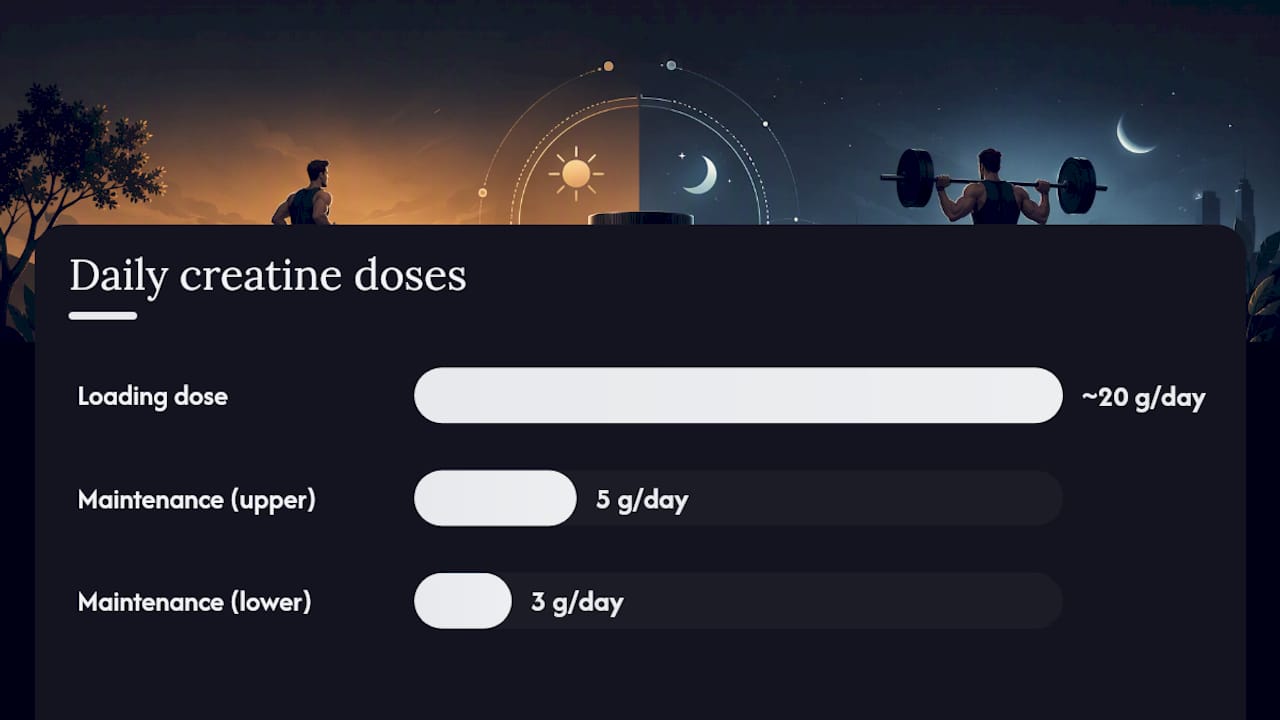
Most people do not need to load. Loading saturates muscle creatine faster, which can be useful if you have a competition or training block starting soon, but the end state after several weeks of maintenance dosing is the same.
| Protocol | Dose | Duration | Notes |
|---|---|---|---|
| Loading | ~20 g/day split into 4 x 5 g doses | 5 to 7 days | Faster saturation; higher GI upset risk |
| Maintenance | 3 to 5 g/day | Ongoing | Reaches saturation in 3 to 4 weeks; better tolerated |
On workout days: Take your maintenance dose within 1 to 2 hours before or after training. Either window works. If you train in the morning, add it to your post-workout shake. If you train at night, take it before you head to the gym.
On rest days: Timing matters less. Pick a consistent time, with breakfast or your first meal, and stick to it. The goal is habit, not optimization.
Pro Tip: If you already mix a protein shake after training, add your creatine to that shake. You get the insulin co-ingestion benefit from the protein and any carbohydrates in the shake, and you never have to think about a separate dose.
For guidance on how much water to drink with creatine, Nzsupps has a practical breakdown that covers hydration and weight changes.
Simple routines that make creatine timing easy to stick to
The best timing strategy is the one you will actually follow for six months. Here are three practical options:
-
Post-workout shake method. Add 3 to 5 g of creatine monohydrate directly to your protein shake immediately after training. The protein and carbohydrates support insulin-mediated uptake, and the routine is already built into your gym habit. This is the most common approach and the one most directly supported by the co-ingestion evidence.
-
Pre-workout mix method. Dissolve creatine in 250 to 300 ml of water or juice 30 to 60 minutes before your session. If you train fasted or prefer not to eat post-workout, this keeps the dose in the peri-workout window without requiring food. Avoid mixing with high-caffeine pre-workout blends if you are sensitive to GI distress; some practitioners note that caffeine combined with creatine can increase stomach upset for certain individuals.
-
Breakfast anchor method (rest days and low-structure days). On days you do not train, take creatine with your first meal. Pairing it with food reduces the chance of nausea and anchors the habit to something you already do every morning.
Two-week habit checklist:
- Days 1 to 3: Decide on one method above and write it into your schedule.
- Days 4 to 7: Take your dose at the same time each day without exception.
- Days 8 to 14: Note whether you missed any doses and adjust the anchor habit if needed.
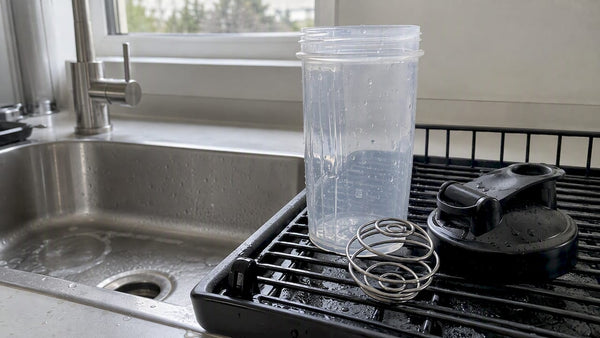
Pro Tip: Fully dissolve creatine powder in liquid before drinking. Undissolved granules sitting at the bottom of a shaker are a common cause of GI discomfort. Warm water dissolves creatine faster than cold.
For practical guidance on stacking creatine alongside protein, the creatine vs. protein powder comparison covers ordering and mixing in detail.
Who might see less benefit, and who needs extra caution?
Non-responders
An estimated 20 to 30% of people do not respond meaningfully to creatine supplementation. The most likely reasons are high baseline intramuscular creatine (leaving little room for further increase) and genetic variation in creatine transporter expression. If you have been consistent for six weeks and notice no change in training performance or body weight, you may be a non-responder, and adjusting timing will not change that.
Special populations
- Vegetarians and vegans tend to start with lower baseline intramuscular creatine because dietary creatine comes almost entirely from meat and fish. Research suggests they often show a larger absolute increase in muscle creatine and a stronger response to supplementation than omnivores.
- Women generally respond well to creatine but may see different body composition effects. The creatine for women guide from Nzsupps covers dose and trade-offs specific to female athletes.
- Older adults benefit from creatine for muscle preservation and strength, and the Candow et al. (2014) trial specifically used an older adult population with no meaningful difference between timing groups.
- Competitive athletes in New Zealand should check that any creatine product they use is batch-tested and free from prohibited substances. Creatine itself is not banned under the World Anti-Doping Agency (WADA) code, but contamination in poorly manufactured products is a real risk. Sport New Zealand and Drug Free Sport NZ both advise competitive athletes to use batch-tested supplements.
When to get medical advice first
- Existing kidney disease or reduced renal function
- Medications that affect kidney function (certain NSAIDs, diuretics, or immunosuppressants)
- A history of kidney stones
Creatine at standard doses is well-tolerated in healthy individuals, but if you fall into any of the above categories, talk to your GP or a sports medicine physician before starting.
What side effects should you expect?
Weight gain in the first week
The most common early change is a 1 to 2 kg increase on the scale. This is water, not fat. Creatine draws water into muscle cells as intramuscular creatine stores rise, and glycogen storage also increases alongside it. The weight gain is real but it reflects muscle hydration, not body fat accumulation.
GI symptoms
Bloating and stomach upset are most common during a loading phase when doses reach 20 g/day. At maintenance doses of 3 to 5 g/day, GI symptoms are uncommon. If you experience discomfort:
- Split the dose across two smaller servings
- Take creatine with food rather than on an empty stomach
- Fully dissolve the powder before drinking
Caffeine interaction
Some evidence suggests that combining creatine with large amounts of caffeine may blunt creatine’s ergogenic effects for certain users and increase GI distress. If you use a high-caffeine pre-workout, consider taking creatine separately, either 30 minutes before the pre-workout or post-training instead.
NZ-specific note
If you have any concerns about kidney function, consult a New Zealand-registered healthcare provider before starting creatine. The New Zealand Ministry of Health does not classify creatine as a controlled substance, but it is not a regulated medicine either, so product quality varies by brand.
How to choose a creatine product in New Zealand
Creatine monohydrate is the form with the most research behind it. Other forms (creatine HCl, buffered creatine, creatine ethyl ester) are marketed as superior but have not consistently outperformed monohydrate in direct trials. Start with monohydrate.
When reading a label, look for:
- Creatine monohydrate as the sole active ingredient. Proprietary blends that obscure the creatine dose are a red flag.
- Clear serving size. A 5 g scoop should deliver 5 g of creatine, not 5 g of a blend.
- Third-party batch testing. For competitive athletes, this is non-negotiable. Look for Informed Sport, NSF Certified for Sport, or an equivalent certification on the label.
- Unflavored options. Unflavored creatine mixes into anything without affecting taste, which makes it easier to add to shakes, oats, or juice consistently.
- Price per serve. Creatine monohydrate is one of the cheapest effective supplements available. If you are paying a significant premium for a branded form, the extra cost is unlikely to deliver extra results.
Pro Tip: Micronized creatine monohydrate dissolves more easily than standard-grind powder and tends to cause less GI discomfort. If you have had stomach issues with creatine before, switching to a micronized version is worth trying before abandoning the supplement entirely.
For a full price-per-serve comparison of creatine products available in New Zealand, the best creatine NZ guide breaks down every major option.
Nzsupps’ practical recommendation for lifters in New Zealand
The routine Nzsupps recommends for most New Zealand lifters is straightforward:
- 3: 5 g of creatine monohydrate daily, taken within 1 to 2 hours of your workout (before or after)
- On rest days, take it with your first meal at a consistent time
- Mix with a protein shake or carbohydrate-containing drink when possible to support uptake
- Skip the loading phase unless you have a specific reason to saturate faster
- If you have any kidney concerns, speak to a GP before starting
Nzsupps stocks unflavored creatine monohydrate options from brands with transparent labeling and clear serving sizes. The Athletech Purest Creatine Monohydrate is a clean, single-ingredient option suited to mixing into any shake. The Basic Supps Creatine Unflavoured is another straightforward choice with a competitive price per serve.
Pro Tip: Vegetarians and vegans should expect a stronger initial response to creatine than omnivores, given lower baseline stores. Stick with the standard 3 to 5 g/day dose; there is no evidence that higher doses accelerate the benefit for this group.
Consistency beats the perfect timing window
The timing debate around creatine is real, but it is also a distraction from what actually drives results. Every trial that has compared pre- versus post-workout dosing has found that both groups improved. The gap between them, when it exists at all, is smaller than the gap between someone who doses consistently and someone who skips days because they missed their “optimal” window.
Creatine works by saturating your muscle cells over time. That saturation depends on daily dosing, not on whether you took it at 6:45 AM or 7:15 AM. The 2026 pilot trial showing an acute strength advantage for pre-exercise dosing is interesting, but it involved eleven participants and a single session. It is a hypothesis worth watching, not a reason to restructure your routine.
Pick a time that fits your life. Pair it with something you already do every day. Give it six weeks before you evaluate whether it is working. That is the protocol that actually produces results.
Creatine monohydrate is available at Nzsupps for NZ lifters
If you have read this far and you are ready to start, the simplest next step is a clean, unflavored creatine monohydrate product you can add to any shake or drink without overthinking it.
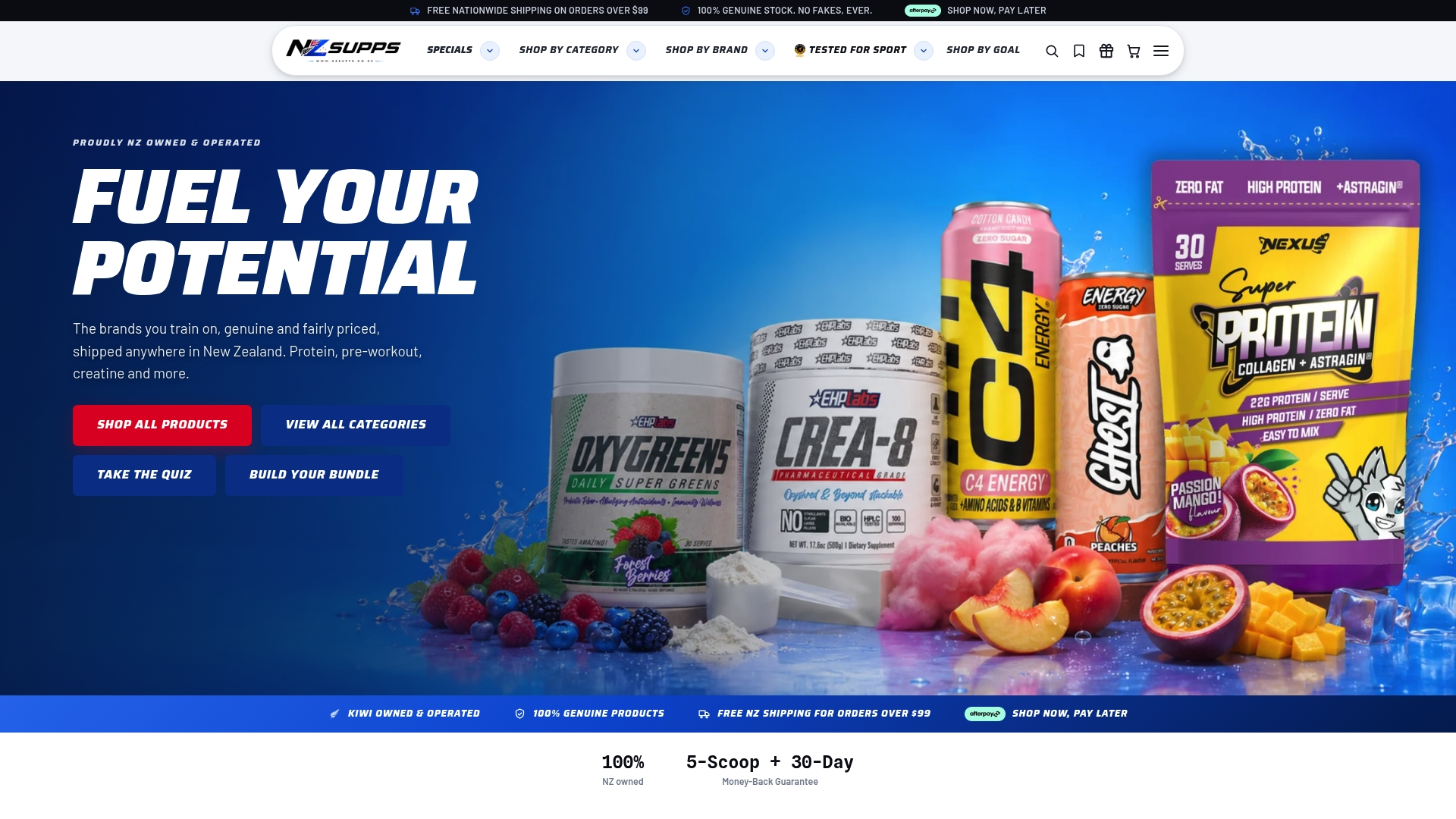
Nzsupps carries a curated range of creatine monohydrate products with transparent labeling and clear per-serve dosing, shipped across New Zealand. The Athletech Purest Creatine Monohydrate is a single-ingredient unflavored option that dissolves cleanly and pairs well with any post-workout shake. For competitive athletes, Nzsupps also stocks batch-tested options so you can train and compete with confidence. Subscribe for regular delivery and you remove the single biggest obstacle to consistency: running out. Browse the full creatine range at Nzsupps and pick the option that fits your budget and routine.
Sources
- Creatine O’Clock: Does Timing of Ingestion Really Influence Muscle Mass and Performance? - PMC
- Acute Creatine Ingestion Before Resistance Training Enhances Strength Performance More than Ingestion During or After Training: A Randomized Crossover Pilot Trial
- The effects of pre versus post workout supplementation of creatine monohydrate on body composition and strength | Journal of the International Society of Sports Nutrition | Springer Nature Link
- When to Take Creatine on Workout and Rest Days
- When to take creatine: Best time and how to take
This article is general information, not a substitute for advice from a qualified doctor. Consult a qualified healthcare professional about your own circumstances before acting on anything here.