SHOP NOW, PAY LATER








 Informed Sport
 Informed Choice
 NSF Certified for Sport
 HASTA Certified

Half a measured serving of pre-workout reduces the amount of the whole formula, not just the caffeine. It also reduces the other disclosed ingredients. Whether that smaller amount makes sense depends on the exact label and why you want to change it.
The first check is what "one serving" means. A label may use one scoop, two scoops or another measure. Half a scoop and half a serving are only the same thing when the full serving is one scoop.
The short answer
- Calculate from the labelled serving weight and ingredient amounts.
- A half serving is not automatically a low-caffeine or suitable serving.
- Do not raise the dose just to reach one ingredient's advertised amount; the other ingredients rise with it.
A real label, worked through
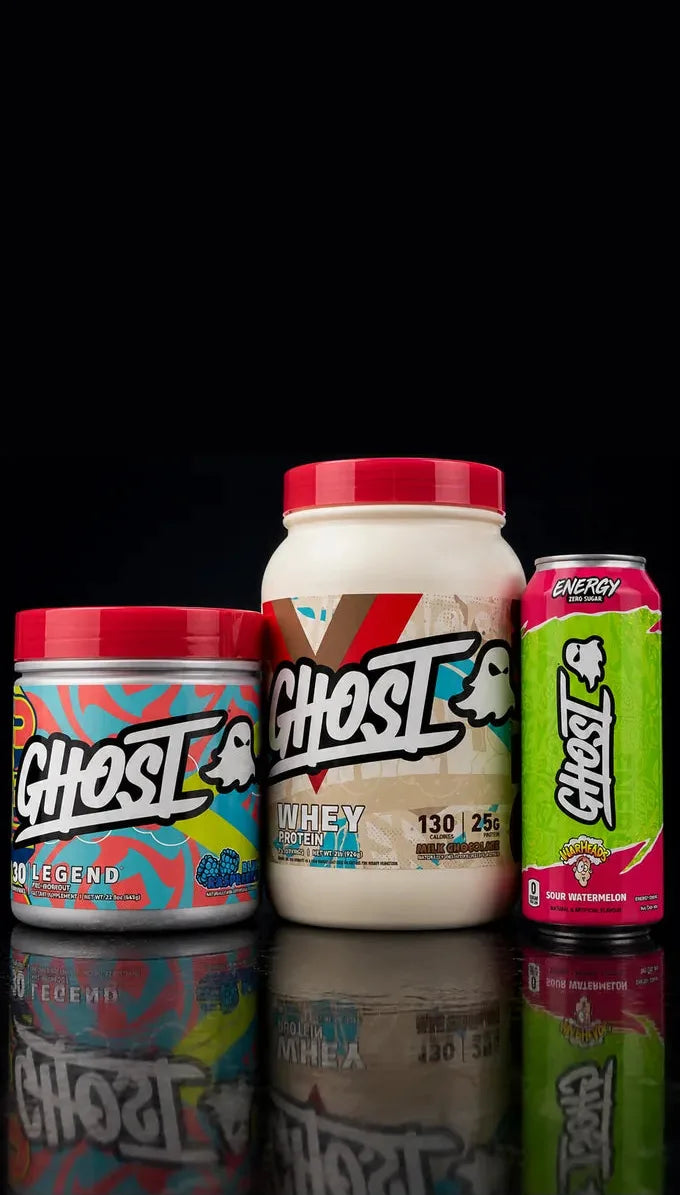
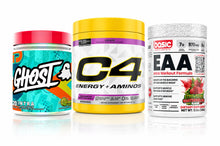
The NZ Supps panel for Ghost Legend V4 Blue Raspberry, 645g lists one scoop as 21.5g. The following comparison uses that exact product record, checked 21 September 2026. It is a calculation from the panel, not independent laboratory testing of a half scoop.
| Component | Labelled full serving | Calculated half serving |
|---|---|---|
| Powder | 21.5g | 10.75g |
| Natural caffeine | 300mg | 150mg |
| L-citrulline | 6,000mg | 3,000mg |
| Beta-alanine | 3,200mg | 1,600mg |
| Betaine anhydrous | 2,500mg | 1,250mg |
| L-tyrosine | 2,000mg | 1,000mg |
For this formula, the smaller amount halves caffeine and also halves each of the other listed ingredients. It does not leave the full citrulline amount behind while selectively reducing the stimulant.
This product's listed directions allow a half scoop to assess tolerance, limit use to one scoop in 24 hours and say to avoid other caffeine sources while using it. Keep those restrictions attached to the example. The table is not permission to add a coffee or another product because the first number is smaller.
Other versions and flavours can have different scoop weights or formulas. Read the tub in front of you instead of transferring these numbers to Ghost Legend All Out, another brand or a previous formula.
Why eyeballing the scoop is imprecise
A scoop measures volume. How tightly the powder is packed and whether it is level or heaped can affect the weight. A half-full scoop is therefore a rough volume estimate, not proof that you measured exactly half the serving grams.
Use a suitable scale if you need a more repeatable powder weight, and follow the label's measuring directions. For the example above, half of 21.5g is 10.75g. A scale displaying only whole grams cannot establish that amount precisely. Do not present it as a precision measuring device when it is not one.
Even a correctly weighed portion is a calculation based on the finished product's labelled formulation. It is not an assay of the caffeine in that individual portion. Keep the original container and directions, and do not repack stimulant powders into unlabelled scoops or bags.
Less caffeine does not mean no caffeine
The example half serving still contains a calculated 150mg caffeine. That is a meaningful amount to include when reviewing the product and your routine. Do not call it caffeine-free, and do not assume it is appropriate simply because the full serving contains more.
EFSA's caffeine guidance discusses safety for defined healthy populations. It is not a personalised dose calculator, and its conclusions about caffeine alone do not approve every pre-workout formula or combination.
For a broader comparison of labels, use our pre-workout caffeine guide. Check the current product panel before acting on an older comparison, because formulas and regional versions can change.
What happens to the other ingredients?
Their calculated amounts reduce too. That is the central trade-off when you use less of a multi-ingredient product. You may prefer the smaller serving, but you should assess it as that smaller formula rather than claim you receive the full label dose of everything else.
Do not use tingling, a strong taste or a dramatic sensation as a measuring tool. Those experiences do not tell you exactly how much caffeine or another ingredient you consumed. Our beta-alanine tingles explanation covers that sensation separately.
If your real aim is to avoid caffeine while choosing other ingredients, compare an appropriate caffeine-free formula instead of repeatedly altering a high-caffeine one. That does not mean you need to buy another product. Training without pre-workout remains an option.
A lower serving can be a decision, not a stepping stone
There is no obligation to move up to a full serving because you have used a product for a week. The label's maximum is a ceiling, not a goal. Decide based on suitability and directions rather than the idea that an experienced lifter should take a larger scoop.
If a serving causes unpleasant symptoms, do not treat that as proof you need to develop tolerance. Stop and reassess. A smaller number on paper does not rule out an adverse response or make an unsuitable formula suitable.
The beginner pre-workout guide introduces the category. This calculation adds the piece that beginner advice often leaves out: reducing a multi-ingredient serving changes the entire panel.
What changes about the tub's value?
A tub labelled as 30 full servings contains enough powder for approximately 60 half-size portions, assuming you use the full contents and measure consistently. That does not turn it into 60 full-strength servings.
At a given tub price, the powder cost per half-size portion is half the cost of a full-size portion. But compare what is delivered, not only the number of drinks. A smaller portion may suit you well; it may also provide less of an ingredient you specifically wanted.
No fixed price is needed for that calculation. Divide the current tub price by its labelled full-serving count, then divide that result by two. Use the current price and your actual portion when comparing products.
Where NZ Supps fits
Start with the panels in our pre-workout range. If the goal is avoiding caffeine, compare the stim-free options on their own directions and ingredients. Buy for the serving you will actually use, rather than a full-scoop claim you do not intend to follow.
Frequently asked questions
Is half a scoop always half a serving?
Only when the label defines one serving as one scoop. Check both the scoop count and gram weight.
Does half a scoop reduce only caffeine?
No. It reduces the calculated amount of every ingredient in the formula. Read the smaller serving as a smaller version of the whole panel.
Is half a high-stim serving automatically safe?
No. The remaining amount and the other ingredients still matter, as do the directions and individual restrictions. Half is a fraction, not a safety category.
Can I add coffee to make up the difference?
Do not assume that is allowed. Follow the exact product restrictions; the Ghost example here specifically says to avoid other caffeine sources.
Do I have to progress to a full scoop?
No. A maximum serving is not a target to work towards. There is no requirement to increase an amount that already fits an appropriate routine.
Will a 30-serving tub give 60 half servings?
Approximately, by powder quantity, if it is measured consistently and the contents are fully used. Each portion still supplies only half the labelled full-serving formula.