SHOP NOW, PAY LATER
















 Informed Sport
 Informed Choice
 NSF Certified for Sport
 HASTA Certified

Combining L-theanine with caffeine reliably improves focused attention and reaction time in acute doses, and it measurably reduces caffeine side effects like tachycardia in most controlled trials. Studies use doses ranging from 97 mg L-theanine with 40 mg caffeine up to 200 mg with 160 mg, with benefits concentrated in the first one to two hours. Anyone on blood pressure medication, stimulants, or with a cardiovascular condition should talk to a doctor before stacking the two.
TL;DR:
- Doses of 97 mg L-theanine and 40 mg caffeine improve task-switching, alertness, and reaction times, with benefits mainly occurring within the first two hours.
- Increasing to 200 mg L-theanine and 160 mg caffeine enhances reaction time and reduces caffeine-related side effects like rapid heart rate from 92% to 17%.
- Combining L-theanine with caffeine appears safe for most healthy adults when taken acutely, but long-term safety and interactions with medications require medical guidance.
- Athletes and sleep-deprived individuals show the most significant benefits, while strength-focused tasks may not improve and can even decline with L-theanine.
- Start with low doses matching your coffee intake, monitor your response, and avoid stacking if you have heart conditions, are pregnant, or are sensitive to stimulants.
Table of Contents
- Does L-Theanine With Caffeine Actually Improve Focus?
- What Doses Do Clinical Trials Actually Use?
- How Do L-Theanine and Caffeine Interact in the Brain?
- Is Combining Caffeine and L-Theanine Safe?
- Who Actually Benefits From This Combination?
- How Do You Combine Coffee and Supplements Safely?
- What Backs This Guide on L-Theanine and Caffeine?
- Is This Combination Worth Trying for You?
- Where to Find Quality L-Theanine and Caffeine Products
- Sources
Does L-Theanine With Caffeine Actually Improve Focus?
The short answer is yes, in the specific tasks researchers have tested it on. Sustained attention, task switching, and reaction time all show measurable gains when L-theanine and caffeine are dosed together, and the effect shows up across several independent trials rather than one lucky study.
One of the clearest data points comes from a double-blind crossover study in acutely sleep-deprived young adults. Participants who took 200 mg L-theanine with 160 mg caffeine improved their reaction time by 38.1 milliseconds compared to placebo, along with a higher hit rate on selective attention tasks. That is not a subtle margin in reaction-time research. A gap that size is often the difference between catching a mistake before it happens and catching it a beat too late.
A lower-dose study points the same direction. Researchers gave young adults 97 mg L-theanine paired with 40 mg caffeine, roughly what you’d get from a strong cup of tea and a modest coffee. Task-switching accuracy and self-reported alertness both improved significantly (P < 0.01), and blood pressure did not spike the way it sometimes does with caffeine alone. That trial matters because it used doses ordinary people could actually replicate without a scale and a supplement label.
Athletic performance research tells a related but distinct story. A 2025 trial on elite wrestlers used 3 mg per kilogram of body weight of each compound, a dose that scales up meaningfully for a 90-kilogram athlete. The combination improved grip strength, vertical jump, and medicine ball throw distance. The side-effect finding is the one worth remembering.
Tachycardia incidence dropped from 92% down to 17% when L-theanine was added to caffeine in that wrestling trial, compared to caffeine taken alone. That is one of the largest side-effect reductions reported in any caffeine supplementation study, and it is the statistic that drives most of the “calm-alert” framing you’ll see around this combination.
Not every study lines up neatly. A separate trial in competitive athletes found no additive cognitive benefit from combining the two, and L-theanine on its own was actually linked to decreased maximal leg and back strength in that particular protocol. Another study testing caffeine, L-theanine, and tyrosine together found gains in movement accuracy and hit time in dynamic tasks, but the added tyrosine muddies how much credit theanine alone deserves.
Here’s what the evidence supports and where it gets shaky:
- Sustained attention and selective attention tasks show consistent improvement across multiple trials.
- Task-switching accuracy improves reliably at both low (97 mg/40 mg) and high (200 mg/160 mg) doses.
- Reaction time gains are among the most replicated findings, with effect sizes large enough to matter in real tasks.
- Maximal strength outputs show mixed or negative results, meaning this isn’t a strength-training booster.
- Most trials run on small samples (dozens of participants, not hundreds) and test single acute doses, not weeks of daily use.
Meta-analytic review work backs the general direction of these findings, reporting small-to-moderate standardized effects on alertness and attention switching that cluster in the first two hours after ingestion. That window matters more than most people realize. This isn’t a supplement you take at 7 a.m. expecting an edge at 3 p.m.
What Doses Do Clinical Trials Actually Use?
Three dose pairs show up again and again in the research, and each one tells you something different about how the combination works at different intensities.
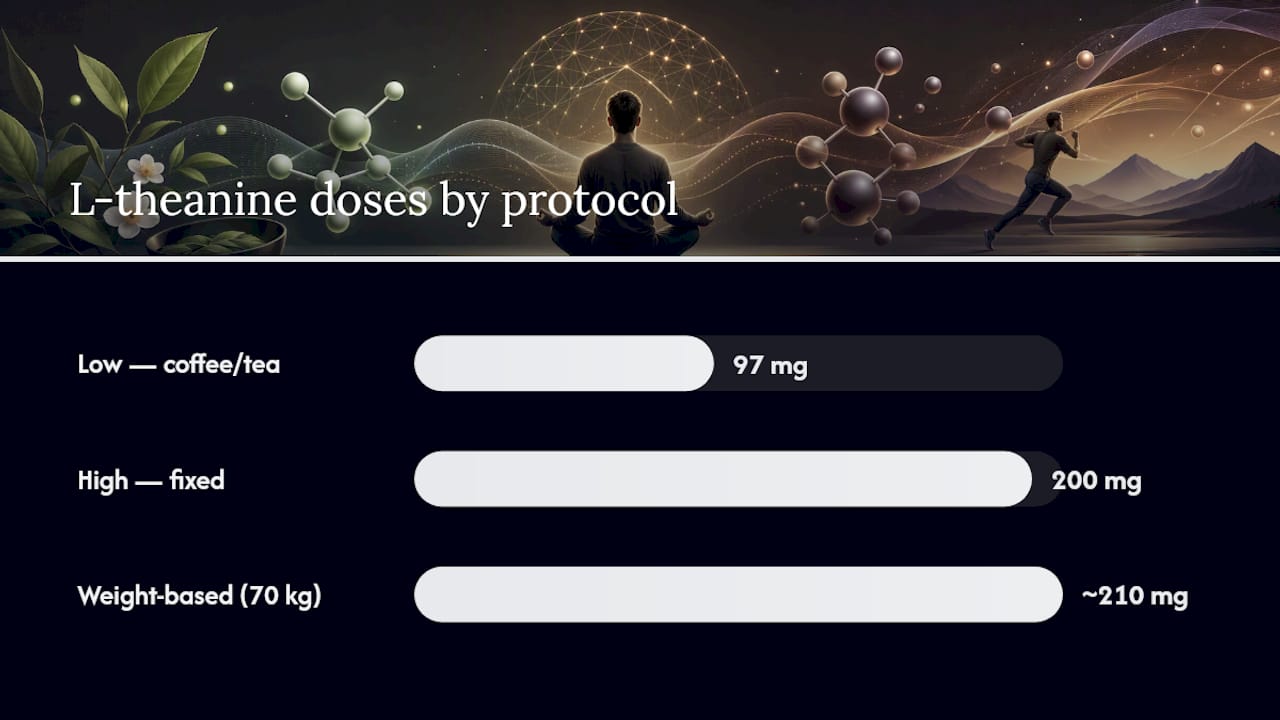
- 97 mg L-theanine + 40 mg caffeine. This is the “coffee and green tea” range, close to what you’d get from a modest breakfast combination. It’s the dose behind the task-switching accuracy findings and it’s the easiest for most people to start with.
- 200 mg L-theanine + 160 mg caffeine. This higher pairing produced the 38.1 millisecond reaction-time improvement in sleep-deprived adults. It’s roughly double the low-dose protocol and closer to what you’d find in a strong pre-workout plus a theanine capsule.
- 3 mg/kg L-theanine + 3 mg/kg caffeine. Used in the athletic trials, this scales with body weight rather than sitting at a fixed number. For a 70-kilogram adult, that works out to around 210 mg of each, similar territory to the high-dose protocol above.
Most researchers who study this combination lean toward something close to a 1:1 ratio by weight, or occasionally 2:1 theanine to caffeine. There’s no single “correct” ratio backed by a dose-response study that tested five or six ratios head to head. What the trials show is that both a modest 97:40 pairing and a much larger 200:160 pairing produce measurable benefits, just with the larger dose pushing reaction time gains further.
Timing follows caffeine’s own pharmacokinetics fairly closely. Caffeine peaks in the bloodstream around 30 to 60 minutes after ingestion, and L-theanine’s alpha-wave effects show up on a similar timeline. Taking both together, 30 to 45 minutes before the task or activity that demands attention, lines up with when the trials measured their outcomes.
Pro Tip: If you’re comparing pre workout vs coffee as your caffeine source, check the label ratio before adding straight caffeine on top. A pre-workout with 200 mg caffeine already sits at the high end of trial doses. Stacking more caffeine without proportional theanine defeats the purpose of the pairing.
The theanine caffeine ratio question comes up constantly in supplement forums, and the honest answer is that anywhere from 1:1 to 2:1 (theanine to caffeine) is defensible based on published protocols. What isn’t defensible is caffeine outweighing theanine by a wide margin since that’s the exact imbalance that produces jitters in the first place.
How Do L-Theanine and Caffeine Interact in the Brain?
Caffeine works by blocking adenosine receptors. Adenosine builds up in the brain throughout the day and makes you feel drowsy; caffeine sits on those receptors without activating them, which is why you feel more alert rather than sedated. That mechanism alone explains why caffeine makes you feel awake, but it also explains the jittery, wired feeling that comes with too much of it.
L-theanine works through a different pathway entirely, and that’s the whole point of pairing them.
- L-theanine increases alpha-wave activity in the brain, a pattern associated with a calm, wakeful state rather than drowsiness or sedation.
- It modulates GABA activity, the brain’s primary inhibitory neurotransmitter, which helps dial down overstimulation.
- It also affects glutamate signaling, contributing to a smoother arousal curve instead of a sharp spike.
- Together, these actions appear to blunt the peripheral side effects of caffeine (elevated heart rate, restlessness) without dulling the cognitive boost.
Neurophysiological studies measuring oscillatory alpha-band activity found that L-theanine tends to counteract the blood pressure rise that caffeine alone often causes, while the attention-task performance benefits of caffeine stayed intact. That’s the mechanistic explanation behind the tachycardia numbers in the wrestling trial. Caffeine still antagonizes adenosine and still drives alertness; theanine just prevents that stimulation from tipping into an overshoot.
It’s worth being honest about the limits here. Most of the mechanistic data comes from EEG measurements and animal models of GABA and glutamate activity, not direct human brain imaging during real-world tasks. Researchers describe the resulting state as “relaxed focus,” a term that captures the subjective experience better than any single neurotransmitter pathway does. The gap between what happens in a petri dish or an EEG cap and what you feel at your desk at 9 a.m. is real, and no study has fully closed it.
Is Combining Caffeine and L-Theanine Safe?
For most healthy adults taking a single acute dose, yes. The safety data across trials is fairly consistent, though it comes with real boundaries worth respecting.
The standout safety finding is the tachycardia reduction from the wrestling trial: 92% of athletes taking caffeine alone showed rapid heart rate, compared to just 17% when L-theanine was added at matching 3 mg/kg doses. That’s not a minor side effect footnote. Rapid heart rate is one of the most common reasons people quit caffeine or pre-workout supplements altogether, and this is the strongest evidence available that theanine directly addresses it.
Blood pressure shows a similar pattern. The 97 mg/40 mg trial found no worsening of blood pressure with the combination, and separate review work found L-theanine tends to blunt caffeine’s typical blood-pressure-raising effect. That said, acute trials are exactly that: acute. Most research measures a single dose over a few hours. Long-term, daily-use safety and tolerance data are still thin, so don’t treat a good single-dose result as proof that daily stacking for months carries zero risk.
Certain groups need to be more careful than the general trial population:
- Pregnant or breastfeeding individuals should avoid stacking caffeine sources and check with a doctor about any caffeine intake at all.
- Anyone on blood pressure medication or other stimulants needs medical guidance before adding a caffeine and theanine combination, since interaction risk compounds with existing drugs.
- People with diagnosed cardiovascular disease, arrhythmia, or anxiety disorders should treat this combination as a conversation with a clinician, not a supplement aisle decision.
- Children and teenagers are not represented in the trial data cited here, which all involved adult participants.
- Anyone sensitive to caffeine on its own should still expect some stimulant effect. Theanine reduces side effects; it doesn’t eliminate caffeine’s basic stimulant action.
Pro Tip: If sleep quality matters to you, treat this combination the same way you’d treat straight caffeine: cut off intake at least six hours before bed. Theanine calms the jitters, but it doesn’t neutralize caffeine’s effect on sleep architecture.
Practical mitigation is simple: start at the lower end of the dose range, avoid taking it within six hours of bedtime, and if you’re combining a supplement with an energy drink or pre workout that already contains caffeine, don’t double up without doing the math on total milligrams.
Who Actually Benefits From This Combination?
The populations with the strongest positive results share one thing in common: they need sustained, precise attention under some form of pressure or fatigue.
Elite athletes in combat and precision sports show up repeatedly in the research, likely because decision speed and accuracy under stress map directly onto what the combination improves. Sleep-deprived adults are the other standout group. The 38.1 millisecond reaction-time gain came specifically from participants who were acutely sleep-deprived, suggesting the combination may help most when your baseline attention is already compromised.
- Elite athletes in wrestling and similar sports showed improved physical outputs alongside major reductions in caffeine side effects.
- Sleep-deprived adults showed the largest reaction-time improvements of any tested group.
- Office workers and students doing sustained-attention or task-switching work fall into the same category the low-dose trial (97 mg/40 mg) tested.
- Maximal strength athletes should not expect the same benefit. One trial linked L-theanine alone to reduced leg and back strength output.
- Endurance metrics outside of the specific trials cited here remain largely untested, so treat claims about endurance gains skeptically.
If you’re deciding whether pre workout vs coffee vs a dedicated theanine and caffeine stack fits your goals, the honest starting point is to trial it small. Take a conservative dose, track your resting heart rate and how you feel subjectively, and adjust from there rather than assuming the trial results transfer perfectly to your body and your task.
How Do You Combine Coffee and Supplements Safely?
A reasonable starting protocol looks like this, based on the lower end of what trials have tested:
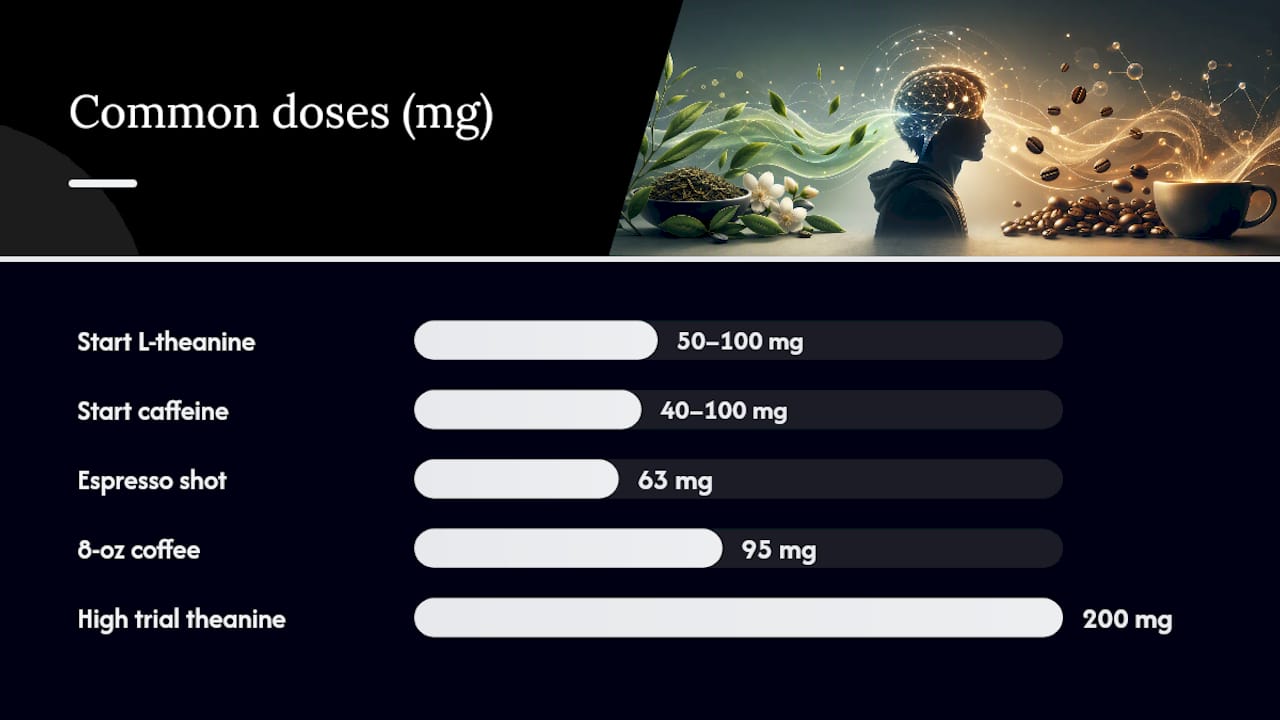
- Start with 50 to 100 mg of L-theanine paired with 40 to 100 mg of caffeine. That’s roughly one theanine capsule with a single shot of espresso, or half a cup of coffee.
- Measure your actual caffeine intake before adding a supplement on top. A standard 8-ounce cup of coffee runs around 95 mg of caffeine; an espresso shot is closer to 63 mg. If you’re drinking coffee and taking a theanine capsule, you don’t need to add extra caffeine from a separate source.
- Match capsule doses to your coffee, not the other way around. If your coffee already delivers 95 mg of caffeine, a 100 mg L-theanine capsule gets you close to a 1:1 ratio without buying a caffeine pill at all.
- Track resting heart rate and subjective anxiety for the first week. This is the single best early warning sign that your dose is too high, especially if you’re new to stacking supplements.
- Reassess after one to two weeks. If side effects stay low and focus feels improved, you can move toward the higher end of trial doses (200 mg theanine, 160 mg caffeine). If anything feels off, drop back down rather than push through.
Tea is worth mentioning here specifically, since it’s the one beverage that delivers both compounds naturally in a single serving. Green and black teas contain both caffeine and L-theanine in a roughly favorable ratio, which is part of why tea has a reputation for a calmer buzz than coffee. Brands like Yugen Teas source teas specifically for that natural compound profile, which makes tea a reasonable low-effort entry point before moving to isolated supplements.
Pro Tip: If you’re stacking this with a caffeinated pre-workout rather than plain caffeine, check the label for existing theanine content first. Some pre-workout formulas already include it, and adding a separate capsule on top can push your total dose past what any trial has actually tested.
Capsule and powder forms give you the most control over exact milligrams, which matters if you’re trying to replicate a specific trial dose. Tea gives you a gentler, less precise version of the same combination. Neither is wrong. It depends on whether you want to dial in a specific number or just want a calmer alternative to a second cup of coffee.
What Backs This Guide on L-Theanine and Caffeine?
This guide draws on randomized, double-blind, and crossover trial data rather than anecdotal supplement reviews, and it leans toward NZ Supps’s own detailed breakdown, L-Theanine and Caffeine: The Calm-Alert Combo, for readers who want a deeper look at how theanine moderates jitters and overstimulation specifically.
Author Blake put this piece together by synthesizing peer-reviewed trial data with NZ Supps’s day-to-day experience helping customers choose stimulant and nootropic products that fit their actual training and work schedules, not just a label claim.
A few things back the practical recommendations here beyond the cited trials:
- The supplement range is curated from established, trusted brands rather than stocking every product on the market.
- Product listings disclose ingredients and dosing transparently, so you can check milligram amounts against the trial doses covered above.
- Customer feedback often points to the same theme the research supports: pairing theanine with caffeine reduces the jittery crash that turns people off stimulant products entirely.
The goal of this guide isn’t to sell a single “correct” dose. It’s to give you the same numbers researchers used, so you can compare them to whatever’s on your own supplement label.
Is This Combination Worth Trying for You?
The honest takeaway is that this combination is worth trying if your goal is sustained attention under pressure or fatigue, and worth skipping if you’re chasing raw maximal strength. Those are two different jobs, and the research draws a fairly clean line between them. You can compare every option in our pre workout collection.
What people get wrong most often is treating “theanine and coffee” as a magic fix for any kind of caffeine sensitivity. It isn’t. It smooths the ride; it doesn’t turn caffeine into a completely different compound. If you already get anxious or your heart races on a single cup of coffee, theanine will likely help, but expecting zero stimulant sensation at all is setting yourself up for disappointment.
Personalizing your dose matters more than chasing the exact numbers from any one trial. Start low, track how you actually feel and perform, and adjust from there. And if you’re managing a heart condition, taking blood pressure medication, or you’re pregnant or breastfeeding, talk to a doctor before you stack anything, no matter how clean the trial data looks on paper.
— Blake
Where to Find Quality L-Theanine and Caffeine Products
Finding a caffeine source with a clearly labeled dose, and a theanine product that actually states its milligrams, solves most of the guesswork covered in this guide. NZ Supps stocks both stimulant and non-stimulant options with fully disclosed ingredient panels, which matters when you’re trying to match a trial-backed dose instead of hoping a proprietary blend lines up.
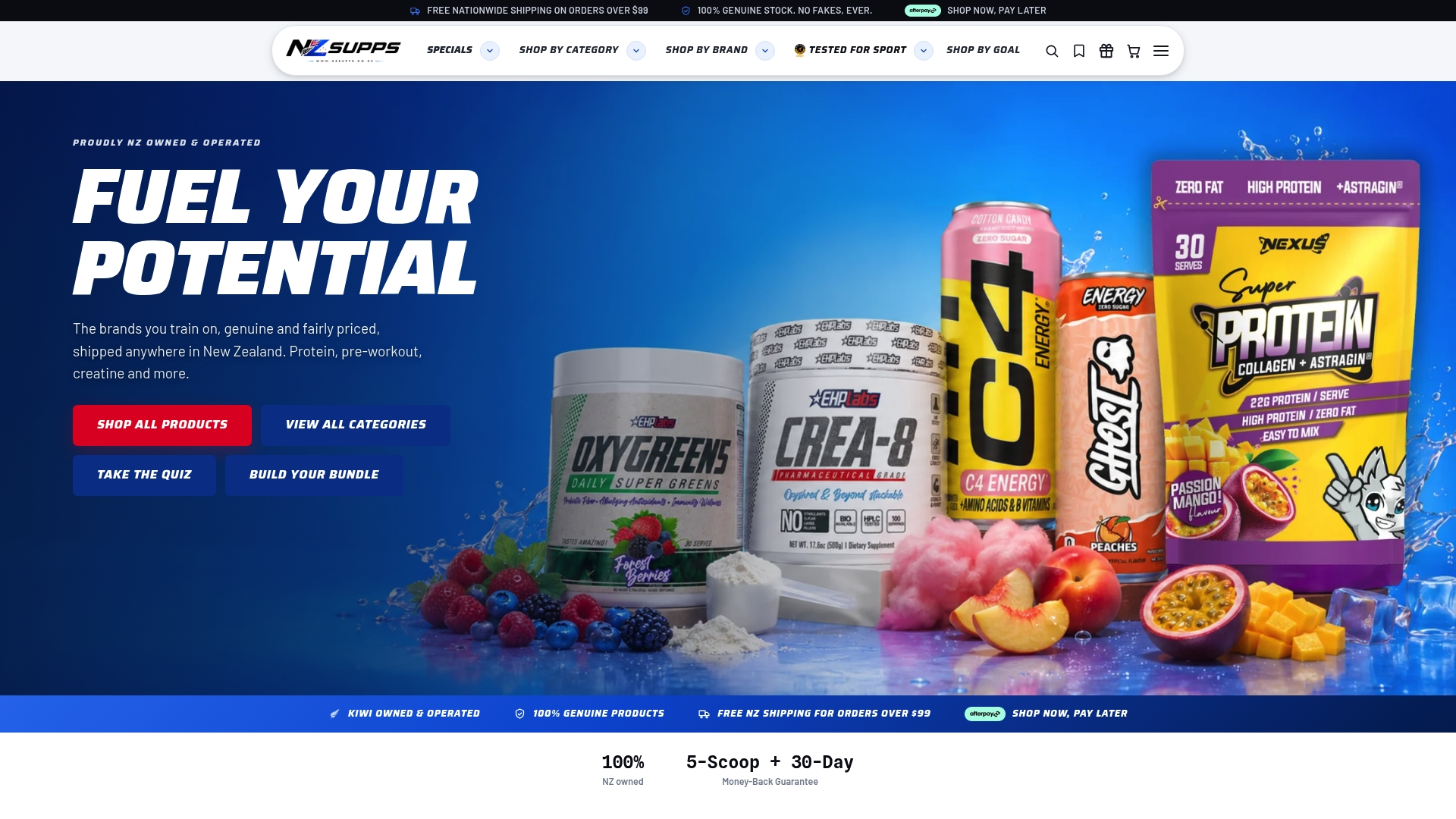
If you’re building a stack around a workout, the Cellucor C4 Sport Pre-Workout gives you a labeled caffeine dose you can pair with a separate theanine capsule, and the Basic Supplements Pre-Workout formula without beta-alanine works well if you’re sensitive to tingling side effects and want a cleaner base to build on. For a straightforward caffeine-only option you can dose precisely alongside theanine, the GAT Essentials Caffeine 200mg tablets let you control the exact milligram amount rather than guessing from a coffee cup.
Browse the current stimulant and pre-workout range on NZ Supps, check the ingredient panel on any product before you buy, and start with the lower end of the dosing protocols covered above.
This article is general information, not a substitute for advice from a qualified doctor. Consult a qualified healthcare professional about your own circumstances before acting on anything here.
Sources
- Performance-enhancing effects of caffeine and L-Theanine among Iranian elite wrestlers: a focus on cognitive and specific physical performance
- High-dose L-theanine–caffeine combination improves neurobehavioural and neurophysiological measures of selective attention in acutely sleep-deprived young adults
- The combination of L-theanine and caffeine improves cognitive performance and increases subjective alertness