SHOP NOW, PAY LATER









 Informed Sport
 Informed Choice
 NSF Certified for Sport
 HASTA Certified

You're standing in the supplement aisle with two plant tubs in your hands, both claiming to be clean, high-protein, and worth the money. Plant protein powder NZ is worth buying when you judge it by protein per serve, blend quality, allergen safety, and what the label says, not by the front-of-pack hype. If you want a straight answer, buy the powder that gives you the protein dose you need, fits your digestion, and passes the label check.
Table of Contents
- What Plant Protein Powder Means in NZ
- Pea, Rice, Soy and Blends Explained
- How to Read Protein Numbers on a Plant Powder Label
- Side by Side Plant Proteins at NZ Supps
- Allergens, Cross Contact and the Vegan Trap
- Flavour, Texture and How to Use It
- Tested for Sport and Why It Matters in NZ
- Your Plant Protein Decision Checklist
What Plant Protein Powder Means in NZ
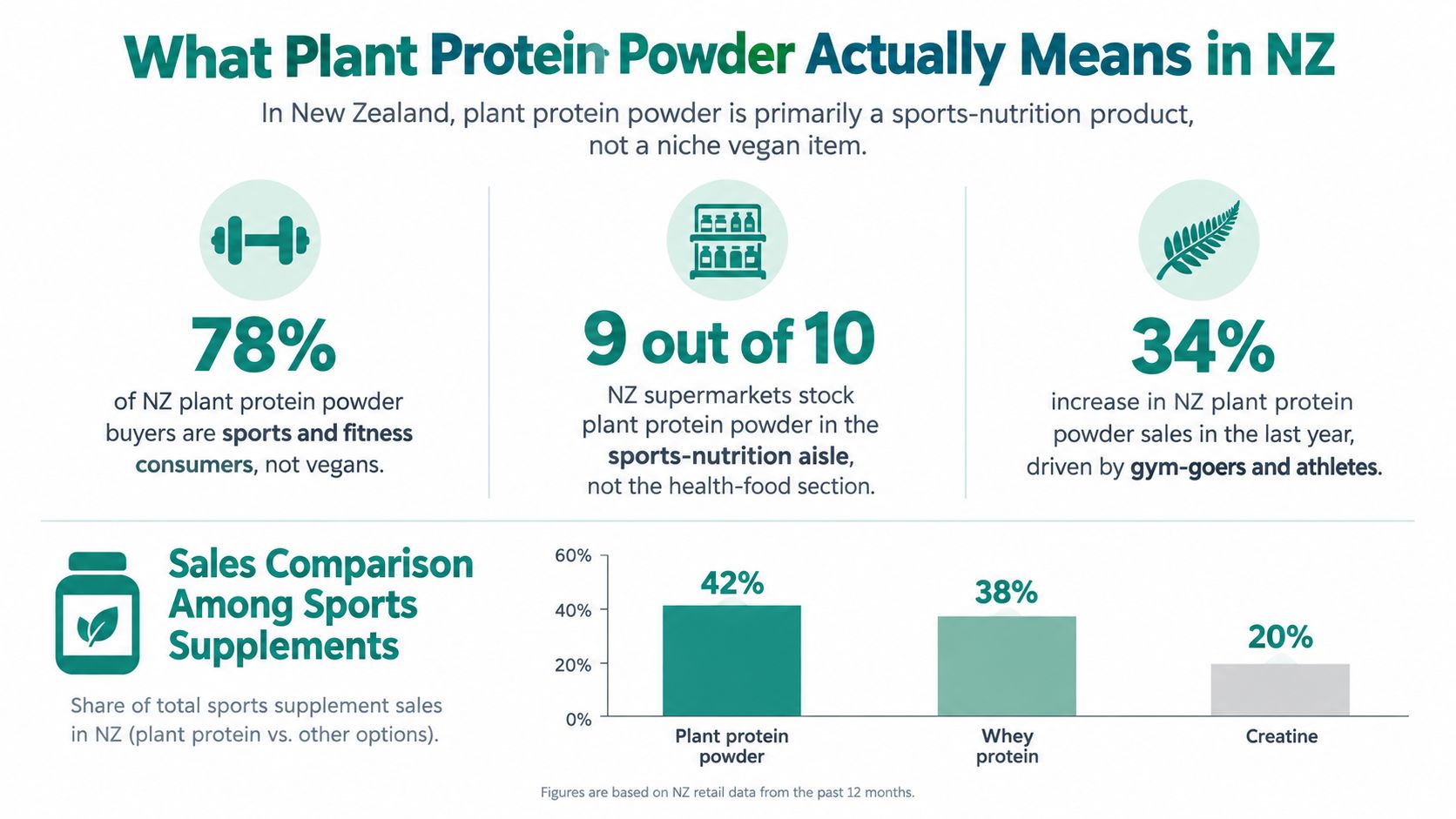
Walk into a NZ supplement aisle and plant protein is usually sitting there as a sports-nutrition ingredient, not a niche vegan extra. A 2023 Coriolis Research analysis estimated domestic demand at 530 tonnes, with pea-protein isolate making up 90% of usage and sports nutrition accounting for about 85% of ingredient use at roughly 451 tonnes. That is the market shape, and it tells you who is buying it, training-focused shoppers who want a workable powder for recovery or everyday use.
What's in the tub
On a NZ shelf, “plant protein” usually means a label-defined blend or isolate, not one fixed ingredient with one formula. The same analysis found pea-protein isolate represented 97% of usage in powders and bars within sports nutrition, which is why pea-heavy formulas dominate the category. It also explains the taste and texture you usually get, earthier, and often less creamy than dairy protein.
The supply chain matters too. Lincoln University's value-chain report says New Zealand has not had commercial-scale plant-protein extraction, and local firms making pea-protein products have generally used imported pea protein (Lincoln University value-chain report). So if a tub says New Zealand, that often describes where it is sold, blended, or packaged, not where the extracted protein was grown and processed.
Practical rule: treat plant protein as a formula category, not a single food. The ingredient source, the blend, and the serve size matter more than the marketing headline.
Pea, Rice, Soy and Blends Explained
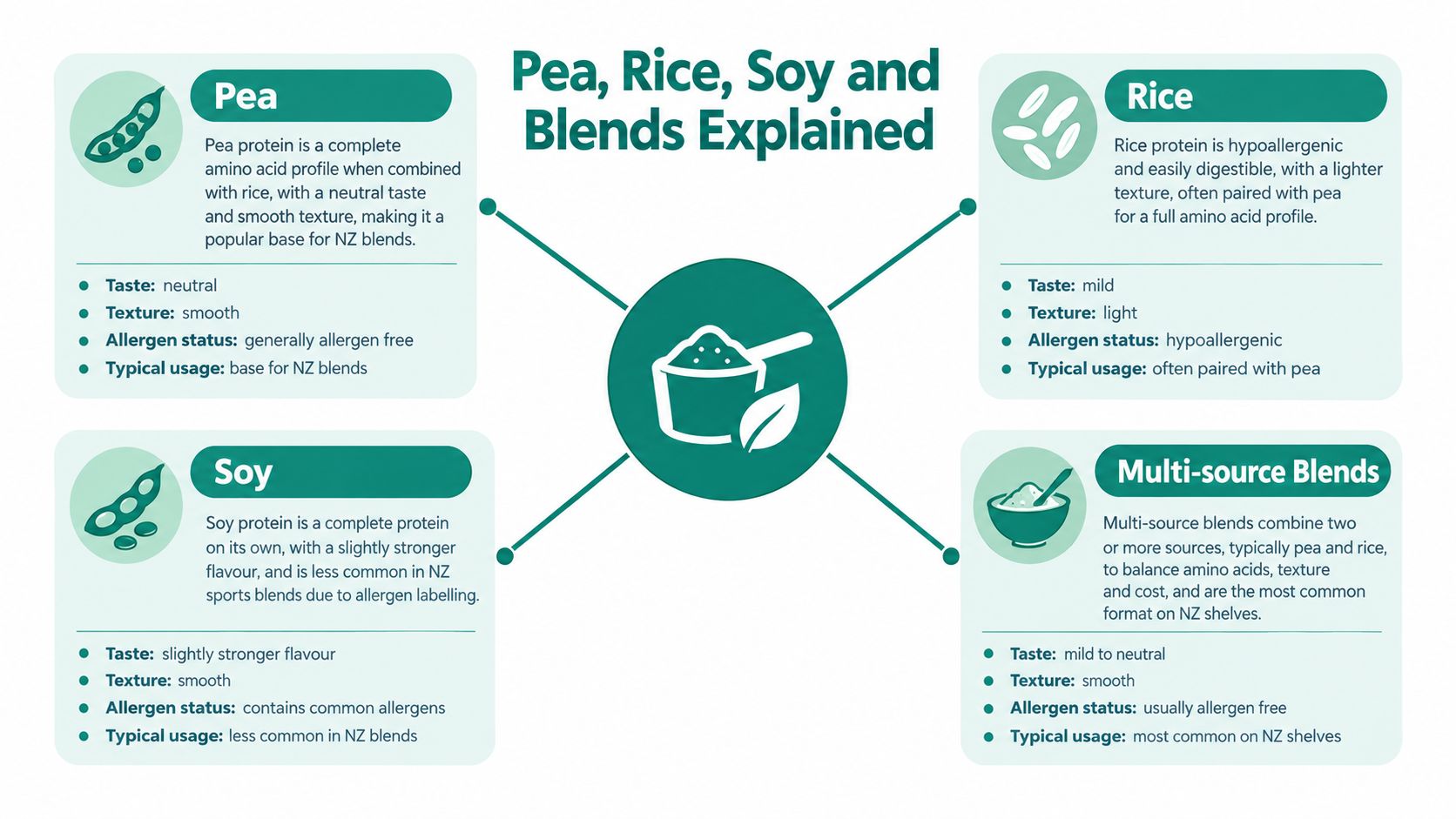
The shortest useful answer is this, pea gives you a strong base, rice smooths texture, soy brings a complete profile on its own, and blends are the sensible way to close gaps. That's the shelf reality, and it's why you need to read the ingredient list before you judge the protein number.
How each source behaves in a formula
Pea protein is the workhorse. It's usually the base because it mixes into a usable powder, carries a decent amino-acid profile, and blends well with other plant proteins. Rice protein tends to be used to improve texture and help balance the amino-acid spread, especially when a formula needs a smoother mouthfeel.
Soy is the most straightforward single-source option nutritionally, but it's not always the easiest sell in a market where allergen labelling matters and some shoppers want to avoid it. Multi-source blends are common because they solve a practical problem, one ingredient can be stronger in some amino acids, another can fill the gaps. That's not a gimmick, it's formula design.
Read blends as nutrition, not marketing
A product listing multiple plant proteins is doing work for you. A blend can improve the overall amino-acid profile, make the shake easier to drink, and keep the price in a sensible range for regular use. That's why you shouldn't dismiss a blend just because it doesn't look as “pure” as a single ingredient powder.
If you want a quick NZ-specific comparison on source choices, the breakdown in pea vs soy protein is a useful starting point. The key thing is not to rank pea, rice, and soy like a contest. Use the formula that fits your stomach, your diet, and your training routine.
If a tub lists two or three plant proteins, that often means the manufacturer is trying to balance amino acids, texture, and cost in one shot.
How to Read Protein Numbers on a Plant Powder Label
Protein grams per serve is the headline, but it's not the whole job. A powder that says 25 g protein can still be a poor buy if the serve is huge, the amino-acid profile is thin, or you need two scoops to get a real dose.
What to check first
Start with the serving size, then look at protein per serve, then check whether the label gives an amino-acid profile. The New Zealand Food Composition Database records amino acids in ways that let you compare amino-acid density against total protein, which is far more useful than staring at a front label claim alone (New Zealand Food Composition Database). That matters for essential amino acids like leucine, lysine, methionine, threonine, and tryptophan, especially if you're relying on plant protein as a regular part of your intake.
Here's the simple buyer method I use across the counter:
-
Write down protein per serve.
Don't guess from the front of the tub, check the nutrition panel. -
Work out cost per 25 g of protein.
That standardises powders with different scoop sizes. -
Check the source mix.
Pea, rice, soy, or a blend tells you a lot about texture and amino-acid balance. -
Look for a disclosed amino-acid profile.
If it's there, good. If it isn't, you're making a weaker decision. -
Judge the serving size.
A bigger scoop isn't a win if it's the only way to get enough protein.
Straight advice: don't buy a plant powder on the biggest front-of-pack number. Buy the one that gives you a useful dose at a price you'll actually keep paying.
For vegan athletes, older adults, and anyone aiming to build muscle, total daily protein matters as much as what's in one scoop. That's why a label-first approach beats the usual “plant versus whey” argument every time.
Side by Side Plant Proteins at NZ Supps
At the counter, I'd sort plant powders by serve size, protein per serve, and price per serve. The tub that looks pricey often isn't, once you do the maths properly.
Plant protein powders stocked at NZ Supps
| Product | Serve size | Protein per serve | Price per serve |
|---|---|---|---|
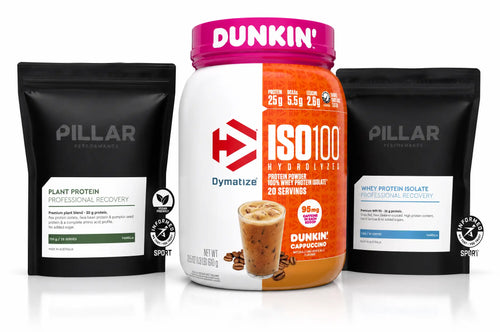
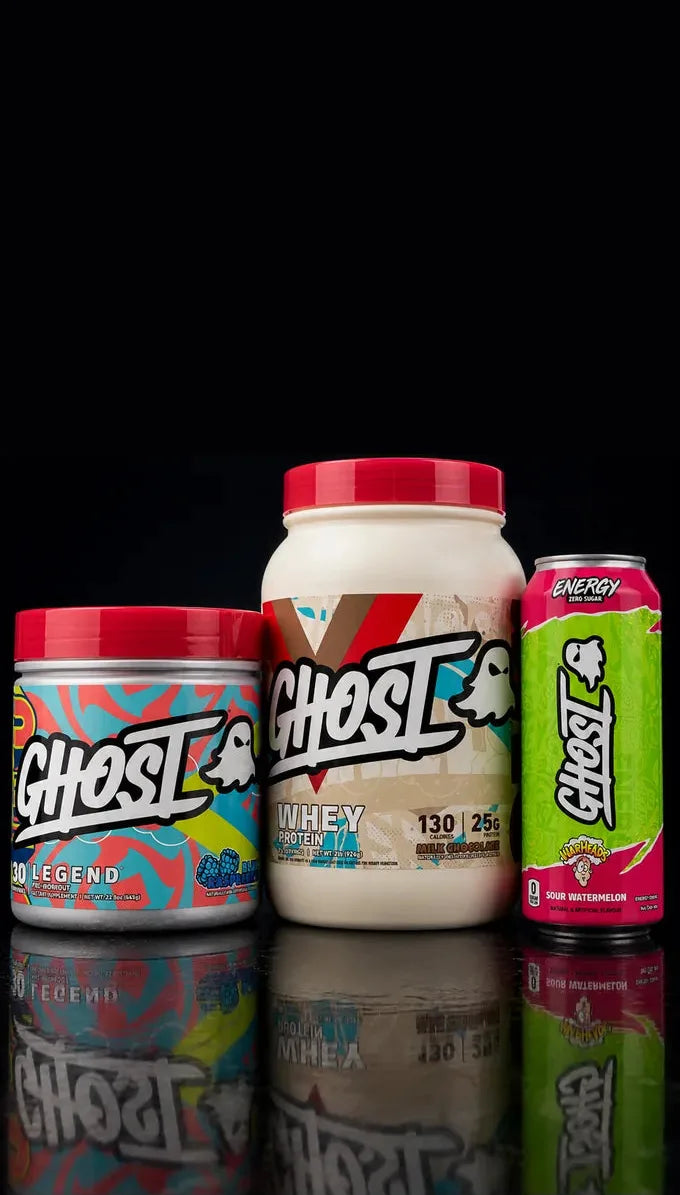
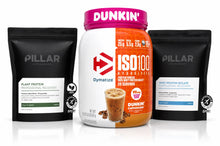
| Pillar Performance Vegan Protein Isolate | Check the product page | 20.5 g | Check the product page |
| Ghost Vegan Protein | Check the product page | 25 g | Check the product page |
The live product pages are still the place to check current pricing and flavour availability, because both can change. Start with the plant protein collection on the NZ Supps site for the full category view, then open the product page for the exact tub you're weighing up.
What the table tells you
Pillar Performance Vegan Protein Isolate gives you a clearly stated plant-protein serve with 20.5 g of protein per serving, while Ghost Vegan Protein sits at 25 g per serve (NZ Supps product range). That is the number to focus on if you want to know whether one scoop does the job, or whether you'll need another serve later in the day.
Pillar fits better as a lighter shake. Ghost suits a more direct post-training serve. That is the practical difference. If you are choosing for value, do not stop at the front label. Check the serve size, check the protein grams, then compare the current price per serve on the product page before you buy.
Allergens, Cross Contact and the Vegan Trap
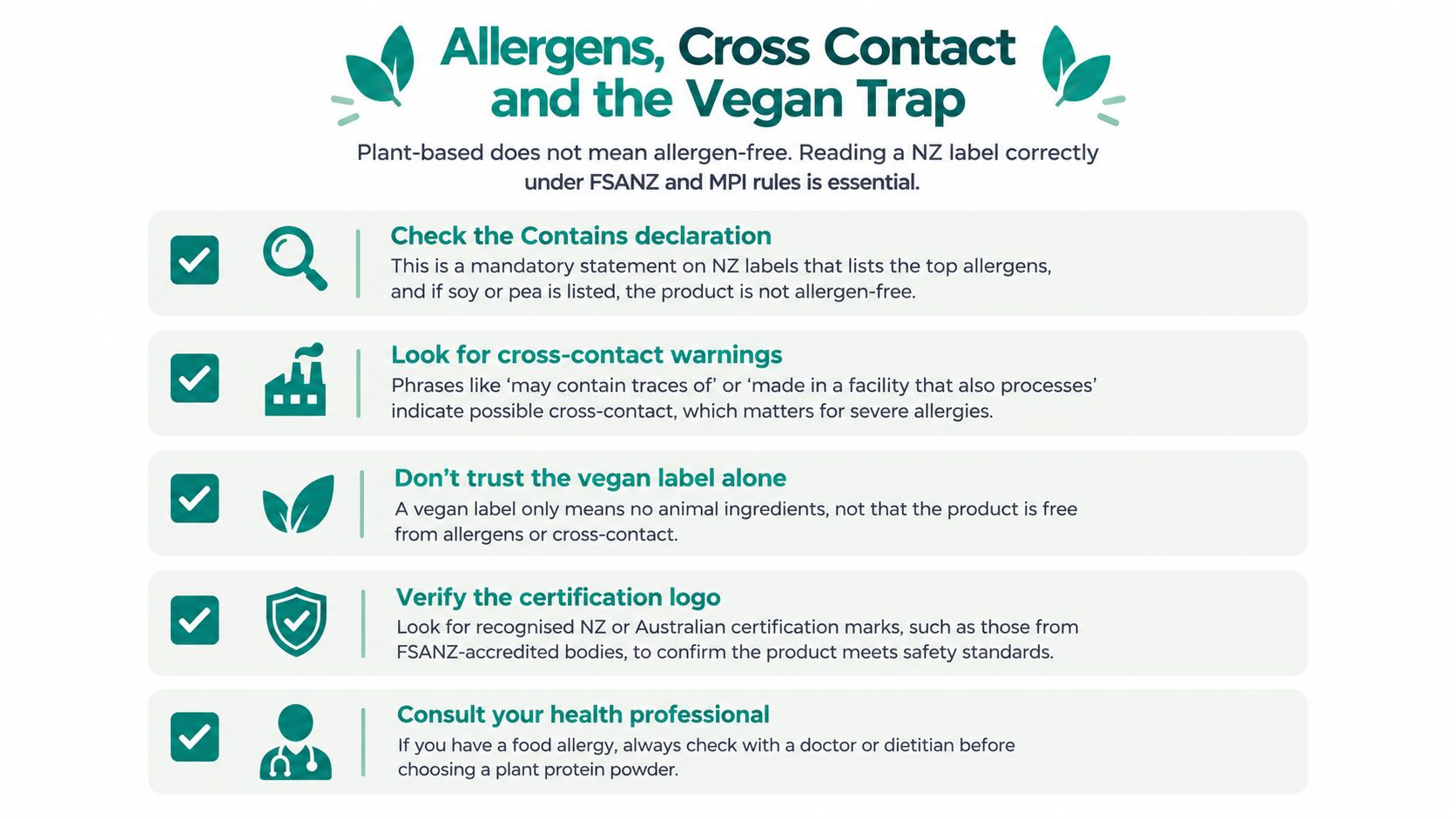
Plant-based does not mean allergen-free. A powder can be dairy-free and still be a problem if you react to soy, gluten-containing cereals, lupin, peanuts, sesame, or tree nuts, and MPI requires allergen declarations when those ingredients or related components are present (MPI allergen declarations and warnings). That's the trap. People see “vegan” and stop reading.
What to check on the label
First, read the ingredients list. In NZ, ingredients are listed in descending order by ingoing weight, so you can see what makes up most of the formula, not just what the front of the pack wants you to notice (MPI food labelling guidance). Then read the allergen declaration. That's the mandatory part.
Next, read any advisory statement or cross-contact wording. If a product says it may contain traces of something, or it's made in a facility that processes allergens, that matters for anyone with a serious allergy. It does not matter how clean the marketing looks.
A vegan label only tells you there are no animal ingredients. It does not tell you the product is safe for every allergy or sensitivity. If you have a specific allergy, repeat the check every time you buy, because formulations change.
If you're looking for a soy-free starting point, the soy-free vegan protein powder NZ guide is worth a look before you buy.
Practical rule: “vegan” means no animal ingredients. It does not mean no allergens, no cross-contact risk, or no label reading.
Flavour, Texture and How to Use It
A strong macro profile means nothing if the shake is unpleasant. Plant powders usually taste earthier than whey, and pea-heavy formulas can come off drier or chalkier if you skimp on liquid. That is normal, so set your expectations properly.
Make the texture work for you
Use more water than you think you need, then adjust once you know how thick the powder runs. If you buy an unflavoured version, it works well in oats, baking, or a smoothie where fruit or yoghurt carries the taste.
Flavoured powders are easier in a shaker. Chocolate usually lands well with NZ buyers because it feels more like a treat than a green smoothie. If you want a flavour reference point, browse Bol chocolate shake options.
Best uses in normal food
- Shaker with water: fastest option, good for checking flavour and mixability first.
- Oats or porridge: useful at breakfast when you want a thicker bowl.
- Smoothies: the easiest way to cover earthy notes and add fruit.
- Baking: handy for muffins or protein slices, especially with unflavoured powder.
If the first shake tastes rough, keep going before you bin the tub. Try colder liquid, more liquid, or a different flavour. Most plant powders become perfectly drinkable once you match them to the job.
Tested for Sport and Why It Matters in NZ
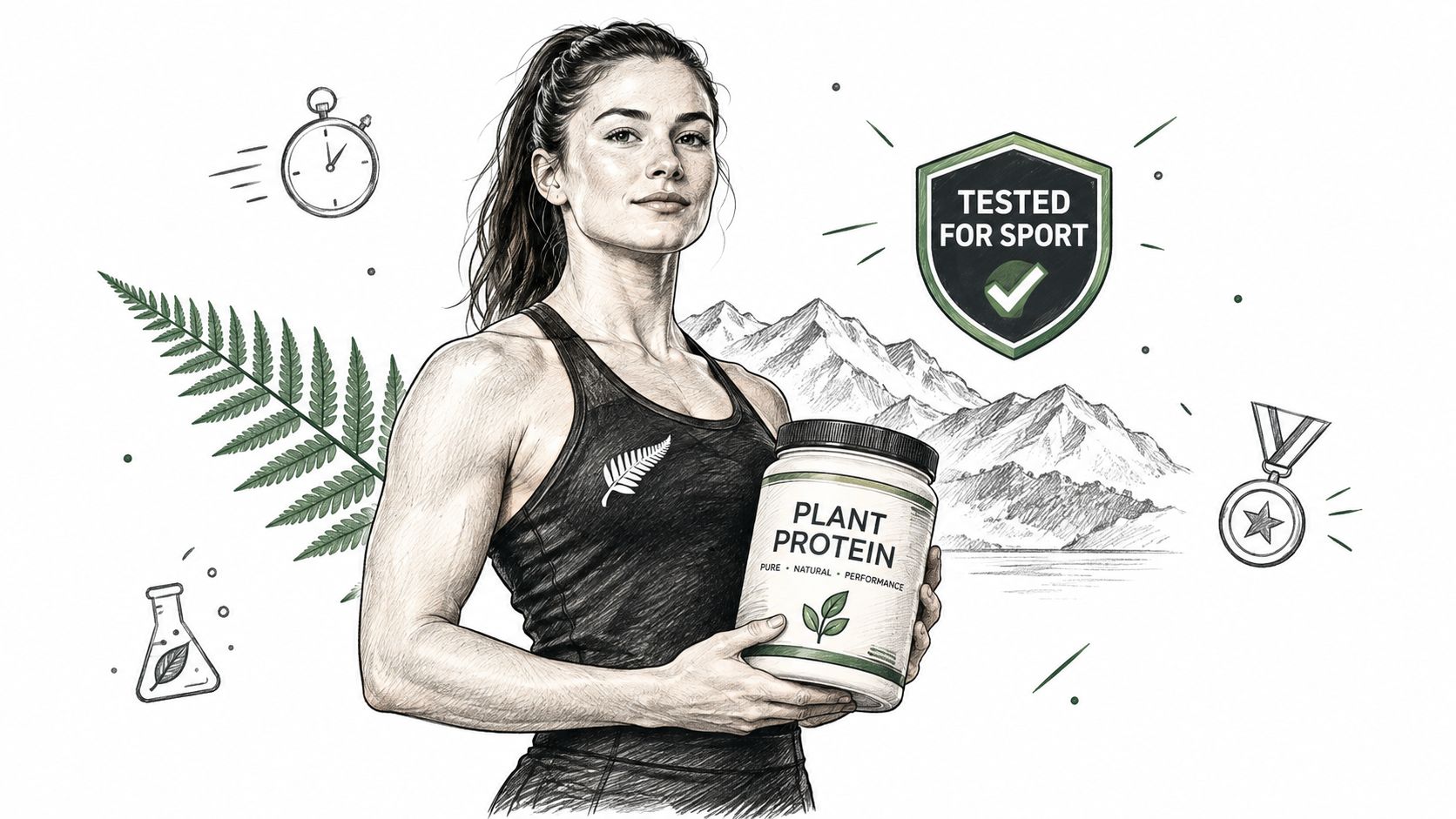
If you're a tested athlete, “natural” on the label means nothing. You need a product that's been independently batch tested under a recognised sport certification programme, because that's the practical filter that reduces risk for athletes subject to testing rules.
The certifications that matter
At NZ Supps, the relevant filters are Informed Sport, Informed Choice, NSF Certified for Sport, and HASTA. Those are not marketing vibes, they're third-party batch-testing programmes built for compliance-sensitive athletes. If you compete under ASADA or Drug Free Sport NZ testing environments, that filter is essential.
For everyone else, it's a preference call. A recreational lifter can choose on taste, texture, and price. A tested athlete can't afford that flexibility.
If you want the full filter view, the Informed Sport protein powder NZ guide is the right place to start. The practical point is simple, use the certification filter first, then look at flavour and protein profile second.
Your Plant Protein Decision Checklist
Run this on every product page before you buy. Check protein grams per serve, then calculate cost per 25 g of protein, then read the blend composition and any disclosed amino-acid profile. After that, check the allergen declaration, any cross-contact wording, and whether tested-for-sport status matters for you.
If you want a baseline for your own intake and training load, Telomyx health and performance testing can give you the numbers to buy against. For product comparison, use the plant protein collection at NZ Supps and filter from there. If no tub ticks every box, choose the one that fits your body, your budget, and your training.