SHOP NOW, PAY LATER











 Informed Sport
 Informed Choice
 NSF Certified for Sport
 HASTA Certified

An empty stomach is not a requirement for pre-workout. Whether a particular product suits you before food depends on its directions, ingredients and your tolerance. If taking it without food repeatedly makes training uncomfortable, there is no reason to force that routine.
Food timing and supplement timing are separate decisions. A pre-workout does not replace breakfast, and taking it fasted does not prove that it will improve your session more than taking it around a suitable meal.
The short answer
- Read the exact product's directions before choosing the timing.
- Do not assume a stronger or quicker sensation means a better workout.
- If an empty-stomach routine causes problems, stop using that routine rather than chasing tolerance through repeated discomfort.
Why there is no one rule for every tub
"Pre-workout" describes a category, not one formula. Products differ in caffeine, other ingredients, serving size and mixing directions. A friend's experience with one powder does not tell you how a different product will feel.
The ISSN caffeine position stand discusses variation in caffeine absorption and response, including the influence of food and delivery format. That helps explain why timing is not identical for everyone. It does not establish a universal fasted protocol for every multi-ingredient pre-workout.
Start with the actual label. If it specifies a serving amount, water quantity or particular restriction, use those directions rather than a generic scoop-and-go instruction. Do not increase the powder because the sensation is slower than you expected.
Training before breakfast
For an early session, ask what you are trying to solve. Is the issue convenience, hunger, a heavy-feeling breakfast or simply habit? The answer may be a different meal routine rather than a different supplement.
If you want to try food beforehand, choose something familiar and give yourself a practical amount of time. Do not introduce a new powder, a new breakfast and a harder session together. A simple record of what you ate, what you took and when is more useful than guessing afterwards.
You can also train without pre-workout. That option is easy to forget when every discussion begins with which scoop to take. If the supplement is making an otherwise manageable session unpleasant, leaving it out is a reasonable first step.
Training after a meal
Eating first does not make the caffeine disappear or cancel the product's listed ingredients. It can change the timing of absorption, and a substantial meal may also change how comfortable you feel moving or lifting. Do not respond by adding another serving while waiting to feel the first.
Allow your routine to be flexible. A small familiar snack and a large dinner are different situations, so avoid treating "with food" as one fixed condition. The useful measure is whether the whole routine fits the session and follows the directions.
If your main concern is how late you can take a stimulant product, read our pre-workout and sleep guide. A meal is not a reliable way to cancel a late caffeine dose.
If the drink makes you feel sick or unsettled
Do not assume the empty stomach is definitely the only cause. Look at the measured amount, the water volume, other caffeine that day, the formula and the session itself. That review can identify a preventable mistake without pretending to diagnose a symptom from a blog.
| What to check | Why it matters for the decision |
|---|---|
| Exact serving and directions | A borrowed scoop or heaped portion may not match the label |
| Other caffeinated drinks or products | The pre-workout may be only part of the day's intake |
| Water used to mix it | Follow directions rather than making an unnecessarily concentrated drink |
| Whether food was skipped | The supplement may be standing in for a meal you needed |
| Whether symptoms recur | Repeated discomfort is a reason to stop and reassess, not a challenge to push through |
For severe symptoms such as chest pain, fainting or difficulty breathing, seek urgent medical help. For milder but recurring problems, stop the product and seek advice about the symptoms rather than continuing an uncomfortable experiment.
Our pre-workout safety guide covers the broader safety questions. This food-timing article cannot tell you that a particular formula is suitable for your health circumstances.
Food does not turn a high dose into a low one
A meal cannot change the amount of caffeine listed in the powder you took. If you consume the same measured serving, you have consumed that labelled amount whether you ate beforehand or not.
EFSA's caffeine guidance identifies amounts that do not raise safety concerns for defined healthy populations. Those are not personal targets, and they do not clear every multi-ingredient formula. Product directions and personal restrictions still apply.
Check the total context, particularly if you also drink coffee, use an energy drink or take another stimulant-containing product. Do not use the reassuring phrase "I had breakfast" as a substitute for checking what you consumed.
A practical routine review
First, decide whether you need the product at all for that session. Next, read its current instructions and use the proper measure. Then consider where a familiar meal or snack fits. Keep a note if you are trying to understand a mild tolerance issue, and stop if the routine causes symptoms.
Change one controllable part at a time. For example, choose your usual breakfast rather than a new meal, and keep the workout familiar. Do not deliberately repeat an adverse reaction just to confirm it.
If the goal is to avoid caffeine, choose based on the ingredient list, not a promise that taking a caffeinated product with food will soften it enough. A caffeine-free product still needs its own suitability check.
Where NZ Supps fits
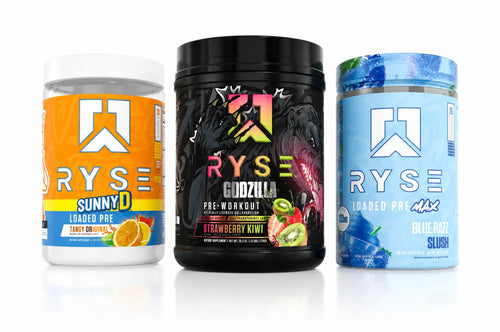
The pre-workout collection lets you compare actual formulas and directions. The stim-free collection is a separate starting point for shoppers avoiding stimulant-based options. Neither is a requirement for a productive training routine.
Pick the routine you can use comfortably and consistently. There is no prize for making your stomach tolerate a supplement on someone else's timetable.
Frequently asked questions
Does pre-workout work only on an empty stomach?
No. An empty stomach is not a universal requirement. Follow the exact product directions rather than assuming food cancels the ingredients.
Will eating stop the caffeine from affecting me?
No. Food does not remove the caffeine dose you consumed. It may influence timing, but it is not protection against an unsuitable dose.
Should I take more if I do not feel it quickly?
No. Do not add another serving just because the sensation is delayed or subtle. Stay within the product directions.
Can pre-workout replace breakfast?
It should not be treated as breakfast. Review food and fluid needs separately from the choice to use a supplement.
Is a stim-free powder automatically easier on the stomach?
Not necessarily. It has a different formula, and ingredients and tolerance still matter. Check the individual product.
What should I do if the same product repeatedly makes me nauseous?
Stop using it and reassess rather than forcing repeated exposure. Seek appropriate advice for recurring symptoms, and urgent help for severe symptoms.