SHOP NOW, PAY LATER

















 Informed Sport
 Informed Choice
 NSF Certified for Sport
 HASTA Certified

Probiotics are live microorganisms, mostly bacteria, that you consume in food or supplement form to add beneficial strains to your gut. Prebiotics are nondigestible fibers that pass through your small intestine intact and become food for the bacteria already living in your colon. That’s the whole distinction in one sentence, and almost everything else in this article is detail on top of it.
If you’re deciding where to start, start with food. A varied, fiber-heavy diet gives you both prebiotics and, if it includes fermented foods, probiotics too. Supplements have their place, but they’re a second step, not the first one.
Quick reference before you go further:
- Probiotics = live bacteria (Lactobacillus, Bifidobacterium) that can add beneficial microbes to your gut.
- Prebiotics = fiber (inulin, FOS, GOS) that feeds the microbes already there.
- Food-first beats supplement-first for most healthy adults.
- Some groups (immunocompromised people, premature infants, those with central lines) should talk to a clinician before trying either as a supplement.
Key Takeaways
The core distinction is mechanical: probiotics are live organisms you add to your gut, while prebiotics are fibers that feed the organisms already living there, and both work better together than either does alone.
| Point | Details |
|---|---|
| Definitions differ by mechanism | Probiotics are live microbes (Lactobacillus, Bifidobacterium); prebiotics are fibers (inulin, FOS, GOS) that feed them. |
| Food beats supplements as a starting point | Yogurt, kefir, sauerkraut, and legumes deliver both categories without label guesswork. |
| Evidence is strain-specific | Some strains help with antibiotic-associated diarrhea and IBS; broad diversity claims are weaker. |
| Check labels before buying | Look for named strains, CFU at expiry, storage instructions, and third-party testing. |
| High-risk groups need clinician input | Immunocompromised people, premature infants, and IBD patients should get medical advice first. |
| Nzsupps applies the same transparency standard | Full ingredient disclosure and clear labeling across its supplement catalog, the same habits this checklist recommends. |
Table of Contents
- Probiotic vs Prebiotic: How They Work in Your Gut
- Where to Find Probiotics and Prebiotics in Food and Supplements
- Probiotics for Gut Health: What the Evidence Actually Shows
- Who Should Be Careful With Probiotics and Prebiotics
- Choosing a Probiotic or Prebiotic Supplement: A Label-Reading Checklist
- How Long Before You Notice a Difference?
- A Two-Week Plan to Add Prebiotics and Probiotics Without Wrecking Your Gut
- Why I’d Rather You Fix Your Grocery List Before Your Supplement Stack
- If You Decide to Try a Supplement
- Where to Learn More
- Sources
Probiotic vs Prebiotic: How They Work in Your Gut
Probiotics work by adding numbers and, sometimes, new capabilities. When you eat a strain like Lactobacillus rhamnosus or Bifidobacterium longum, those live organisms travel through your gut and can transiently colonize it, competing with less helpful bacteria and producing compounds that support your gut lining. Prebiotics work differently. Inulin, fructooligosaccharides (FOS), and galactooligosaccharides (GOS) are fibers your own digestive enzymes can’t break down, so they arrive in your colon mostly intact, where resident bacteria ferment them into short-chain fatty acids like butyrate, acetate, and propionate.
That fermentation step matters more than most people realize. The International Scientific Association for Probiotics and Prebiotics (ISAPP) defines a prebiotic as a substrate that’s selectively used by host microorganisms to confer a health benefit, which is a more precise standard than just “fiber that’s good for you.” Not all fiber qualifies. A comprehensive review on probiotics, prebiotics, and postbiotics lays out how these three categories interact: probiotics supply the organisms, prebiotics supply their fuel, and postbiotics are the leftover metabolic byproducts (inactivated microbial cells, cell fragments, metabolites) that can themselves confer benefits even without live bacteria present.
The ISAPP consensus draws a hard line: prebiotics must be selectively utilized by beneficial microorganisms and must confer a measurable health benefit. A fiber that just adds bulk to stool without feeding specific bacteria doesn’t meet the definition, no matter how it’s marketed.
Here’s a detail that rarely makes it into supplement marketing: probiotic strains you eat usually don’t stick around. Research from ISAPP on the synbiotic concept notes that introduced strains often fail to establish long-term residence unless your regular diet supplies the fermentable fibers those strains need to survive. You can spend real money on a probiotic capsule and get a few weeks of benefit, then watch it wash out because there was nothing in your diet to keep those bacteria fed. That’s the practical case for treating prebiotics as the foundation and probiotics as the addition, not the other way around.
Common examples worth knowing by name:
- Probiotic genera: Lactobacillus and Bifidobacterium, the two most studied and most commonly used in commercial products.
- Prebiotic fibers: inulin, FOS, and GOS, each fermented somewhat differently and found in different foods.
- Postbiotics: inactivated microbial preparations or metabolites, an emerging third category with growing research interest.
Where to Find Probiotics and Prebiotics in Food and Supplements
You don’t need a supplement aisle to get either one. Most probiotic foods are fermented, and most prebiotic foods are plants your grandmother probably kept in the pantry anyway.
Probiotic-rich foods:
- Yogurt with live and active cultures (check the label; heat-treated yogurt has none left)
- Kefir, which typically carries more strain diversity than yogurt
- Sauerkraut, kimchi, and other fermented vegetables that haven’t been pasteurized after fermentation
- Miso and tempeh, fermented soy products common in Japanese and Indonesian cooking
Prebiotic-rich foods:
- Onion, garlic, and leek
- Asparagus
- Green (slightly underripe) bananas
- Oats
- Legumes, including lentils and chickpeas
- Chicory root, one of the richest natural sources of inulin
Some foods do double duty. Kefir and certain aged cheeses can carry live cultures alongside naturally occurring fibers, which is roughly the food equivalent of a synbiotic, a product designed to combine both categories on purpose. On the supplement side, you’ll see single-strain probiotics (one organism, often a specific Lactobacillus strain), multi-strain blends (several organisms combined, sometimes ten or more), standalone prebiotic fiber powders, and synbiotic formulas that pair a strain with its preferred fiber. Storage matters here: some probiotics need refrigeration to stay viable, while others are freeze-dried and shelf-stable. Prebiotic fiber powders are almost always shelf-stable.
Probiotics for Gut Health: What the Evidence Actually Shows
The evidence for probiotics and prebiotics is not one uniform block of “yes, it works.” It’s strain-specific, condition-specific, and in many cases, thinner than product marketing implies. Some probiotic strains have solid, repeated trial support for narrow conditions. Other claims rest on mechanistic plausibility and animal or short-term human data that hasn’t been confirmed at scale.
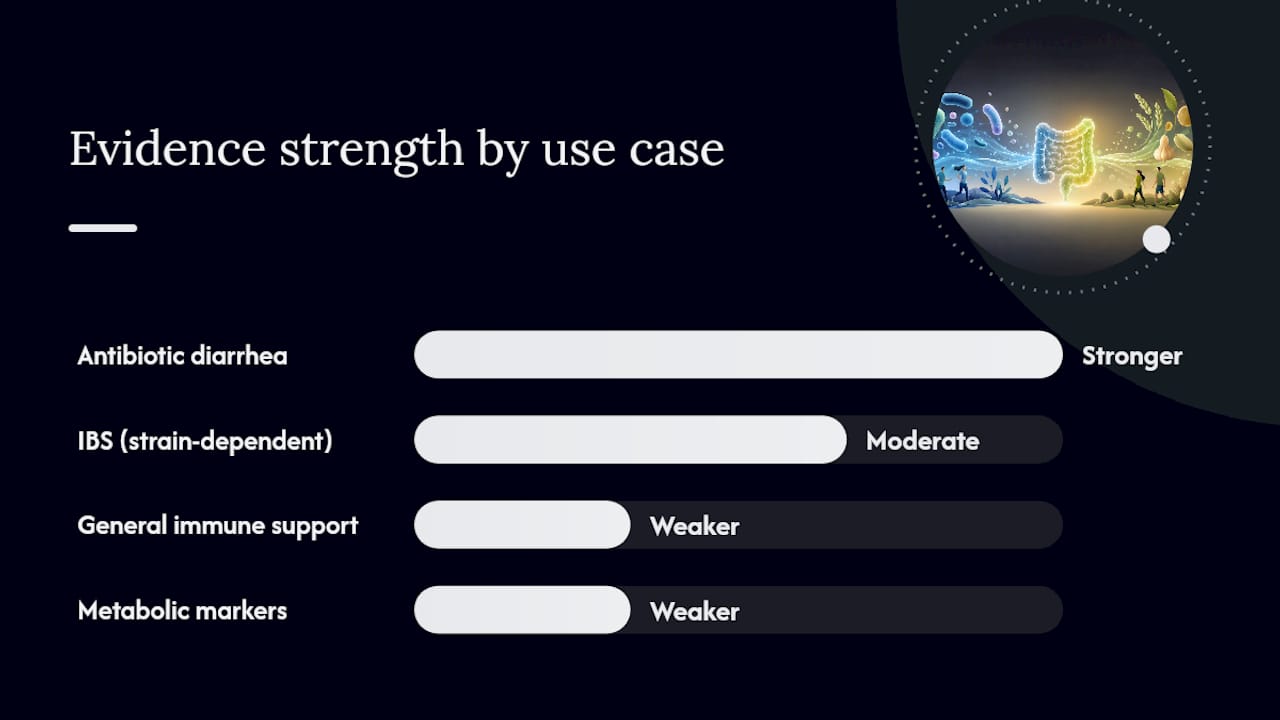
Systematic reviews and trial literature show consistent benefit for certain uses, particularly antibiotic-associated diarrhea and some IBS symptom clusters, when a specific, well-studied strain is used at an adequate dose. What the same literature does not support is the idea that popping any probiotic capsule will meaningfully boost microbiome diversity in an otherwise healthy adult. That broader claim, common in advertising, outruns what the trials actually demonstrate.
| Use case | Food sources | Supplements | Evidence strength |
|---|---|---|---|
| Antibiotic-associated diarrhea | Limited, dose too low in most foods | Strain-specific, moderate to strong for select strains | Stronger |
| IBS symptom relief | Fermented foods may help some people | Strain-specific, mixed results across formulations | Moderate, strain-dependent |
| General immune support | Diverse fiber and fermented food intake | Broad claims common, evidence thinner | Weaker |
| Metabolic markers (cholesterol, blood sugar) | Diet pattern matters more than single foods | Mixed trial results, effect sizes small | Weaker |
Regulatory context explains part of the confusion. Supplements marketed as probiotics or prebiotics aren’t reviewed for efficacy the way medicines are. The FDA regulates dietary supplements as a category of food, not as drugs, which means a company can sell a “probiotic” product without proving it does what the label implies. The NIH Office of Dietary Supplements makes this explicit: not every product labeled probiotic has demonstrated health benefits, and strain identity matters enormously because effects don’t automatically transfer from one Lactobacillus strain to another just because they share a genus.
One number worth sitting with: a large share of probiotic research covers single strains tested in isolation, yet most commercial products sold to consumers are multi-strain blends that have never been tested as that exact combination. That gap between what’s studied and what’s sold is the single biggest reason to read labels skeptically rather than assume “probiotic” is a synonym for “proven.”
Who Should Be Careful With Probiotics and Prebiotics
Most healthy adults tolerate both categories fine, but a few groups need to check with a clinician before starting either as a supplement, not just as a passing thought.

People who are immunocompromised, those recovering from serious illness, individuals with central venous lines, premature infants, and people in an active flare of inflammatory bowel disease fall into this group. A review of probiotic clinical trials flags that because probiotic supplements aren’t regulated the way medicines are, safety and appropriateness depend heavily on the individual’s baseline health status rather than a blanket assumption that “probiotics are harmless because they’re natural.” Rare cases of bacteremia or fungemia linked to probiotic use have occurred almost exclusively in people who were already critically ill or immunocompromised, but that’s exactly the population where the risk calculation changes.
For everyone else, the more common downside is simply uncomfortable, not dangerous: gas, bloating, and cramping, especially when prebiotic fiber intake jumps too fast. Some probiotic strains and high-dose fiber supplements can also interact with certain medications, so if you’re on immunosuppressants or have a chronic GI condition, it’s worth a conversation with your doctor or pharmacist before adding either one at supplement-level doses.
Pro Tip: If you know fiber upsets your stomach, introduce one new prebiotic food at a time, in small portions, and wait two to three days before adding another. This “start low, go slow” approach lets your gut bacteria adjust gradually instead of overwhelming them with a big fermentation load all at once.
Choosing a Probiotic or Prebiotic Supplement: A Label-Reading Checklist
The decision rule is simple: food first, supplement second, and only when you have a specific reason grounded in evidence or a clinician’s recommendation. If you land on “yes, I want a supplement,” the label is where most people get misled, because supplement marketing is far more polished than the science backing individual products.
Here’s what to check before you buy:
- Strain identity down to genus, species, and strain code (e.g. Lactobacillus rhamnosus GG), not just “probiotic blend.”
- CFU count at expiry, not at the time of manufacture. Viable organism counts drop over the shelf life of a product.
- Storage instructions. Some strains need refrigeration to survive; if a fridge-only product is sitting on a warm shelf, its potency is already compromised.
- Single-strain vs multi-strain formulation, and whether that specific combination (not just the individual strains) has been studied.
- Presence of a prebiotic fiber, which would make it a synbiotic rather than a probiotic alone.
- Expiration date, checked at purchase, not assumed.
- Third-party testing seals, which indicate independent verification of contents.
- Allergen and additive disclosures, particularly for dairy, soy, or gluten-derived carriers.
- Clear dosing instructions, including timing relative to meals if specified.
Watch for these red flags:
- Vague labeling like “proprietary probiotic blend” with no named strains
- No CFU count listed anywhere on the packaging
- Sweeping claims (“cures bloating,” “boosts immunity”) with no strain-specific citation
- Prebiotic fiber doses far above typical dietary intake with no safety data behind them
Synbiotics, products combining a specific strain with the fiber it prefers, can be a reasonable middle ground if you want a one-product approach, though the NIH factsheet notes that individual responses to these combinations vary depending on your existing microbiome makeup. There’s no guarantee a synbiotic outperforms getting the same fiber and strain separately from food and a targeted supplement.
How Long Before You Notice a Difference?
Don’t expect an overnight transformation, but don’t expect to wait months either. Digestive symptom changes, things like bowel regularity or reduced bloating, often show up within a few days to a few weeks of consistent intake. Deeper metabolic or immune-related benefits, if they occur at all for your particular situation, tend to take longer and vary more from person to person.
A reasonable evaluation window is four to twelve weeks, depending on what you’re tracking. If you’re watching bowel regularity, two to four weeks usually tells you something. If you’re hoping for changes in a metabolic marker or a chronic symptom pattern, give it closer to the full twelve weeks before deciding whether it’s working.
Signs worth tracking along the way: stool consistency and frequency, bloating severity on a simple 1 to 10 scale, and any change in energy or general GI comfort. Stop and check with a clinician if you notice worsening abdominal pain, fever, blood in stool, or any symptom that feels like it’s getting worse rather than settling, since that pattern isn’t consistent with normal adjustment and deserves a proper look.
A Two-Week Plan to Add Prebiotics and Probiotics Without Wrecking Your Gut
The safest way to build both into your routine is gradual, front-loaded with prebiotic foods before you add live cultures, so your existing bacteria have fuel by the time new organisms show up.
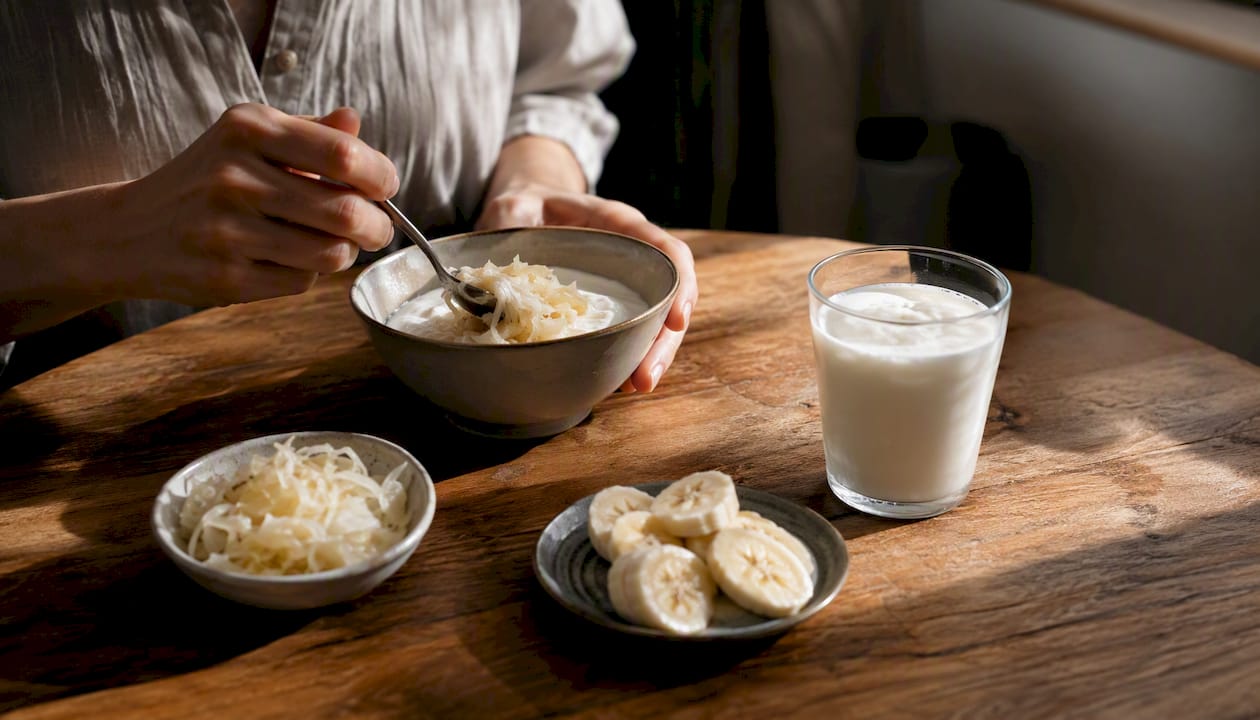
Days 1 through 3: Add one small serving of a high-prebiotic food daily, such as a quarter cup of cooked oats, a small serving of lentils, or a few spears of asparagus. Keep portions modest even if you’re used to eating fiber, since your gut needs a few days to adjust to increased fermentation activity.
Days 4 through 7: Introduce a probiotic food alongside what you’re already doing. A half cup of yogurt with live cultures or a small glass of kefir works well. Keep the prebiotic servings steady rather than increasing them yet.
Week 2: Slowly increase portion sizes of both categories. Add a second prebiotic food to your rotation (garlic in cooking, a green banana as a snack) and consider whether a synbiotic supplement makes sense if you want more consistency than food alone provides.
A few practical notes that make this easier: spread your fiber intake across meals rather than loading it all at breakfast, and choose whole foods over processed “prebiotic-fortified” snack bars, since whole-food sources deliver a more complex nutrient matrix than an isolated fiber extract added to a granola bar.
Pro Tip: If you have IBS or a known fiber sensitivity, favor partially fermented fibers like well-cooked oats or ripe (not green) bananas before moving to stronger fermentable fibers like raw garlic or chicory root, and stretch the timeline above to three or four weeks instead of two.
Why I’d Rather You Fix Your Grocery List Before Your Supplement Stack
The probiotic vs prebiotic framing gets treated like a competition, and it shouldn’t be. My read on the evidence is that most people chasing gut health improvements are solving the wrong problem first: they buy a $40 probiotic before they’ve added a single extra vegetable to their week. Given how often introduced strains fail to persist without dietary fiber to sustain them, that order of operations wastes money on the part of the equation that matters less.
Supplements earn their place when you have a specific, evidence-backed reason, recovering from antibiotics, managing a diagnosed IBS pattern, or working with a clinician on a targeted plan. Outside of that, a plate with more legumes, a jar of live-culture yogurt in the fridge, and patience beats a supplement stack every time I’ve looked closely at the comparison. If you fall into a higher-risk group, immunocompromised, pregnant, caring for a premature infant, or managing a chronic GI condition, none of this replaces a conversation with your doctor.
If You Decide to Try a Supplement
Food-first is the right starting point for nearly everyone, but there are situations where a well-chosen supplement genuinely helps, especially if you travel often, eat a narrow diet, or you’re rebuilding your gut after a round of antibiotics. If that’s you, the label checklist above still applies: look for a named strain, a CFU count guaranteed through expiry, clear storage instructions, and third-party testing rather than a proprietary blend with vague claims. For current prices and stock, see our health and wellness NZ range.
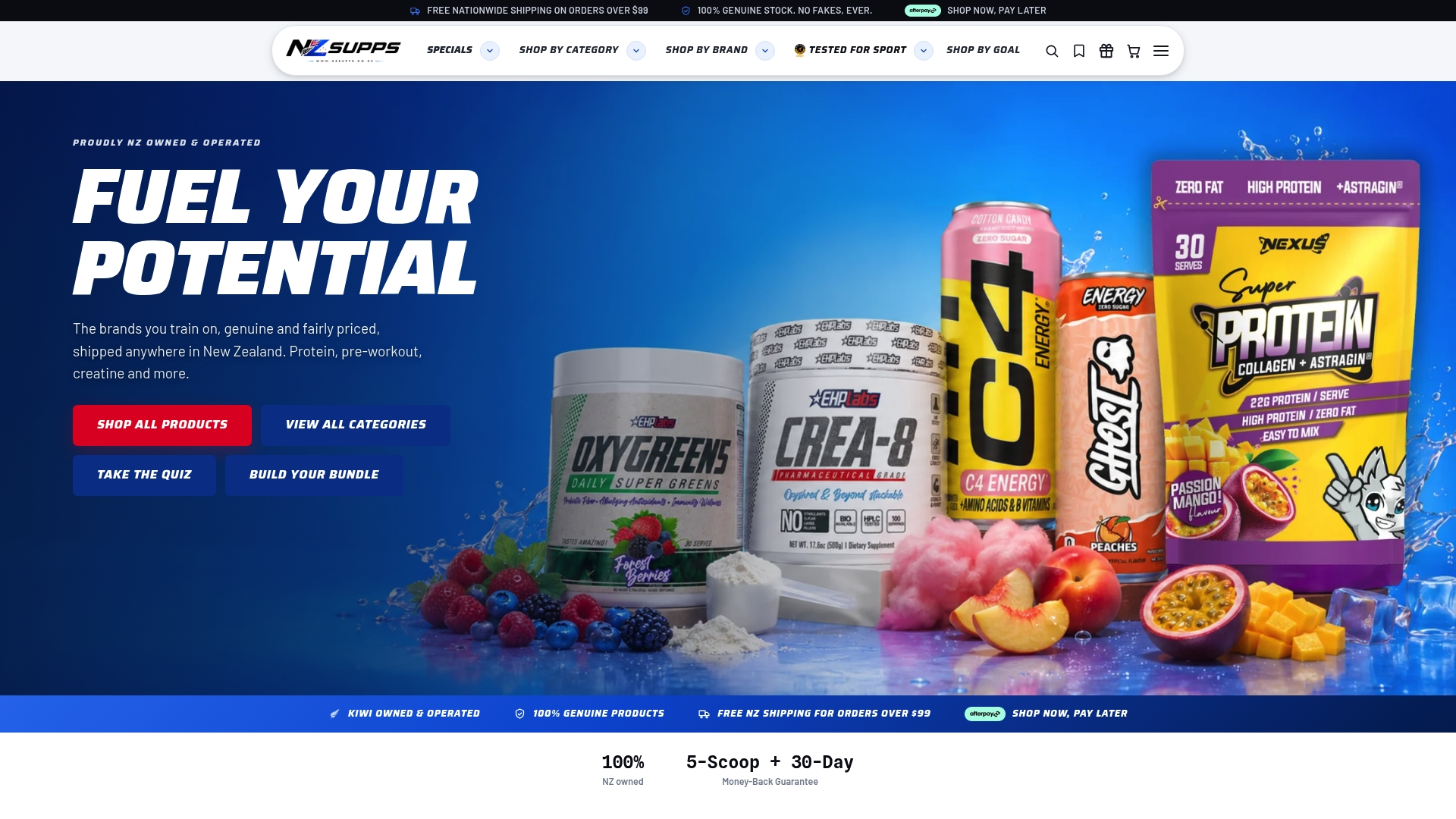
Nzsupps curates its catalog with the same transparency standard this article just walked you through: full ingredient disclosure, clear labeling, and no mystery blends hiding behind marketing copy. While gut-health probiotics aren’t the core of the range, the same label-reading habits apply to every product in the shop, including protein and recovery staples like the Basic Supplements Beef Isolate, where you can check exact serving sizes, allergen notes, and sourcing before you buy. If you’re already building a supplement routine around recovery or performance and want to see how a brand handles full ingredient transparency, that’s a reasonable place to start looking.
Where to Learn More
If you want to go deeper than a single article can take you, these sources cover the definitions, clinical evidence, and consumer guidance in more detail than most product pages will ever offer.
- ISAPP consensus definitions clarify exactly what qualifies as a prebiotic versus a probiotic, which is useful if you want to evaluate a product claim against the actual scientific standard.
- NIH Office of Dietary Supplements factsheet gives a clinician-oriented breakdown of strain specificity and why not every “probiotic” label carries proven benefits.
- Peer-reviewed review articles on probiotics, prebiotics, and postbiotics walk through mechanisms and evidence in more technical depth for readers who want the full picture.
| Source | What it offers | Why click it |
|---|---|---|
| Probiotics, prebiotics, and postbiotics in health and disease | Definitions, mechanisms, evidence review | Best single overview of how all three categories relate |
| Probiotics - Health Professional Fact Sheet (NIH ODS) | Clinical guidance, strain specificity, synbiotic definition | Authoritative, clinician-facing detail on what’s proven vs marketed |
| Probiotics and health: understanding probiotic trials | Regulatory context, safety for vulnerable groups | Explains why supplement labels aren’t proof of efficacy |
This article provides general information and isn’t a substitute for personalized medical advice. If you’re pregnant, immunocompromised, or managing a chronic condition, confirm any changes to your diet or supplement routine with a qualified healthcare provider.
This article is general information, not a substitute for advice from a qualified doctor. Consult a qualified healthcare professional about your own circumstances before acting on anything here.
See the probiotic-containing supplements and check the named strain and stated amount on each label.
Sources
- Probiotics, prebiotics, and postbiotics in health and disease - PMC
- Probiotics - Health Professional Fact Sheet
- Probiotics and health: understanding probiotic trials (NZMJ PDF)
- Prebiotics vs probiotics: what’s the difference and do you need both? (URMC)