SHOP NOW, PAY LATER











 Informed Sport
 Informed Choice
 NSF Certified for Sport
 HASTA Certified


A chocolate protein bar is worth it when it uses a complete protein source, delivers strong protein per 100 kcal, and its sugar, saturated fat and kilojoules fit your goal. If the protein is low quality or most kilojoules come from coating and fillers, you're buying chocolate with a protein claim.
You're standing in the aisle at 3pm, hungry, comparing two wrappers that both shout chocolate and protein. One looks bigger. One claims more grams. Neither tells you, at a glance, which one will do the job you want. That's the problem with protein bars chocolate shoppers hit every day in NZ, and the wrapper front won't solve it. The back of the pack will.
Table of Contents
- The Short Answer on Chocolate Protein Bars
- Reading the Nutrition Information Panel Like an NZ Shopper
- What Protein Source Actually Means in a Chocolate Bar
- Coating vs Filling and Where the Kilojoules Come From
- Matching a Chocolate Bar to Your Goal
- Allergens, Labels and What May Contain Really Means
- NZ-Stocked Chocolate Protein Bars Side by Side
- Choosing Your Chocolate Protein Bar
The Short Answer on Chocolate Protein Bars
Most shoppers grab the bar with the largest protein number on the front. That's the trap. A bigger bar can show more total protein because it's heavier, even if most of its energy comes from chocolate coating, syrups, nuts or added fats.
That single gram figure also hides protein quality. Ten grams from whey and ten grams from collagen count the same on the front claim, but they don't do the same job. Collagen isn't a complete muscle protein source, while dairy proteins are. If you only read total grams, you'll miss that difference entirely.
What to check instead
- The Nutrition Information Panel: Compare bars per 100 g and by protein density, not just per serve.
- Coating versus filling: Work out whether kilojoules come from cocoa coating or from the protein filling underneath.
- Protein source: Check if it's whey, milk protein, soy, a pea blend, or collagen, and whether that matches your goal.
- Your actual job for the bar: Decide if you need an everyday snack, a lower sugar option, or something after training.
If you'd rather make your own at home and control every ingredient, a plant-based energy bar recipe shows how dates, cocoa and plant protein can form a simple base. Homemade bars still need the same discipline though. You still need to know your protein source, portion size and total energy.
Judge a chocolate bar by protein quality and density first, flavour second. The tastiest bar isn't useful if the label doesn't support your goal.
Use the checks that follow in the supermarket, online, or in your gym bag. They take under a minute once you know where to look, and they work on any brand.
Reading the Nutrition Information Panel Like an NZ Shopper
NZ packaged foods must show a Nutrition Information Panel, or NIP, with values per serving and per 100 g. NZ food labelling guidance from the Ministry for Primary Industries confirms most packaged foods must show energy, protein, total fat, saturated fat, carbohydrate, sugars and sodium in both formats. That dual layout exists for comparison, so use it.
The per 100 g column is the fair column. Bars come in different weights, and a heavier bar will almost always show more protein per serve. Per 100 g strips out size and shows you what is in the food, gram for gram.
The protein density check
Go one step further and work out grams of protein per 100 kcal. Divide protein grams per serving by kilojoules converted to calories, then multiply by 100. Ministry for Primary Industries labelling rules for retail food note that nutrition panels support comparison among foods and that claims require the relevant nutrition information to be declared.
It matters for a specific reason. A hypothetical 20 g protein, 900 kJ bar gives about 5.3 g protein per 100 kcal. A hypothetical 12 g protein, 700 kJ bar gives about 6.9 g per 100 kcal. The second bar has less total protein, but it's more protein efficient if you're watching energy intake.
| Column | Value |
|---|---|
| Per serving | Shows what you get if you eat the whole bar as defined on the pack |
| Per 100 g | Shows concentration, so you can compare different bar sizes fairly |
| Protein per 100 kcal | Your calculated density check, useful when kilojoules matter |
| Sugars and saturated fat per 100 g | Shows whether chocolate coating is driving the profile |
Read protein alongside serving weight, energy, sugars, saturated fat and sodium, every time. Front of pack wording is marketing. The NIP is the contract. If a bar can't justify its kilojoules with protein density, put it back.
What Protein Source Actually Means in a Chocolate Bar
Not all protein grams are interchangeable. The source affects amino acid quality, digestion, allergens and whether the bar suits recovery, snacking or dairy free eating. Read the first protein ingredient in the list, not just the total on the NIP.
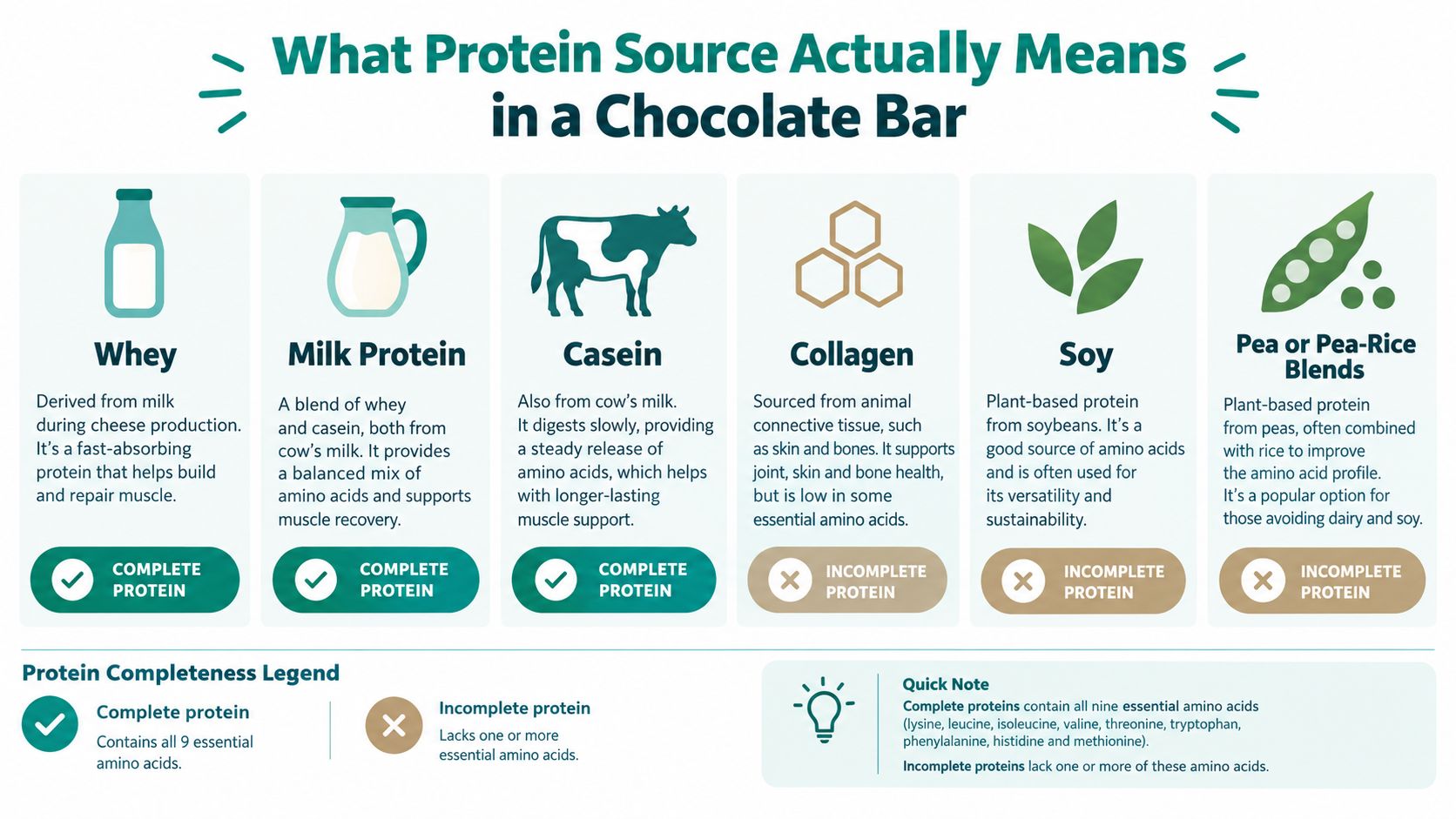
Complete proteins contain all essential amino acids. Whey, milk protein, casein and soy sit in that camp. Whey digests relatively quickly and suits post training use. Milk protein and casein digest more slowly and often give bars a firmer, more filling texture for snacking.
Plant bars usually blend sources for balance. Pea on its own is limited in some amino acids, so brands combine pea and rice, or add soy, to improve the profile. That blending matters more than a vague plant based claim on the front.
Where collagen fits
Collagen counts toward total protein, but it isn't equivalent to a complete muscle protein. One NZ listing reports 13.1 g protein and 225 kcal per 44 g bar, with 10 g from hydrolysed collagen, as shown on the NZ Protein chocolate bar product listing. That may suit someone wanting collagen specifically. It shouldn't be ranked as equal to whey for muscle recovery.
Context matters too. Ministry of Health nutrition data on protein intakes reports median usual intakes of 102 g per day for males and 71 g per day for females, and identifies protein as necessary for tissue maintenance and repair, and for hormone, enzyme and antibody synthesis. Treat a bar as a convenient top up, not proof you're short on protein.
| Source | Type | Typical use | Watch for |
|---|---|---|---|
| Whey | Complete, dairy | Post training | Milk allergen |
| Milk protein | Complete, dairy | Snack, recovery | Milk allergen |
| Casein | Complete, dairy, slower | Filling snack | Milk allergen |
| Collagen | Incomplete for muscle protein | Collagen specific use | Don't rank by grams alone |
| Soy | Complete, plant | Dairy free snack | Soy allergen |
| Pea or pea rice | Blended plant | Dairy free snack | Check it's a blend, texture varies |
Coating vs Filling and Where the Kilojoules Come From
Split the bar in your head. The coating gives you chocolate flavour, snap and sweetness. The filling carries most of the protein, along with crisps, nut pastes, caramel layers or syrups that hold it together. Both parts add kilojoules, but they don't add the same nutrition.
Coatings vary widely. A dairy milk style coating brings sugar and milk solids. A darker coating may bring more cocoa and cocoa butter, which lifts saturated fat even when sugar drops. Compound coatings can use other vegetable fats for structure and shine. The ingredients list tells you which you're getting, and characterising ingredients may need percentage labelling, which helps you spot whether cocoa or nuts are present in meaningful amounts or mainly as flavouring.
Low sugar does not mean low energy
That point catches people out constantly. One NZ chocolate product contains 321 kcal per 75 g serving despite only 0.6 g sugar, highlighted in the NZ Supps guide to protein bars for weight management in NZ. Fat from cocoa butter, nut pastes and coating still carries energy. If you only chase the sugar line, you'll miss the kilojoule load.
Low sugar bars usually get sweetness another way. Brands use sugar alcohols, high fibre or intense sweeteners, and each affects tolerance differently. If polyols are new to you, read how sugar alcohols work in protein bars before you stock up. High fibre and polyols can cause bloating, gas or loose stools in sensitive people, especially right before training.
Check three lines together. Saturated fat shows coating impact. Sugars plus total carbohydrate shows sweetness load. Fibre and any listed polyols hint at gut tolerance. A bar that looks clean on sugar but is loaded with fat and polyols isn't automatically the smarter pick. It's just a different trade off.
Matching a Chocolate Bar to Your Goal
Pick the job first, then the bar. A great desk snack can be a poor pre run choice, and a solid post training bar can be wasteful as a casual sweet fix. Use your goal to decide which label lines matter most.
Everyday snack and general recovery
You want satisfying protein density without dessert level energy. Check protein per 100 kcal, keep an eye on saturated fat, and choose a complete source you tolerate well. Milk protein and whey blends often suit here because they are filling and familiar. Portion control matters too. If the bar is large, the per serve kilojoules need to fit your day, not just look good per 100 g.
Lower sugar use
Don't stop at the sugar grams. Compare total energy, saturated fat, fibre and polyols alongside sugar. Listed NZ products range from 6.7 g to 18 g fibre per bar in comparisons of lower sugar options, and that spread affects fullness and digestion. A very high fibre bar may suit a slow afternoon. It may feel heavy before a workout.
Timing changes the answer. If you're eating close to exercise, guidance on eating a protein bar before a workout is worth checking so fibre, fat and polyols don't work against you. Test a new bar on a low stakes training day first.
Post training muscle recovery
Source quality moves to the top. Favour whey, milk protein, soy or a well blended plant protein over a bar built mainly on collagen. Then check absolute protein per serve, because density alone won't help if the total dose is tiny. Sodium is less of a concern after a hard, sweaty session than it is for an everyday office snack, but still read it.
Practical rule: Snack bars optimise for satiety and energy control. Post training bars optimise for complete protein and total dose. Don't judge both jobs by one number.
Allergens, Labels and What May Contain Really Means
Chocolate protein bars are allergen dense by design. Common ingredients include milk derived protein, soy, peanuts, tree nuts and cereal based crisps. If you manage an allergy, the ingredients list and allergen declaration are your primary tools, not the flavour name.
Ministry for Primary Industries allergen declaration requirements state that milk, soy, peanuts, tree nuts, wheat and other gluten containing cereals are among the allergens that must be declared when present as ingredients or used in making the product. Labels should use required names such as milk, soy, wheat or the individual tree nut name, and even very small amounts present in the food must be declared.
Required versus precautionary statements
A may contain traces of statement is different. Ministry for Primary Industries guidance on allergen reporting explains that this statement is not required by NZ law, although manufacturers may use one where unintended cross contact is possible. Don't treat the absence of that line as proof of an allergen free facility. It isn't.
Run this routine in under a minute:
- Protein source: Confirm the first protein ingredient and whether it's complete.
- Allergen declaration: Scan for milk, soy, peanuts, tree nuts, wheat and gluten cereals.
- Density check: Estimate protein per 100 kcal from the NIP.
- Tolerance check: Note fibre, polyols, sugars, saturated fat and sodium per serve.
- Serving reality: Check the stated serve size against the actual bar weight in your hand.
For drug tested athletes, a transparent full ingredient list and an independently batch tested product are prudent risk management features. Certification doesn't improve macros, but it does reduce contamination risk. Keep those two judgements separate.
NZ-Stocked Chocolate Protein Bars Side by Side
Three chocolate bars sit on my counter right now, and their labels tell completely different stories despite near identical wrappers. NZ Supps stocks chocolate options across Quest, Smart Protein Bar and Vitawerx styles, so you can run the same label checks across dairy based and lighter formats in one place. Start on the NZ Supps compare page, filter to chocolate flavours, and open each Nutrition Information Panel before you trust the front claims.
| Bar | Protein source | Protein dose | Sugar | Energy | Fibre and sweeteners | $ per serve |
|---|---|---|---|---|---|---|
| Quest Bar Choc Brownie | Milk protein isolate and whey isolate, complete | High per serve | Very low; polyols and stevia do the sweetening | Moderate | High fibre with a noticeable erythritol load | Divide pack price by serves |
| Quest Overload Chocolate Explosion | Milk and whey protein blend, complete | High per serve | Very low | Heaviest of the group; dessert style coating | Lower fibre, thicker chocolate coat | Divide pack price by serves |
| Smart Protein Bar Chocolate Choc Chip | Whey protein blend | High per serve | Very low | Leanest energy profile here | Moderate fibre with sugar alcohols | Divide pack price by serves |
| Vitawerx chocolate coated bar | Whey isolate listed for this range | Moderate | Low | Lighter snack format | Lower fibre | Divide pack price by serves |
Formulations change, so treat the table as the pattern to look for and confirm the exact grams on the current pack before buying a box. The structural differences are the point. Quest pairs high fibre with a strong polyol load, Overload trades that fibre for a heavier coating and more energy, Smart runs the leanest profile, and Vitawerx sits closest to a conventional chocolate bar with whey added.
Sensitive gut? The polyol and fibre line matters more than the sugar line. Chasing a post training dose? Favour the bars where a complete dairy source leads the ingredient list and the coating does less of the work.
Plant demand adds useful local context. A New Zealand Trade and Enterprise pea protein analysis estimates national pea protein demand at 530 tonnes, with 451 tonnes, or 85%, used in sports nutrition, and pea isolate at about 97% of sports nutrition usage. For broader background on functional foods beyond bars, the guide from maxijournal.com is a useful starting point.
Choosing Your Chocolate Protein Bar
Make the decision in a fixed order and you'll stop second guessing in the aisle. Flavour gets a vote, but it doesn't get the first vote.
- Confirm the source: Whey, milk protein, soy or a pea rice blend for general protein use. Collagen only if collagen is the point.
- Check density: Work out protein per 100 kcal and compare per 100 g values across sizes.
- Scan allergens: Milk, soy, nuts, wheat and gluten cereals, plus any voluntary may contain wording for context.
- Balance the trade offs: Sugar, saturated fat, fibre and polyols against your goal and timing.
- Check value: Price per serve means little without absolute protein and source quality beside it.
Map that back to your routine. For an everyday snack, choose a filling complete protein bar with energy you can fit daily. For lower sugar use, watch total kilojoules and tolerance, not sugar alone. For post training, prioritise complete protein and total dose per serve, then let chocolate flavour be the bonus.
If you're weighing bars against shakes for convenience and cost, the comparison of protein powder versus protein bars lays out where each format fits. Powders usually win on flexibility. Bars win when you need sealed, portable food with no mixing.
The wider category is established, not a passing fad. Sports nutrition market coverage for New Zealand identifies protein and energy bars as leading products and reported protein bars were expected to continue strong growth after 2023. You're not short on choice. You're short on filters, and now you have them.
Treat the bar as a convenient supplemental serve within your normal eating, chosen on label facts. That's the standard. Anything less is just buying chocolate and hoping.
Browse the full protein bars range at NZ Supps to compare chocolate flavours side by side on protein source, NIP values and price per serve before you commit to a box. Stock is held in NZ and dispatched from Palmerston North, so you can order the bars that pass your label checks and get them delivered nationwide without waiting on overseas shipping.