SHOP NOW, PAY LATER










 Informed Sport
 Informed Choice
 NSF Certified for Sport
 HASTA Certified

Sugar alcohols in protein bars are generally safe for most people, cutting calories and blunting blood sugar spikes compared to regular sugar, but they carry real digestive risk once you cross a personal tolerance threshold. The trade-off is worth it for most fitness-focused eaters in moderate amounts. Check the nutrition panel for grams of sugar alcohol and which specific one is used. Maltitol and sorbitol misbehave far more often than erythritol.
TL;DR:
- Sugar alcohols like maltitol and sorbitol are more likely to cause digestive issues, especially beyond 10 to 15 grams daily, due to fermentation in the gut.
- Maltitol has a higher glycemic index and more pronounced blood sugar effects than erythritol, making it less suitable for blood sugar management.
- Manufacturers often use sugar alcohols to reduce net carbs and improve texture, but maltitol’s impact on blood sugar is closer to sugar than to erythritol.
- Erythritol and xylitol have minimal digestive side effects, and erythritol may be associated with cardiovascular risk in high doses, though evidence is inconclusive.
- Opt for protein bars with transparent labels showing specific sugar alcohol types and amounts, and test tolerance gradually to avoid digestive discomfort.
Table of Contents
- What Are Sugar Alcohols in Protein Bars?
- Why Do Protein Bars Contain Sugar Alcohols?
- Do Sugar Alcohols Affect Blood Sugar and Calories?
- Why Do Sugar Alcohols Cause Digestive Issues?
- How to Read a Protein Bar Label for Sugar Alcohols
- Should You Choose Bars With Sugar Alcohols?
- How Nzsupps Approaches Ingredient Transparency
- What Happens to Sugar Alcohols During Manufacturing?
- Are Sugar Alcohols FDA-Approved and Regulated?
- A Practical Take on Performance and Gut Comfort
- Find Protein Bars With Transparent Labels at Nzsupps
- Sources
- FAQ
What Are Sugar Alcohols in Protein Bars?
Sugar alcohols, technically called polyols, are carbohydrates that occur naturally in small amounts in fruit but get produced industrially for food manufacturing at a much larger scale. They deliver roughly 25% to 75% fewer calories per gram than table sugar, landing around 1.5 to 2.6 calories per gram against sugar’s 4. Sweetness varies too, ranging from about a quarter as sweet as sucrose to nearly as sweet, depending on which one you’re eating.
The polyols you’ll see most often on a protein bar wrapper:
- Erythritol: mildest on the gut, minimal calories, often naturally fermented from corn
- Xylitol: found in birch and corn, sweet, popular in gum and dental products too
- Maltitol: closest in taste and texture to real sugar, also the most likely to cause trouble
- Sorbitol: common in “sugar-free” candy and bars, moderate GI risk
- Isomalt: used more for texture and shelf stability than sweetness
Here’s a quick trick worth remembering: almost anything ending in “-ol” on an ingredient list is a polyol. Manufacturers rarely hide this, but it’s easy to skim past on a busy label.
Why Do Protein Bars Contain Sugar Alcohols?
Sugar alcohols do more than cut calories. They hold moisture, which keeps a bar chewy instead of turning into a brick after two weeks on a shelf, and they add bulk and sweetness without spiking the sugar line on the label.
That’s also where the marketing math gets slippery:
- Lower sugar content lets brands print “low sugar” or “sugar-free” across the front of the package
- Sugar alcohol grams get subtracted from total carbs to produce a “net carbs” number, which drives most keto-friendly bar claims
- A bar can carry 20 grams of maltitol and still call itself low-carb, even though maltitol has a real glycemic effect that erythritol simply doesn’t
The net-carb subtraction is legitimate math for erythritol, which barely digests at all. It’s a much shakier claim for maltitol, which behaves closer to sugar than any other common polyol.
Do Sugar Alcohols Affect Blood Sugar and Calories?
The calorie and glycemic case for sugar alcohols is genuinely strong. Most polyols carry a glycemic index between 0 and 36, compared with roughly 65 for table sugar, and erythritol and xylitol both come with a documented dental benefit: unlike sugar, they don’t feed the oral bacteria that cause cavities.
By the numbers: Sugar alcohols run about 1.5 to 2.6 calories per gram versus sugar’s 4, and most carry a glycemic index under 36 against sugar’s roughly 65. That’s the entire calorie and blood-sugar case for choosing them.
Not every polyol earns equal trust, though. Maltitol’s glycemic index can range approximately between 30 and 45, which suggests people managing blood sugar should treat maltitol-sweetened bars differently than those sweetened with erythritol.
There’s also a newer wrinkle worth taking seriously without overreacting to it. Recent observational research has flagged a possible association between elevated erythritol levels and cardiovascular events in people who already carry cardiovascular risk. This is not proof that erythritol causes heart problems. It’s a correlation in a specific at-risk population, and researchers themselves are calling for more targeted study before drawing firm conclusions. For most healthy, active adults eating a bar or two a day, it’s a detail to file away rather than a reason to panic.
Why Do Sugar Alcohols Cause Digestive Issues?
Your gut doesn’t absorb sugar alcohols the way it absorbs regular sugar. A portion passes through undigested, reaches the colon, and gets fermented by gut bacteria. That fermentation produces gas, and at higher doses it pulls water into the intestine, which is the laxative effect people associate with “sugar-free” candy binges.
Cleveland Clinic notes that moderate amounts, roughly 10 to 15 grams a day, are usually tolerated fine by most people. Push past that and bloating, cramping, and diarrhea become common, especially with maltitol and sorbitol, which ferment more aggressively than erythritol does.
A few groups should be more careful:
- Anyone with IBS or a diagnosed sensitivity to fermentable carbs (FODMAPs)
- Children, whose smaller body size means the same gram amount hits harder
- Athletes eating a new bar right before training or competition, where GI distress at the wrong moment can wreck a session
Pro Tip: Add up sugar alcohol grams across everything you eat in a day, not just one bar. Gum, mints, and “keto” desserts all stack onto the same tolerance limit.
How to Read a Protein Bar Label for Sugar Alcohols
A 30-second label check tells you almost everything you need to know before you commit to a box of bars.
- Find the carb breakdown. Total Carbohydrate will list “Sugar Alcohol” as its own sub-line, usually right under sugars.
- Identify the specific polyol. Scan the ingredient list for anything ending in “-ol.” Maltitol and erythritol behave nothing alike, so knowing which one you’re dealing with matters more than the total gram count alone.
- Check the net-carb math. If the front of the package advertises “5g net carbs” but the label shows 15 grams of maltitol subtracted out, treat that claim with skepticism. Erythritol subtraction is fair game; maltitol subtraction is optimistic marketing.
Should You Choose Bars With Sugar Alcohols?
A sugar-alcohol bar makes sense if you’re managing blood sugar, chasing a calorie target, and you’ve already confirmed your gut handles that specific polyol without issues. It’s a reasonable everyday choice for many people who aren’t sensitive.
Skip them, or at least test cautiously, if you have IBS, you’re buying for a child, or you’ve got a competition or hard session within a few hours of eating one. People managing cardiometabolic risk factors may also want to discuss polyol intake with a doctor given the emerging (though still unproven) erythritol research.
- If you want the texture of a treat without the GI gamble, look for bars sweetened with allulose or no polyols at all
- Whole-food swaps work too: Greek yogurt with berries, or a handful of nuts with jerky, deliver protein without any net-carb math to untangle
Pro Tip: Keep one “safe” bar you know your gut tolerates for travel days, and treat new flavors as an at-home experiment, not a road-trip gamble.
How Nzsupps Approaches Ingredient Transparency
Some specialist retailers list full ingredient panels on product pages, not just marketing claims, so shoppers can check sugar alcohol content before buying rather than after opening the box. That curated, disclosed-ingredient approach is the whole point of shopping a specialist retailer instead of guessing from a supermarket shelf. None of this replaces a conversation with a doctor or dietitian about your own gut, blood sugar, or heart health. Treat this guide as a starting point for that conversation, not a substitute for it.
What Happens to Sugar Alcohols During Manufacturing?
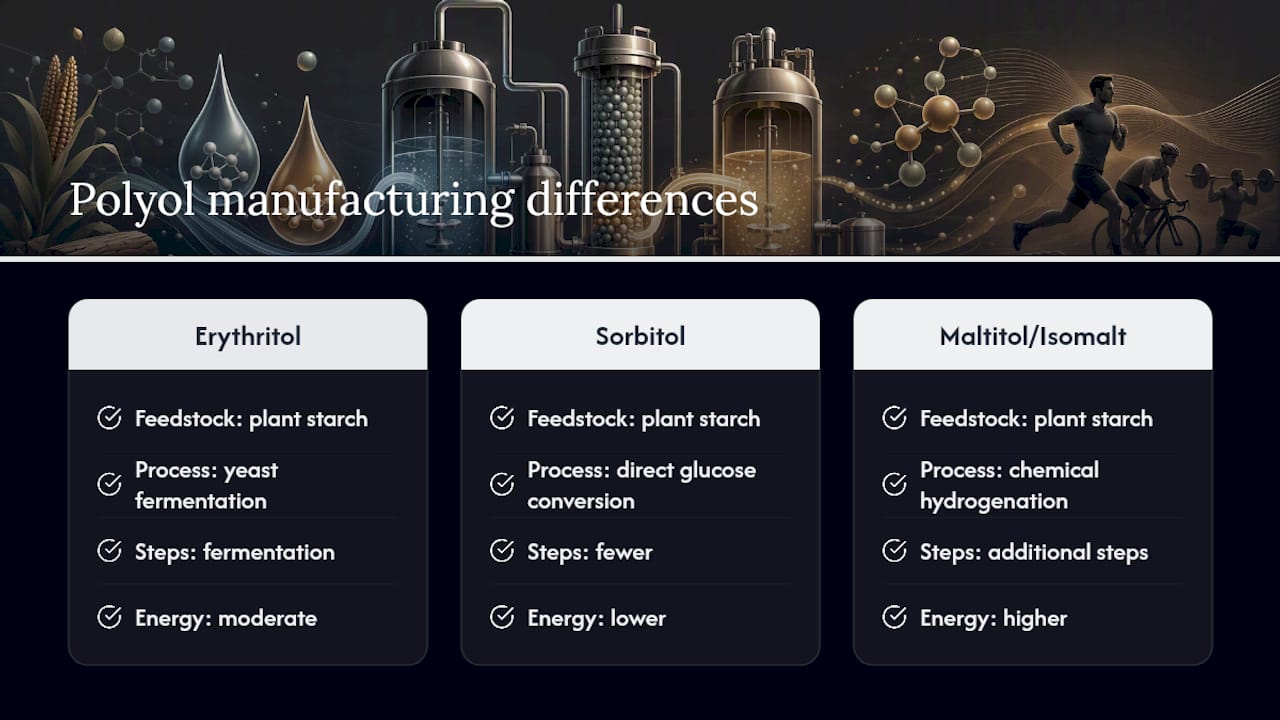
Most commercial polyols start as plant-derived starch, usually corn, that gets broken down and chemically hydrogenated into its sugar alcohol form. Erythritol is a partial exception: producers typically ferment glucose with yeast, a process closer to brewing than to industrial chemistry, which is part of why it’s often marketed as more “natural” than maltitol or sorbitol.
The manufacturing footprint of polyols isn’t dramatically different from other processed sweeteners, but it isn’t free either. Corn-based feedstocks carry the same land and water demands as any large-scale crop production, and the fermentation or hydrogenation steps require energy input at industrial scale. Isomalt and maltitol production involves additional processing steps compared to simpler polyols like sorbitol, which occurs more directly from glucose conversion.
None of this makes sugar alcohols an environmental villain compared to cane sugar or high-fructose corn syrup, which carry their own significant agricultural and processing footprints. But it’s worth knowing that “sugar-free” doesn’t mean “unprocessed.” A bar sweetened with erythritol went through a fermentation tank before it hit the shelf, just like the beer aisle did, and a bar sweetened with maltitol went through a more energy-intensive chemical conversion process. If minimizing processing steps matters to you as much as minimizing sugar, whole-food snacks will always beat any polyol-sweetened bar on that specific metric, regardless of which sugar alcohol is used.
Are Sugar Alcohols FDA-Approved and Regulated?
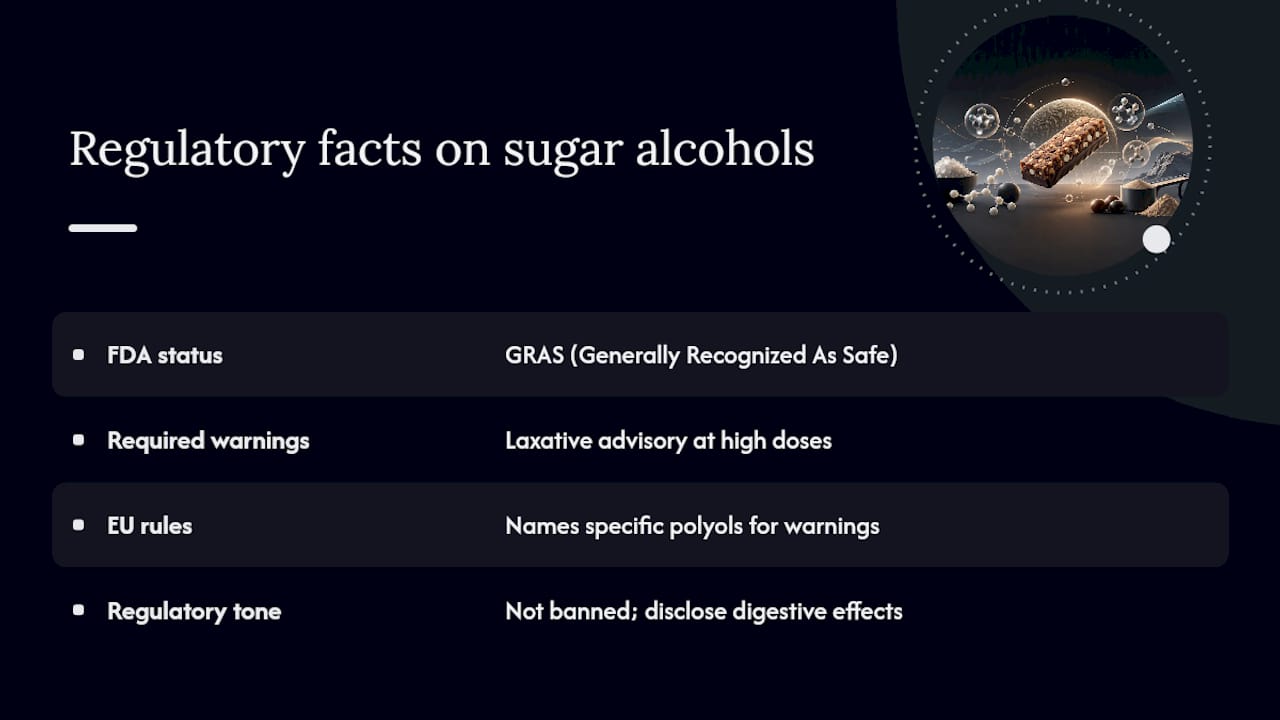
Sugar alcohols carry Generally Recognized As Safe (GRAS) status with the FDA, the same regulatory category covering most common food additives that have a long history of safe use. This isn’t a rubber stamp handed out casually. GRAS status means the ingredient has been reviewed against a body of safety data and cleared for its intended use in food.
Regulation goes further than a one-time approval, though. Peer-reviewed food science literature notes that products with meaningful added polyol content commonly require a laxative-effect advisory on the label in many jurisdictions, precisely because the digestive effects are well-documented and predictable at higher doses. The European Union names specific polyols including sorbitol, mannitol, isomalt, maltitol, lactitol, xylitol, and erythritol in its labeling rules, requiring products exceeding a set threshold of added polyols to carry that warning.
This regulatory pattern tells you something useful: authorities aren’t treating sugar alcohols as dangerous, but they are treating the digestive side effects as significant enough to mandate disclosure rather than leave it to word of mouth. That’s a meaningfully different regulatory posture than, say, artificial colorings, where the concerns center on entirely different health questions. The laxative advisory requirement is essentially regulators codifying what Cleveland Clinic and other health authorities already tell patients directly: moderate amounts are fine, more than that isn’t.
A Practical Take on Performance and Gut Comfort
Chasing the lowest net-carb number on a wrapper isn’t the win it looks like if it means spending your workout near a bathroom. Whole-food protein sources deserve first priority, with sugar-alcohol bars filling the convenience gaps around them. Test any new bar on a low-stakes day, not before a lift that matters, and let your own gut, not the label’s front-of-pack claim, make the final call.
— Blake
Find Protein Bars With Transparent Labels at Nzsupps
Specialist retailers provide product pages disclosing full ingredients, so you can check sugar alcohol content before you buy instead of after you’ve already opened the wrapper and had a rough afternoon. That matters more for bars than almost any other supplement category, since the difference between an erythritol bar and a maltitol bar can be the difference between a smooth training day and a wasted one.
If you’re building a stack around clean, disclosed ingredients rather than trial and error, start with a protein base you already know the full breakdown of, like Nzsupps’ Beef Isolate in Tropical Orange Mango, and use that same label-reading habit on every bar you add to your cart afterward. Compare bar options directly against shake convenience in our protein bars versus shakes breakdown to decide which fits your training schedule better.
Sources
- How healthy is sugar alcohol? - Harvard Health
- What to know about sugar alcohols - Cleveland Clinic
- Review on polyols in food production - Food Chemistry and Technology (Springer)
FAQ
Are Sugar Alcohols in Protein Bars Bad for You?
Not inherently. They’re generally recognized as safe by the FDA and offer real calorie and blood-sugar advantages, but they can cause gas, bloating, or diarrhea if you eat more than your personal tolerance, which for many people sits around 10 to 15 grams a day.
Are Sugar Alcohols Bad for You in General?
Sugar alcohols are considered safe for most people in moderate amounts, though maltitol and sorbitol cause digestive symptoms more often than erythritol does, and emerging research on erythritol and cardiovascular risk in high-risk populations warrants some caution.
What Protein Bars Don’t Use Sugar Alcohols?
Look for bars sweetened with allulose, monk fruit, or dates instead of polyols, and check the ingredient list for anything ending in “-ol” to confirm a bar is genuinely free of sugar alcohols. Nzsupps’ best protein bars ranking lists options across different sweetener types.
What Ingredients Should I Avoid in Protein Bars?
Beyond high-dose maltitol or sorbitol if you have a sensitive gut, watch for excessive added sugars disguised under multiple names, and check the sugar substitute breakdown if you’re also cutting artificial sweeteners from drinks and snacks.