SHOP NOW, PAY LATER














 Informed Sport
 Informed Choice
 NSF Certified for Sport
 HASTA Certified

Choose acetyl-L-carnitine (ALCAR) if you want cognitive or mood support, since it crosses the blood-brain barrier more readily than other carnitine forms. Choose L-carnitine L-tartrate if your goal is exercise recovery, since that’s the form used in most performance trials. Both forms can be taken together, but total carnitine load and dosing timing matter more than most labels let on.
TL;DR:
- Acetyl-L-carnitine crosses the blood-brain barrier more effectively, making it more suitable for cognitive and mood support, especially in older adults.
- L-carnitine L-tartrate has a stronger track record for improving exercise recovery and reducing muscle soreness, with doses typically between 1 and 4 grams daily.
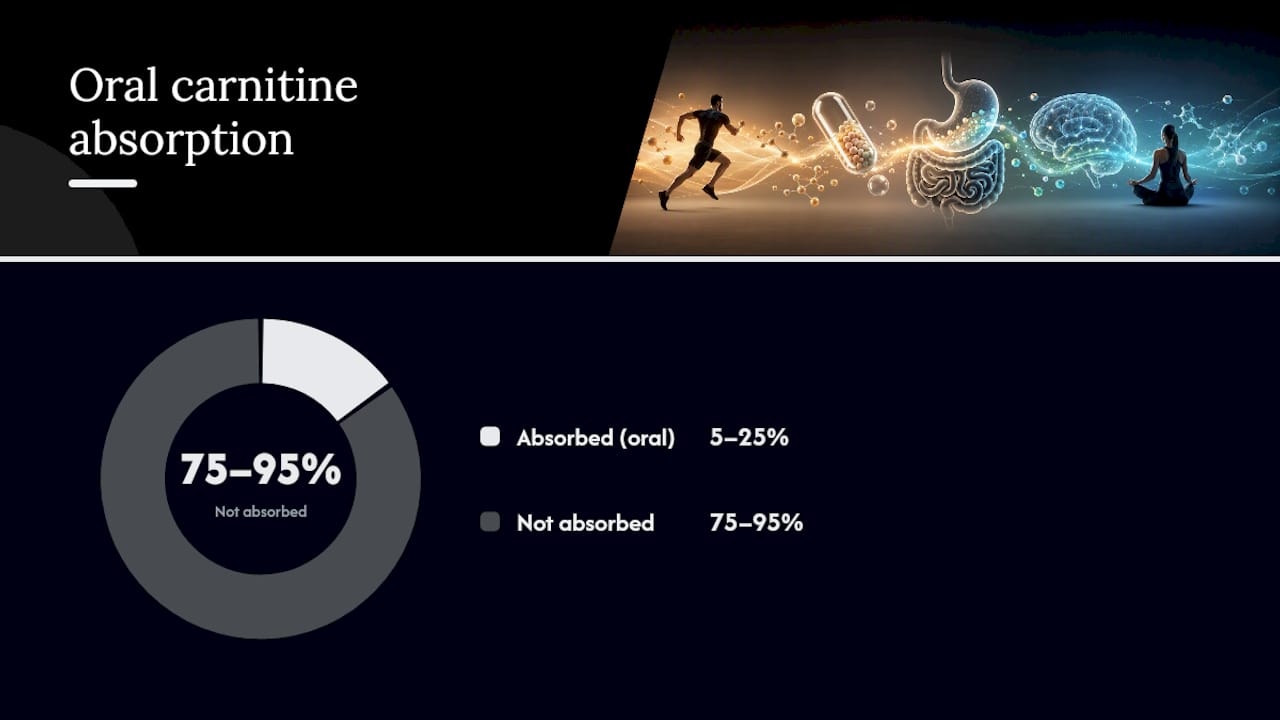
- Oral bioavailability of carnitine supplements ranges from 5% to 25%, so higher doses are used in studies, but absorption remains limited regardless of form.
- Most people tolerate carnitine supplements well, but gastrointestinal issues and body odor are common at higher doses, and certain groups should consult a healthcare professional first.
- When choosing a supplement, verify active carnitine milligrams per serving, the salt form, and opt for products with transparent labels and third-party testing.
Table of Contents
- L Carnitine Tartrate vs Acetyl L Carnitine: What’s the Actual Difference?
- What Does the Research Actually Show for Cognition, Mood, and Exercise?
- Which Form Should You Choose, and How Much Should You Take?
- Are There Side Effects or Reasons to Avoid Carnitine Supplements?
- How This Article Approached the Evidence
- Why the Brain vs Exercise Framing Gets Oversimplified
- Where to Buy Carnitine Supplements With Transparent Labels
- Sources
- FAQ
L Carnitine Tartrate vs Acetyl L Carnitine: What’s the Actual Difference?
Both molecules start as the same compound, L-carnitine, a nutrient your body makes from the amino acids lysine and methionine and uses to shuttle fatty acids into cell mitochondria for energy. The difference between L-carnitine tartrate and acetyl L-carnitine involves one added chemical group and one added salt.
ALCAR carries an acetyl group attached to the carnitine molecule. That small chemical addition is more likely to cross the blood-brain barrier, which is why researchers reach for it in cognitive and mood studies rather than plain carnitine. The Linus Pauling Institute notes this acetyl group also allows the molecule to donate acetyl units for acetylcholine synthesis, a neurotransmitter tied to memory and learning, though clinical results from that mechanism have been inconsistent.
L-carnitine L-tartrate, by contrast, is plain carnitine bound to tartaric acid, a salt chosen for stability and solubility rather than brain penetration. That tartrate salt matters for your wallet and your dosing math: tartaric acid adds weight without adding active carnitine, so a gram of tartrate powder contains meaningfully less usable carnitine than a gram of pure carnitine would. Checking the amino acid’s actual makeup before buying saves you from paying tartrate-salt prices for carnitine-level results.
Neither form absorbs particularly well on its own. Oral bioavailability across supplemental carnitine sits somewhere between 5% and 25%, a wide range that helps explain why supplement doses run so much higher than the amounts your body actually retains. A few practical takeaways from the chemistry:
- ALCAR’s acetyl group aids blood-brain barrier crossing; plain carnitine and tartrate forms do so far less efficiently.
- Tartrate salts reduce active carnitine per gram, so label math matters more than serving-size math.
- Oral absorption maxes out around 25%, meaning higher listed doses don’t translate to proportionally higher blood levels.
- Your body can interconvert carnitine forms to some degree, but dietary carnitine from meat and fish still absorbs better than any pill.
Vegetarians and vegans, who get less dietary carnitine to begin with, sometimes see more noticeable effects from supplementation simply because their baseline is lower.
What Does the Research Actually Show for Cognition, Mood, and Exercise?
The evidence splits cleanly along the same brain versus exercise line, though “splits cleanly” doesn’t mean either side is bulletproof.
On the cognitive front, ALCAR trials in older adults and people with mild cognitive impairment have shown short to mid-term improvements on certain memory and mood scales. But the bigger picture is messier. Broader reviews of the carnitine literature describe short-term gains that don’t reliably hold up as long-term functional benefits, and a Cochrane-style analysis of ALCAR for dementia found the same pattern: early promise, inconsistent staying power.
By the Numbers: Oral carnitine bioavailability tops out around 25%, which is one reason cognitive and exercise trials alike use gram-level doses rather than milligram doses common with other supplements. Lower absorption means researchers compensate with higher intake, and it also means individual results vary more than a clean percentage would suggest.
On the exercise side, L-carnitine L-tartrate has a narrower but steadier track record. Small trials point toward:
- Reduced markers of exercise-induced muscle damage in recreational athletes.
- Lower perceived exertion during and after training sessions.
- Faster subjective recovery in trials running several weeks, including one protocol using 2 grams twice daily for 24 weeks.
The honest caveat applies to both sides of this comparison. Most of these studies involve small sample sizes, run for a few weeks to a few months, and vary in dose, population, and outcome measures. That heterogeneity is exactly why carnitine supplementation, in either form, functions as an adjunct to training and diet rather than a stand-in for either one.
Which Form Should You Choose, and How Much Should You Take?
Match the form to the goal, not the marketing copy. If cognitive sharpness, mood support, or general brain aging is your priority, ALCAR is the more evidence-aligned pick because of its blood-brain barrier advantage. If your priority is training recovery, reduced soreness, or exercise performance, L-carnitine L-tartrate has more relevant trial data behind it.
Here’s how the dosing typically breaks down:
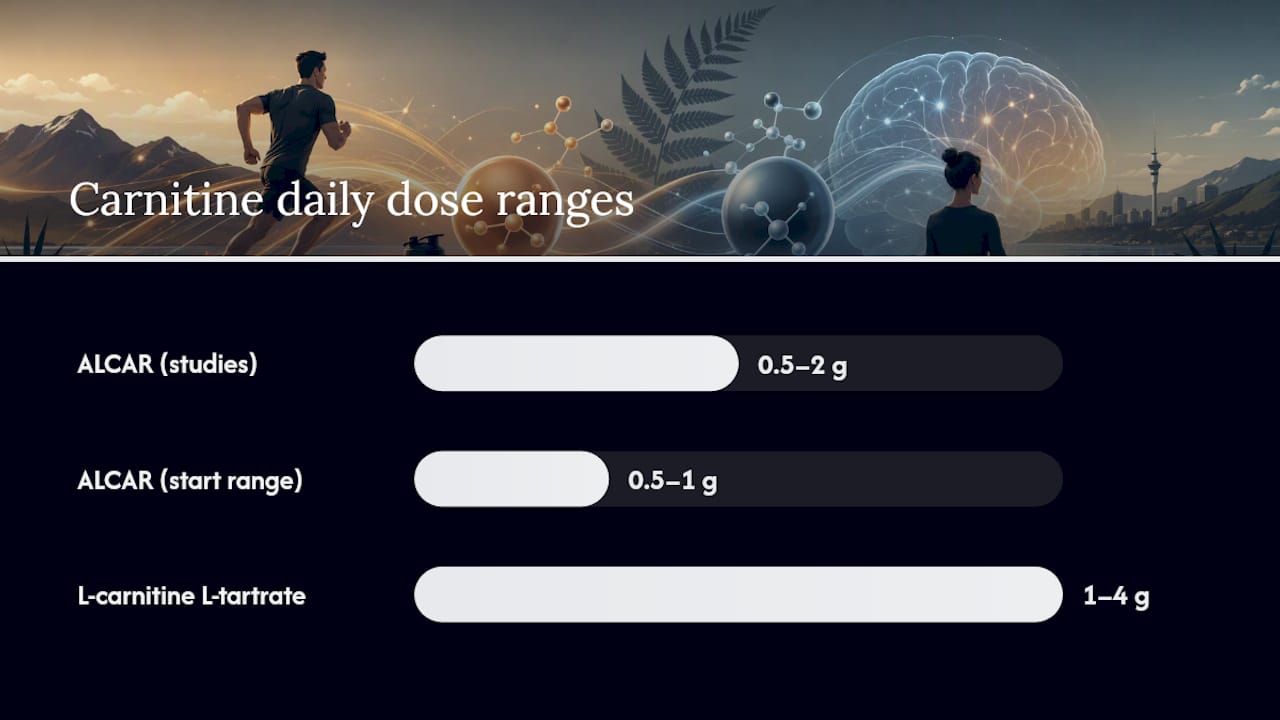
- ALCAR for cognitive or mood support: Most studies use 0.5 to 2 grams per day, and the Linus Pauling Institute lists 0.5 to 1 gram daily as a reasonable starting range for general use.
- L-carnitine L-tartrate for exercise and recovery: Studies commonly use 1 to 4 grams daily, often split into two doses, with some athlete protocols pairing it with carbohydrate intake to improve muscle uptake.
- Timing: Take ALCAR in the morning if focus is the goal, since some people report a mild stimulating effect. Take L-carnitine tartrate around your training window, either 60 to 90 minutes before or shortly after exercise.
- Combining both: It’s reasonable to use ALCAR for cognitive support and L-carnitine tartrate around workouts on the same day, as long as you track your total carnitine intake and start at the lower end of each range before adjusting upward.
Pro Tip: Before buying either form, flip the bottle around and find the milligrams of active carnitine per serving, not just the total product weight. A “2,000 mg L-carnitine tartrate” label might only deliver around 1,300 to 1,400 mg of actual carnitine once you account for the tartaric acid content.
Your label checklist should cover four things every time: active carnitine mg per serving (not total compound weight), which salt form you’re getting, the actual serving size versus your target dose, and whether the product carries third-party testing, which matters more if you compete in tested sports.
Are There Side Effects or Reasons to Avoid Carnitine Supplements?
Most people tolerate carnitine supplementation well, but side effects do show up, especially at higher doses. Nausea, diarrhea, and a fishy body odor are the most commonly reported issues, and they usually show up before anything more serious does. Think of them as your body’s early warning system rather than something to push through.
A few groups should talk to a clinician before starting either form:
- Pregnant or breastfeeding individuals, since safety data in these populations is limited.
- Anyone with a seizure history, since carnitine has been linked to seizure activity in isolated case reports.
- People with kidney impairment, since carnitine metabolism and clearance both involve the kidneys.
- Anyone currently taking prescription medications, particularly blood thinners, since interaction research is still thin and a prescriber is better positioned to flag risk than a supplement label.
By the Numbers: Bioavailability sitting at just 5% to 25% means most of an oral dose passes through unabsorbed, which is part of why gastrointestinal side effects are the most common complaint rather than anything systemic.
A sensible approach: start at the low end of the dosing range, give it two to four weeks before judging results, and stop or scale back if you notice digestive upset or unusual body odor.
How This Article Approached the Evidence
This comparison draws on the NIH Office of Dietary Supplements fact sheets, the Linus Pauling Institute at Oregon State University, and peer-reviewed exercise and cognition research rather than manufacturer marketing claims. Nzsupps carries carnitine formulations with fully disclosed ingredient panels, which matters when a salt form like tartrate can obscure how much active carnitine you’re actually getting per serving.
For related label-reading and dosing frameworks, Nzsupps’ guides on citrulline safety and dosing and creatine salt comparisons apply the same evidence-first approach used here.
Why the Brain vs Exercise Framing Gets Oversimplified
Most articles treat this as a binary choice, and that framing undersells how much dosing and timing decide the outcome. The bigger issue isn’t picking the wrong form. It’s picking the right form and then underdosing it, or taking it inconsistently for two weeks and concluding it “doesn’t work.”
The conventional advice skips the bioavailability problem entirely. When absorption tops out around 25%, a “clinical dose” from a study doesn’t guarantee the same blood levels in you, especially if you’re taking it on an empty stomach or with coffee. That’s not a reason to avoid supplementation. It’s a reason to be patient with it and specific about which outcome you’re actually measuring, whether that’s a subjective focus improvement or a training metric like perceived exertion.
If you take one thing from this comparison, let it be this: match the form to a single, specific goal before you buy, then give it a real trial period instead of judging it after a few doses.
— Blake
Where to Buy Carnitine Supplements With Transparent Labels
Once you know which form fits your goal, the harder part is finding a product where the label actually tells you what you’re getting. A lot of carnitine products list total compound weight in bold and bury the active carnitine milligrams in fine print, which makes comparing two bottles nearly impossible at a glance.
Active ingredient amounts are clearly listed on many carnitine product pages, so you can check milligrams per serving, salt form, and serving size before you buy instead of guessing. The GAT Sport L-Carnitine 3000 Liquid is a stim-free liquid format worth checking out if you’re leaning toward the exercise-support side of this comparison, since liquid carnitine sidesteps some of the tartrate-salt math altogether. Pair it with a tested pre-workout if you’re building out a full training-day stack. Whatever you choose, run your intended dose past a clinician first if you fall into any of the higher-caution groups covered above. Browse carnitine ranges on supplement sites and check label details before your next order.
This article is general information, not a substitute for advice from a qualified doctor. Consult a qualified healthcare professional about your own circumstances before acting on anything here.
Sources
- Carnitine - Health Professional Fact Sheet
- L-Carnitine | Linus Pauling Institute | Oregon State University
- What to Know About the Amino Acid L-Carnitine - Healthline
- Acetyl-L-Carnitine - RxList
FAQ
Which Type of L-Carnitine Is Best for Fat Loss?
Neither form has strong evidence as a standalone fat-loss tool; carnitine’s role in fat metabolism is real, but clinical weight-loss results are inconsistent and typically modest at best.
Can You Take L-Carnitine Tartrate and Acetyl-L-Carnitine Together?
Yes, many people take both, using ALCAR for cognitive support and L-carnitine tartrate around workouts, but track your combined daily total and start at the lower end of each dosing range.
Who Should Not Take Acetyl-L-Carnitine?
People who are pregnant or breastfeeding, have a history of seizures, have kidney impairment, or take prescription medications like blood thinners should talk to a clinician before starting ALCAR.
Is Acetyl-L-Carnitine Better for Weight Loss Than Regular L-Carnitine?
No form has been shown to be clearly superior for weight loss; ALCAR’s advantage lies in cognitive and mood support, not in a documented edge for fat loss over other carnitine types.