SHOP NOW, PAY LATER










 Informed Sport
 Informed Choice
 NSF Certified for Sport
 HASTA Certified

For most health-conscious readers, stevia edges out sucralose on current safety signals, mainly because of a small but replicated finding tying sucralose to gut microbiome and blood sugar changes. Both sweeteners are approved for food use and safe within their acceptable daily intake, so the real decision usually comes down to taste, the product blend, and how you plan to use it (see more on selling Amanita Muscaria as food legality issues).
TL;DR:
- Stevia generally has a cleaner human research record and no current evidence of microbiome disruption, unlike sucralose, which has preliminary signals linking it to gut bacteria shifts.
- Both sweeteners are approved and safe within their acceptable daily intake levels, but sucralose’s limit is 5 mg/kg and stevia’s is 4 mg/kg, with typical consumption far below these thresholds.
- Taste preferences heavily influence choice, with sucralose offering a sugar-like flavor suitable for cold drinks and baking, while stevia’s bitterness varies based on the extract used.
- Small human microbiome studies suggest sucralose may impact gut bacteria, but results are preliminary, inconsistent, and confounded by product blends and individual differences.
- For people managing blood sugar, starting with stevia and monitoring personal responses can be a safer, more conservative approach until more conclusive long-term research emerges.
Table of Contents
- Sucralose vs Stevia at a Glance
- What Do Regulators and Human Studies Actually Say?
- Does Sucralose Really Mess With Your Gut Bacteria?
- How Do Sucralose and Stevia Actually Taste?
- Which Sweetener Fits Your Situation?
- How Nzsupps Thinks About Sweetener Transparency
- An Editorial Take on Sucralose vs Stevia
- Sources
- FAQ
Sucralose vs Stevia at a Glance
Before getting into the research weeds, here’s how the two stack up on the factors that actually change a buying decision.
| Factor | Sucralose | Stevia |
|---|---|---|
| Regulatory status & ADI | FDA approved; ADI 5 mg/kg body weight/day | JECFA/WHO approved; ADI 4 mg/kg body weight/day for steviol glycosides |
| Human metabolic evidence | Small trials link it to glycemic changes in some subjects | Generally neutral effects on blood glucose in most trials |
| Gut microbiome evidence | Preliminary human data suggest bacterial shifts | Limited human microbiome data; no strong signal yet |
| Taste & aftertaste | Clean, sugar-like sweetness | Can taste bitter or licorice-like, depending on the glycoside blend |
| Heat stability & use | Withstands baking but may form breakdown compounds at high heat | Heat stable; often preferred for baking and cooking |
A few quick takeaways make this easier to act on:
- Pick stevia for zero-calorie drinks and recipes where you want a clean-label ingredient and don’t mind checking the blend for bitterness.
- Pick sucralose when you want a neutral, sugar-like taste in cold applications like protein shakes, but keep an eye on the microbiome research if you have digestive sensitivity.
- Check the full label either way since both sweeteners are frequently blended with erythritol, maltodextrin, or other carriers that change the nutritional picture.
Quick fact check: Regulators set sucralose’s acceptable daily intake at 5 milligrams per kilogram of body weight per day, while the JECFA/WHO limit for steviol glycosides sits at 4 milligrams per kilogram. For an adult, those acceptable daily intake limits translate to amounts far beyond what typical diet soda or protein powder use would ever reach.
What Do Regulators and Human Studies Actually Say?
Sucralose and stevia both cleared the regulatory bar decades ago, but “approved” and “extensively studied at typical human doses” are not the same claim, and that gap is where most of the current debate lives.
The FDA approved sucralose in 1998 and set its ADI at 5 mg/kg body weight per day. Steviol glycosides, the sweet compounds extracted from the stevia plant, received a JECFA/WHO acceptable daily intake of 4 mg/kg body weight per day. Both figures come from toxicology testing designed to build in a large safety margin, typically 100 times below the lowest dose showing any adverse effect in animal studies. In practice, almost nobody hits these ceilings through normal consumption of diet drinks, flavored waters, or sweetened protein powder.
Where the two sweeteners diverge is in the newer human clinical literature, and this is the part most comparison articles skip.
Human trial evidence is thinner than the marketing suggests
Randomized controlled trials on non-sugar sweeteners generally show mixed or neutral effects on body weight, insulin sensitivity, and other metabolic markers. A public health review from the UK’s Scientific Advisory Committee on Nutrition looked across the available randomized trials on non-sugar sweeteners and found heterogeneous results. Some trials showed modest benefits for weight management when sweeteners replaced sugar; others showed no measurable difference. The committee’s overall read: current RCTs don’t point to clear, large-scale harm at typical exposure levels, but the trials themselves often run short, use small samples, and rarely track outcomes for more than a few months.
That last point matters more than it sounds. A trial that runs 8 to 12 weeks and shows no change in fasting glucose tells you almost nothing about what 10 years of daily diet soda does to your metabolic health. Nobody has run that trial, for either sweetener, at the scale you’d want.
A broader synthesis of RCT evidence compiled for WHO’s guideline development process reached a similar conclusion: most trials on adiposity and cardiometabolic markers report neutral or mixed outcomes, and the quality of evidence is limited by small sample sizes and inconsistent study design across different sweeteners and populations. This is not a ringing endorsement of either sweetener, but it’s also not the smoking gun that some corners of social media suggest.

Where sucralose picks up a specific concern
Sucralose has drawn more scrutiny recently because of findings connecting it to changes in gut bacteria composition and glycemic response in small human trials, a signal that stevia hasn’t generated with comparable clarity in the current literature. This is a real, if preliminary, distinction, and it’s the main reason stevia gets the nod as the more conservative default choice for people actively managing blood sugar.
It’s worth being precise about what “preliminary” means here. The relevant data come from small-sample human research, not large cohort studies, and none of it has been replicated at scale. Treat it as a reason to pay attention, not as proof that sucralose causes metabolic harm in typical users.
Animal studies raise questions, but don’t answer them
Rodent studies testing high-dose sucralose and stevia exposure have reported biochemical and tissue changes in the animals, according to a comparative toxicology study published on PMC. These findings matter as hypothesis generators. They tell researchers where to look next. What they don’t do is translate directly to human risk at normal dietary doses, because rodent studies typically use doses far above what a person would consume through food and drinks, and rodent gut physiology differs from human gut physiology in ways that limit how cleanly results carry over.
Harvard Health’s overview of sweeteners sums up the state of the science well: non-nutritive sweeteners are generally considered non-caloric and safe within regulatory limits, but researchers still need more long-term human data to close the gaps that animal and short-duration studies leave open.
Bottom line on the evidence: Both sweeteners are legal, regulated, and backed by decades of toxicology testing. What’s genuinely established is the ADI framework and the absence of large, consistent harm signals in human RCTs. What’s still speculative is the long-term human relevance of the animal findings and the small human microbiome studies, particularly for sucralose. Neither sweetener has been “proven safe forever” or “proven dangerous.” The honest answer sits in the middle, and stevia currently carries a slightly cleaner track record in that middle ground.
Does Sucralose Really Mess With Your Gut Bacteria?
The most talked-about sucralose finding comes from a small human trial that found measurable shifts in gut bacteria composition and impaired glycemic responses after a period of sucralose exposure in healthy volunteers. The sample size was small, and the results haven’t been replicated in a larger, independent cohort yet, which is exactly why researchers describe this as a preliminary signal rather than settled science.
Here’s why that distinction actually matters for how you should read headlines about it. A small trial can absolutely be real and worth taking seriously. It can also fail to replicate once a larger, more diverse group gets tested, especially when background diet, gut bacterial baseline, and dose all vary as much as they do between individuals. Right now, this sucralose and gut health finding sits in the “flag it, don’t panic about it” category.
Stevia’s microbiome picture looks different, mostly because there’s less of it. Human trials specifically testing stevia’s effect on gut bacteria composition are sparse, and the ones available don’t show a comparable glycemic disruption signal. That’s not proof stevia is cleaner for your gut. It’s simply that the research volume isn’t there yet to make a confident claim either way.
Several factors make this research harder to interpret than a single headline number suggests:
- Dose matters enormously. Studies testing sweetener effects often use doses well above typical daily intake from diet drinks or protein powder.
- Product blends confound results. Most commercial stevia and sucralose products aren’t pure; they’re mixed with erythritol, maltodextrin, or dextrose, and those carriers have their own metabolic effects.
- Background diet skews outcomes. A person eating a high-fiber, low-processed diet responds differently to a sweetener challenge than someone eating a standard Western diet.
- Individual gut microbiome baseline varies widely. The same dose of sucralose can produce a measurable shift in one person and nothing detectable in another.
For someone managing prediabetes or insulin resistance, the practical implication isn’t “avoid sucralose completely.” It’s “don’t assume a sugar-free label means metabolically inert,” and it’s worth tracking your own numbers if you’re a heavy user of diet products.
Pro Tip: If you’re monitoring blood glucose and use a continuous glucose monitor or regular fingersticks, try logging your sweetener intake for two weeks alongside your readings. Individual responses to sucralose and stevia vary enough that your own data will tell you more than any population-level study.
How Do Sucralose and Stevia Actually Taste?
Taste is where most people make their real-world decision, and the two sweeteners land in genuinely different places on the palate.
Sucralose delivers a clean, sugar-like sweetness with minimal aftertaste in most applications, which is exactly why it dominates diet sodas, flavored waters, and protein powders. Stevia’s flavor profile depends heavily on which steviol glycoside the manufacturer uses, and this is where a lot of consumer confusion comes from.
1. Reb A, Reb D, and Reb M taste noticeably different
Rebaudioside A, the most common and cheapest stevia extract, tends to carry more bitterness and a licorice-like aftertaste, according to a consumer sensory study published in MDPI’s Foods journal. Rebaudioside D and Rebaudioside M, newer and more expensive extracts, score much closer to sucrose on sensory panels with far less bitterness. If you’ve tried a stevia product years ago and hated it, a modern Reb M formulation might change your mind entirely.

2. The food matrix changes the outcome
A sensory comparison run by researchers at A*STAR tested sweeteners across tea, chocolate milk, and yogurt, and found sucralose consistently tracked closer to sucrose across matrices, while stevia’s bitterness became more noticeable in acidic or complex foods like yogurt. A sweetener that tastes fine in your morning coffee can taste off in a fruit-flavored yogurt.
3. Heat changes sucralose’s chemistry, not its sweetness
Sucralose holds up reasonably well in baking, but at very high sustained heat, some research points to the possible formation of chlorinated breakdown products, an area still under active investigation rather than settled science. Stevia is generally heat stable and is often the preferred choice for baked goods and cooked sauces where you want to avoid any thermal uncertainty.
Practical swaps that actually work in the kitchen:
- Cold protein shakes and drinks: Sucralose blends tend to mimic sugar’s mouthfeel most closely, which is why it shows up in most flavored protein powders.
- Baking and roasting: Reach for a stevia blend or an unsweetened base and add sweetness after cooking if you’re worried about heat stability.
- Coffee and tea: Either works well here since both dissolve cleanly in hot liquid without needing to withstand prolonged high heat.
- Yogurt and acidic foods: Test a small batch first. Stevia’s bitterness shows up more in these matrices, per the A*STAR sensory data above.
Which Sweetener Fits Your Situation?
Different readers need different answers here, and the “best” sweetener genuinely depends on your health profile and how you use it day to day.
People managing diabetes or prediabetes generally do better starting with stevia, given the current lack of a glycemic disruption signal compared to the preliminary sucralose findings. That said, both remain within a normal range for most people at typical intake, so this is a preference based on caution rather than a hard rule.
Taste-sensitive users who’ve disliked stevia in the past should look specifically for Reb D or Reb M formulations rather than writing off stevia entirely; the sensory gap between glycoside variants is large enough to change the entire experience.
Athletes using protein powder or intra-workout drinks typically encounter sucralose more often because it mimics sugar’s mouthfeel in cold, high-flavor products. A cyclic dextrin carbohydrate product is one example of how manufacturers balance sweetness and performance ingredients in a single formula, and checking that label tells you exactly which sweetener system you’re getting.
People with GI sensitivity should watch for sugar alcohols and maltodextrin fillers bundled alongside either sweetener, since those carriers cause bloating and digestive discomfort independent of the sweetener itself.
Label-reading checklist before you buy:
- Look for “steviol glycosides” or “Reb A/D/M” specifically, rather than just “stevia,” since the blend affects both taste and any metabolic relevance.
- Check for “sucralose” or the brand name Splenda, and note whether it’s blended with maltodextrin, which adds a small carbohydrate load.
- Scan for erythritol or other sugar alcohols, since these carry their own digestive tolerance issues in larger amounts.
- Remember the dosing ceiling: 5 mg/kg body weight/day for sucralose and 4 mg/kg body weight/day for steviol glycosides, both far above what typical daily servings deliver.
Pro Tip: If you’re trying to cut back on sweeteners generally rather than just switching brands, start by cutting your sweetened drink intake in half for two weeks before swapping products. You’ll often find your palate resets and you need less sweetness overall, regardless of which sweetener you land on.
How Nzsupps Thinks About Sweetener Transparency
Nzsupps stocks products from a curated set of brands specifically because ingredient transparency should be checkable, not assumed. When a protein powder or electrolyte mix lists “sucralose” or “steviol glycosides” on the label, that’s information you should be able to trust matches what’s actually in the tub.
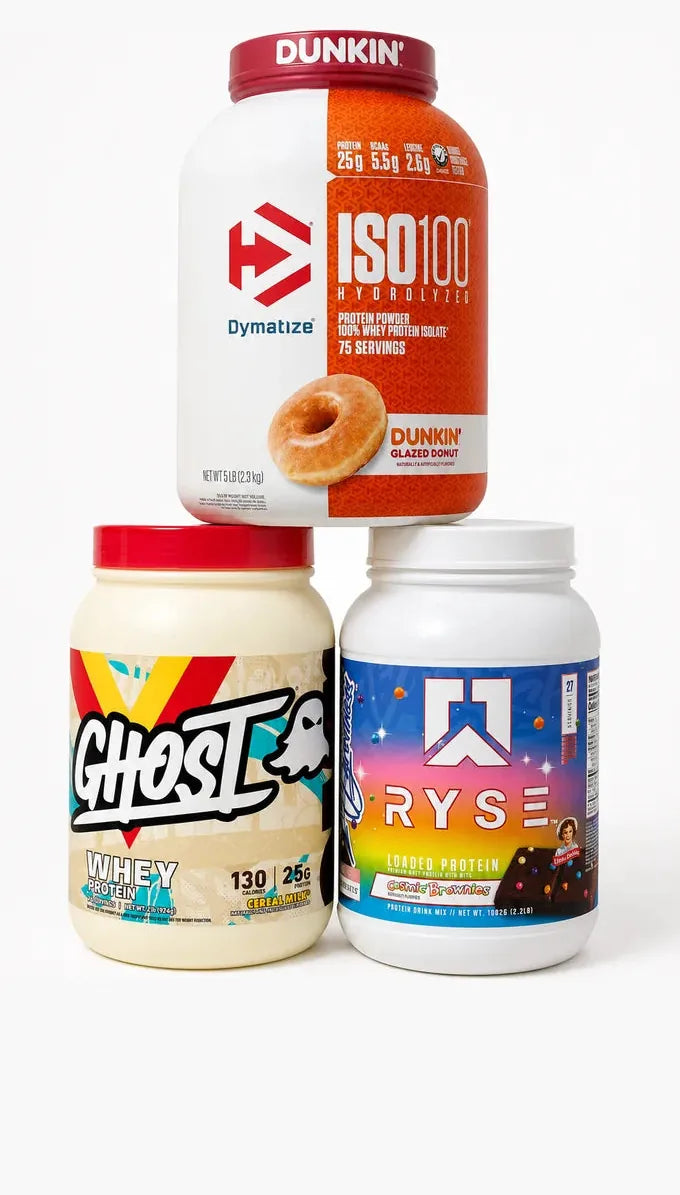
If you’re shopping for a sweetened protein powder, a product like Dymatize Iso 100 Chocolate Peanut Butter shows the kind of full ingredient disclosure worth looking for, letting you see exactly which sweetener system and carrier ingredients you’re getting before you commit to a tub.
For readers specifically weighing sweetener choice in hydration and energy products, Nzsupps has covered related ground in its guide to sugar-free electrolytes versus sugar versions and its breakdown of whether sugar-free energy drinks carry hidden downsides.
A few habits make label reading faster once you know what to look for:
- Scan the sweetener line first, not the marketing claims on the front of the package.
- Cross-check for maltodextrin or erythritol listed near the sweetener, since these change the calorie and glycemic picture even in a “sugar-free” product.
- Note whether the brand names the specific steviol glycoside, since a product using Reb A will taste and perform differently than one using Reb M.
- Treat “natural flavors” claims with mild skepticism and focus on the actual sweetener and carrier ingredients listed in the panel.
An Editorial Take on Sucralose vs Stevia
The evidence on sucralose and stevia doesn’t support a dramatic verdict in either direction, and that’s honestly the more useful takeaway than a clean winner. Stevia currently has a slightly cleaner human research record, mainly because sucralose has drawn more scrutiny into its microbiome effects, not because stevia has been proven safer across the board. The smart approach is conservative rather than absolute: use the minimal amount of either sweetener that gets you the result you want, and pay attention to how your own body responds rather than leaning entirely on population averages that may not describe you. If you’re managing blood sugar closely, this is worth tracking for a few weeks before making it a permanent swap. And if you find yourself reaching for sweetened everything, the better move might not be choosing between sucralose and stevia at all. It might be dialing down how much sweetness you’re chasing in the first place.
— Blake
Sources
The claims in this article draw on a mix of regulatory guidance, clinical evidence reviews, and sensory science, not marketing copy from either sweetener’s manufacturers.
- The hidden hazardous effects of stevia and sucralose consumption in male and female albino mice in comparison to sucrose — PMC
- Sweeteners: Time to rethink your choices? — Harvard Health
- SACN position statement on non-sugar sweeteners — UK Health agencies (position statement)
- Consumer-Based Sensory Characterization of Steviol Glycosides (Rebaudioside A, D, and M) — MDPI
Ready to check a label for yourself? Browse protein, creatine, and electrolyte options at Nzsupps, where every product page lists full ingredients so you can see exactly which sweetener system you’re buying before you check out.
This article is general information, not a substitute for advice from a qualified doctor. Consult a qualified healthcare professional about your own circumstances before acting on anything here.
FAQ
Which Is Safer, Stevia or Sucralose?
Both are approved by regulators and safe within their acceptable daily intake, but stevia currently has a slightly cleaner human research record. Sucralose has drawn attention for a preliminary human finding linking it to gut microbiome and glycemic changes, a signal not yet seen with comparable strength for stevia.
What Is the Healthiest Type of Artificial Sweetener?
There’s no single sweetener proven healthiest across every category. Stevia is technically a plant-derived sweetener rather than a synthetic one, and its steviol glycosides (especially Reb D and Reb M) show a favorable taste and safety profile in current sensory and toxicology research, but individual tolerance and product blends still matter more than the sweetener category alone.
Why Avoid Sucralose?
You don’t necessarily need to avoid sucralose, since regulators consider it safe within its 5 mg/kg body weight/day ADI. Some people choose to limit it because of preliminary evidence tying it to gut bacteria shifts and impaired glycemic response in a small human trial, a finding that hasn’t yet been replicated at scale.
Is There a Downside to Stevia?
The main downside is taste, not safety. Older stevia extracts made with Reb A can carry a bitter or licorice-like aftertaste, and stevia products are often blended with erythritol or maltodextrin, which can affect digestion or add a small carbohydrate load depending on the amount used.