SHOP NOW, PAY LATER










 Informed Sport
 Informed Choice
 NSF Certified for Sport
 HASTA Certified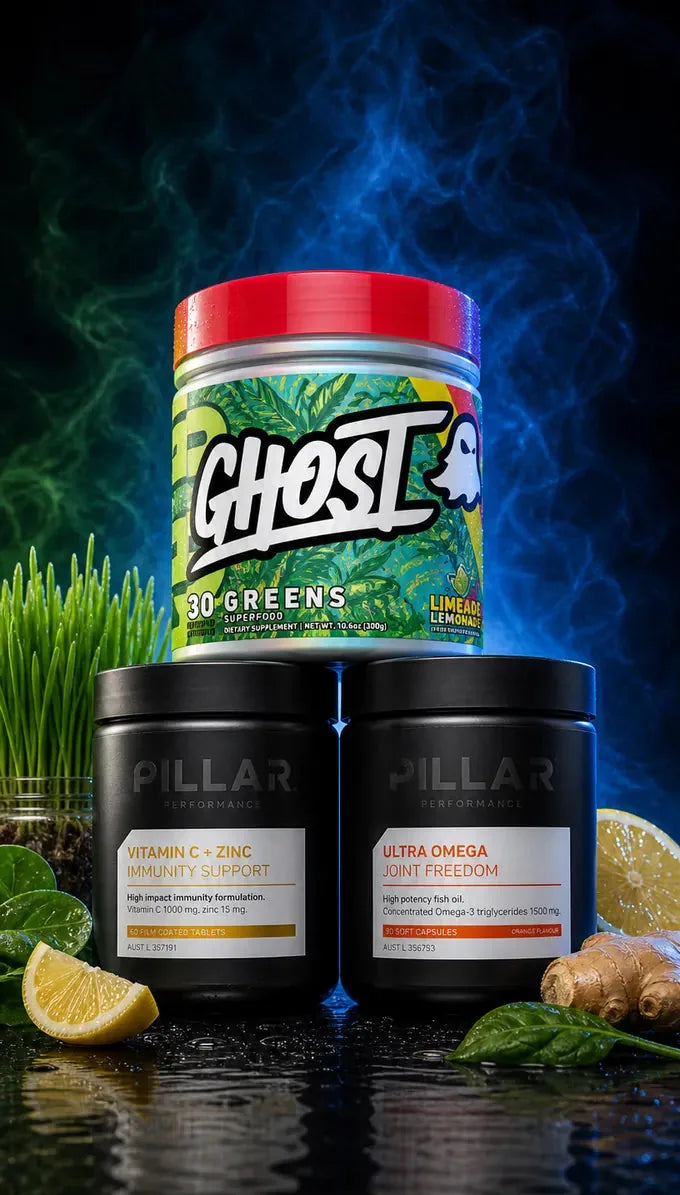

Sugar electrolytes are better when you need carbohydrate fuel as well as fluid and sodium. Sugar-free electrolytes are better when you need a low-energy drink, your session is shorter, or your fuel is coming from food or another product. Neither one wins every workout.
The useful way to compare sugar vs sugar-free electrolytes is to stop treating sugar as either magic or poison. In a sports drink, carbohydrate has a job. It supplies fuel and can help the drink meet combined fuel and hydration goals. In a sugar-free product, removing that carbohydrate keeps the drink lighter, but it also removes the fuel. Pick by the session in front of you, not by which word on the label sounds healthier.
Quick answer
Sugar-free electrolytes are better when you need fluid and sodium but not fuel: shorter sessions, a hot gym, or training where your carbohydrate comes from food. A sugar version, or a sports drink at about 6 to 8 percent carbohydrate, is better for long, hard or repeated sessions where the bottle also has to fuel you. For most sessions under 60 to 90 minutes in normal conditions, water and regular meals cover it.
How sugar vs sugar-free electrolytes changes the job
Both types can contain sodium and other electrolytes. Both can add flavour that makes a drink easier to finish. The main split is carbohydrate. Traditional sports drinks commonly contain about 6 to 8 percent carbohydrate, according to the Australian Institute of Sport. Lower-sugar and sugar-free options provide little or no carbohydrate.
| Option | What it gives you | Usually fits | Main trade-off |
|---|---|---|---|
| Sugar electrolyte drink | Fluid, electrolytes, and carbohydrate | Long, hard, or repeated sessions where fuel is useful | Adds carbohydrate and energy you may not need |
| Sugar-free electrolyte drink | Fluid and electrolytes with little or no carbohydrate | Shorter sessions, lower-energy plans, or separate fuelling | Does not meaningfully fuel working muscle |
| Water | Fluid | Many short or easy sessions in normal conditions | Does not replace meaningful sodium or supply fuel |
The decision between sugar vs sugar-free electrolytes often comes down to whether the bottle also needs to fuel you. The electrolyte panel still matters. A drink can say "hydration" on the front and carry very little sodium. Another may be built for heavy sweating. Some products also include caffeine or other performance ingredients, so do not assume every tub in an electrolyte category is a plain hydration mix. Read the full label. Ghost Hydration vs Ghost BCAA is a good example of two similar-looking tubs doing different jobs.
When sugar earns its place
Carbohydrate becomes useful when training lasts long enough or runs hard enough to draw heavily on stored fuel. The Australian Institute of Sport describes sports drinks as a convenient way to address fuel, fluid, and electrolyte needs together. That is why you see them in endurance events, tournament days, long rides, and demanding field sessions.
A sugar-containing drink can make sense when:
- You are exercising continuously for more than about an hour and intensity is meaningful.
- You have several matches, heats, or sessions with limited time to eat between them.
- Heat and sweat make it easier to drink your carbohydrate than chew it.
- You struggle to keep energy up late in long sessions.
- Your wider sports-nutrition plan already includes carbohydrate during training.
This does not mean any sweet drink is a good sports drink. The amount of sodium, carbohydrate concentration, serving volume, and gut comfort all matter. A very concentrated drink may sit badly, especially when you are running hard. Follow the label's water volume rather than doubling the powder to make it taste stronger.
When sugar-free makes more sense
Sugar-free electrolytes suit sessions where fluid and sodium are the priority but fuel is not. That may be an easy gym session, a short class, a low-intensity walk in the heat, or training where you already have carbohydrate from a meal, gel, chews, or another drink.
The fuel gap shows up clearly on the labels. A serve of a sugar-free mix carries about 5 calories and one isotonic gel carries 97, so a sugar-free bottle leaves the fuel job to your food or a gel.
Calories per serve: sugar-free mix vs isotonic gel
As listed for each product: one stick, one scoop or one gel. NZ Supps range, September 2026.
No calorie figure is listed for Ryse Core Hydration, which is sugar-free.
They can also make the numbers simpler during a cutting phase. If you do not need carbohydrate during the session, there is no reason to add it by accident. A sugar-free drink can give you flavour and electrolytes without turning every bottle into a fuel serve.
Still, "sugar-free" does not automatically mean better for your stomach. Some sweeteners and sugar alcohols trouble some people. Flavouring, acidity, magnesium, and a strong serving can also matter. Try a product in training before relying on it in a race or long event.
Most short workouts do not need either one
For many people training for less than 60 to 90 minutes in normal conditions, water and regular meals cover the job. The American College of Sports Medicine notes that most recreational exercisers in that range are unlikely to become depleted of electrolytes. A bottle of electrolyte mix is an option, not an entry fee for doing squats.
Look at the session honestly. Forty-five minutes of weights in an air-conditioned gym is not the same hydration problem as a three-hour ride in a humid North Island summer. Sweat rate varies as well. Two people can complete the same workout and finish with very different fluid and sodium losses. A full day of tramping is similar, and our guide to electrolytes on the track covers it.
The broad electrolyte guide explains what the minerals do and when losses become relevant. If you are new to supplements altogether, the beginner supplement shortlist helps separate useful basics from things you can leave on the shelf.
Does sugar help your body absorb electrolytes?
Glucose and sodium can support water absorption together in the intestine. That principle is used in oral rehydration solutions. But a clinical oral rehydration solution is not the same thing as a standard sports drink or gym electrolyte powder. Medical products use specific concentrations for illness-related fluid loss and should be used as directed by a healthcare professional or pharmacist.
For sport, a small amount of carbohydrate can support a combined hydration and fuel plan. It is not required in every electrolyte drink. The Australian Institute of Sport electrolyte framework specifically describes lower-sugar products for situations where electrolyte and fluid needs are high but fuel needs are low.
Read these five lines on the label
- Serving size: Check whether the panel is for one scoop, one sachet, or the finished bottle.
- Sodium: This is the main electrolyte lost in sweat. Compare the amount per prepared serving. The ingredient list alone is not enough.
- Total carbohydrate and sugars: This tells you whether the drink is also a fuel source.
- Caffeine: Some hydration-branded products include stimulants. Count them toward your daily intake and consider training time.
- Mixing volume: The nutrition numbers only make sense at the water volume the label specifies.
Potassium, magnesium, calcium, and chloride may be included too. More minerals do not automatically make a product better. Choose the panel that fits the losses and fuel demands you are trying to cover.
Here is how three sugar-free mixes we stock read on those lines.
| Product | Sugar | Carbohydrate | Calories | Sodium |
|---|---|---|---|---|
| Ghost Hydration | 0 g | 2 g | 5 | 323 mg |
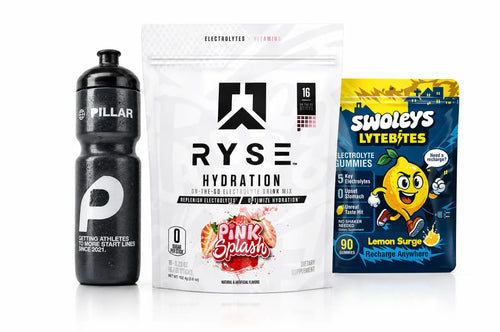
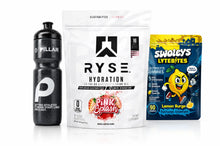
| Pillar Electrolyte Hydration Sticks | 0 g | 3.5 g (erythritol) | 5.3 | 400 mg |
| Ryse Core Hydration | Sugar-free | Not listed | Not listed | 320 mg |
Sugar reads 0 g on Ghost and Pillar, yet both list some carbohydrate, and Pillar is sweetened with erythritol, a sugar alcohol, so check that line if sugar alcohols bother your stomach. At about 5 calories a serve, neither is a fuel source. For the rest of the range, see every electrolyte we stock, ranked by sodium, or electrolyte sachets, sticks and tubs compared if you want single serves for the bag.
How to choose sugar vs sugar-free electrolytes for your next session
If the session is short and ordinary, start with water. If it is long, intense, or part of a tournament day, consider a sugar electrolyte drink so the bottle helps with fuel as well. If you are sweating heavily but fuelling elsewhere, a sugar-free option may fit better.
Water
- Short or easy sessions in normal conditions
- Water and regular meals cover the job
Sugar-free electrolytes
- Pillar 400 mg, Ghost 323 mg, Ryse 320 mg sodium a serve
- About 5 calories a serve (Ghost, Pillar)
- Hot gyms, heavy sweaters, fuel from food
Electrolytes plus carbs
- Sports drinks carry about 6 to 8 percent carbohydrate
- Or pair a sugar-free mix with a gel, 97 calories each
If you are building a full training stack, check that you are not doubling ingredients across pre-workout, intra-workout, and hydration products. The energy drink versus pre-workout guide helps identify stimulant products, while the Build Your Stack tool keeps the core categories visible in one place.
Compare the label, not the front-of-tub promise. When weighing sugar vs sugar-free electrolytes, browse the live electrolyte range, check sodium, carbohydrate, caffeine, and serving volume, then choose the product that matches the session in front of you.
Are sugar or sugar-free electrolytes better for the gym?
For a typical short weights session, water may be enough. Sugar-free electrolytes can suit a hot gym or a heavy sweater who does not need workout fuel. A sugar-containing drink makes more sense when the session is long, demanding, or part of a day with repeated training.
Do sugar-free electrolytes still hydrate you?
Yes, a sugar-free product can still provide fluid and electrolytes. It does not provide meaningful carbohydrate fuel. Check its sodium amount and mixing directions because electrolyte formulas vary widely.
Are sugar-free electrolytes good for you?
For most healthy people, a correctly mixed sugar-free electrolyte is a reasonable way to get fluid and sodium without extra energy. Whether it suits you comes down to three things on the label: the sodium per serve, the sweetener (Pillar uses erythritol, and sugar alcohols can upset some stomachs), and how often you actually need it. If your training is short, water may do the same job.
Is sugar an electrolyte?
No. Sugar is a carbohydrate. Electrolytes are minerals such as sodium, potassium, chloride, magnesium and calcium. The two do work together: glucose and sodium can support water absorption in the intestine, which is why sports drinks pair them. The food rules handle them differently too. Under Food Standards Australia New Zealand rules, which apply in New Zealand, a drink sold as an electrolyte drink must contain at least 10 mmol/L of sodium. FSANZ material on the earlier rules described traditional electrolyte drinks as containing 50 to 100 g/L of sugar, so products that looked like no-sugar electrolyte drinks could fall under formulated beverage rules instead.
Does sugar improve electrolyte absorption?
Glucose and sodium can support water absorption together in the intestine. That does not mean every workout needs sugar. In sport, carbohydrate is most useful when you also need fuel. Clinical oral rehydration solutions are different products with specific uses and concentrations.
Are sugar-free electrolytes better for cutting?
They are often easier to fit when you do not need carbohydrate during training because they add little or no energy. They do not cause fat loss. Total food intake, training, recovery, and the wider plan still determine the result.
Can you drink electrolytes every day?
Many healthy people can use a correctly mixed product, but daily use may be unnecessary if training is short and meals already replace losses. People with kidney, heart, or blood-pressure conditions, or anyone taking medicines that affect fluid or minerals, should get medical advice before making electrolyte products a daily habit.
Sources and health note
This is general sports-nutrition information, not treatment for dehydration, vomiting, diarrhoea, heat illness, or a medical electrolyte imbalance. Seek medical help for confusion, fainting, persistent vomiting, severe weakness, very low urine output, or worsening dehydration. Ask a clinician or registered dietitian for an individual plan if you have a medical condition or fluid restriction.
- Australian Institute of Sport sports-drink fact sheet
- Australian Institute of Sport electrolyte framework
- American College of Sports Medicine hydration and electrolyte guidance
- Sports Dietitians Australia sports-drink guidance
- University College London Hospitals oral rehydration guidance
Put the sugar comparison into practice when you browse electrolytes NZ. Read carbohydrate and sugar entries separately from the mineral amounts, and compare the labelled serving sizes before choosing a drink for your routine.