SHOP NOW, PAY LATER









 Informed Sport
 Informed Choice
 NSF Certified for Sport
 HASTA Certified

Quick answer
Most training days need zero or one electrolyte sachet. Have one when the session is long, hot or sweaty, and keep two or more for big sweat days such as tournaments or hot outdoor work. For the sachet itself, Pillar Performance sticks list 400 mg sodium at $1.70 a serve, while a 40-serve Ghost Hydration tub is $1.50 a serve if it never leaves the bench.
Electrolyte sachets are worth it when you sweat enough to need them and want a sealed, no-scoop serve. In the current NZ Supps range, sachet-style sticks cost about $1.70 a serve (Pillar Performance), while a 40-serve tub delivers the same job from $1.50 a serve (Ghost Hydration) and gummies come in at $0.87 as a light top-up. How many per day? For most people, zero to one, driven by sweat, not by habit.
Sachets are the travel-friendly end of the electrolyte aisle. Same minerals as a tub, portioned into single serves you can throw in a gear bag, glovebox or work drawer. You pay a premium for the packaging, so the useful comparison is per-serve cost against how much portability you genuinely use.
Prices below were checked on 24 September 2026 in the live electrolyte collection. Stock rotates fast in this category, so check the product page before you buy.
Electrolyte options in NZ at a glance
Price per serve by format
Pack price divided by listed serves. Every in-stock NZ Supps electrolyte, prices at 24 September 2026.
Blue bar: the stick format. Swoleys lists 10 mg sodium per two-gummy serve on the pack and our listing shows no sodium figure for GAT, so neither swaps like for like with a 320 to 400 mg serve. For GAT Nitraflex Hydration, our NZ listing shows a 325 mg caffeine pre-workout panel with no sodium, while GAT's own page describes it as caffeine free, so check the physical label before buying.
Formats matter more than brands here. Sachets and gummies remove the scoop-and-shaker step entirely. Tubs win once the product lives on one bench and never travels. Several lines above sell out and return often, Pillar sticks included, so treat availability as part of the decision.
How many electrolyte sachets per day?
The search everyone types has a boring answer: it depends on sweat, and for most training days the number is zero or one. The American College of Sports Medicine notes that recreational exercisers training under about an hour in normal conditions are unlikely to deplete electrolytes in a way water and normal meals cannot fix.
One sachet earns its place when the session is long, hot or genuinely sweaty: summer sport, long rides, humid gyms, physical outdoor work. Two or more a day belongs to big sweat days, tournament schedules and hot-climate manual work, not to a desk day where the sachet is functioning as cordial.
The ceiling worth respecting is sodium. Sachets typically carry a few hundred milligrams each, and your food already supplies most of your daily total. Stacking multiple serves daily on a low-sweat lifestyle adds sodium with no job to do. If you have blood pressure, kidney or heart conditions, or take fluid-affecting medicines, get medical advice before making electrolytes a daily habit.
Read the sodium line first
Electrolyte products are not interchangeable. Sodium is the mineral lost fastest in sweat, and the amount per serve varies several-fold across the range. A product can lead its label with magnesium and B vitamins while carrying modest sodium, which makes it a flavour product wearing a hydration badge.
Price per 100 mg of sodium
Per-serve price divided by label sodium, 24 September 2026. Lower means more sodium for your money.
Blue bar: the stick format. Swoleys gummies (10 mg sodium per two-gummy serve on the pack) and GAT Nitraflex Hydration (our listing shows no sodium figure) are left out. Sodium is one line of the panel, so check potassium, magnesium and sugar too.
Check three lines: sodium per prepared serve, the mixing volume the numbers assume, and whether the formula carries carbohydrate or caffeine. Sugar changes the drink's job, and the sugar vs sugar-free electrolytes guide covers when each version makes sense. Caffeinated hydration products exist and count toward your daily stimulant total.
For the underlying question of whether you need any of this, the electrolyte explainer walks through what the minerals do and when losses become worth replacing.
Which format fits which person
- Sachets (Pillar sticks): travel, sport bags, work sites, sharing without passing a tub around. Highest cost per serve after the small-tub tax; best portability.
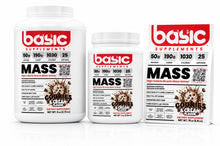
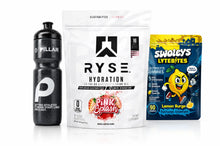
- Tubs (Ghost, GAT, Ryse, Basic): home and gym-bench use, better per-serve pricing at 40-plus serves, flavour variety.
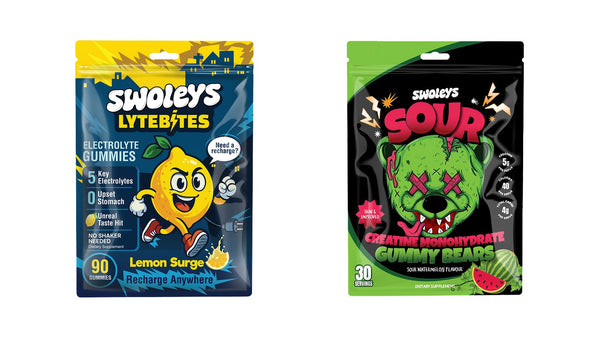
- Gummies (Swoleys): $0.87 a serve in the current range, no water needed at all. Chew, drink water, done. Also the format most likely to get eaten as lollies by flatmates.
Sticks
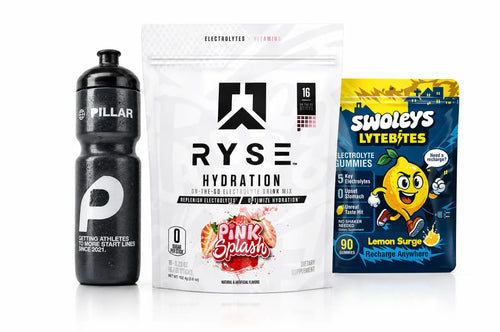
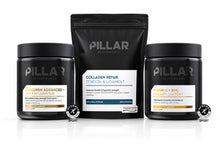
- Pillar Performance, 30 sticks for $50.85
- 400 mg sodium, 190 mg potassium and 80 mg magnesium a stick
- Pre-measured, no scoop, fits a gear bag or glovebox
Tubs
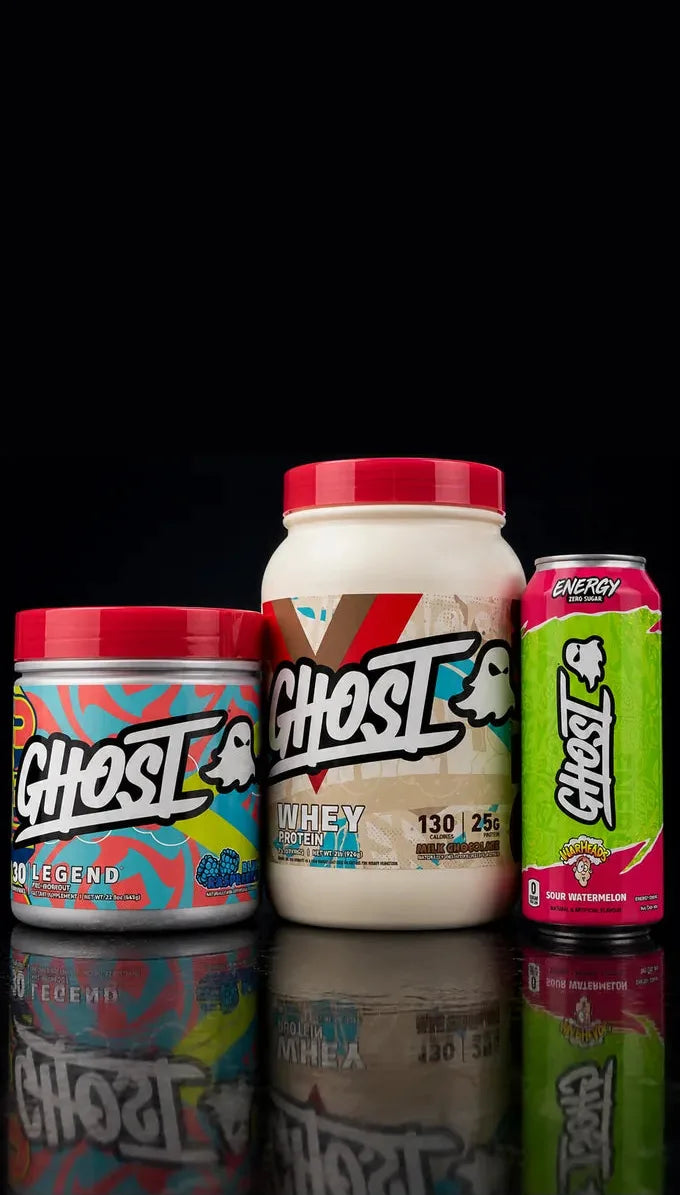
- Ghost Hydration, 40 serves for $59.95, 323 mg sodium
- Ryse Core Hydration, 16 serves for $42.70, 320 mg sodium
- Pillar Performance tub, 15 serves for $53.96, 400 mg sodium
- Of these three, only Ghost costs less a serve than sticks
- GAT Nitraflex Hydration ($1.42 a serve) is left off until its NZ label is confirmed, see the quick picks below
Gummies
- Swoleys Electrolyte Gummies, 45 serves for $39.25
- A serve is two gummies, nothing to mix
- You still need to drink water with them
- The pack lists 10 mg sodium per two gummies, a light top-up. Read what Swoleys electrolyte gummies are for
Athletes under drug testing should check certification per exact product and batch: Pillar builds its range for tested athletes, and the Tested for Sport collection is the filtered starting point.
The honest buying order
Water covers most sessions. A 40-serve tub covers a sweaty training block for less per serve than sticks. Sachets buy convenience for movement-heavy weeks. Gummies undercut everything at $0.87 a serve as a light top-up if chewing suits you. Work down that list and stop at the first format that matches your actual week, not your aspirational one.
| If you want | Go for |
|---|---|
| A low cost per serve in a drink | Ghost Hydration, 40-serve tub, $1.50 a serve |
| Something you will actually carry | Pillar Performance sticks, 30 serves, $1.70 a serve |
| To test a flavour first | A 15 or 16 serve tub: Ryse Core Hydration at $2.67 a serve, or the Pillar tub at $3.60 |
| Minerals without mixing a drink | Swoleys Electrolyte Gummies, 45 serves, $0.87 a serve as a light top-up (10 mg sodium per two gummies) |
| A specific sodium target | Pillar lists 400 mg, Ghost 323 mg and Ryse 320 mg a serve. Full list: every electrolyte we stock, ranked by sodium |
| Caffeine as well as minerals | A drink above plus a separate pre-workout. GAT Nitraflex Hydration ($1.42 a serve) is not a sure pick here: our NZ listing shows a 325 mg caffeine pre-workout panel with no sodium, while GAT's own page describes it as caffeine free, so check the physical label before buying. More in the GAT Sport range guide |
Sweaty season coming? Compare sodium per serve across the live electrolyte range, keep one format where you actually train, and pair the order with anything else under $70 to clear the free-shipping line. If you are building the wider routine, the stack finder slots hydration into place alongside the basics.
Are electrolyte sachets good for you?
They are useful when replacing genuine sweat losses and harmless-to-unnecessary when there is nothing to replace. Match serves to sweat. People with kidney, heart or blood-pressure conditions should get medical advice before daily use.
What is the best electrolyte drink in NZ?
Per serve, Swoleys gummies cost least at $0.87, though at 10 mg sodium per two gummies they are a light top-up rather than a sweat replacement. For sodium per dollar, Pillar Performance sticks at $0.42 per 100 mg. For a sachet, Pillar Performance sticks at $1.70 when in stock. For a tub, Ghost at $1.50. GAT Nitraflex Hydration is $1.42 a serve, but check the physical label before buying: our NZ listing shows a 325 mg caffeine pre-workout panel with no sodium, while GAT's own page describes it as caffeine free (see the GAT Sport range guide). The best pick is the one whose sodium content matches your sweat and whose format matches your bag.
Are electrolyte sticks better value than a tub?
Against a small tub, yes. Pillar Performance sticks work out at $1.70 a serve, while the same 400 mg sodium formula in the 15-serve Pillar tub is $3.60. Against a big tub, no: a 40-serve Ghost Hydration tub is $1.50 a serve. Per 100 mg of sodium, though, the sticks edge ahead ($0.42 against $0.46) because each stick carries 400 mg to Ghost's 323 mg. Ghost lists more potassium and magnesium, so compare the full panel. Pay the stick premium when the serve has to travel, because the stick in your bag is the one that gets used.
Can you drink electrolytes every day?
Many healthy people can, correctly mixed, but daily use is only useful with daily sweat. Short indoor sessions plus normal meals rarely need supplementation. Medical conditions and fluid-affecting medicines change the answer; ask a clinician.
Do electrolytes hydrate better than water?
During long or sweaty exercise, sodium helps you retain the fluid you drink, which is the point. For a quiet day at a desk, water does the job and the sachet is flavour. The session decides, not the marketing.
Sources and health note
- American College of Sports Medicine hydration and electrolyte guidance
- Australian Institute of Sport electrolyte framework
This is general sports-nutrition information, not treatment for dehydration or illness. Seek medical care for vomiting, diarrhoea, heat illness or symptoms of serious dehydration. Prices checked 24 September 2026 and change without notice.
Use the sachet comparison to browse our current electrolytes NZ range. Check the mineral entries and serving instructions for each product, then choose a pack format that suits where you will use it.