SHOP NOW, PAY LATER















 Informed Sport
 Informed Choice
 NSF Certified for Sport
 HASTA Certified

Reorder any supplement a few days before running out, rather than when the container is completely empty. That buffer covers ordinary shipping delays and gives you a few days of margin if a carrier is running slow. It’s the same logic warehouses use for inventory, just scaled down to your bathroom shelf, and it’s why NZ Supps and similar retailers build subscription reminders around that same window.
TL;DR:
- Reordering supplements a few days before running out accounts for shipping delays and reduces the risk of gaps, especially for critical doses.
- For powders, use servings-to-days conversion and set reminders based on supply duration, buffer days, and shipping time to optimize reorder timing.
- Adherence matters more than cost savings for products sensitive to potency loss or with strict dosing, favoring subscriptions for fresher, smaller batches.
- Shelf-stable supplements like creatine last longer and require less frequent reorder windows, while probiotics and fish oils need tighter timing due to faster degradation.
- Use automatic retailer tools or built-in subscription features to simplify monitoring, scheduling, and batch ordering, reducing manual math and missed doses.
Table of Contents
- When Should You Reorder Supplements? Cadence Rules That Actually Work
- How to Calculate Your Next Reorder Date
- Subscription or Bulk Buy: Which Timing Strategy Fits Your Goals?
- Storage, Shelf Life, and Expiry Signals That Change Your Timing
- Your Practical Reorder Checklist and the Tools That Make It Stick
- Why the “Just Buy More” Advice Misses the Point
- Set It Up Once With NZ Supps and Stop Thinking About It
- Sources
When Should You Reorder Supplements? Cadence Rules That Actually Work
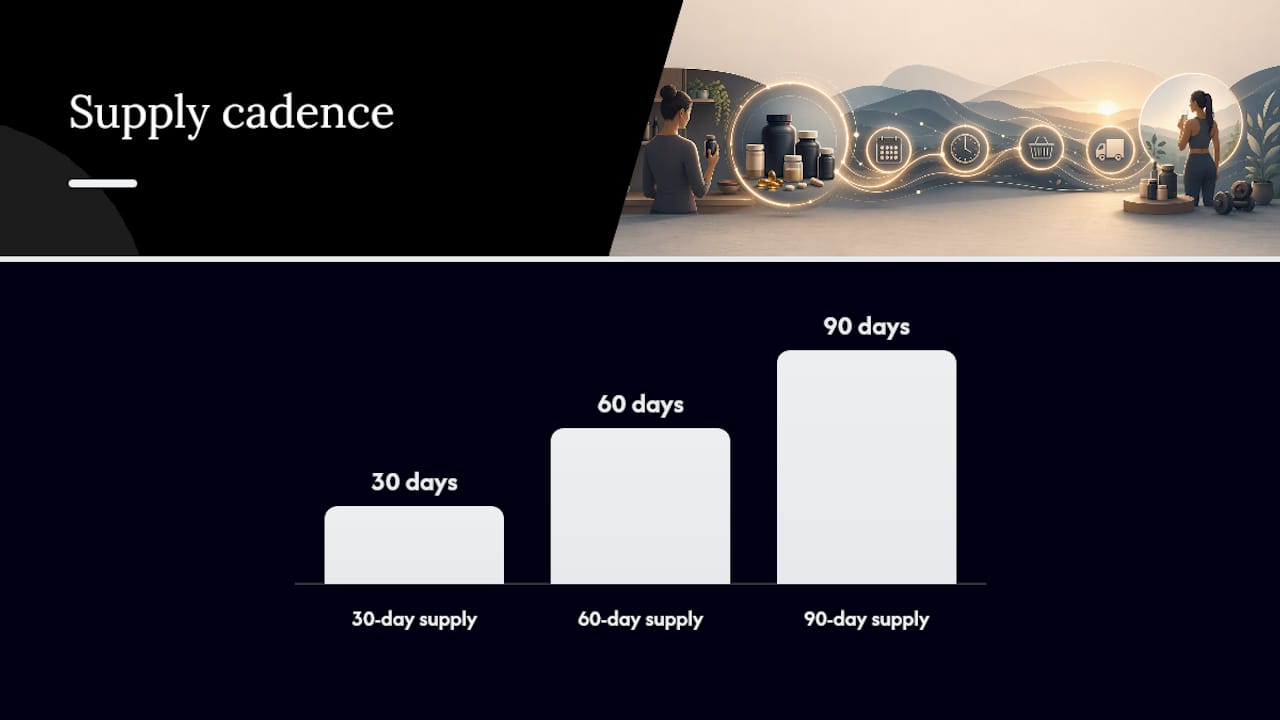
Most supplements ship in 30, 60, or 90-day supplies, and the right cadence depends on the product’s form as much as your budget. A capsule or tablet product is easy to count. A tub of powder is harder to eyeball, which is exactly where people get caught off guard.
Here’s how the common cadences break down:
- 30-day supply: Standard for daily capsules, multivitamins, and single-serving powders. Good starting point if you’re new to a product.
- 60-day supply: Common for products you take consistently and don’t expect to change soon, like a maintenance dose of creatine.
- 90-day supply: Best for shelf-stable products with predictable dosing, where buying more at once lowers cost per serving.
The seven-day rule works for most people, but you should widen that buffer if your shipping tends to run slow, or if you’re on a critical daily dose where a missed day actually matters (think a physician-directed regimen, not a general wellness stack). A practical add-on: when two or three products are all going to run out within that same seven-day window, place one combined order instead of three separate ones. It saves on shipping and cuts down the number of dates you need to track.
Pro Tip: If you’ve missed doses in the past month, that’s a signal to move your reorder point earlier, not a reason to blame yourself. Adjust the buffer, not your willpower.
How to Calculate Your Next Reorder Date
The formula retailers and pharmacy systems use for refill reminders is straightforward: reorder date equals your delivery date plus supply duration, minus shipping time, minus your buffer days. Once you plug in real numbers, the math takes about thirty seconds.
Example 1: A 30-day tub of protein powder, standard domestic shipping.
- Delivery date: January 1
- Supply duration: 30 days → runs out around January 31
- Subtract 3 days of shipping and a 7-day buffer: reorder by January 21
Example 2: A 90-day supply of fish oil, shipped internationally.
- Delivery date: January 1
- Supply duration: 90 days → runs out around April 1
- Subtract 14 days of international shipping and a 10-day buffer (because slower shipping deserves a wider margin): reorder by March 8
To do this for anything in your cabinet:
- Count servings left in the container.
- Convert servings to days based on your daily dose.
- Set a calendar or app reminder for that calculated date, not the date you think you’ll run out.
Subscription or Bulk Buy: Which Timing Strategy Fits Your Goals?
The right choice depends on how much a missed dose actually costs you, not just the price per unit. Four factors decide it:
- How much adherence matters: If missing a few days meaningfully hurts your results, adherence beats savings every time.
- Product stability: Sensitive ingredients lose potency faster; shelf-stable ones don’t.
- Cost per dose: A bulk discount only pays off if you finish the product before it degrades.
- Flexibility needs: Life changes. Pause and skip options matter more than people expect.
Subscriptions tend to win when adherence is the main driver of results or when a product is potency-sensitive, since fresher, smaller batches beat a giant tub you’ll take six months to finish. Subscription models can raise the expected effective dose you actually receive compared to ad-hoc buying, simply because you’re less likely to run out and skip days.
Here’s the cost-per-dose trap: a $60 bulk tub that lasts 90 days looks cheaper per serving than a $25 subscription that lasts 30 days, until you factor in that you actually finish the smaller one on schedule and the big tub sits half-used past its useful window. Auto-refill programs also reduce the cognitive load of remembering to reorder at all, which matters more than most people give it credit for.
Storage, Shelf Life, and Expiry Signals That Change Your Timing
Not every supplement degrades at the same rate, and that should directly shape how much you keep on hand. Protein powders typically carry a 1 to 2 year shelf life unopened, which gives you room to buy in bulk without much risk. Creatine monohydrate is one of the most stable compounds on the shelf and barely degrades under normal storage.
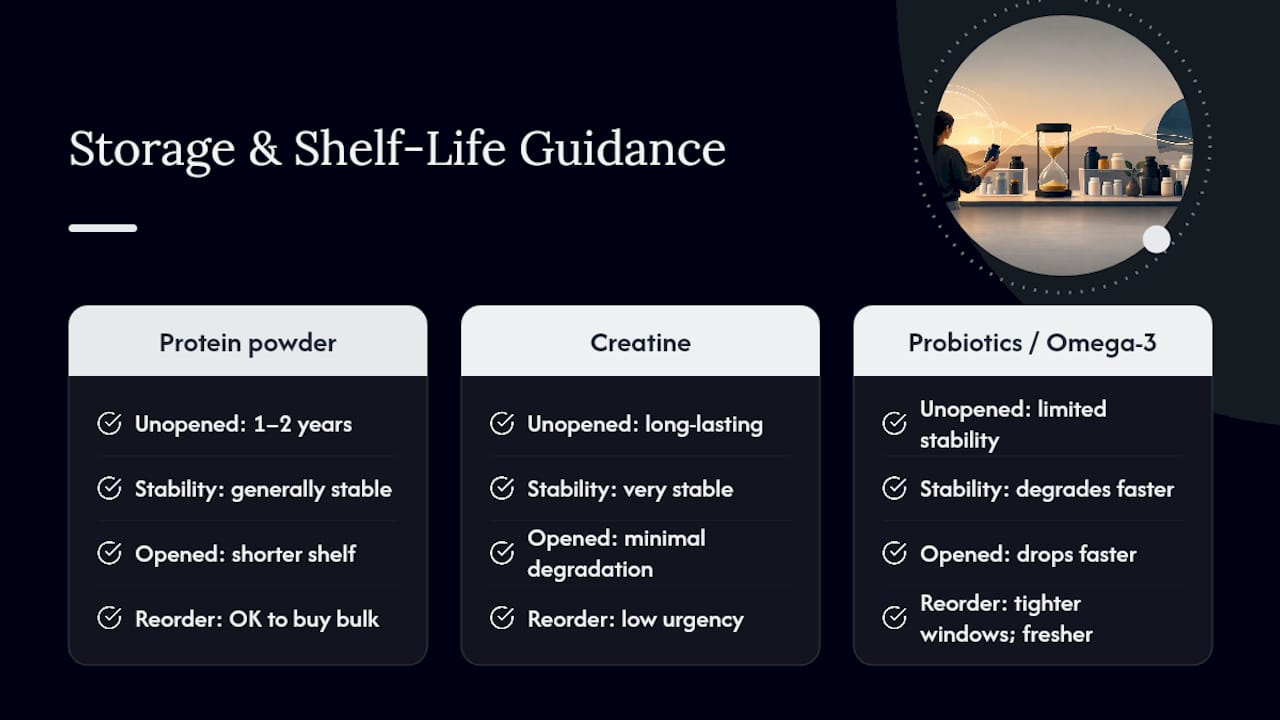
Probiotics and omega-3 products sit at the other end of the spectrum. Live cultures die off over time even under ideal conditions, and fish oil oxidizes faster once opened, so both deserve tighter reorder windows regardless of what the label’s expiration date says.
Trust your senses over the date stamp. Toss anything that smells rancid, has clumped into a solid mass, or has changed color from what you remember at purchase. An unopened container stored in a cool, dry place will always outlast one that’s been opened and exposed to air and moisture, so opening a product should effectively shorten your internal reorder clock, even if the printed date says you have months left. Labeling rules vary by country, so when a date looks ambiguous, lean toward fresher stock, especially for anything potency-sensitive.
Your Practical Reorder Checklist and the Tools That Make It Stick
A seven-step routine turns this from theory into habit:
- Count what’s left in every container you’re actively using.
- Set your buffer (7 days as a baseline, more for slow shipping or critical doses).
- Choose a cadence per product: 30, 60, or 90 days.
- Set reminders using the reorder-date formula, not guesswork.
- Turn on auto-refill for anything where running out would actually hurt you.
- Track whether you’re actually taking the doses on schedule.
- Review the whole system every three months, since routines and needs shift.
For tools, a basic calendar reminder works fine, and it costs nothing. Merchant subscription features go a step further by automatically calculating your usage days and firing off a reminder when you’re running low. Retailers can configure personalized usage-based reminders per product, which removes the manual math entirely.
Pro Tip: Group anything expiring within the same seven-day window into a single order. One combined checkout beats three separate ones, and you’ll thank yourself when you’re not paying shipping three times in one month.
Why the “Just Buy More” Advice Misses the Point
Most articles on this topic treat every supplement the same way, telling you to “stock up” without asking what you’re stocking up on. That’s backwards. A 90-day tub of creatine sitting in your cupboard is low risk, since creatine stores stay elevated for weeks after you stop taking it, so a short gap barely registers. A 90-day bottle of probiotics is a different story entirely, and treating both the same way is how people end up disappointed by supplements that “didn’t work,” when the real problem was a stale bottle or an inconsistent schedule.
The bigger blind spot is that most people optimize for price per serving and ignore price per dose actually taken. A cheaper bulk order you finish inconsistently delivers less value than a slightly pricier subscription you actually stick to. If you’re serious about a routine involving creatine or protein, check whether creatine fits your goals before you commit to a bulk order you might not finish on schedule.
— Blake
Set It Up Once With NZ Supps and Stop Thinking About It
Some online retailers let you build the reorder system this article just walked through directly into checkout, instead of tracking dates in a separate app. Subscription orders may come with adjustable delivery cadences, pause and skip controls, and reminder emails timed to land before you’re down to that final week of supply.
That built-in timing does the heavy lifting the seven-day rule is built around: it reduces missed doses without you having to calculate a single reorder date yourself. If you’re running a creatine or protein routine and want the cadence handled automatically, start with the Basic Supplements Pre-Workout page, check the subscription option at checkout, and set your delivery interval to match your actual usage. Once it’s set, the reminder does the remembering for you.
This article is general information, not a substitute for advice from a qualified doctor. Consult a qualified healthcare professional about your own circumstances before acting on anything here.
Sources
- Refill reminders
- Does protein powder expire? Shelf life, storage, and bad signs
- How long does creatine stay in your system?
- Pharmacy subscription models can improve medication adherence and costs