SHOP NOW, PAY LATER











 Informed Sport
 Informed Choice
 NSF Certified for Sport
 HASTA Certified

Short answer: if you train with any real intent, creatine is one of the few supplements genuinely worth your money, and yes, that most likely includes you. But “most likely” isn’t “definitely”. So instead of throwing another benefits list at you, let’s answer the exact thing you typed in: is creatine right for me? We’ll run a quick, honest self-check, your goal, how you train, your diet, and what you’re expecting, and by the end you’ll know whether to grab a tub or put the money somewhere else.
Quick answer
Probably, if you lift or play a stop-start sport and can take something every day. Creatine monohydrate at 3 to 5 g a day is the simple, well-studied way to do it, rest days included. It is not a stimulant, so you will not feel it kick in; give it a month before you judge it, and check with your GP first if you have a medical condition or are pregnant.
What creatine actually does (the 20-second version)
Your muscles use a molecule called ATP for short, hard efforts, that last rep, a heavy single, a sprint. Creatine helps you top up and recycle ATP faster, so you get a little more out of those top-end efforts. More quality reps this week, a touch more power, more total work over a month. Strength and size follow the extra work; creatine doesn’t create them out of thin air.
That’s the mechanism in plain English. If you want the full research rundown on the gains side, I’ve covered how creatine really affects your gains and every benefit and who it’s actually for separately. This post is narrower on purpose: not what creatine does, but whether it’s worth it for you.
Is creatine right for you? Run the self-check
Answer these four honestly. You don’t need a yes on all of them, but they’ll tell you how much bang you’ll actually get.
1. What’s your goal?
Building strength, muscle or power, or just training harder for longer? That’s creatine’s home turf, strong yes. If you’re a pure endurance runner chasing the lightest possible bodyweight, the payoff is smaller and the slight water weight might not be your friend. And if you just want to feel switched-on in the gym, that’s a stimulant’s job, not creatine’s, don’t expect a buzz.
2. How do you train?
Lifting, sprints, HIIT, or a sport with repeated hard efforts (rugby, footy, CrossFit-style stuff)? Creatine shines on all of it. Long, slow, steady cardio only? You’ll get less out of it. The more your training leans on short, intense bursts, the more creatine has to give you.
3. What does your diet look like?
Creatine sits naturally in red meat and fish. If you eat little or none of either, vegetarian, vegan, or just not a big meat eater, your natural stores are probably running lower, which means you’re one of the people most likely to actually notice creatine. Big steak-and-salmon eater? You’ll still benefit, the top-up’s just smaller.
4. What are you expecting?
This is where people trip up. Creatine is not a pre-workout. You won’t feel it kick in, there are no tingles, no rush, that’s beta-alanine and caffeine you’re thinking of. Creatine works quietly over weeks. If you can be patient and consistent, it delivers. If you need to feel something the first session, you’ll be disappointed, and that’s on the expectation, not the product.
You’re a strong candidate if: you lift or play a stop-start sport, you want more strength or size, and you can take something daily without needing a hit off it. It’s less urgent if: you’re purely doing long cardio, you’re chasing minimum bodyweight, or your training and protein aren’t dialled in yet (more on that below).
Strong candidate if
- You lift, sprint or play a stop-start sport such as rugby or footy
- You want more strength, size or power
- You can take it daily without needing to feel a hit
- You eat little red meat or fish, so your natural stores are likely lower
Less urgent if
- Your training is mostly long, steady cardio
- You are chasing the lightest possible bodyweight
- Your training and protein are not dialled in yet
- You will not take it every day
The safety stuff you’ve probably Googled at 1am
Creatine monohydrate is one of the most studied supplements on earth, and the scary headlines don’t hold up for healthy people, but let’s not hand-wave it.
- Kidneys. If your kidneys are healthy, the research doesn’t show a problem at normal doses. The full breakdown is here: does creatine damage your kidneys?
- Hair loss. This one traces back to a single small study on a hormone marker, it’s not the settled fact the internet made it. I unpacked it in does creatine cause hair loss?
- Water and “bloat”. Creatine pulls a bit of water into the muscle, which makes you look fuller, not puffy. Just drink enough through the day, here’s how much water to have with creatine.
If you’ve got a pre-existing medical condition or you’re pregnant, have a quick word with your GP first. Otherwise, for the average person lifting a few times a week, it’s about as low-drama as supplements get.
How much, and how to start
This part is refreshingly simple.
- 3 to 5g every day. That’s it. One small scoop.
- Skip the loading phase. You’ll read about “loading” with 20g a day for a week. All that does is fill your stores a bit faster, roughly one week instead of three or four. It can also upset your stomach, and you end up at the same place either way. Not required. Just take your daily 3 to 5g and let it build.
- Timing barely matters. Before, after, morning, night, pick whatever you’ll actually remember. Consistency does the heavy lifting, exactly like I bang on about with beta-alanine.
- Take it on rest days too. You’re keeping your muscle stores topped up, not fuelling a single session, so don’t skip the days you’re off.
The easiest way to never forget it? Stir it into your daily protein shake, one habit, two boxes ticked.
Which form should you actually buy?
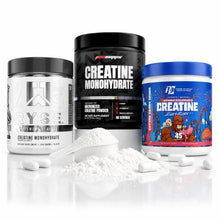
Monohydrate is the answer for almost everyone. It’s the most researched form, the cheapest per serve, and it’s tasteless so it disappears into water or a shake. Start here and you genuinely can’t go wrong. A good default is Nexus Creatine Monohydrate 500g, $62.85 for 100 serves works out around 63c a day. If you just want to test the water first, the 150g tub ($27, 30 serves) does the job.
Price per 5 g serve of creatine
Tub price divided by the serves on the label, using the in-stock size with the lower price per serve. Every product here lists 5 g creatine a serve. NZ Supps range, 24 September 2026.
Blue rows are plain, unflavoured creatine powders. Flavoured scoops, gummies and blends cost more per serve.
What about HCL? Creatine HCL dissolves more easily and needs less water, and some people say it sits better on the stomach. But the evidence that it out-performs monohydrate for results is thin, and it costs more per gram. For most people, mono wins on proof and price. We don’t currently stock a pure HCL product, so I’m not going to pretend otherwise, if you want the full head-to-head, read creatine HCL vs monohydrate.
Gummies are worth a mention if “remembering the powder” is the real thing stopping you. Swoleys creatine gummies turn your daily dose into a treat you’ll actually take, they cost more per serve, but a dose you take beats a tub you forget. I compared the two properly in creatine gummies vs powder.
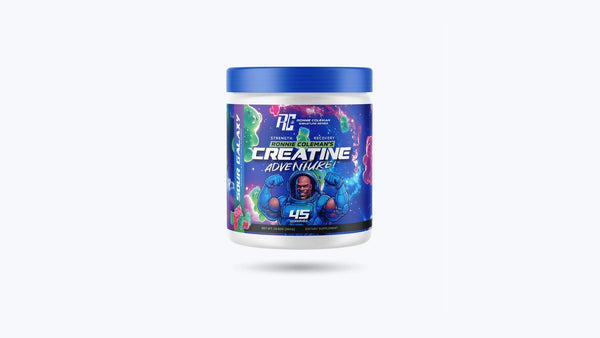
Prefer it built into a bigger formula? MusclePharm Creatine-Hydrate folds 5 g of creatine monohydrate and a few electrolytes (potassium, sodium and magnesium) into one scoop at about 91c a serve, if you’d rather run one flavoured scoop than a separate unflavoured one.
| Start with | Why | Serves | Price per serve |
|---|---|---|---|
| Nexus Creatine Monohydrate 150g | Trial tub, a month of daily serves to see if the habit sticks | 30 | $0.90 |
| Nexus Creatine Monohydrate 500g | Everyday default, plain monohydrate that mixes into water or a shake. Creatine types explained | 100 | $0.63 |
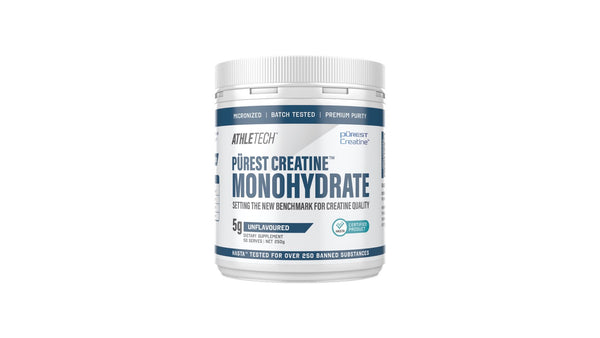
| Athletech Purest Creatine Monohydrate 250g | HASTA listed, for athletes who are drug tested. Check the batch | 50 | $0.72 |
| Swoleys Sour Creatine Gummy Bears | No mixing, if a powder habit will not stick. All creatine gummies | 30 | $1.65 |
Who should skip it (or push it down the list)
Being honest, creatine isn’t everyone’s first move:
- Your basics aren’t sorted yet. Creatine amplifies hard training and decent protein, it doesn’t replace them. If your budget only stretches to one thing right now, get your protein in first (I put them side by side in creatine vs protein powder), then add creatine.
- You’re a pure endurance athlete watching every gram of bodyweight. The small water gain may not be worth it for you.
- You genuinely won’t take it daily. An unopened tub does nothing. Either commit to the daily habit (gummies help) or spend the money elsewhere.
And to kill one myth outright: creatine is just as useful for women, and no, it will not make you “bulky”, full explanation in creatine for women.
The bottom line
For most people who train with intent, creatine is a cheap, well-proven, low-risk win, and monohydrate taken daily is the whole game. If the self-check above landed on “yes”, start with a tub of mono, take your 3 to 5g every day, and give it a month before you judge it.
Ready to grab one? Browse the full creatine collection, or if you want my picks ranked, here’s the best creatine in NZ buyer’s guide.