SHOP NOW, PAY LATER









 Informed Sport
 Informed Choice
 NSF Certified for Sport
 HASTA Certified

Creatine monohydrate is the sensible starting point for most people choosing a creatine supplement. It has the strongest research base and is available in several convenient formats. HCl, flavoured powders and hydration blends give you other purchasing options, but a different name does not automatically mean better results.
The easiest way to choose is to separate the creatine form from the product around it. Decide which ingredient you want, whether you need anything added, and how you prefer to take it. If you compete in tested sport, make product and batch verification a separate requirement.
Which creatine terms actually describe different things?
Monohydrate and hydrochloride describe chemical forms. Micronised describes particle size. Creapure identifies a branded source of monohydrate. Flavoured, gummy and capsule describe how a product is supplied. A hydration blend adds other ingredients.
These terms can overlap. One product can be micronised creatine monohydrate, flavoured and blended with electrolytes. That does not make it three different types of creatine.
| Term on the label | What it tells you | What to check |
|---|---|---|
| Creatine monohydrate | The most established supplemental form | Amount per serve, ingredient list and testing |
| Creatine HCl | Creatine hydrochloride, a different salt | Labelled amount; avoid assuming small-dose equivalence |
| Micronised creatine | Powder processed into smaller particles | Which chemical form it actually contains |
| Creapure | A branded German source of monohydrate | Genuine source identification and finished-product testing |
| Creatine + hydration | Creatine combined with other ingredients | Creatine amount and individual electrolyte quantities |
| Creatine HMB | Creatine plus the separate ingredient HMB | Amounts of both ingredients and the reason you want HMB |
| Flavoured creatine | A taste choice | Creatine grams rather than total scoop weight |
| Gummies, chews or capsules | A delivery format | Number of pieces in one full serve |
Why start with creatine monohydrate?
Monohydrate has the most extensive evidence for supporting repeated high-intensity exercise and training adaptations. A systematic review of alternative creatine forms found a much smaller research base for alternatives and no consistent case for replacing monohydrate with a more expensive form.
That makes plain monohydrate a useful default when you want creatine without additional ingredients. It also makes comparisons easier: you can compare the labelled quantity, number of serves and testing evidence across products with the same basic ingredient.
For example, the label for Athletech Purest Creatine Monohydrate, 250g lists 5g creatine monohydrate in a 5g scoop, with no other ingredients. That is a straightforward product specification. Its sport-testing status is a separate check, covered below.
Is creatine HCl better than monohydrate?
HCl is more soluble in water under studied laboratory conditions. Research on creatine salts supports that physical difference. Better solubility, however, does not establish greater muscle gain or prove that a much smaller dose gives the same result as monohydrate.
A 2025 trial in 31 team-sport athletes compared 5g daily of HCl, 5g daily of monohydrate and placebo over eight weeks. It found no significant between-group differences in the measured outcomes. That small trial did not establish HCl superiority, and it did not test the smaller HCl serving sizes often promoted on products.
ProSupps Con-Cret Raspberry is a real HCl option in the NZ Supps range. Its displayed label lists 750mg creatine HCl within a 960mg scoop. Those are label facts, not evidence that one scoop replaces 5g of monohydrate.
You may prefer how a particular HCl product mixes or tastes. Treat that as a practical preference rather than a proven performance advantage. Our dedicated HCl versus monohydrate article covers the comparison in more detail.
Are micronised creatine and Creapure different forms?
Micronised powder has smaller particles. If the ingredient says creatine monohydrate, micronising it does not change that chemical form. Particle size can affect how a powder behaves when mixed, but the word alone is not evidence of better training results. The 2022 review of creatine compounds distinguishes these physical and chemical properties.
Creapure's manufacturer identifies its ingredient as creatine monohydrate made in Germany. It is a sourcing and quality-control choice within the monohydrate category. It is not a new creatine molecule, and the ingredient name does not automatically certify the finished tub for sport.
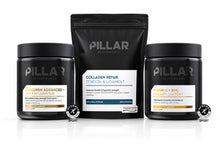
NZ Supps lists PILLAR Performance Creatine Monohydrate, whose description specifies Creapure. This product was unavailable when this guide was checked on 14 September 2026; check the product page for current availability.
What about buffered creatine, ethyl ester and other forms?
Buffered creatine adds alkalising ingredients. Creatine ethyl ester is a derivative, while nitrate and magnesium creatine chelate combine creatine with other chemical components. Those names describe different formulations, but the research does not justify treating them as automatic upgrades.
The alternative-forms systematic review included magnesium creatine chelate, nitrate and ethyl ester, among others, and highlighted limited direct comparisons with monohydrate. The broader creatine-compounds review also found no convincing general superiority for buffered forms or ethyl ester.
These forms are mentioned to help you read labels elsewhere. They are not presented here as products currently stocked by NZ Supps. If an unfamiliar form costs more, ask what human evidence supports that particular benefit at the labelled amount.
Is Creatine-Hydrate a different type of creatine?
In a product name, "hydrate" can describe a blend built around creatine and hydration ingredients. Read the ingredient panel to identify the actual creatine form.
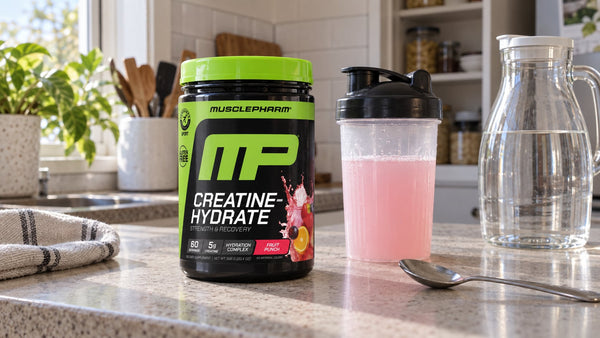
MusclePharm Creatine-Hydrate Fruit Punch is described by NZ Supps as monohydrate with an electrolyte complex. The manufacturer's page also identifies monohydrate, but notes that international formulations can differ. Use the supplied NZ pack for exact electrolyte amounts rather than importing numbers from an overseas label.
MuscleSport Creatine + Hydration Lemon Italian Ice is another listed option. Its manufacturer identifies monohydrate alongside ingredients including taurine, salt and an electrolyte blend. The NZ listing does not currently provide a detailed nutrition panel, so confirm the supplied label before comparing quantities.
Choose a blend because you want its added ingredients and convenience. Do not assume "hydration" means enough sodium for every long or sweaty session. A combined product also gives you less freedom to adjust creatine and electrolytes independently.
How is creatine HMB different?
HMB is a separate ingredient added alongside creatine. In Gaspari Creatine HMB Unflavoured, the creatine form is monohydrate. The manufacturer's unflavoured supplement facts list 5g micronised monohydrate and 2g HMB in a 7.5g scoop.
The purchasing question is whether you specifically want HMB as well as creatine. The existence of both ingredients in one tub does not prove the finished blend produces better results than plain monohydrate for everyone. Avoid paying for extra ingredients solely because a longer formula sounds more advanced.
Should you buy flavoured or unflavoured creatine?
Choose unflavoured if you want to add it to a drink you already enjoy without introducing another flavour. Choose flavoured if a standalone drink makes the routine easier to keep.
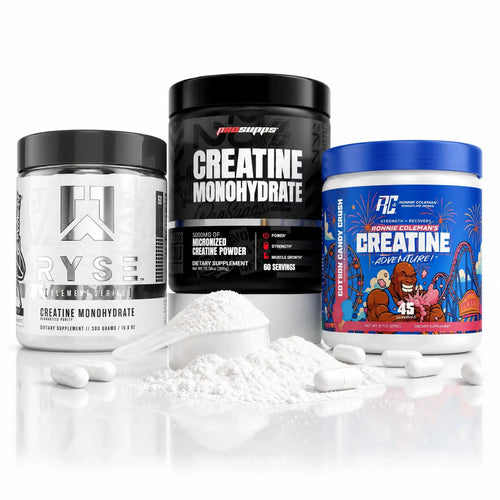
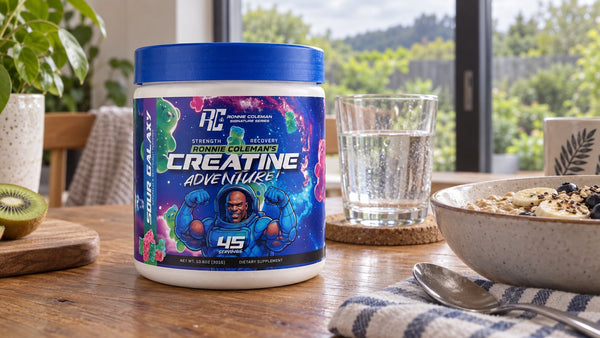
Ronnie Coleman Creatine Adventure Sour Galaxy is a flavoured monohydrate product in the NZ Supps range. Flavouring changes the product experience, not the identity of monohydrate itself.
Check sweeteners and other ingredients if they influence your choice. The total scoop includes flavouring and any other additions, so a scoop's weight is not automatically the amount of creatine. Follow the product's mixing instructions and keep dry powder sealed as directed on the pack.
How do powders, capsules, chews and gummies compare?
Powder gives you a measured serving to mix. Capsules avoid the taste and mixing step, while chews and gummies offer another way to take a labelled amount. None of those formats tells you the chemical form without an ingredient check.
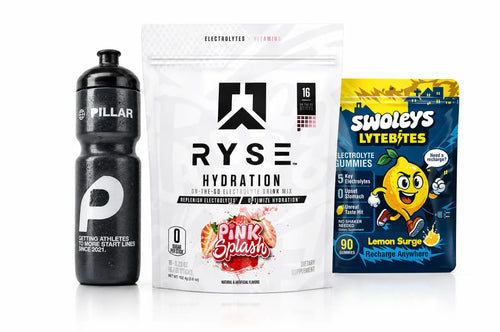
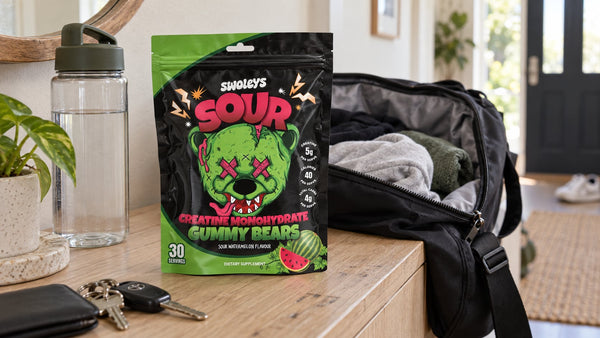
The displayed label for Swoleys Sour Creatine Gummy Bears Watermelon lists 5g monohydrate per three gummies. One gummy is therefore not the full labelled serve. This is a label declaration, not an independent assay of the contents.
NZ Supps also lists GAT creatine chews and capsules, but those options were unavailable when checked on 14 September 2026. Compare the actual serving count when they are available rather than treating "120 chews" or "180 capsules" as the number of daily serves.
Our creatine gummies versus powder guide covers that format decision. For value, divide the current price by the number of full labelled serves, then compare like-for-like ingredients and amounts.
Which option fits your routine?
- If you want a simple starting point, shortlist plain monohydrate and compare label clarity, testing and cost per serve.
- If you dislike the drink, try a flavour or format you prefer before assuming you need a different chemical form.
- If you already buy electrolytes, compare a blend against keeping the two products separate. Check whether the fixed combination suits both needs.
- If you want an HCl product, separate the preference for mixing or taste from claims about smaller-dose equivalence.
- If you compete in tested sport, apply the certification and batch requirement before choosing among the remaining options.
Consistency also affects the practical choice. Choose a format that fits your routine and assess it over time rather than judging a product after a few occasional servings. Loading is a separate decision from form; our creatine loading guide explains it.
How should tested athletes choose a creatine product?
HASTA's official Athletech Purest Creatine record identifies the unflavoured product as HASTA Certified and lists batches. Match the pack supplied to that record. Do not extend its status to other Athletech products, another flavour or a different brand.
The main testing programmes have different requirements:
- Informed Sport requires every certified product batch to be tested before release for sale.
- Informed Choice uses monthly blind retail testing. Its mark does not establish that every production batch was tested before release.
- HASTA Certified includes manufacturing checks and ongoing every-batch testing. An independent HASTA test on one batch does not by itself confer full certification.
- NSF Certified for Sport includes prohibited-substance screening alongside label-content verification and contaminant checks within its programme scope.
Use the exact programme name and match the product and batch evidence. Our practical supplement-testing guide for NZ buyers explains how to make those checks.
Start your shortlist in the NZ Supps creatine collection, then use the tested-for-sport collection and official programme records where relevant. Ingredient form, product suitability and batch testing are three separate checks.
Frequently asked questions
Which creatine type should a beginner choose?
Plain creatine monohydrate is a sensible starting point because it has the strongest evidence base. Choose a clear label and a format you can use consistently, with appropriate batch-testing evidence if you compete in tested sport.
Is HCl better if I am worried about bloating?
Do not treat HCl as a guaranteed solution or confuse stomach discomfort with changes in body weight. A change on the scales does not tell you whether a product is causing digestive discomfort, and solubility alone does not prove better tolerance.
Does flavoured creatine work differently?
Flavour does not create a new chemical form. Check which form is included and how much is declared per serve; the total flavoured powder weight includes other ingredients.
Is a hydration blend necessary for creatine to work?
A hydration blend is an optional product format, not a requirement for choosing creatine. Assess the added ingredients against your needs instead of assuming plain monohydrate is incomplete.
Do I need to cycle through different creatine types?
Changing types on a schedule is not an established requirement. Make a change for a specific reason, such as format, price or testing evidence, rather than assuming rotation improves results.
Sources
- Alternative creatine forms: systematic review (2022)
- Creatine salts and solubility
- HCl versus monohydrate athlete trial (2025)
- Creatine compounds: critical review (2022)
- What is Creapure?
- MusclePharm Creatine-Hydrate
- MuscleSport Creatine + Hydration
- Gaspari Creatine HMB supplement facts
- Athletech Purest Creatine official HASTA listing
- Informed Sport certification process
- Informed Choice certification process
- HASTA certification requirements
- NSF Certified for Sport mark