SHOP NOW, PAY LATER










 Informed Sport
 Informed Choice
 NSF Certified for Sport
 HASTA Certified

Around 10% of Australians and New Zealanders aged 15 and over reported using at least one supplementary food product in the previous four weeks, and about 80% of those users chose protein-type products according to Food Standards Australia New Zealand. That makes the best vanilla protein powder NZ shoppers can buy the one that gives you the most usable protein per dollar for your goal, not the tub with the loudest label.
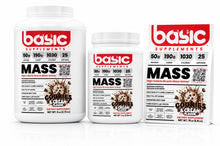
My overall pick is Basic Supplements Whey Vanilla from NZ Supps, provided its current label gives you the protein density and sweetener profile you want. For a higher-density option, choose a vanilla whey isolate. For dairy-free shoppers, choose a clearly labelled pea or pea-and-rice blend, then compare its cost per 25g of protein rather than its tub price.
Table of Contents
- What Makes a Vanilla Protein Powder Worth Buying in NZ
- The Main Vanilla Protein Types Available in NZ
- How to Read a Vanilla Protein Label in NZ
- Comparing Vanilla Protein Powders Stocked in NZ
- Best Vanilla Protein Powder NZ Picks by Use Case
- NZ Labelling Rules and Sport-Tested Certifications
- Shopping Tips and Common Questions for NZ Buyers
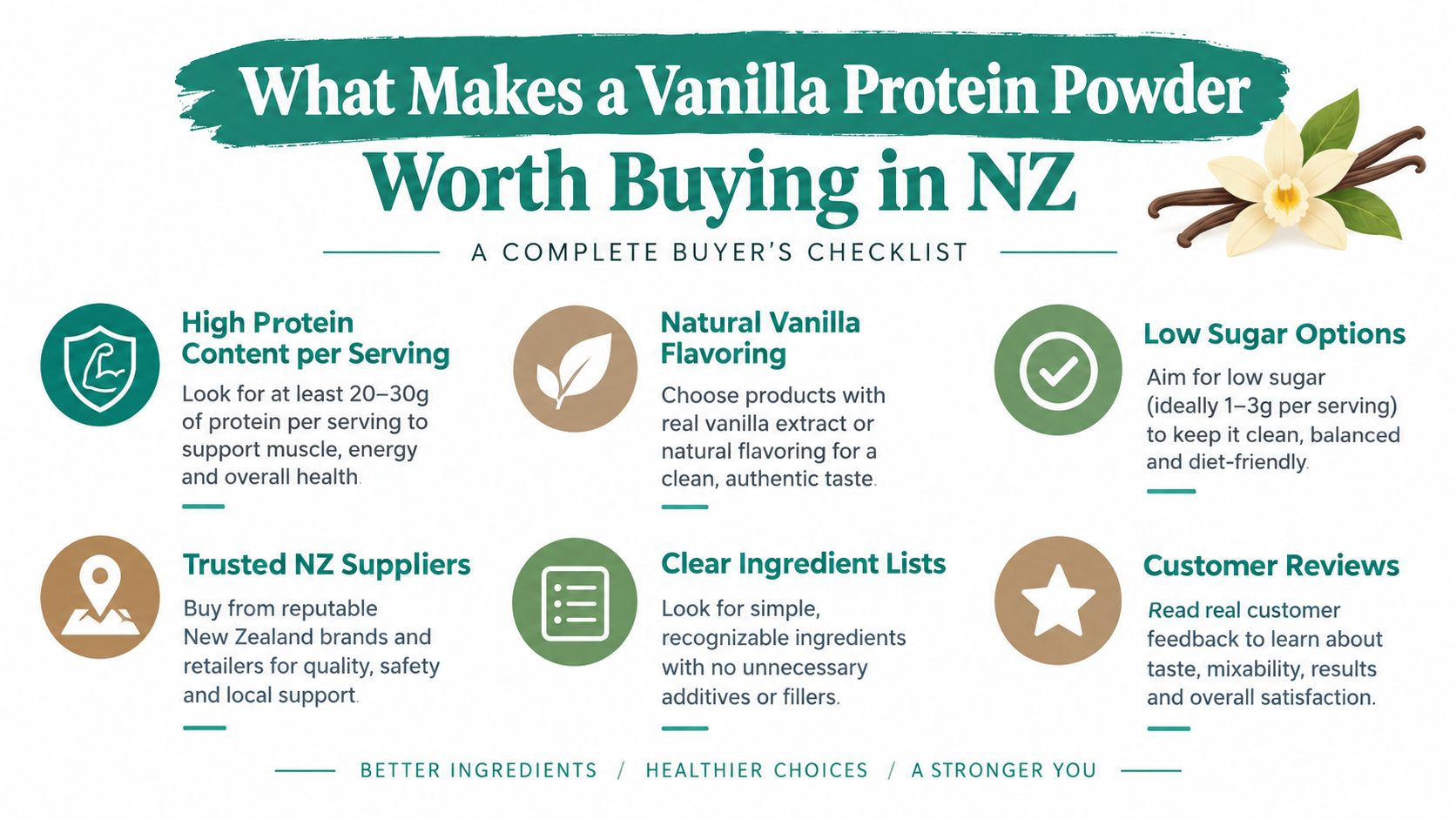
What Makes a Vanilla Protein Powder Worth Buying in NZ
Vanilla is the safest baseline flavour because it works in water, milk, smoothies, oats and baking. It also exposes a poor formula quickly. If the powder is overly sweet, chalky or heavy with artificial flavour, vanilla usually makes that obvious.
I judge every vanilla powder using four checks:
- Protein per serve, not just the large number on the front of the bag.
- The sweetener and ingredient list, including the flavour system, gums, emulsifiers and fillers.
- Mixability, tested in a shaker with water before assuming it will work in a smoothie.
- Price per 25g of protein, which gives you a fair comparison between different scoop sizes and formulas.
A tub with a lower shelf price can still be poor value if each serve contains less protein. A larger scoop can also make a product look less concentrated, even when the protein grams per serve are strong. Compare the declared serving size, protein grams and number of serves before judging the deal.
Start with the label, then check the price
The label tells you what you're buying. Look for the protein source, protein per serve, serving weight and sweetener. A short ingredient list isn't automatically better, but it makes the formula easier to understand and compare.
Kiwi Nutrition's vanilla whey, for example, lists NZ whey protein concentrate, crushed vanilla beans, natural vanilla flavour, sunflower lecithin and stevia, with no added sugars, colours, artificial flavours, preservatives or fillers as shown in its product information. Go Good's organic vanilla whey lists four core inputs, including NZ whey protein concentrate, organic ground vanilla beans, sunflower lecithin and thaumatin. Those are useful examples of how ingredient architecture can differ even when two products are both called vanilla whey.
Practical rule: Work out the cost of 25g of protein before you decide that a tub is cheap.
Shipping and stock also affect real value for New Zealand buyers. A product that is held locally, dispatched promptly and easy to reorder can be more useful than a nominally cheaper imported tub with uncertain availability. Athletes should also check whether the exact product carries a batch-tested certification.
For a broader comparison of available formats, use the protein powder collection for NZ shoppers. Treat vanilla as a category, not a single product. Concentrate, isolate, casein and plant-based powders suit different labels, textures and budgets.
The Main Vanilla Protein Types Available in NZ
About 80% of supplementary food users chose protein-type products, compared with about 15% who chose energy-type products in the reported four-week period reported by Food Standards Australia New Zealand. Vanilla spans nearly every format, so compare the protein delivered per serve and the cost per 25g of protein, not the tub price alone. A cheaper tub can still cost more for each useful serve.
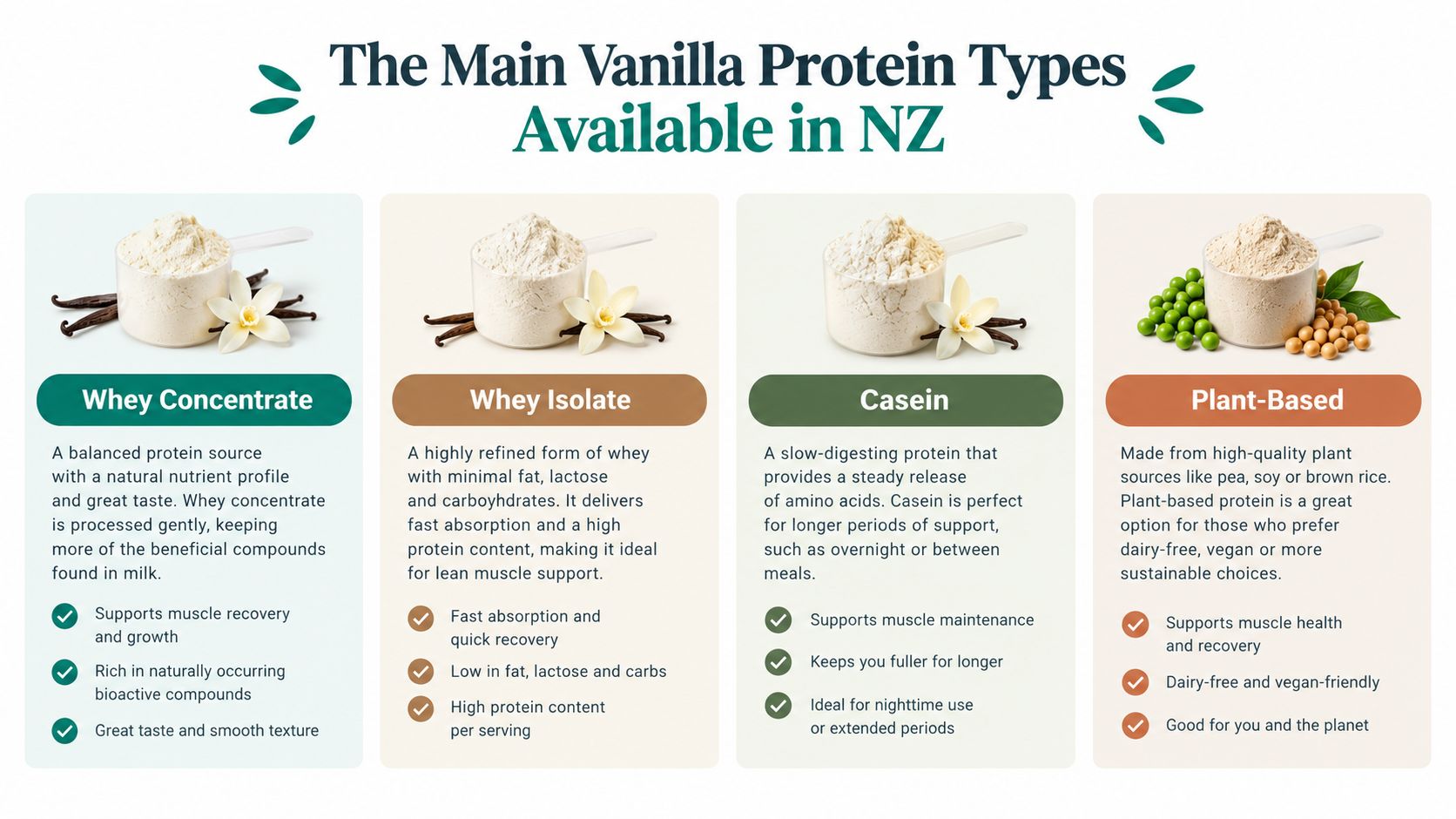
Whey concentrate
Whey concentrate is the practical everyday option. It usually has a fuller dairy flavour and retains more of the naturally occurring non-protein components found in whey than isolate. Choose it for a straightforward vanilla shake when its protein per serve and cost per 25g beat the alternatives.
Judge the powder by the numbers, not by the word “whey” on the front. A large scoop with modest protein can offer worse value than a smaller, denser serve. Concentrate is the everyday whey pick when the label gives you a solid protein return without an inflated cost.
Whey isolate
Whey isolate undergoes more processing and generally provides a higher protein concentration in each scoop. It suits buyers who want a lighter formula or more protein from a similar serving size.
Isolate costs more in many ranges. Pay that premium only when its protein density, ingredient profile or mixing preference gives you a clear reason. Calculate the cost per 25g of protein before choosing it over concentrate. High-density isolate is a separate use-case pick, not automatically the best vanilla powder.
Casein
Casein is a dairy protein known for a thicker texture and slower digestion. Vanilla casein usually produces a more substantial shake than whey, which suits shoppers who prefer a thick drink or a powder between meals.
It appears less often in mainstream NZ vanilla ranges. Check the serving size, protein grams, available serves and cost per 25g before treating a large tub as good value. Casein wins on texture and format preference, not just on price.
Plant-based protein
Plant-based protein is the clear category for dairy-avoiding and vegan shoppers. Pea protein is common, while pea-and-rice blends broaden the amino-acid profile. Compared with whey isolate, plant powders can taste earthier or grainier, making the vanilla flavour system important.
Pea-protein demand in Aotearoa New Zealand reached about 530 tonnes, growing at a 53% compound annual growth rate from 2010 to 2021. Sports nutrition represented 85% of demand, alternative meats 14%, and pea isolates about 90% of domestic demand in the cited NZ industry analysis. That supports a proper plant-based comparison rather than a token vegan option.
For the practical trade-offs, read this guide to whether plant protein is better than whey. Compare its protein per serve and cost per 25g with whey on equal terms. Athletes should also treat sport-tested certification as a separate filter when selecting any of these vanilla types.
How to Read a Vanilla Protein Label in NZ
The front of the tub sells the flavour. The back tells you whether the product deserves your money. Read the label in this order.
Protein per serve comes first
Check serving weight and protein grams together. A 45g serve containing 30g of protein should be compared with the protein grams in a smaller scoop, not with the scoop size alone. The useful measure is protein delivered, followed by the cost of delivering it.
Woolworths NZ lists BSc High Protein Powder Vanilla at 31.0g protein per 45.0g serve, or 68.9g per 100g. Musashi High Protein Protein Powder Vanilla lists 30.0g per 45.0g serve, or 66.6g per 100g in the listed product information. BSc is therefore marginally denser by 0.3g per serve and 2.3g per 100g, but that doesn't automatically make it better value. You still need the current price and number of serves.
Check the flavour and sweetener system
Sucralose, stevia, monk fruit and natural vanilla flavour produce different taste profiles. Some shoppers prefer the clean sweetness of stevia or monk fruit, while others prefer the stronger sweetness associated with sucralose. A natural vanilla claim also needs context. It can describe the flavour system without meaning the powder contains a large amount of vanilla bean.
Read the amino-acid information
Look for a full amino-acid profile where the brand provides one. Leucine is particularly relevant when comparing whey with plant-based products, but don't assume a product has a specific leucine amount unless the label states it. Avoid treating an impressive total nitrogen figure as proof of superior protein quality.
Inspect the supporting ingredients
Sunflower lecithin can support dispersion. Thickeners, gums and emulsifiers can change mouthfeel and mixability. None of these ingredients automatically makes a product bad, but a long label gives you more to evaluate than a short one.
Calculate cost per 25g
Use this formula:
Cost per 25g of protein = serve price × 25 ÷ protein grams per serve
This calculation removes much of the noise created by pack size and scoop size. A guide to choosing supplements confidently is useful if you want a broader explanation of serving panels and ingredient lists. You can also review supplement labels explained before comparing tubs.
| Metric | What to Check | Why It Matters |
|---|---|---|
| Serving size | Grams in the declared serve | It shows how much powder you need for the listed protein amount |
| Protein per serve | Total protein grams | This is the amount you're paying to consume |
| Sweetener | Sucralose, stevia, monk fruit or another system | It affects sweetness and aftertaste |
| Ingredient list | Protein source, flavours, lecithin, gums and fillers | It shows how complex the formula is |
| Amino-acid profile | Whether leucine and other amino acids are declared | It helps you compare protein sources honestly |
| Cost per 25g | Serve cost adjusted for protein grams | It creates a fair value comparison |
Comparing Vanilla Protein Powders Stocked in NZ
Many buying guides become unreliable. They compare tub prices while ignoring serving size, protein density and the amount of powder required to reach a useful protein benchmark.
The only honest approach is to use the current product page and calculate the numbers from the declared label. The supplied NZ product information confirms a vanilla listing for Basic Supplements Whey Vanilla through NZ Supps, but it doesn't provide the current serving size, protein grams or price needed for a defensible cost-per-25g calculation. I won't invent those figures.
The same issue applies to any comparison that claims a current NZ retail price without displaying the product page and label beside it. Prices change, pack sizes change and promotions distort tub-level comparisons. A retailer's current product page should be the final source for the calculation.
The comparison method
For each product, record four details:
- Serve size: the grams of powder used in one declared serving.
- Protein per serve: the grams shown in the nutrition information panel.
- Price per serve: current pack price divided by the number of labelled serves.
- Cost per 25g protein: price per serve multiplied by 25, divided by protein grams per serve.
Use the following table when checking the current NZ Supps listings. The verified information supplied for this article doesn't include the live prices or full labels for the NZ Supps products, so those fields must be confirmed before purchase.
| Product | Serve Size (g) | Protein per Serve (g) | Sweetener | Mixability | Price per 25g Protein |
|---|---|---|---|---|---|
| Basic Supplements Whey Vanilla | Check current label | Check current label | Check current label | Test with water | Calculate from current price |
| Vanilla whey isolate | Check current label | Check current label | Check current label | Test with water | Calculate from current price |
| Vanilla casein | Check current label | Check current label | Check current label | Usually thicker, confirm in use | Calculate from current price |
| Vanilla plant-based powder | Check current label | Check current label | Check current label | Check for graininess or settling | Calculate from current price |
My editorial verdict
For most gym-goers, start with Basic Supplements Whey Vanilla because it is the specifically identified NZ Supps vanilla whey listing and represents the everyday category. Don't call it the value winner until you have checked its current protein grams and calculated the cost per 25g.
For a high-density comparison, BSc and Musashi provide a useful public benchmark. Their listed protein density is close, so a buyer would need the current pack prices, flavour system and personal taste preference to decide which offers better value. Protein density alone doesn't settle the purchase.
A plant powder should be judged on the same basis. If it needs a larger serve to provide 25g of protein, the apparently cheaper tub may cost more per usable protein benchmark. That doesn't make plant protein a poor choice. It means dairy-free shoppers need to compare the formula they want, not a headline price.
Best Vanilla Protein Powder NZ Picks by Use Case
The right pick changes with the label you need. My recommendations stay narrow because a vanilla powder should solve a specific shopping problem, not try to be everything for everyone.
Everyday gym-goer
Pick: Basic Supplements Whey Vanilla.
This is the straightforward choice for someone who wants a familiar whey format and a neutral flavour that can work in a shaker or smoothie. Check the current label before ordering, especially protein per serve, sweetener and cost per 25g.
Skip it if you avoid dairy or if the current ingredient list contains a sweetener you already know you dislike. Also skip it if the product's protein density compares poorly with the isolate options you're considering.
Drug-tested athlete
Pick: a vanilla whey isolate carrying Informed Sport certification.
The logo matters more than a vague “athlete friendly” claim. Informed Sport says products carrying its logo are batch tested, with every batch tested for banned substances before release, and the programme checks for more than 250 prohibited substances according to the certification information.
Choose the certified product only after checking that the logo applies to the exact flavour and batch or product listing. Skip an uncertified vanilla powder when your competition rules require a tested supplement.
Lactose-sensitive or dairy-avoiding buyer
Pick: a vanilla pea or pea-and-rice blend with a fully disclosed label.
Look for a plant-based protein source, a declared amino-acid profile and a sweetener system you can tolerate. Choose a blend when you want a broader amino-acid profile than a single plant source can provide. Vanilla is useful here because it can cover earthy notes that are more noticeable in some plant formulas.
Skip a plant powder if the label hides the protein blend in a proprietary formula or gives you no clear protein-per-serve information.
Value-focused bulk buyer
Pick: the vanilla concentrate with the lowest verified cost per 25g of protein.
That may be a larger tub, but size alone doesn't decide it. Calculate the price from the current pack, declared serves and protein grams. A cheaper tub can lose once a larger serve is required.
Skip any “bulk deal” that only shows the tub price and doesn't make the protein economics clear. The number you need is the cost of the protein you'll use.
NZ Labelling Rules and Sport-Tested Certifications
A New Zealand supplement label should give you enough information to identify the product, its seller and its intended use. Dietary supplements must show the words “DIETARY SUPPLEMENT”, net weight or volume, the manufacturer's or seller's trading name and business address, a consumer information panel and an overdose warning where one is required under the published Dietary Supplements Regulations.
Medsafe states that dietary supplements are regulated under the Dietary Supplements Regulations 1985 and that their labelling and marketing must not include therapeutic claims in its regulatory guidance. That means a protein powder label should describe its contents and use without promising to treat or prevent a condition.
Three checks before you buy
Read the ingredient order. MPI guidance says supplemented food labels must list ingredients in order of ingoing weight, show a nutrition information panel, include the words “supplemented food” where applicable and state the appropriate daily consumption amount with an advisory warning if exceeding it may cause harm in its supplemented food guidance.
Look for transparent protein information. The nutrition panel should make it clear how much protein appears in the declared serve. Be cautious with proprietary blends that don't disclose the amount of each component. Also inspect the amino-acid panel where available rather than assuming that a high nitrogen value tells the full story.
Treat certification as product-specific. Informed Sport is relevant for athletes who need batch-tested supplements. Informed Choice and other sport certification marks also need to be checked against the exact product, flavour and certification listing. A general brand statement isn't the same as a logo attached to the product you're buying.
For a more detailed explanation of what batch testing means for NZ athletes, read Informed Sport protein powder in NZ. The practical point is simple: if your sport has strict prohibited-substance rules, choose the tested product rather than trying to judge contamination risk from the ingredient list alone.
Shopping Tips and Common Questions for NZ Buyers
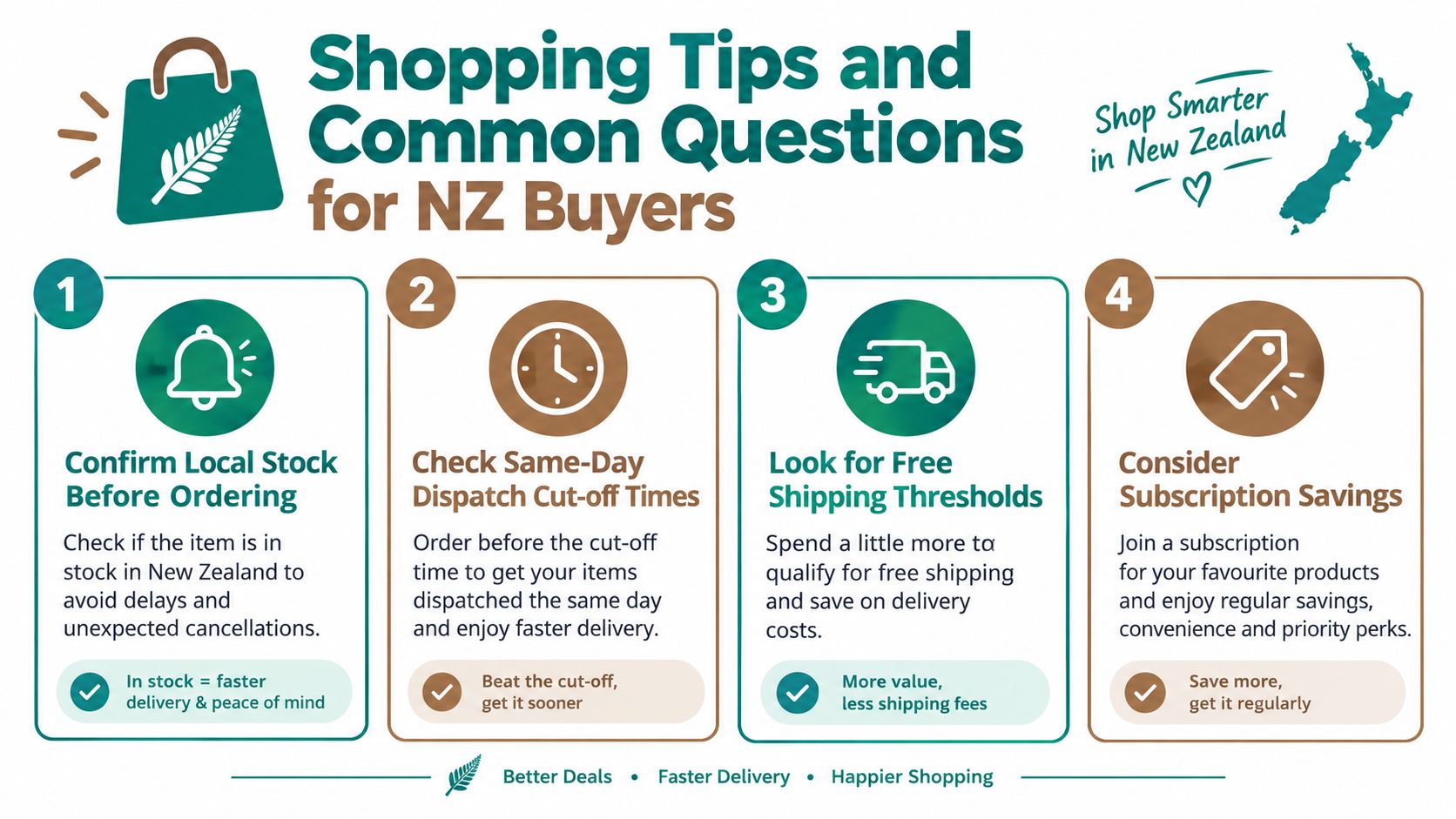
Start with stock status. A vanilla powder isn't good value if it's unavailable when you need to reorder. Check the product page, confirm the pack size and review the dispatch information before comparing the price with another option.
NZ Supps holds stock domestically in Palmerston North, offers same-day dispatch for weekday orders placed before 1 pm, and provides free delivery over $99, according to the supplied business information. Repeat buyers can also check subscription options, while athletes can use certification filters for Informed Sport or Informed Choice products. These are shopping tools, not substitutes for reading the label.
Questions NZ shoppers ask
How do I reduce an artificial vanilla aftertaste?
Choose a product with a flavour and sweetener system you already enjoy, then mix it with more liquid or blend it with yoghurt, fruit or oats. A strong aftertaste usually comes from the flavour and sweetener system, not from vanilla as a category.
What's the difference between sucralose and stevia?
They're different sweeteners with different taste profiles. Sucralose often gives a stronger, cleaner sweetness, while stevia can leave a herbal or lingering note for some people. Neither automatically makes a powder better. Read the label and choose the taste you'll use.
Can plant-based blends match whey for leucine content?
Don't assume they match. Compare the declared amino-acid profile and serving size. A pea or pea-and-rice blend can be a valid dairy-free option, but the useful comparison is the actual protein and leucine information on the product label.
Should I buy isolate just because it costs more?
No. Buy isolate when its protein density, ingredient list or personal preference justifies the premium. If a concentrate gives you the best verified cost per 25g of protein and you like the taste, it's the smarter purchase.
NZ Supps gives New Zealand shoppers access to whey, isolate, plant-based and sport-tested protein options, with product comparison and certification filters to help you check the label before buying. Visit NZ Supps to compare current vanilla listings by protein per serve, serving cost and the formula that suits your routine.