SHOP NOW, PAY LATER















 Informed Sport
 Informed Choice
 NSF Certified for Sport
 HASTA Certified

Beta-glucans lower LDL cholesterol at doses around 3 grams a day, blunt post-meal blood sugar spikes, and, in fungal or yeast form, can shorten the length of a cold. But those are three different molecules doing three different jobs. Oat and barley beta-glucan works through gut viscosity; mushroom and yeast beta-glucan works through immune receptors. Confuse the two and you’ll take the wrong dose for the wrong goal.
TL;DR:
- Consuming around 3 grams of cereal beta-glucan daily before meals can significantly reduce LDL cholesterol within four to six weeks.
- Fungal and yeast beta-glucans are designed for immune support at doses of 100 to 500 milligrams daily, ideally taken on an empty stomach over several weeks.
- Combining oat or barley beta-glucan with food slows carbohydrate absorption, improving blood sugar control for those with metabolic syndrome but is unlikely to produce substantial weight loss.
- Effective microbiome benefits from consistent intake of cereal beta-glucan over two to four weeks, with whole-food sources generally supporting a broader fermentation process.
- In medical contexts, beta-glucan is a supportive adjunct in cancer treatment or surgery, but it should only be used under professional guidance due to variability in formulations and potential interactions.
Table of Contents
- What Are Beta Glucans, and Why Does Source Change Everything?
- Cholesterol and Cardiovascular Benefits of Oat and Barley Beta-Glucan
- Immune Modulation: What Fungal and Yeast Beta-Glucans Actually Do
- Blood Sugar, Insulin Response, and the Weight Loss Question
- Gut Microbiome and Prebiotic Effects
- Beta Glucan in Cancer Care, Surgery, and Immune Recovery
- Skin Health, Wound Healing, and Topical Beta Glucan
- Safety, Side Effects, and Drug Interactions
- How to Choose a Beta Glucan Supplement That Actually Works
- Editorial Standards Behind This Guide
- Where to Buy Transparent Beta Glucan and Supplement Products
- Sources
- FAQ
What Are Beta Glucans, and Why Does Source Change Everything?
Beta-glucans are chains of glucose molecules linked together in patterns that vary depending on where they come from. That structural detail decides what the compound does once it’s inside you.
Cereal beta-glucans, found in oats and barley, carry a 1,3/1,4 linkage pattern. That structure lets them dissolve into a thick, viscous gel in the gut, which is the whole reason they affect cholesterol and blood sugar. Fungal and yeast beta-glucans, sourced from things like Saccharomyces cerevisiae, shiitake, and reishi, carry a 1,3/1,6 linkage instead. That branching pattern doesn’t gel the same way, but it binds tightly to immune receptors, which is why fungal extracts show up in immune-support formulas rather than cholesterol products. Reviews of beta-glucan biology and mechanisms consistently point to this linkage difference as the main reason two products both labeled “beta-glucan” can do almost nothing alike.
The clinical research reflects that split. Cardiovascular outcomes have the deepest evidence base, with decades of randomized trials and multiple meta-analyses converging on a consistent LDL-lowering effect from cereal sources. Immune outcomes are better studied in fungal and yeast extracts, though the evidence there is more mixed. Metabolic and gut microbiome effects sit somewhere in between, with solid mechanistic data but fewer large, long-term trials.
Here’s the outcome map worth keeping in mind as you read the rest of this guide:
- Cholesterol and cardiovascular health: strongest evidence, cereal source (oat, barley)
- Blood sugar and metabolic syndrome: solid evidence, cereal source
- Immune support and infection frequency: moderate but real evidence, fungal/yeast source
- Gut microbiome and prebiotic effects: emerging evidence, cereal source
- Skin healing and topical use: early-stage evidence, both sources studied differently
- Cancer care adjuncts: clinical but narrow, specific fungal/yeast extracts only
Everything below breaks these down individually, with the actual doses and timelines used in the research.
Cholesterol and Cardiovascular Benefits of Oat and Barley Beta-Glucan
The gel-forming mechanism is straightforward. When cereal beta-glucan dissolves in the small intestine, it thickens the contents into a viscous mass that traps bile acids before they can be reabsorbed. Your liver responds by pulling more cholesterol out of the bloodstream to manufacture replacement bile acids, and LDL levels drop as a result.
The 3-Gram Benchmark: Clinical trials and systematic reviews consistently link daily intake of roughly 3 grams of cereal beta-glucan to measurable reductions in LDL and total cholesterol, usually detectable within four to six weeks of consistent use.
That 3-gram figure isn’t arbitrary. It’s the threshold multiple regulatory bodies have used when evaluating cholesterol-related health claims, and it shows up again and again in the trial literature because it’s roughly the point where the gel-forming effect becomes strong enough to matter. Below that amount, the viscosity effect tends to be too weak to produce a reliable change on a cholesterol panel.
Health Canada’s monograph guidance on beta-glucan reflects this same evidence base, listing cholesterol reduction and glycemic support among the accepted uses for oat and barley beta-glucan products, along with standard label language for dosing and precautions. That kind of regulatory sign-off matters more than marketing copy, because it means the claim has been checked against the underlying trial data rather than just repeated by supplement companies.
You have two practical routes to that 3-gram target:
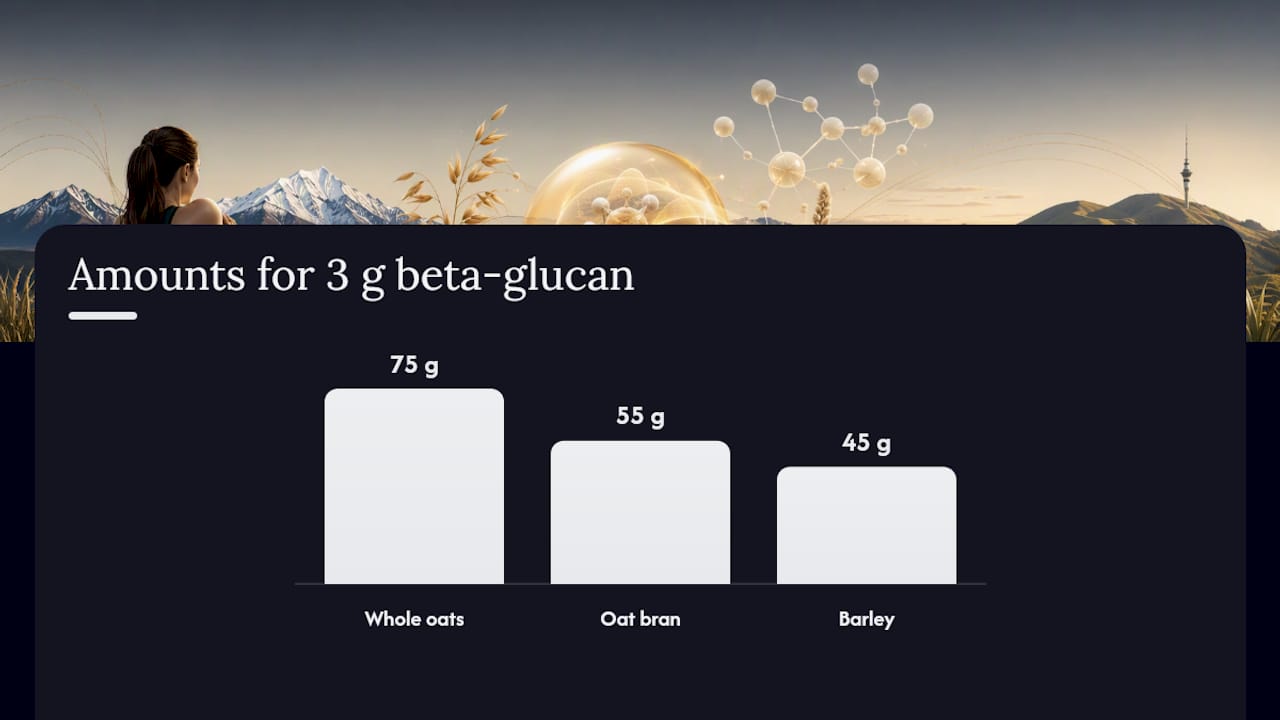
- Whole food approach: roughly 75 grams of whole oats, 55 grams of oat bran, or 45 grams of barley daily, based on typical cereal beta-glucan content
- Concentrated supplement approach: an isolated oat or barley beta-glucan extract, usually delivering the full 3 grams in a smaller volume than eating the whole grain
- Combined approach: oatmeal at breakfast plus a smaller supplemental dose later in the day, which some people find easier to sustain than eating enough whole grain to reach 3 grams from food alone
Who actually benefits most here? People with borderline-high LDL who aren’t yet on cholesterol medication tend to see the clearest movement, since there’s more room for the gel-binding mechanism to make a dent. People already on a statin can still add cereal beta-glucan, but the incremental drop tends to be smaller because the medication is already working the same cholesterol pool from a different angle.
One practical wrinkle: the effect scales with consistency, not with any single big dose. Eating a bowl of oatmeal once and skipping it for a week won’t move your numbers. The trials showing LDL reductions all used daily intake sustained over a month or more, which tells you this is a long-game lever, not a quick fix.
Immune Modulation: What Fungal and Yeast Beta-Glucans Actually Do
Fungal and yeast beta-glucans work through a completely different door than their cereal cousins. Their 1,3/1,6 branched structure binds to a receptor on immune cells called Dectin-1, found mainly on macrophages and dendritic cells. That binding primes those cells to respond faster and more effectively when they encounter an actual pathogen, a process researchers describe as trained or primed immunity rather than a blunt stimulant effect.
What the Trials Show: A systematic review of randomized controlled trials on fungal beta-glucans found that supplementation reduced the incidence or shortened the duration of respiratory infections in several studies, along with improvements in self-reported wellbeing. Changes in measurable cellular immune markers, though, were inconsistent across trials.
That inconsistency is worth sitting with rather than glossing over. Some trials show clear white blood cell activity changes; others show none, even when the same people report fewer sick days. That gap between lab markers and lived symptoms is common in immune-nutrition research generally, and it means you should judge fungal beta-glucan by whether you actually get sick less often, not by chasing a specific blood marker.
Dosing in this category looks nothing like the cereal side:
- Typical immune-support range: 100 to 500 milligrams per day, based on the dose ranges used across most published RCTs
- Trial range overall: studies have tested doses from a few milligrams up to a full gram per day, though the majority of positive respiratory-infection findings cluster in that 100 to 500 milligram window
- Timing: often taken on an empty stomach, a practice rooted in the idea that absorption and receptor interaction may be more efficient without competing food in the gut
- Preventive window: most of the positive trial results come from sustained daily use over several weeks to months leading into cold and flu season, not from taking it after symptoms already start
One heterogeneity issue supplement shoppers rarely hear about: beta-glucan extracts from baker’s yeast, shiitake, reishi, maitake, and turkey tail are not interchangeable, even though they share the same 1,3/1,6 backbone family. Extraction method, purity, and molecular weight all vary between these sources, and that variation is a big part of why trial results differ so much from study to study. A product labeled simply “beta-glucan 500mg” without naming its source or extraction method is telling you less than it should.
Blood Sugar, Insulin Response, and the Weight Loss Question
Cereal beta-glucan slows how fast carbohydrates move from your gut into your bloodstream. The same viscous gel that binds bile acids also physically slows gastric emptying and delays glucose absorption in the small intestine, which flattens the glucose spike you’d otherwise get after a carb-heavy meal.
That mechanism translates into a fairly reliable practical strategy: pairing roughly 3 grams of cereal beta-glucan with a carbohydrate-containing meal blunts the post-meal blood sugar rise more than eating the same meal without it. This is the same viscosity effect responsible for the cholesterol benefit, just measured against a different marker.
The evidence is strongest in people who already have some degree of insulin resistance or metabolic syndrome. In those cohorts, sustained beta-glucan intake has shown improvements not just in single post-meal glucose readings but in broader metabolic syndrome markers, including modest improvements in insulin sensitivity over weeks of consistent use. If your blood sugar regulation is already efficient, the effect is real but smaller, since there’s less dysfunction for the mechanism to correct.
Where the evidence gets noticeably thinner is weight loss. Beta-glucan does increase satiety somewhat, mostly through the same gel-thickening effect that slows stomach emptying and makes meals feel more filling. But translating “feels more filling” into actual, sustained weight loss on a scale is a different claim, and the trial data supporting that jump is limited and inconsistent. Some studies show modest reductions in food intake at a single meal; very few show durable weight change over months. Treat beta-glucan as a blood sugar tool with a mild appetite side benefit, not a weight-loss supplement in its own right.
Practical takeaways for metabolic goals:
- Take cereal beta-glucan with the meal you’re trying to blunt, not separately from it
- Stick to the 3-gram range used in the trials that actually show glycemic benefits
- Expect the clearest results if you already run insulin-resistant or have diagnosed metabolic syndrome
- Don’t expect it to move the scale on its own; pair it with the usual levers of diet and activity if weight loss is the actual goal
Gut Microbiome and Prebiotic Effects
Cereal beta-glucan doesn’t get fully digested in the small intestine. Whatever survives that far travels to the colon, where resident bacteria ferment it, and that fermentation is where a second layer of benefits comes from.
Two bacterial genera respond particularly well to that fermentable fiber: Bifidobacterium and Lactobacillus, both associated with a range of favorable digestive and metabolic outcomes. As these populations ferment beta-glucan, they produce short-chain fatty acids, compounds like butyrate that feed the cells lining your colon and appear to play a role in regulating inflammation elsewhere in the body. This fermentation process takes time to build momentum, typically showing measurable shifts in gut bacterial populations after a couple of weeks of regular intake rather than after a single serving.
That timeline is the key practical point most supplement marketing skips. Microbiome mediation is likely a major reason why long-term dietary inclusion of cereal beta-glucan tends to produce broader systemic benefits than a short burst of high-dose supplementation. You’re not just feeding your gut bacteria once; you’re cultivating a population shift that takes sustained input to establish and maintain.
This is also where cereal fiber and classic prebiotic mechanisms overlap heavily. If you want a deeper look at how fermentable fibers like beta-glucan differ from probiotic bacteria themselves, this breakdown of prebiotic versus probiotic mechanisms covers the distinction in more depth.
Practical points worth remembering:
- Fermentation benefits build over roughly two to four weeks of consistent intake
- Whole-food sources (oats, barley) generally deliver a broader mix of fermentable fiber than isolated extract supplements
- Skipping days undercuts the microbiome benefit more than it undercuts the cholesterol benefit, since bacterial populations shift with steady food supply, not occasional spikes
Beta Glucan in Cancer Care, Surgery, and Immune Recovery
This is the highest-intensity use case for beta-glucan, and it needs the clearest boundary drawn around it: nothing here replaces standard medical treatment. What the clinical literature actually shows is a supportive, adjunctive role in specific, narrow contexts, almost always studied as an addition to conventional care rather than a substitute for it.
Some of the more established clinical uses involve specific fungal and yeast extract formulations, often delivered intravenously in hospital settings rather than as an over-the-counter capsule. Trials in surgical patients have examined certain IV beta-glucan blends for their potential to support recovery and reduce postoperative infection rates, and other research has looked at beta-glucan’s role in supporting blood cell production (hematopoiesis) during immune-suppressive treatments. Several mushroom-derived beta-glucan extracts, including compounds derived from Lentinula edodes (shiitake) and turkey tail mushroom, have a longer history of clinical use as adjunct therapies in some countries, generally alongside, never instead of, standard oncology protocols.
It’s worth being blunt about the limits here. Systematic reviews covering this research repeatedly flag heterogeneity between study designs, extraction methods, and patient populations as a reason to interpret these findings cautiously rather than as settled proof of benefit. The compound showing promise in a hospital IV trial is not the same product sitting on a supplement shelf, and dosing, purity, and delivery method all differ enormously between the two.
If you’re navigating a cancer diagnosis, recovering from major surgery, or managing an immune-suppressive condition, the right move is a conversation with your treating clinician before adding any beta-glucan product, oral or otherwise, to your regimen. This category is genuinely promising research territory, but it’s also the one where self-directed supplementation carries the most risk of interacting with active treatment.
Skin Health, Wound Healing, and Topical Beta Glucan
Beta-glucan shows up in skincare formulations mostly for its moisture-retention and skin-barrier-support properties, and there’s reasonable evidence behind topical use for supporting wound healing. The proposed mechanism involves beta-glucan’s ability to interact with skin immune cells in a way that may help coordinate the repair process, alongside a straightforward humectant effect that helps skin hold onto moisture.

Topical formulations, typically using yeast-derived beta-glucan, have been studied for minor wound care, dermatitis-prone skin, and general barrier support in cosmetic contexts. The evidence base here is smaller than the oral cardiovascular and immune research, and much of it comes from smaller trials and cosmetic-industry studies rather than the large RCTs backing the cholesterol claims.
A few practical points if you’re considering a topical product:
- Look for a named source (yeast-derived beta-glucan is the most common in skincare) rather than a vague “beta-glucan complex” claim
- Patch-test any new topical formulation, especially if you have sensitive or reactive skin
- Topical beta-glucan is a supportive skincare ingredient, not a treatment for significant wounds, infections, or chronic skin conditions
- See a dermatologist or physician for any wound that isn’t healing normally, shows signs of infection, or persists beyond a week or two
Safety, Side Effects, and Drug Interactions
Oral beta-glucan, from either cereal or fungal sources, is generally well tolerated. The most common complaints are mild digestive ones, bloating, gas, or a change in stool consistency, usually tied to increasing fiber intake too quickly rather than any inherent toxicity in the compound itself. Starting at a lower dose and building up over a week or two typically resolves this.
Injectable and IV forms of beta-glucan, used in the clinical and hospital contexts described earlier, carry a different risk profile than anything sold as an oral supplement, including the potential for more serious adverse reactions. That distinction matters because it means the safety data from hospital-administered IV trials doesn’t automatically tell you anything about the capsule on your kitchen counter, and vice versa.
A few groups need extra caution before adding beta-glucan supplements:
- People on immunosuppressant medications, since fungal and yeast beta-glucan’s immune-priming mechanism could theoretically work against the intended effect of the drug
- People taking cholesterol medications, who should still be fine combining them with cereal beta-glucan but may want to monitor for an additive effect on LDL
- People with autoimmune conditions, given the immune-activating mechanism of fungal and yeast sources specifically
- Pregnant or breastfeeding individuals, who should check with a physician before starting any new supplement, beta-glucan included, given the limited safety data specific to these groups
Regulatory monograph guidance, including Health Canada’s beta-glucan documentation, reflects these same caution points in its standard label language. If you notice unusual digestive symptoms that don’t settle after a couple of weeks, or any new symptom after starting a beta-glucan product while on prescription medication, stop and call your prescribing clinician rather than pushing through it.
How to Choose a Beta Glucan Supplement That Actually Works
Marketing copy on supplement labels rarely tells you the linkage type, and that’s the single most important piece of information for judging whether a product will actually do what you’re buying it for.
- Check the stated source first. Oat (Avena sativa) or barley (Hordeum vulgare) means you’re buying a cereal beta-glucan for cholesterol and blood sugar goals. Yeast (Saccharomyces cerevisiae), shiitake (Lentinula edodes), reishi, or maitake means you’re buying a fungal beta-glucan for immune goals.
- Confirm the dose per serving matches the goal. Look for gram-level dosing (approaching 3g) for cardiovascular claims, and milligram-level dosing (100 to 500mg) for immune claims.
- Look for extraction or purity statements. Terms like “purified” or a stated percentage of beta-glucan content suggest a more rigorously processed extract than a vague “mushroom blend.”
- Prioritize third-party testing. Independent verification of potency and contaminant screening is a meaningful signal in a category where product quality varies enormously between manufacturers.
- Be skeptical of vague “complex” claims. A label that lists “beta-glucan complex” without naming the source or the linkage-relevant organism is giving you less information than a product that names its exact source.
Pro Tip: Match the product type to your actual goal before you look at price or reviews. A fungal immune blend won’t touch your cholesterol, and an oat-based fiber supplement won’t do much for your immune system, no matter how the label is worded.
Editorial Standards Behind This Guide
This guide draws on systematic reviews, randomized controlled trials, and regulatory monograph guidance rather than supplement marketing claims, and every dosage figure cited here traces back to a specific study or health-agency document linked in the text above.
We approach content like this by insisting on transparency from sport nutrition brands: clear ingredient lists, disclosed dosing, and no hiding behind proprietary blends. You can see that approach reflected on individual product pages, including detailed ingredient and dosing breakdowns for specific supplements we carry.
Editorial content on this site is independent of product selection. Any product link included here is offered as a convenience for readers who want to see a real-world example of label transparency in action, not as an endorsement disguised as research.
— Blake
Where to Buy Transparent Beta Glucan and Supplement Products
Reading beta-glucan dosages on a research page is one thing. Finding a product that actually states its source, its exact dose per serving, and skips the vague “proprietary complex” language is the harder part, and it’s exactly the gap Nzsupps was built to close for New Zealand shoppers.
Products are sourced and shipped within New Zealand, avoiding grey-market imports with uncertain expiration dates or inconsistent beta-glucan content. If cardiovascular or metabolic support is your goal, browsing the Health & Wellness category is the fastest way to compare fiber and general-health formulas side by side, ingredient list included. If you’re building out a broader supplement stack alongside your beta-glucan routine, protein, creatine, and amino acid categories sit in the same shop-by-category page, with fully disclosed ingredients on every listing and genuine Kiwi customer service from staff who actually train. Start by browsing the category that matches your current goal, and check the product page for the exact dosing detail before you add it to cart.
This article is general information, not a substitute for advice from a qualified doctor. Consult a qualified healthcare professional about your own circumstances before acting on anything here.
Sources
The right dose depends entirely on which effect you’re after, and mixing up cereal and fungal dosing is the most common mistake people make with this supplement category.
For cardiovascular and blood sugar benefits, the research consistently points to roughly 3 grams per day of oat or barley beta-glucan, taken with meals so the gel-forming mechanism can interact directly with the food you’re digesting. For immune support, fungal and yeast beta-glucan trials typically use 100 to 500 milligrams per day, often taken on an empty stomach based on the theory that this maximizes receptor interaction without competing dietary input.
- Effects of fungal beta-glucans on health – systematic review of randomized controlled trials (Food & Function)
- Review of β-glucans biology, mechanisms and therapeutic targets (PMC)
- Template for short form monographs — beta-glucan (Health Canada guidance document)
Those food equivalents come from clinical and review literature on cereal beta-glucan content, and they’re useful mainly for sanity-checking supplement labels. If a product claims to deliver a meaningful cholesterol benefit from a fraction of a gram, that claim doesn’t match the dose range the trials actually used.
Pro Tip: If you’re taking both types, cereal beta-glucan with breakfast and a fungal or yeast extract on an empty stomach later in the day avoids digestive crowding and respects the different absorption logic behind each one. Trying to stack both at the same meal can just mean neither gets the conditions it works best under.
FAQ
Is It Safe to Take Beta Glucan Every Day?
Yes, for most healthy adults, daily oral beta-glucan from cereal or fungal sources is well tolerated, with mild digestive symptoms like bloating being the main reported issue during the first week or two. People on immunosuppressant medications, those with autoimmune conditions, and pregnant or breastfeeding individuals should check with a physician first, since the immune-activating mechanism in fungal and yeast beta-glucan can be relevant to those situations.
Which Foods Are High in Beta Glucan?
Oats and barley are the two richest common food sources, with roughly 75 grams of whole oats, 55 grams of oat bran, or 45 grams of barley needed to reach the 3-gram daily benchmark used in cholesterol research. Mushrooms like shiitake and reishi also contain beta-glucan, but in the 1,3/1,6 fungal form associated with immune effects rather than cholesterol lowering.
Who Should Not Take Beta Glucan?
People on immunosuppressant therapy should talk to their doctor before starting fungal or yeast beta-glucan, since its immune-priming mechanism may work against the medication’s purpose. Anyone with an autoimmune condition, a scheduled surgery, or a diagnosed illness undergoing active treatment should also consult their clinician first, given the heterogeneity in how different beta-glucan preparations behave in clinical settings.
What Is the Best Time to Take Beta Glucan?
Cereal beta-glucan (oat or barley) works best taken with meals, since the gel-forming effect needs to interact with the food you’re eating to blunt cholesterol absorption and blood sugar spikes. Fungal or yeast beta-glucan for immune support is often taken on an empty stomach in clinical practice, based on the idea that this maximizes immune receptor interaction without competing digestive activity.