SHOP NOW, PAY LATER









 Informed Sport
 Informed Choice
 NSF Certified for Sport
 HASTA Certified

Electrolyte-containing fluids, especially those with sodium, usually reduce cramp susceptibility during heavy sweating, but they’re not a guaranteed fix. The strongest clinical evidence, including a controlled hydration trial, shows sodium and fluid replacement delay cramp onset rather than eliminate it outright. Magnesium’s track record is much weaker. Start with sodium-based hydration during long or hot sessions, treat magnesium as a secondary experiment rather than a cure, and see a clinician if cramps are frequent, severe, or unusual.
TL;DR:
- Sodium and chloride loss during heavy sweating primarily increases cramp risk by affecting blood volume and muscle excitability, making sodium the top priority mineral.
- Electrolyte studies show that sodium-based hydration can delay cramps but does not guarantee prevention, with magnesium showing minimal proven benefit.
- Proper timing involves pre-hydration with sodium, ongoing intake during exercise based on individual sweat rates, and rehydration with sodium afterward to avoid blood sodium dilution.
- Plain water after heavy sweating can increase cramp susceptibility, while electrolyte solutions better maintain serum sodium and reduce local muscle fatigue triggers.
- Magnesium supplementation offers weak evidence for cramps, and medical consultation is advised if cramps are severe, recurrent, or associated with other neurological symptoms.
Table of Contents
- Which Electrolytes Matter Most for Cramp Prevention
- What the Research Actually Shows About Electrolytes and Cramps
- How to Time Your Electrolyte Intake Before, During, and After Exercise
- Choosing Between Sports Drinks, ORS, Coconut Water, and Salty Snacks
- Is Magnesium Worth Taking for Cramp Prevention?
- When Muscle Cramps Signal Something Beyond Hydration
- Why Sodium Deserves More Credit Than Magnesium Gets
- Building Your Electrolyte Kit With Nzsupps
- Sources
Which Electrolytes Matter Most for Cramp Prevention
Sodium does the heaviest lifting. When you sweat, you lose sodium and chloride faster than you lose anything else in meaningful quantities, and that loss drives down blood volume and raises serum osmolality in ways that make muscle tissue more excitable and cramp-prone. This is why sodium, not magnesium or potassium, gets top billing in nearly every serious electrolyte protocol built around exercise-associated cramping.
Potassium works differently. It’s mostly an intracellular mineral, meaning your muscle cells hold onto it rather than losing it through sweat in large amounts. That makes potassium more of a baseline dietary concern, something you get right through bananas, potatoes, and leafy greens over the course of a week, rather than a mineral you chase mid-run with a tablet.
Magnesium and calcium both play roles in nerve signaling and muscle contraction, which is exactly why supplement marketing leans on them so hard. The catch: the evidence supporting supplementation for exercise cramps is thin, a point covered in more depth further down.
Here’s the practical breakdown:
- Sodium and chloride: lost fastest in sweat, drives fluid balance and osmolality, the priority mineral for acute cramp risk
- Potassium: intracellular, dietary-focused, not a rapid-fix mineral
- Magnesium: involved in neuromuscular signaling, but supplementation evidence for cramps is weak
- Calcium: essential for contraction and relaxation cycles, rarely deficient enough in athletes to be the cramp culprit
The practical takeaway is to build your fluid strategy around sodium, keep potassium-rich foods in your regular diet, and stop expecting a single mineral to solve a problem that usually has more than one cause.
What the Research Actually Shows About Electrolytes and Cramps
The clinical picture is more nuanced than most supplement marketing suggests, and it’s worth knowing the actual studies behind the claims before you spend money chasing a fix.
A frequently cited trial gave athletes a carbohydrate-electrolyte beverage before and during exercise in hot conditions and compared outcomes against a hypohydration protocol. Athletes who drank the electrolyte beverage exercised substantially longer before cramps set in. That’s a meaningful delay, not a cure. Some participants still cramped even while properly hydrated and supplemented, which tells you electrolyte status is one lever among several, not the entire machine.
Muscle cramps have multifactorial causes. Even with optimized hydration and electrolyte intake, local muscle fatigue and neural factors can still trigger a cramp during hard efforts.
A separate line of research looked at what happens after dehydration, comparing plain water against an oral rehydration solution. The ORS study found that drinking water alone after heavy sweat losses actually decreased the threshold frequency needed to trigger an electrically induced cramp, meaning subjects became more cramp-susceptible, not less. Serum sodium and chloride dropped with water intake but stayed stable with the ORS. That’s the dilution effect in action: chug plain water after a hard, salty sweat session and you can lower your blood sodium concentration further, which works against you rather than for you.
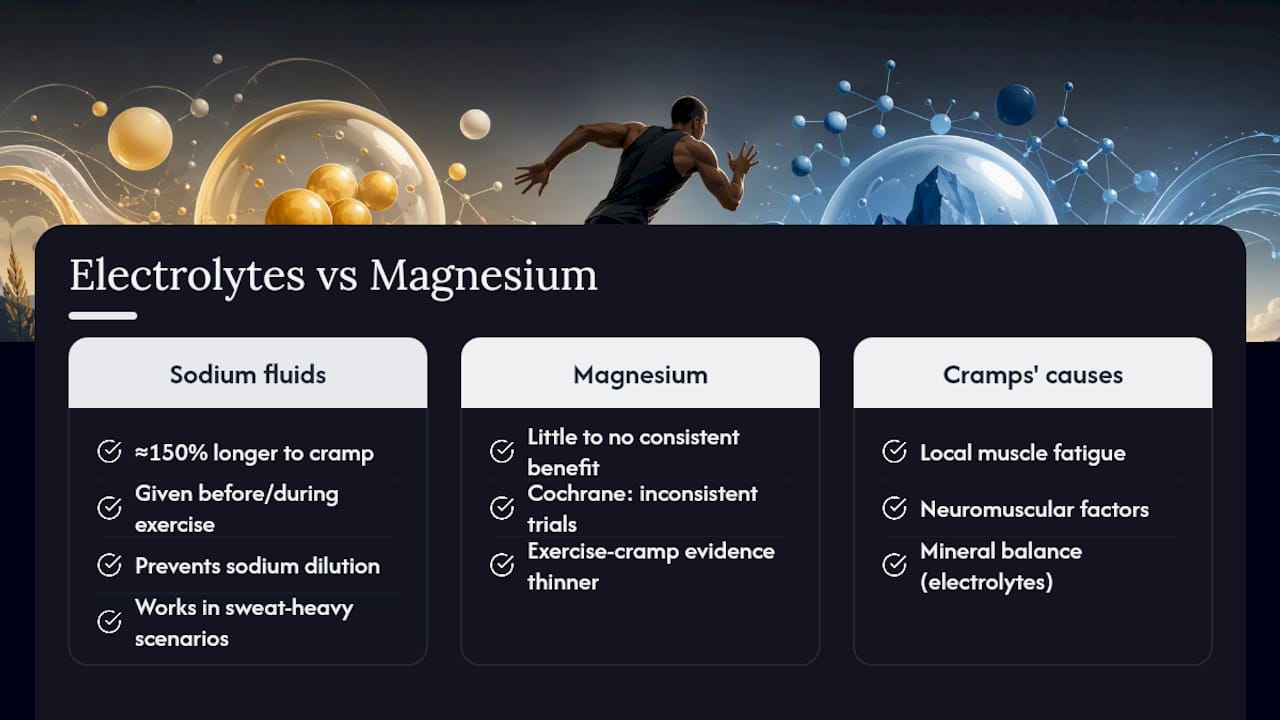
The number that matters here: a roughly 150% increase in exercise duration before cramp onset with electrolyte supplementation, measured against a hypohydration baseline, is the closest thing this field has to a headline statistic. It’s also the one most often stripped of context and turned into a blanket promise on product labels.
Then there’s magnesium. Cochrane’s review of randomized trials on magnesium for muscle cramps found little to no consistent prophylactic benefit for idiopathic cramps, and the evidence for exercise-associated cramps specifically is even thinner. Put the three findings together and a consistent pattern emerges: sodium-focused fluids can meaningfully delay cramp onset in many sweat-heavy scenarios, but no electrolyte protocol reliably prevents every cramp, because cramps stem from a mix of fatigue, neuromuscular factors, and mineral balance rather than one cause you can supplement away.
How to Time Your Electrolyte Intake Before, During, and After Exercise
Getting the timing right matters as much as picking the right product. Here’s a workable sequence for anyone training or racing in conditions where heavy sweating is likely.
- 90 to 60 minutes before a long or hot session, eat a normal meal with some sodium in it. Don’t overload; you’re topping off, not loading up.
- 30 to 60 minutes before start, drink 300 to 500 mL of a sodium-containing fluid. This pre-loads fluid and sodium so you’re not starting the session already behind.
- During exercise, aim for roughly 300 to 800 mL of fluid per hour, adjusted for your personal sweat rate, with sodium intake somewhere around 300 to 700 mg per hour for heavy sweaters. Lighter sweaters or shorter efforts need less. This is a wide range on purpose. Sweat rate and sweat sodium concentration vary enormously between individuals, and sweat testing is the only way to know your actual numbers rather than guessing.
- Immediately after finishing, reach for a sodium-containing drink or salty food rather than plain water. Plain water after a heavy-sweat session risks the dilution effect described above, temporarily lowering blood sodium concentration at exactly the moment your muscles are most fatigued and cramp-prone.
- If cramps show up at night, a small sodium-containing snack or electrolyte drink before bed, combined with proper hydration the day before and some light stretching, tends to help more than reaching for a magnesium pill alone.
Pro Tip: Weigh yourself before and after a typical hard training session, in the same clothes, without drinking during the weigh-in. Each pound lost is roughly 470 to 480 mL of sweat. That’s a cheap, effective way to estimate your personal sweat rate instead of relying on generic hourly targets.
One caveat that applies across all of this: if you have hypertension, kidney disease, or take diuretics, talk to a clinician before adopting a high-sodium hydration regimen. The ranges above are built for healthy, heavy-sweating athletes, not for people managing a cardiovascular or renal condition.
Choosing Between Sports Drinks, ORS, Coconut Water, and Salty Snacks
The right choice depends less on brand and more on sodium content, sugar tolerance, and how long you’ll be out there.
Plain water is fine for short, low-intensity sessions under an hour where sweat losses are modest. Once you’re pushing past an hour, especially in heat, plain water alone starts to work against you for the dilution reasons already covered. Standard sports drinks split the difference: they carry some sodium and carbohydrate, useful for both hydration and fueling, though sodium content varies a lot by brand and is often lower than what heavy sweaters actually need.
Oral rehydration solutions are formulated specifically to match physiological losses, with higher sodium relative to sugar than most sports drinks, and they’re the closest thing to what the clinical trials actually tested. Coconut water is popular but has meaningfully less sodium than sweat itself, which limits its usefulness as a standalone cramp-prevention strategy despite its potassium content and marketing reputation. Electrolyte tablets and sachets offer a practical middle ground: portable, mixable into any water source, and often formulated with sodium levels closer to what heavy sweaters need than a generic sports drink provides.
For everyday baseline intake, food does most of the work:
- Bananas and potatoes for potassium
- Yogurt and nuts for magnesium and calcium
- Salty snacks like pretzels or salted crackers for a quick sodium boost before or after training
Sugar-free electrolyte products suit anyone with a sensitive stomach or who’s already getting enough carbohydrate from other fueling sources, while sugared versions make sense when you need both hydration and mid-session fuel in one product. Check labels carefully. Sodium content per serving varies dramatically across products even within the same category.
Is Magnesium Worth Taking for Cramp Prevention?
Here’s where a lot of well-intentioned advice falls apart: magnesium supplementation has weak evidence behind it for exercise cramps specifically. Cochrane’s systematic review found magnesium probably makes little or no difference for idiopathic cramps in older adults, with conflicting results in pregnancy and insufficient data for athletes. Trial doses in the reviewed studies ranged from 100 to 520 mg of elemental magnesium daily, and diarrhea was the most common side effect at higher doses.
A short, clinician-supervised trial can be reasonable if you have a confirmed deficiency or recurrent nighttime cramps that haven’t responded to sodium and hydration fixes. For most athletes chasing exercise-related cramps, though, magnesium is a secondary experiment, not a primary fix.
When Muscle Cramps Signal Something Beyond Hydration
Most cramps tied to sweating and fatigue resolve with better sodium and fluid strategy. Seek medical advice if cramps come with weakness, numbness, or other neurologic signs, if they’re severe or frequent enough to disrupt daily life, or if they started after a new medication. A clinician can order basic tests, serum electrolytes, kidney function, thyroid panel, to rule out an underlying cause before you spend more money on supplements.
Why Sodium Deserves More Credit Than Magnesium Gets
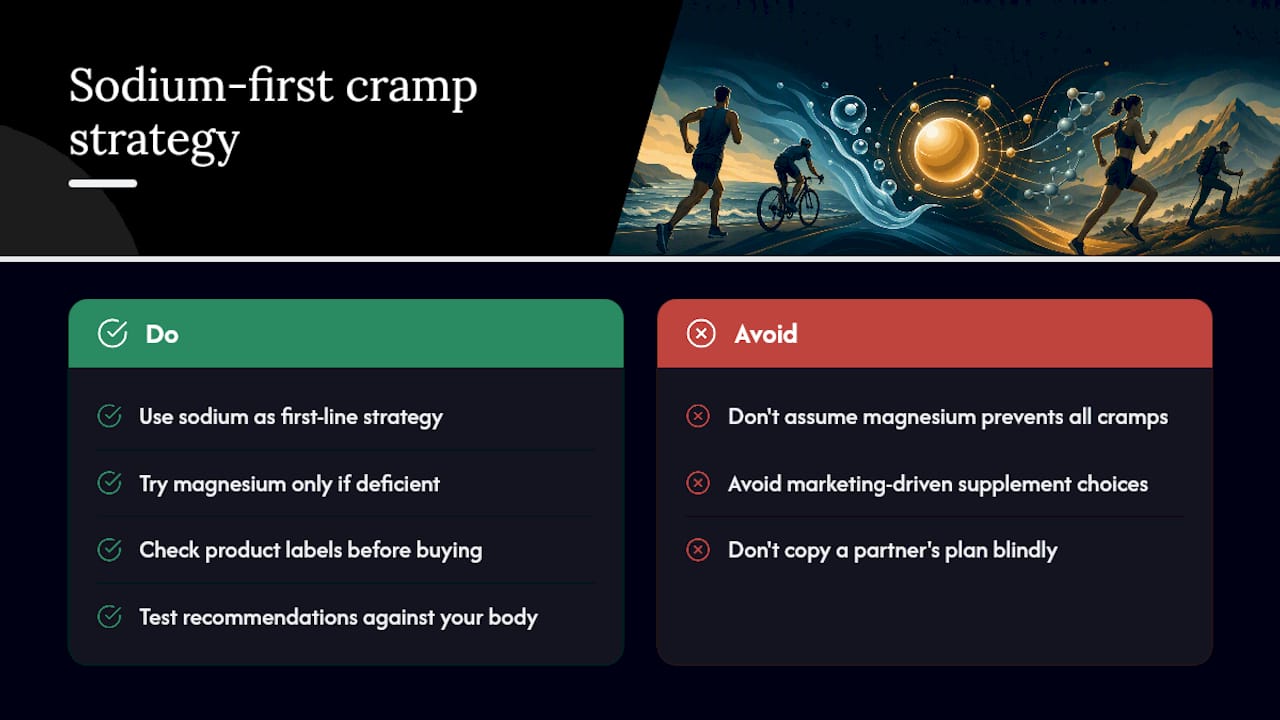
Cramp prevention has become a magnesium industry, and the evidence doesn’t back that up. Sodium is the mineral with actual trial data behind it, yet it gets a fraction of the marketing attention because “drink something salty” doesn’t sell as well as a supplement with a compelling backstory.
The honest position, grounded in the trial data covered above, is that sodium-focused hydration is your best-supported first move, magnesium is a reasonable secondary experiment for specific cases like confirmed deficiency or recurrent nighttime cramps, and no single mineral guarantees a cramp-free session. Nzsupps builds its educational content around that hierarchy rather than around whichever product has the best margin, drawing on peer-reviewed trials and clinical reviews like the ones cited throughout this piece, including detailed product information that lets you see exactly what’s in a formula before you buy it. What works for your training partner’s sweat rate and sodium losses won’t necessarily match yours, so treat every recommendation here, including this one, as a starting point to test against your own body.
Blake
Building Your Electrolyte Kit With Nzsupps
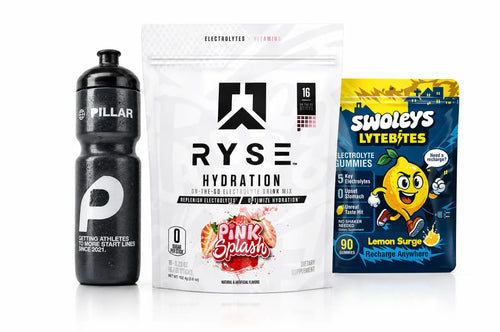
If the research above tells you anything practical, it’s that sodium content and serving size matter more than flashy branding. Nzsupps stocks electrolyte sachets and tablets built around the sodium-forward approach the clinical evidence actually supports, recovery powders that pair sodium and potassium for post-session replenishment, and magnesium formulations for anyone whose clinician has flagged it worth trying.
Before you buy anything, run through a quick label checklist: sodium content per serving, not just total electrolytes; whether the product is sugared or sugar-free depending on whether you need mid-session fuel; and clear dosage instructions so you’re not guessing at how many servings per hour or per day. If you’re also rebuilding after long or hot sessions, a beef isolate protein like the Tropical Orange Mango flavor pairs well with a sodium-based recovery drink to cover both fluid and muscle repair needs in one sitting. Browse the electrolyte and recovery categories on the Nzsupps site, compare sodium content across sachets and tablets, and pick a starting option that matches your sweat rate and the length of your typical session.
This article is general information, not a substitute for advice from a qualified doctor. Consult a qualified healthcare professional about your own circumstances before acting on anything here.
Sources
- Influence of Hydration and Electrolyte Supplementation on Incidence and Time to Onset of Exercise-Associated Muscle Cramps
- Effect of fluid ingestion (water vs oral rehydration solution) on electrically induced muscle cramp susceptibility after exercise in heat
- Magnesium for muscle cramps | Cochrane