SHOP NOW, PAY LATER











 Informed Sport
 Informed Choice
 NSF Certified for Sport
 HASTA Certified

Whey isolate is worth it if you need high protein density with less lactose, fat and carbohydrate, or struggle to meet protein targets through food, but it isn't automatically better than concentrate if ordinary foods already cover the daily reference intake of 64 g for men or 46 g for women. If your protein needs are already covered, what exactly are you paying extra to improve?
That's the useful question when browsing whey protein isolate. A premium label can describe a useful difference in composition without making the product necessary for everyone.
Table of Contents
- Is Whey Isolate Worth It for You
- What Whey Isolate Actually Is
- Whey Isolate Compared with Other Protein Types
- Who Actually Benefits from Whey Isolate
- How to Read a Whey Isolate Label
- Batch Testing and the Drug-Tested Athlete Question
- How to Choose Between Isolate and Concentrate
- The Verdict on Whey Isolate for NZ Shoppers
Is Whey Isolate Worth It for You
Start with your meals, not the tub. The protein reference intakes above apply to adults aged 19 to 70, while national nutrition figures put median daily intake at 102 g for men and 71 g for women, approximately 59% and 54% above those reference amounts, respectively. Those figures sit within the supplied New Zealand nutrition and dairy-sector context.
Population figures don't tell you what you personally need or eat. They do challenge the assumption that everyone who joins a gym automatically needs another protein product.
Run these checks before buying
- Protein adequacy: Look at what you eat across an ordinary day. Identify the gap a shake would fill rather than adding one because it sounds useful.
- Lactose tolerance: Decide whether lower lactose is a genuine purchasing requirement. Don't assume the word isolate guarantees a particular lactose amount.
- Protein cost: Compare the price of the protein you'll consume, not the size of the scoop or the visual size of the tub.
The strongest reason to buy isolate is practical: its composition suits your eating plan, and its convenience helps you follow that plan. The weakest reason is assuming that more filtration must produce better results regardless of everything else.
Buying rule: Pay for a feature you'll use, not a purity claim you can't connect to your needs.
Treat isolate as food in a convenient format. This is a label-and-value decision, not a medical recommendation or a promise of weight loss.
What Whey Isolate Actually Is
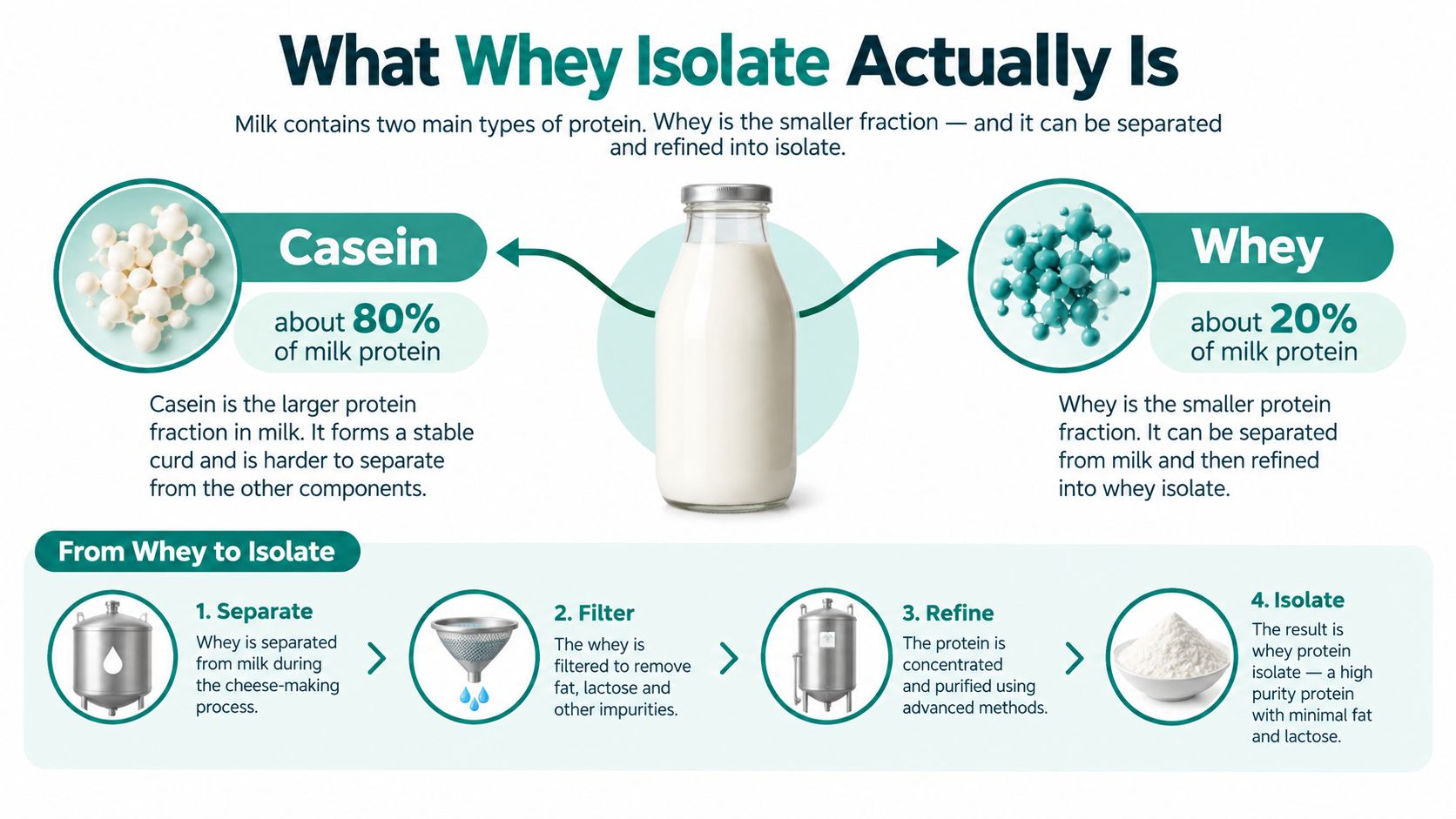
Milk contains several components that manufacturers can separate and refine. New Zealand dairy-industry reference material describes milk protein as roughly 80% casein and 20% whey, with whey protein accounting for about 0.7% of milk's overall composition. Lactose, the main carbohydrate, typically accounts for 4.5% to 5% of milk, according to the New Zealand Institute of Chemistry's milk-processing reference.
Those percentages describe different things. The casein-to-whey split concerns milk's protein fraction, while the smaller whey figure describes its share of the whole milk.
The diagram shows how that smaller protein fraction fits into the processing chain.
Further refinement, not a different food
Whey is generated during cheese and other dairy manufacture. Further filtration and purification produce an ingredient with a higher proportion of protein and fewer residual milk components.
That's what the isolate premium is meant to purchase: a more concentrated ingredient. It doesn't turn whey into a different food or establish that every finished isolate product offers equal value.
New Zealand's processing base helps explain the availability of specialised dairy ingredients. The dairy-sector context includes estimated fluid-milk production of 21.7 million metric tonnes for the 2025 market year, alongside processing capacity supporting whey isolate, concentrate, milk-protein concentrates, lactoferrin and caseinates. The New Zealand dairy production reference provides local industry context, not proof of superior sporting results.
- Ingredient specification matters: A highly refined base ingredient can still be combined with other ingredients in a finished powder.
- Origin isn't an outcome guarantee: Local dairy supply can support supply-chain confidence without proving a performance advantage.
- Processing affects usability: Texture, solubility and sedimentation also deserve attention when choosing something you'll drink regularly.
The useful distinction is between the ingredient and the finished product. You buy the latter, so its nutrition panel has to justify its price.
Whey Isolate Compared with Other Protein Types
The meaningful comparison isn't premium protein versus inferior protein. It's which option supplies the protein you need, in a format you'll use, at a cost you're comfortable paying.
Isolate's compositional advantage is real, but the size of that advantage depends on the finished formula. Concentrate may be the smarter buy when it fits your intake and you tolerate it comfortably.
Whey Isolate vs Whey Concentrate vs Plant Protein vs Whole Foods
No current product prices or complete product panels are available for this comparison, so the table deliberately avoids made-up averages. Use the exact flavour and pack size you're considering to fill in the label-dependent fields.
| Option | Serve size | Protein per serve | Lactose | Fat and carbs | Calories per serve | Price per serve | Cost per gram of protein |
|---|---|---|---|---|---|---|---|
| Whey isolate | Check label | Check actual grams | Generally reduced by processing; verify label | Check finished formula | Check panel | Current price ÷ labelled servings | Serving price ÷ protein grams |
| Whey concentrate | Check label | Check actual grams | Check label | Compare with your eating plan | Check panel | Current price ÷ labelled servings | Serving price ÷ protein grams |
| Plant protein | Check label | Check actual grams | Check full ingredient list | Formula-dependent | Check panel | Current price ÷ labelled servings | Serving price ÷ protein grams |
| Whole foods | Use the portion you eat | Use that portion's nutrition information | Food-dependent | Food-dependent | Portion-dependent | Cost of the portion eaten | Portion cost ÷ protein grams |
For lactose context, the Ministry of Health's 2008/09 Adult Nutrition Survey reported median usual daily intakes of 14.3 g for males and 12.2 g for females. Milk supplied 52% of total lactose intake, with other dairy products supplying another 11%, according to the Ministry's lactose-intake findings.
Those are population-level figures, not a tolerance test. Your wider diet and the particular powder's lactose content matter more than the national median.
A lower-lactose powder is only part of the comparison. Account for what you mix it with and what else you eat.
The practical winners depend on the job:
- Choose isolate for composition: Its label should show the protein density and lower non-protein components you're paying for.
- Choose concentrate for value: If its panel fits and digestion is comfortable, there's no need to spend more merely to change categories.
- Consider plant protein for ingredient preferences: Assess the complete formula rather than assuming all plant powders are interchangeable.
- Keep ordinary foods in the calculation: Powder's clearest advantage is portability and predictable serving size, not automatic nutritional superiority.
Who Actually Benefits from Whey Isolate
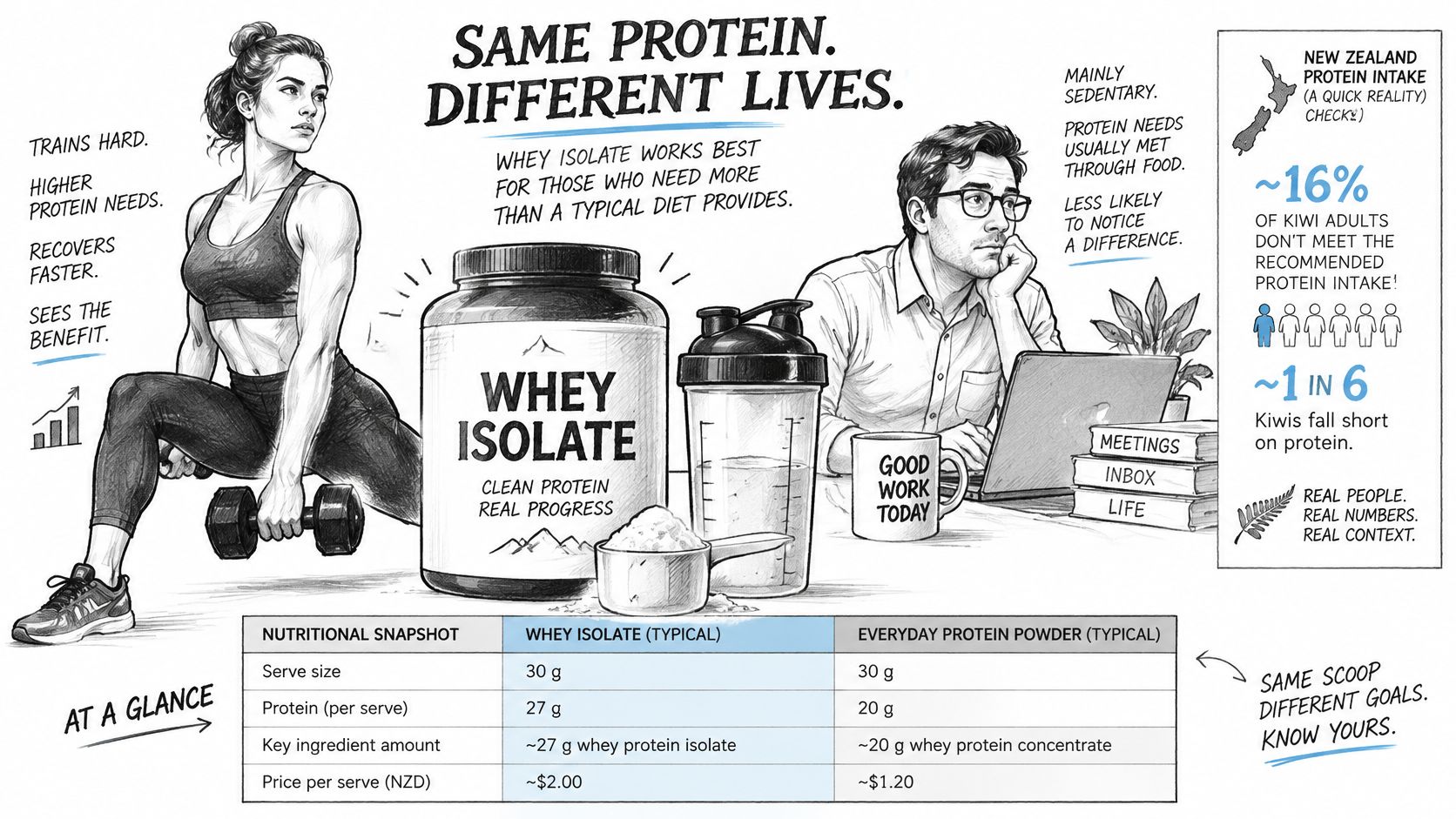
The strongest candidates have an identifiable constraint. They aren't just people who exercise; they're people whose food intake, schedule or preferred nutritional composition makes a concentrated powder useful.
This visual is a starting point for thinking about use, not a rule that active people need isolate and sedentary people don't.
Match the product to the constraint
An athlete following a calorie-controlled eating plan may value a serving that contributes protein with limited additional fat and carbohydrate. That's a composition benefit, not a claim that the powder itself causes weight loss.
Someone who struggles to eat enough may find a drink easier to fit around meals. A travelling worker or athlete may value the same product because carrying a shaker is more practical than carrying prepared food.
- Lower-lactose shoppers: Check the specific product rather than treating all isolates alike. The guide to protein powder for lactose intolerance helps frame that label comparison.
- Time-constrained shoppers: Convenience can be worth paying for when it solves a recurring problem, not just an occasional inconvenience.
- Competitive athletes: Product assurance is a separate requirement from protein density.
HPSNZ/DFSNZ advises athletes to consider whether dietary or training changes could achieve the same objective before using a supplement. That food-and-training-first approach is a useful filter before committing to a regular purchase.
Keep training separate from product selection
If your goal is to support muscle growth through training, Navilo Health's guide provides a separate resource for thinking about the training side of that goal. Don't use a protein category as a substitute for a coherent training plan.
For additional viewing alongside those considerations:
The everyday shopper who already eats enough protein and has no composition constraint has a simpler decision. There may be no worthwhile gap for isolate to fill.
How to Read a Whey Isolate Label
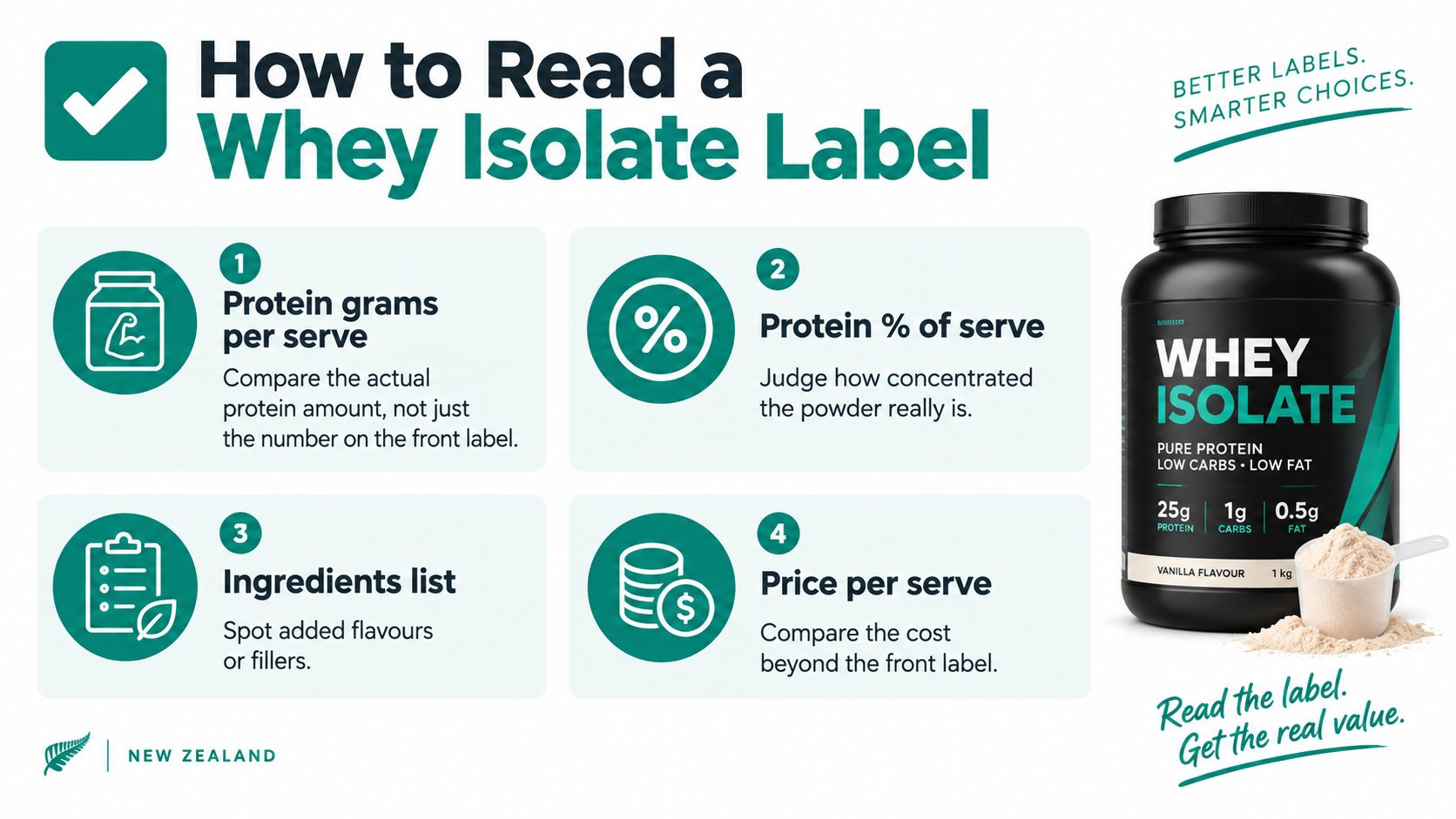
Turn the tub around before deciding whether the premium is justified. Front-of-pack language gives you a category; the nutrition panel and ingredients tell you what you're buying.
MPI states that nutrition and health claims are regulated under Standard 1.2.7 of the Australia New Zealand Food Standards Code. In its 2022 survey, 69% of dairy and dairy-product labels carrying nutrition content claims met requirements, while 81% of individual claims assessed complied, according to MPI's nutrition-claims label survey.
Use the checklist as a prompt, then compare the actual figures.
Compare the protein with the whole serving
A powder providing 25 g of protein in a 30 g serving is roughly 83% protein by weight. That worked example, together with the importance of processing and formulation, is covered in the Massey University whey-protein research context.
The calculation is protein grams divided by serving grams, multiplied by a hundred. It prevents a larger scoop from looking more concentrated because its headline protein amount is larger.
- Read ingredient order: Check whether whey protein isolate is the principal protein ingredient or part of a blend.
- Check carbohydrate and lactose separately: Don't treat the total carbohydrate figure as a precise lactose declaration.
- Compare calories: Use the serving you'll consume, including anything you add.
- Look for amino-acid disclosure: Where available, it adds information beyond the headline protein number.
The guide to protein per scoop and serving sizes is useful when products use different scoop weights.
Formulation matters after the maths
Massey research documents heat-induced denaturation, aggregation and gelation of whey proteins, with aggregation and precipitation also observed in acidic isolate beverages under heat treatment. These processing effects can change solubility, mouthfeel and sedimentation.
That doesn't mean a poorly mixed shake has lost its nutritional value. It means the word isolate doesn't guarantee a pleasant or stable finished drink.
Label check: Flavourings and sweeteners aren't automatically a problem. They become a value question when they leave you paying isolate prices for a less concentrated serving.
For tested sport, add the batch certificate to your checks. A certification claim deserves verification just as much as a protein claim.
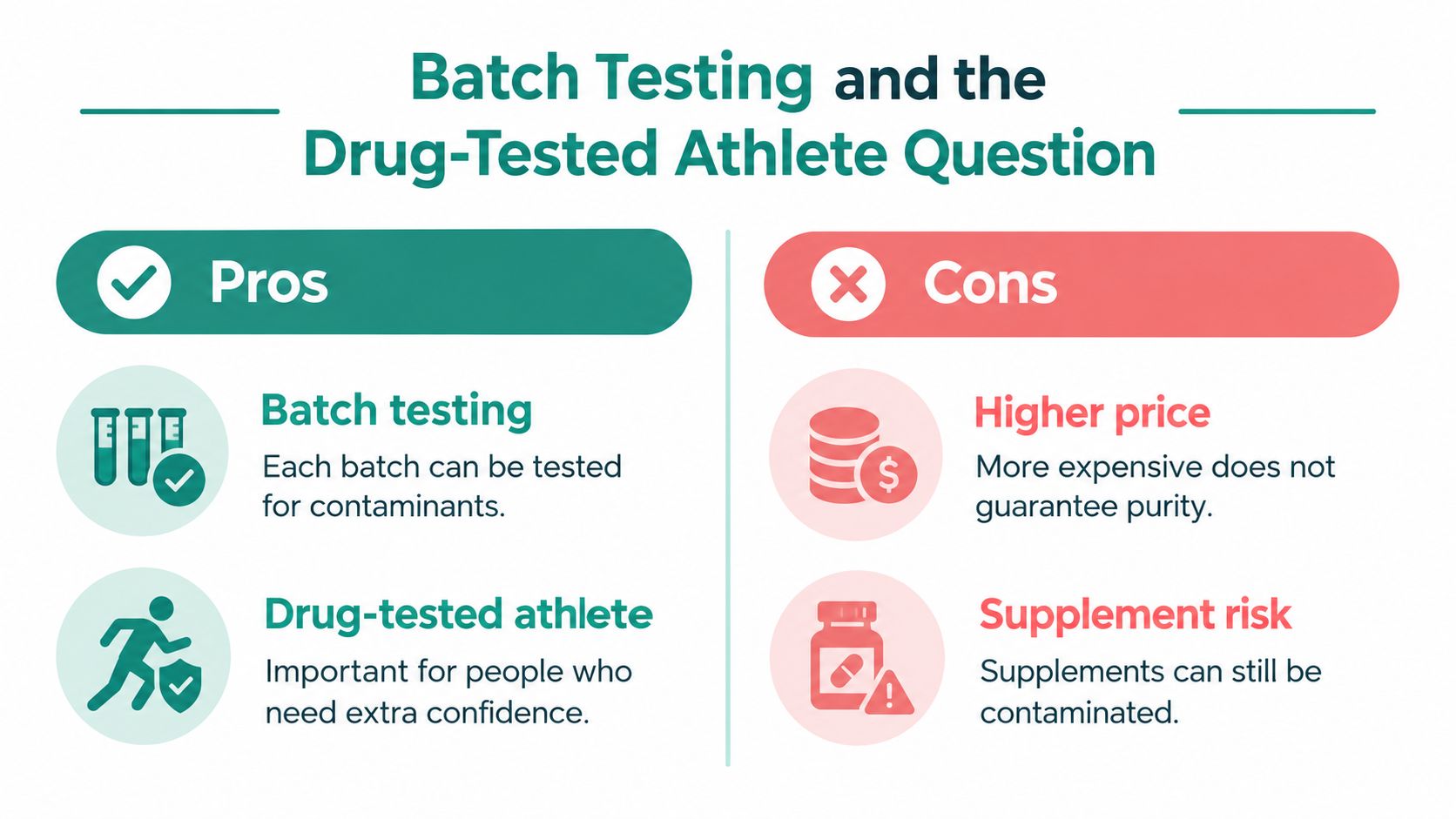
Batch Testing and the Drug-Tested Athlete Question
Paying more for isolate doesn't establish that a supplement is free from prohibited substances. Protein refinement and anti-doping assurance are different questions.
The Sport Integrity Commission explains that supplements are manufactured in factories rather than medical laboratories, and that contamination has occurred in New Zealand. It also notes that Consumer NZ found illegal drugs in six supplement products in 2022, as detailed in its supplement-risk guidance.
The balance is straightforward: testing can reduce risk, but a premium price can't remove it.
Verify the batch, not just the brand
Under strict-liability anti-doping rules, athletes remain responsible for prohibited substances found in their samples, including when contamination was accidental. Labels can be inaccurate, and no supplement is completely safe.
Independent batch testing reduces risk but doesn't eliminate it. The certificate must correspond to the exact product batch, not merely a familiar brand name or a logo elsewhere on the website.
- Match the batch identifier: Compare the identifier on the sealed product with the certificate.
- Check the certification standard: Don't assume different certification schemes make identical assurances.
- Keep supply traceable: Prefer a clear supply chain and brand-sealed packaging.
- Read the entire formula: A familiar protein ingredient doesn't establish the suitability of every added ingredient.
The explanation of how supplements are tested for banned substances provides more detail on assessing testing claims.
Local sale isn't sporting approval
New Zealand's supplement framework doesn't generally pre-approve products for safety or sporting compliance. Availability in a local shop is therefore not a substitute for checking the particular product and batch.
For a tested athlete, the buying order should reflect that distinction. Establish whether supplementation is needed, assess product assurance, then decide whether the nutritional specification suits the plan.
The isolate designation tells you about the protein ingredient. It doesn't clear a product for competition.
How to Choose Between Isolate and Concentrate
Make the decision using the amount of protein you need to purchase, rather than the amount of powder a manufacturer calls a serving. That keeps different tub sizes and scoop weights from distorting the comparison.
A Massey University study used Fonterra-supplied whey isolate in acute doses of 30 g and 70 g, corresponding to approximately 120 kcal and 280 kcal, respectively. The Massey acute-response study demonstrates controlled research use, not superior long-term muscle gains over matched protein from concentrate.
Calculate the cost of the protein
Use cost per 25 g of protein as the common comparison, rather than price per tub. The calculation is:
Current tub price ÷ total grams of protein in the tub × 25
Total protein means labelled servings multiplied by protein grams per serving. Use the current price, exact pack size and chosen flavour, because a calculation from another variant may not apply.
Make the purchase in this order
- Establish your target: Account for the protein already supplied by meals and identify the amount you still want from a supplement.
- Compare equal protein amounts: Apply the calculation to each candidate before deciding which tub looks cheaper.
- Check the constraint: Confirm that the lactose information, calories and other ingredients address your actual requirements.
- Apply the assurance check: Tested athletes should verify the batch before treating a product as a suitable option.
Concentrate is the sensible default when it fits your eating plan, is comfortable to use and costs less per gram of protein. Isolate earns the premium when its specific composition solves a problem the cheaper option doesn't.
NZ Supps provides per-serve pricing, ingredient callouts, side-by-side product comparison and Tested for Sport filtering by certification standard. Those tools support the comparison, but they don't replace reading the selected product's label.
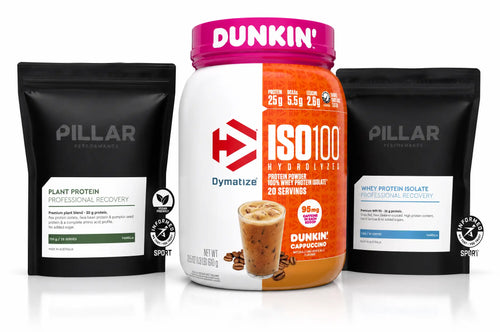
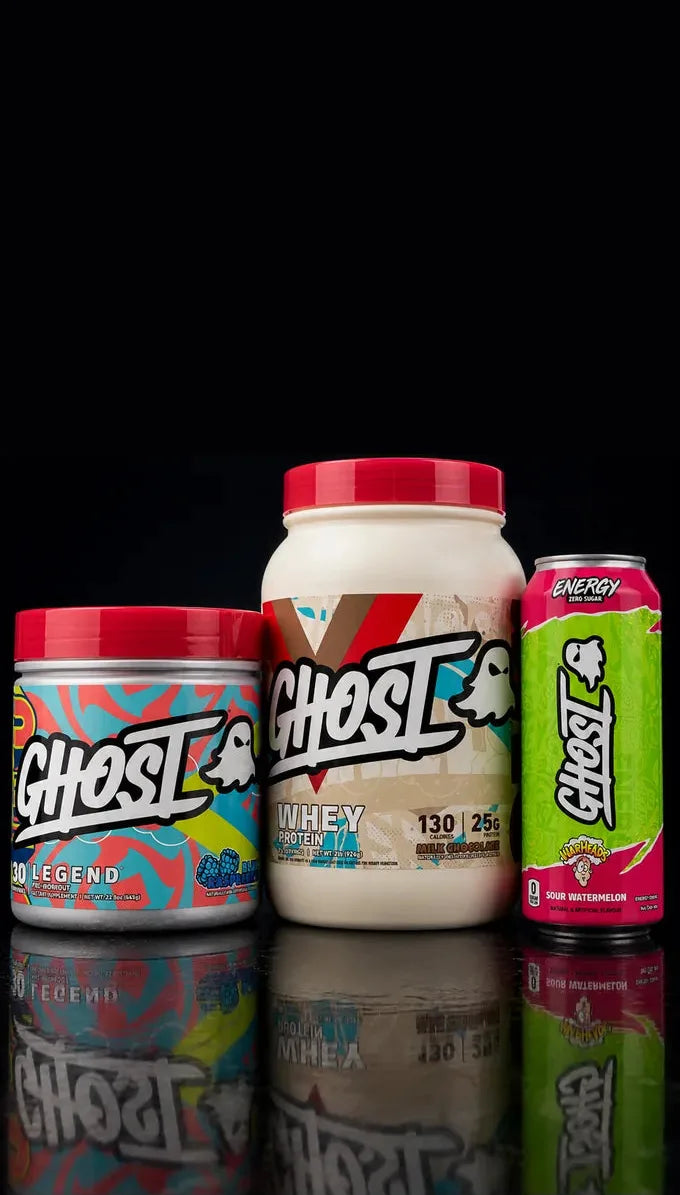
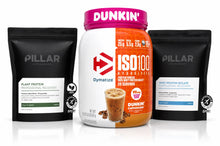
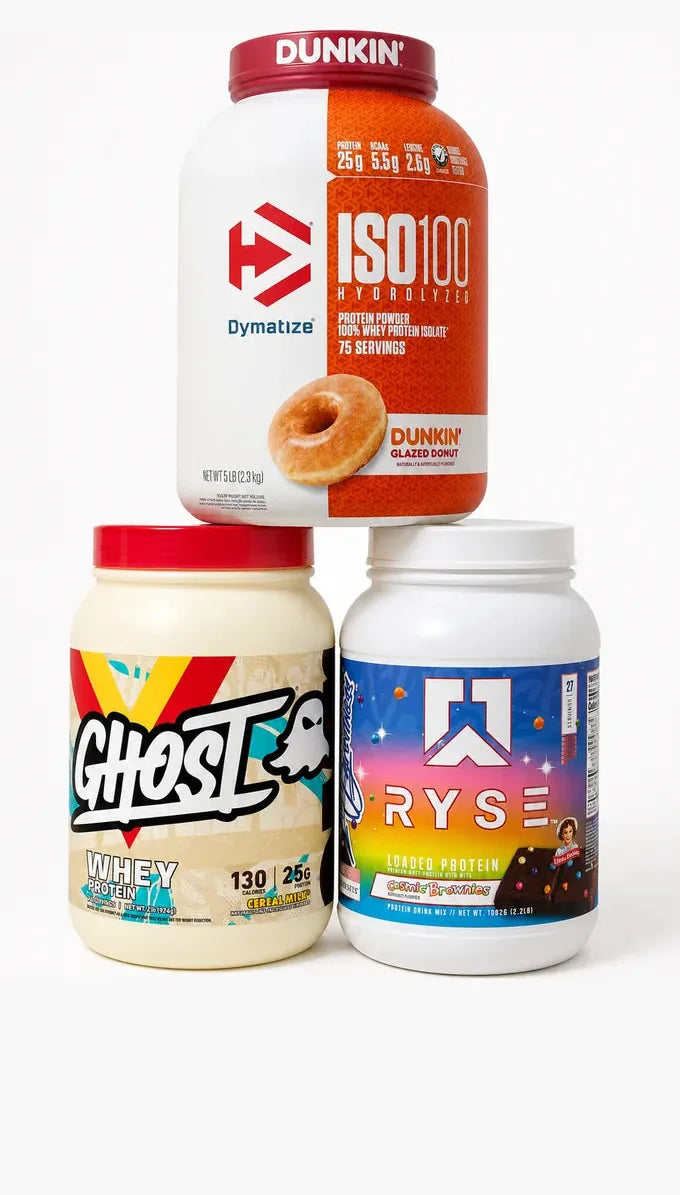
Basic Supplements Isolate, Dymatize ISO 100 and Pillar Performance Whey Protein Isolate are named comparison candidates. Current stock, prices and product-page addresses haven't been verified, so they aren't presented as in-stock recommendations.
For overseas purchases, don't assume a foreign listing provides the same regulatory context as a locally sold product. Check the seller, manufacturing information, full label and product assurance before comparing price alone.
The Verdict on Whey Isolate for NZ Shoppers
Calorie-controlled athlete: Buy for the label composition, not a weight-loss promise. Lower-lactose shopper: Verify the specific lactose information rather than relying on the category.
Drug-tested competitor: Prioritise batch verification. Everyday gym-goer already eating enough: The cheaper option, or no powder, may be smarter.
For convenience alone, choose something you'll use consistently. Compare equal amounts of protein, then check the panel and ingredients before browsing the whey protein isolate range.
Brand-sealed products, locally held inventory and label-comparison tools can make a protein purchase easier to assess. Visit NZ Supps to compare the current options against your protein needs, budget and sporting requirements. Shop all whey protein isolate.