SHOP NOW, PAY LATER















 Informed Sport
 Informed Choice
 NSF Certified for Sport
 HASTA Certified

Use knee sleeves for most training. Reserve knee wraps for planned maximal squat attempts, ideally with a coach watching your bar path. That’s the whole decision in one sentence, and it holds up whether you’re benching a home rack in the garage or peaking for a meet.
Sleeves earn their spot because of what they don’t do: they don’t change your squat mechanics. A 5mm or 7mm neoprene sleeve adds compression and warmth around the joint, which helps with proprioception and comfort across high-volume sessions, but it won’t launch you out of the hole. Wraps do the opposite on purpose. Wrapped tight enough, they store elastic energy on the way down and release it explosively on the way up, functioning almost like a second set of quads. That’s a real mechanical assist, not a placebo, and it’s exactly why they’re treated differently by every serious strength coach and every powerlifting federation.
The catch is that the assist comes with strings attached: mobility restriction, a setup that eats into your rest between attempts, and a real risk of leaning on the wrap instead of your own strength. If you’ve got an old knee injury, a competition on the calendar, or you’re just not sure which category you fall into, the how to choose section below walks through the exact questions to ask before you buy either one.
- Sleeves: daily training, joint support, high-volume work, most lifters
- Wraps: maximal singles and doubles, competition peaking, experienced lifters with coaching
- Both: legal in most raw divisions, but always confirm with your federation before a meet
Key Takeaways
Knee sleeves suit almost all regular training because they add joint warmth and compression without changing squat mechanics, while knee wraps belong only in planned maximal attempts because they mechanically assist the lift.
| Point | Details |
|---|---|
| Default to sleeves | Wear sleeves for regular training since they support the joint without altering your squat mechanics. |
| Save wraps for peaking | Bring wraps out only for maximal singles or doubles, ideally with a coach watching. |
| Check federation rules first | Confirm sleeve thickness and wrap length limits with your competition federation before meet day. |
| Watch for red flags | Numbness, sharp pain, or feeling dependent on the gear means stop and see a physiotherapist. |
| Rotate by training phase | Keep most training volume unwrapped, then introduce wraps in a short peaking block before a max test. |
Table of Contents
- Knee Sleeves vs Knee Wraps: What Sleeves Actually Do
- What Knee Wraps Are and How They Change Your Squat
- Knee Sleeves vs Wraps: A Side-by-Side Comparison
- How to Choose the Right Knee Support for Your Training
- How to Put On and Care for Sleeves and Wraps
- Why Experienced Lifters Own Both
- Get Your Training Gear Sorted at Nzsupps
- Knee Sleeves vs Wraps: Which to Use for Training and Max Squats
- Frequently Asked Questions
- Sources
Knee Sleeves vs Knee Wraps: What Sleeves Actually Do
A knee sleeve is a compressive neoprene tube that slides over the joint and stays there for the whole set, sometimes the whole session. Thickness is the main variable that matters: 3mm sleeves prioritize mobility and are common in Olympic lifting, 5mm hits a middle ground favored by CrossFit athletes, and 7mm delivers the most compression and warmth at some cost to knee flexion. Most general lifters land on 5mm or 7mm.
The physiological case for sleeves is straightforward. Warming a joint improves synovial fluid viscosity and reduces stiffness, according to Johns Hopkins Medicine, which lines up with why lifters report knees feeling looser and more stable once a sleeve is on. Cleveland Clinic notes that compression can improve stability and help manage swelling, though it’s not a fix for structural damage. A sleeve helps you feel and perform better; it doesn’t repair cartilage.
Here’s the trade-off:
- Benefits: consistent compression, joint warmth, proprioceptive feedback (you feel your knee position better under load), fast to put on, tolerable for sets of 10, 15, or 20 reps.
- Drawbacks: minimal elastic assistance, sizing varies enough between brands that you should check the manufacturer’s chart rather than guess, and some materials trap heat to the point of discomfort in long sessions.
Sleeves make sense for most lifters doing regular squat volume, anyone easing back from minor knee irritation, and CrossFit or Olympic lifters who need support without losing range of motion.
Pro Tip: Buy sleeves sized to knee circumference, not to your shirt size. A sleeve that’s too loose gives you almost none of the compression benefit, and one sized for aesthetics over fit tends to roll during heavy sets.
What Knee Wraps Are and How They Change Your Squat
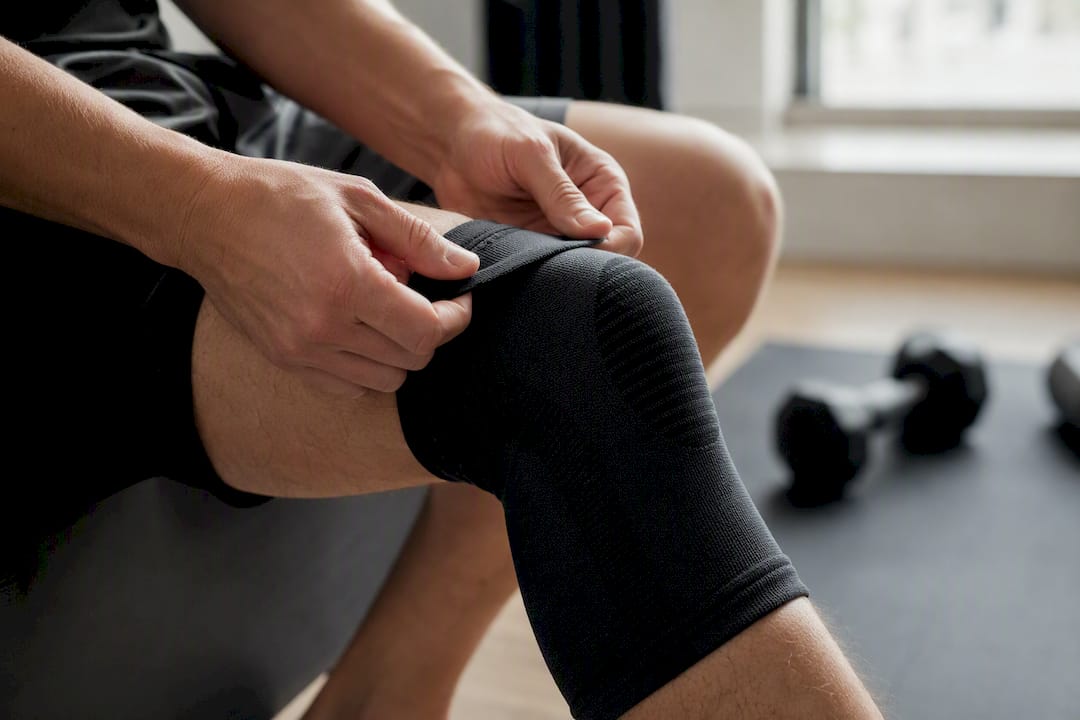
A knee wrap is a long strip of elastic canvas, typically 2 meters for training and up to 2.5 meters for competition, wound tightly around the knee before a heavy attempt. Unlike a sleeve, a wrap isn’t neutral. It’s an active mechanical tool.
A peer-reviewed study on knee wraps found measurable effects on squat mechanics and performance, supporting what lifters have known anecdotally for decades: a tightly wound wrap stores elastic energy as the knee flexes on the descent, then releases that energy to help drive the bar up out of the bottom. Gear Patrol’s comparison puts it plainly, wraps can add meaningful kilograms to a competition total in a way sleeves simply cannot.
That carryover is the whole appeal, and also the whole risk.
- Benefits: significant assistance out of the hole on maximal attempts, adjustable tightness so experienced lifters can dial in exactly how much rebound they want, legal in most powerlifting competition raw divisions with wraps.
- Drawbacks: wrapping properly takes real time between attempts, often a minute or more per leg with a partner’s help; mobility is noticeably restricted once wrapped; and Starting Strength warns that wraps can function almost like an exoskeleton, meaning lifters who wrap every session risk masking technique faults instead of fixing them.
Wraps fit competitive powerlifters, lifters in a peaking block building toward a maximal single or double, and anyone using them under the eye of an experienced coach who can spot when the wrap is compensating for bad positioning rather than adding to good positioning.
Pro Tip: Never let a training partner wrap you tighter than you’d wrap yourself for a competition attempt. If it hurts to stand still, it’s too tight, and you’re trading performance for tissue stress.
Knee Sleeves vs Wraps: A Side-by-Side Comparison
| Dimension | Knee Sleeves | Knee Wraps |
|---|---|---|
| Compression/support level | Moderate, constant | High, but load-dependent on wrap tension |
| Mechanical assistance (rebound) | Minimal | Significant elastic rebound on ascent |
| Mobility impact | Slight restriction | Noticeable restriction while wrapped |
| Setup time / ease of use | Seconds, pull on and go | minute or more per leg, often needs a partner |
| Typical use case / best for | Daily training, high-volume sets, joint comfort | Maximal singles, doubles, competition peaking |
| Competition legality/notes | Generally allowed in raw divisions | Allowed in some raw/wrapped divisions; confirm with your federation |
The numbers behind that rebound aren’t guesswork. The PubMed study on knee wraps documented real changes to squat biomechanics, not just a subjective feeling of being “boosted.” That’s a meaningful data point in a topic where a lot of advice is practitioner opinion rather than measured effect.
Still, worth being honest about the limits of the evidence. Most of what’s known about wraps and performance comes from a small number of biomechanics studies and years of practitioner reporting from federations and coaches, not a large body of controlled trials. The practical guidance from Starting Strength and Gear Patrol reflects decades of coaching consensus more than clinical rigor, and that consensus is consistent enough to trust for training decisions, even without a stack of randomized trials behind it.
How to Choose the Right Knee Support for Your Training
Run through this before you swipe your card on either one:
- What’s your training goal right now? Building volume and general strength points to sleeves. Peaking for a specific meet or a one-rep max attempt points to wraps.
- Do you have any knee injury history? If you’ve had pain, swelling, or a diagnosed issue, sleeves are the safer default, and Johns Hopkins’ overview of knee pain is worth reading before you add any external support to a joint that’s already struggling.
- Are you competing? If yes, check your federation’s equipment list. Sleeve thickness limits and wrap length limits vary between raw and classic raw divisions, and getting red-lighted at weigh-ins over illegal gear is an avoidable disaster.
- Do you have a coach or experienced training partner? Wraps are far safer and more effective with a second set of eyes checking your depth and bar path. Wrapping yourself for a max attempt with no feedback is how technique faults get buried instead of fixed.
- What’s your budget? Quality sleeves run cheaper and last longer per session than a good pair of training and competition wraps combined.
Sizing matters more than most lifters expect. For sleeves, measure knee circumference and check the specific brand’s chart. A 5mm sleeve from one manufacturer can fit completely differently from another brand’s 5mm sleeve. For wraps, decide between a shorter training wrap for daily practice sessions and a longer, stiffer competition wrap reserved for meet day or planned peaking blocks.
A few red flags mean stop and reassess, regardless of which gear you’re wearing:
- Numbness or tingling during or after a set
- Sharp, localized pain that wasn’t there before you added support
- A creeping sense that you can’t hit your numbers without the gear on
- Skin irritation, bruising, or marks that don’t fade within a day
Any of those warrants a conversation with a physiotherapist, not a tighter wrap. The clear recommendation: default to sleeves, and only bring wraps into the picture for planned maximal attempts, ideally under supervision from someone who’s coached wrapped lifting before.
How to Put On and Care for Sleeves and Wraps
For sleeves, roll the sleeve down like a sock before pulling it up over the knee, that prevents the bunching that causes hot spots during a set. Size down slightly if you’re between measurements on a brand’s chart; a slightly snug sleeve holds its compression better over a long session than one that’s borderline loose. Most lifters leave sleeves on for the entire squat or leg day, pulling them off between sessions rather than between sets.
- Roll the sleeve into a doughnut shape, step in, and unroll it upward over the kneecap.
- Check that the sleeve sits centered on the joint, not riding high on the thigh or low on the shin.
- Leave it on for your full working sets; there’s no benefit to removing and reapplying between sets.
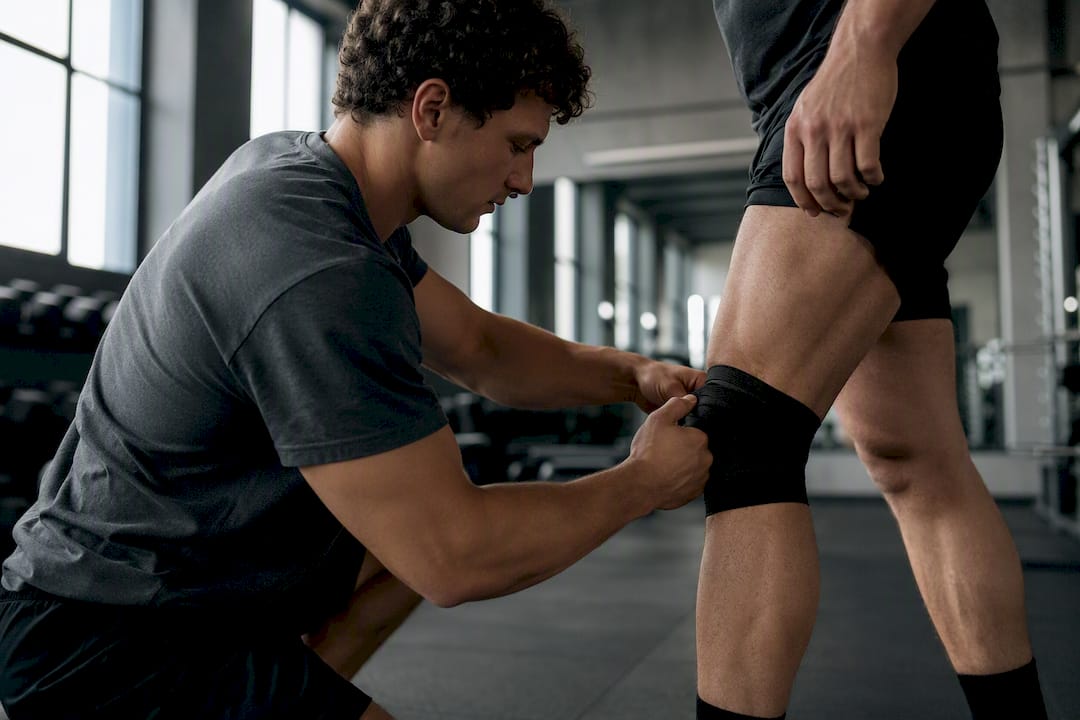
Wraps take more technique. Start below the kneecap, wrap in a consistent spiral pattern, and finish just above the knee, tightening progressively as you go rather than yanking hard on the first pass. Many lifters prefer a partner-wrap for competition attempts because it’s faster and more consistent than wrapping yourself under pressure. Re-wrap fresh before every maximal attempt rather than reusing the same wrap job from your last set.
Care is simple for both: hand wash neoprene sleeves and let them air dry away from direct heat, which breaks down the material faster than normal wear. Inspect wraps regularly for fraying elastic, since a wrap that’s lost its snap won’t give you the rebound you’re expecting when it matters most. Watch your skin for chafing or irritation and stop immediately if you feel sharp pain or numbness that doesn’t resolve when you loosen the gear. Neither sleeves nor wraps are a substitute for addressing an actual injury.
Why Experienced Lifters Own Both
Most lifters who’ve been training seriously for a few years end up owning both, and the smart ones rotate them by training phase rather than picking a permanent side. A sensible split looks like sleeves for the bulk of your training year, with wraps introduced only during a focused peaking block ahead of a meet or a planned max attempt.
- Sleeves handle the volume: squat sessions, accessory work, anything where joint comfort and consistent support matter more than a rebound effect.
- Wraps come out for the last few weeks before a max test, used sparingly enough that you’re not leaning on them for your everyday numbers.
- A useful benchmark from experienced coaching circles: keep at least 70% of your training volume unwrapped, so your raw strength keeps developing alongside your wrapped performance, according to guidance from Genghis Fitness on phased use.
Whichever gear you’re wearing, what goes into your training matters just as much as what goes on your knees. A solid pre-workout and consistent creatine use support the strength you’re trying to protect with any knee gear in the first place.
[Editor’s note: author background and credentials to be added.]
Get Your Training Gear Sorted at Nzsupps
Knee sleeves and wraps solve mechanical problems. What fuels the sessions where you actually use them is a separate conversation, and it’s one Nzsupps has spent years helping New Zealand lifters figure out. Whether you’re grinding through a high-volume block in sleeves or gearing up for a wrapped max attempt, recovery and performance nutrition still do the heavy lifting between sessions.
A batch-tested beef isolate protein supports the muscle recovery your knees depend on indirectly, since stronger surrounding muscle takes pressure off the joint itself. If you’re peaking toward a meet, an NSF-certified pre-workout gives you a clean energy option that won’t complicate testing requirements. Browse the full range at Nzsupps and build a setup that supports your training the way your knee gear supports your squat.
Knee Sleeves vs Wraps: Which to Use for Training and Max Squats
The research on this topic supports a conclusion most gym-floor debates skip right past: this was never a competition between two products, it’s a mismatch of purposes. Sleeves are a training tool. Wraps are a performance tool for a specific, narrow window. Treating them as interchangeable, or worse, treating wraps as the “advanced” version of sleeves you graduate into, misreads what each one is built to do.
The conventional advice on this topic tends to oversell wraps to intermediate lifters chasing bigger numbers before their technique can support the load a wrap will help them move. That’s backward. Wraps amplify whatever pattern is already there, good or bad, according to Starting Strength’s warning about their exoskeletal effect.
If you take one thing from this article, prioritize building unwrapped strength first. Earn the right to wrap by having a squat worth amplifying.
Frequently Asked Questions
Can knee sleeves replace knee wraps for competition squatting?
Not for maximal attempts. Sleeves provide compression and warmth but don’t deliver the elastic rebound that wraps produce on a heavy single, according to the PubMed research on wrap mechanics.
Are knee wraps allowed in raw powerlifting divisions?
It depends on the federation. Some raw divisions permit wraps, others restrict them to classic raw or single-ply categories, so check your specific federation’s rulebook before a meet.
How tight should knee wraps be?
Tight enough to feel firm support and some rebound on the descent, but not so tight that standing still is painful or your foot goes numb. If it hurts before you even touch the bar, it’s too tight.
Can I wear knee sleeves every day?
Yes, sleeves are designed for regular use across training sessions. Just clean them between uses and watch for skin irritation if you’re wearing them for long stretches.
Do knee sleeves help with existing knee pain?
Sleeves can improve comfort and stability through compression and warmth, but they’re not a treatment for structural knee problems. Persistent pain deserves an evaluation, not just a tighter sleeve, per Johns Hopkins’ guidance on knee pain.
Sources
- PubMed article on knee wraps (2010)
- Cleveland Clinic, Compression therapy
- Gear Patrol, Knee sleeves vs knee wraps (2023)
- Starting Strength, Knee wraps and knee sleeves (2019)
- Johns Hopkins Medicine, Ice packs vs warm compresses