SHOP NOW, PAY LATER











 Informed Sport
 Informed Choice
 NSF Certified for Sport
 HASTA Certified

Plant based protein in NZ mostly means pea, soy, rice, hemp or a blend, and a single source powder isn't automatically complete. Soy or a well matched pea and rice blend comes closest, so your pick should turn on protein per serve, amino acid profile, allergens and cost per 10 g of protein. Plant sources aren't niche here either. The Ministry for Primary Industries and Plant and Food Research report found plant based proteins contributed at least 40% of adults' average daily protein intake in the 2008 to 2009 New Zealand Adult Nutrition Survey. That's the starting point for choosing vegan protein powder NZ sensibly. You're adding to a pattern that already exists, not replacing food with powder.
Table of Contents
- How Much Plant Protein NZ Adults Already Eat
- Pea, Soy, Rice and Blend Powders Compared Per Serve
- Why Some Plant Proteins Are Complete and Others Are Not
- Digestion, Allergens and Label Checks Before You Buy
- How to Work Out Cost Per Serve and Per 10 g of Protein
- Matching Plant Protein to Muscle, Meals and Older Adults
- Choose Your Plant Protein and Check the Label First
How Much Plant Protein NZ Adults Already Eat
Legumes offer a familiar way to see how often plant protein appears in New Zealand meals: lentils in soup, chickpeas in hummus, kidney beans in chilli, or baked beans on toast. The Ministry of Health dietary habits report found that 52.0% of New Zealand adults ate legumes at least once a week. The remaining 48.0% did not reach that weekly frequency.
The report also found that 55.3% of Pacific adults and 54.0% of Māori adults ate few or no legumes. These figures describe eating frequency, not how many grams of protein people get. Legumes include lentils, chickpeas, kidney beans, baked beans, hummus and soups containing legumes. They are described in dietary guidelines as fibre-rich, nutrient-dense protein options. The pattern matters: a meal can include plant protein without relying on a powder, but legumes do not appear regularly in everyone's week.
What that gap means for powders
A powder can fill a practical gap when work, training, travel or appetite makes a legume-based meal unlikely. Treat it as one part of the day's intake, not a substitute for a varied mix of beans, lentils, tofu, wholegrains, nuts and seeds across the week. To judge how much a serve adds, first set a daily target, then compare it with meals using this guide to how much protein per day in NZ.
Judge a powder by what it adds to your day, including how its protein fits across meals, rather than by whether the tub says plant based.
Protein totals are only one part of that comparison. How protein is spread through the day and the amino acid quality in each meal also shape what a powder contributes.
Pea, Soy, Rice and Blend Powders Compared Per Serve
Start with a like for like serve, then check the actual label because protein percentage, flavouring and added ingredients change the grams you get. The table uses a standard 30 g serve so you can see the trade offs without brand marketing getting in the way.
| Protein type | Serve size | Amino acid note | Main trade off |
|---|---|---|---|
| Pea isolate | 30 g | Good lysine, lower methionine | Earthy taste in some brands |
| Soy isolate | 30 g | Complete essential amino acid profile | Soy allergy and taste preference |
| Rice protein | 30 g | Lower lysine, good methionine | Often grittier texture |
| Hemp protein | 30 g | All essentials present in modest amounts | Lowest protein per serve |
| Pea and rice blend | 30 g | Amino acids complement each other | Longer ingredient list |
Pea isolate
Pea isolate is the workhorse you'll see most often. It's usually mild enough in flavoured versions, blends well into smoothies and oats, and forms the base of many mixed plant powders. Its gap is methionine, so it's stronger as part of a varied day than as your only protein source meal after meal.
Soy isolate
Soy isolate is the most common single source option with a complete essential amino acid profile. That makes label comparison simpler, since you aren't relying on another powder to fill a gap. The deciding factors are usually soy allergy, taste, and whether you already eat a lot of soy foods such as tofu, tempeh or soy milk.
Rice protein
Rice protein is often grittier than pea or soy, especially in water. It's lower in lysine but provides methionine, which is why brands pair it with pea rather than selling it alone for everyday use. In a smoothie with banana or berries, texture is less noticeable than in a plain shaker.
Hemp protein
Hemp contains all essential amino acids, but in modest amounts, and it delivers much less protein per serve than an isolate. You also get more fibre and fat in the scoop. That can suit a smoothie built as a small meal, but it's a poor swap if you're comparing protein grams alone.
Pea and rice blends
A pea and rice blend is designed so each source covers the other's weaker amino acid. You'll often see a longer ingredient list because flavour, sweeteners and gums are added to smooth out taste and texture. Read protein per serve and protein per 100 g before assuming a blend is stronger than a single source isolate. Any values you see in general guides are approximate, and the label in front of you is the final authority.
Why Some Plant Proteins Are Complete and Others Are Not
Food needs to supply nine essential amino acids that the body cannot make: histidine, isoleucine, leucine, lysine, methionine, phenylalanine, threonine, tryptophan and valine. Total protein grams show how much protein is present, but not whether a food provides each amino acid in useful amounts.
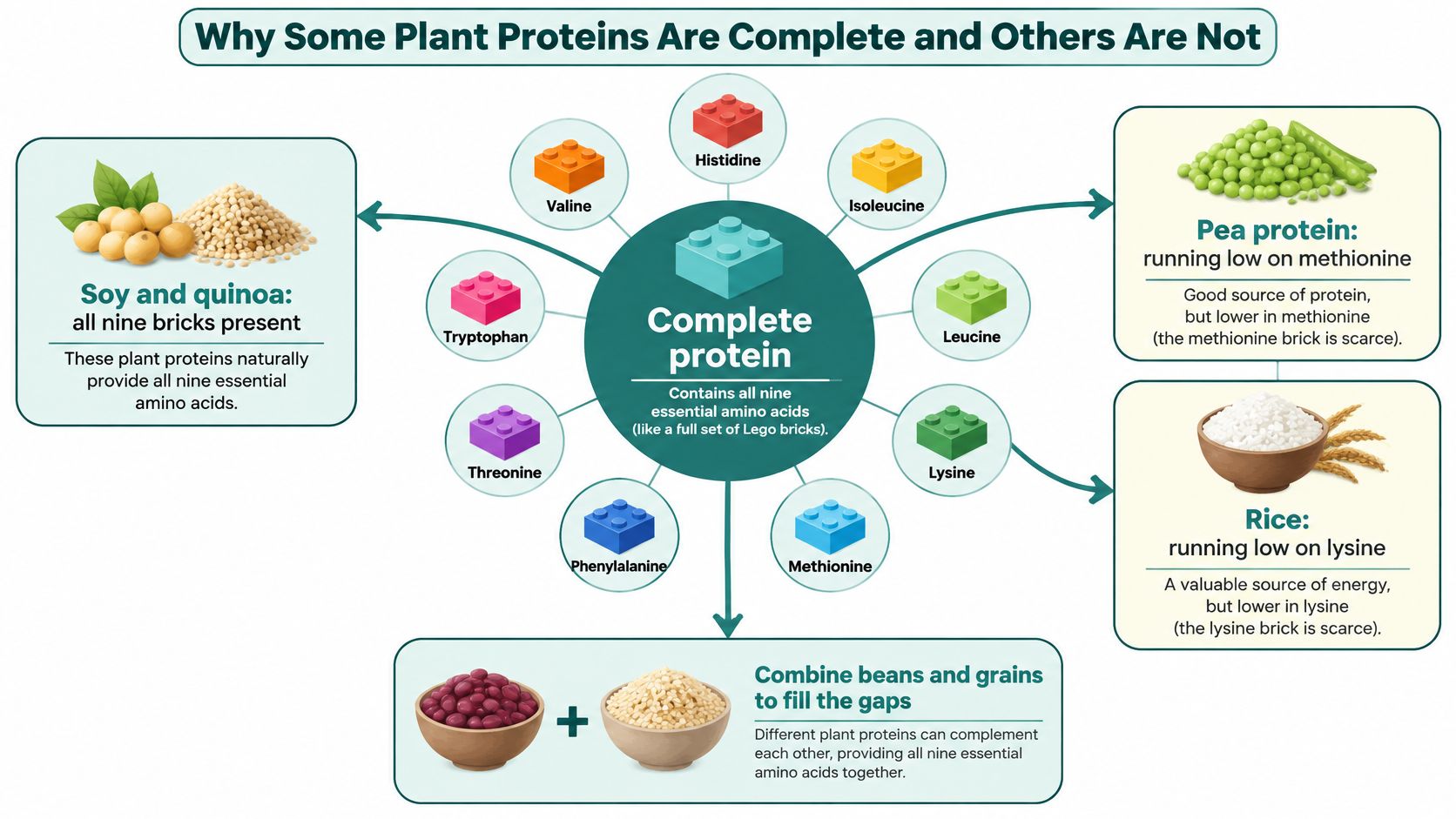
Amino acids work like different Lego brick shapes. If one type runs short, a meal may provide plenty of other types but still have a less balanced mix. A complete protein supplies all nine in useful amounts; an incomplete source is relatively low in at least one.
Leucine and lysine are the usual pinch points
Leucine is involved in signalling muscle protein building after a meal. Lysine is often lower in grain-based proteins, while legumes tend to provide more. So, a front-of-pack protein claim is only part of the picture: variety across foods and the amount eaten at a meal also matter.
Soy provides all nine essential amino acids in one source. Pea is higher in lysine and lower in methionine, while rice has the reverse pattern. Blending them can balance these differences. If a label gives an amino acid profile, compare leucine and lysine per serve, rather than trying to infer quality from the total protein figure alone.
This short video explains the same idea in plain terms.
Completeness across the day
A meal does not have to supply a perfect amino acid mix on its own. Health New Zealand protein guidance recommends at least two daily servings of legumes, nuts and seeds when plant foods supplement other protein sources, and at least three when protein comes exclusively from plants. A serving is 1 cup of cooked or canned beans, split peas or lentils, 170 g tofu, or 30 g nuts or seeds.
Use these foods to build a varied day, then consider where a powder fits, such as in a breakfast smoothie or after training. Protein-quality scores also account for how amino acids are digested and used. The guide to PDCAAS compared with DIAAS explains the difference. For a practical comparison, consider amino acid quality per meal alongside total protein across the day, rather than judging a powder by its scoop alone.
Digestion, Allergens and Label Checks Before You Buy
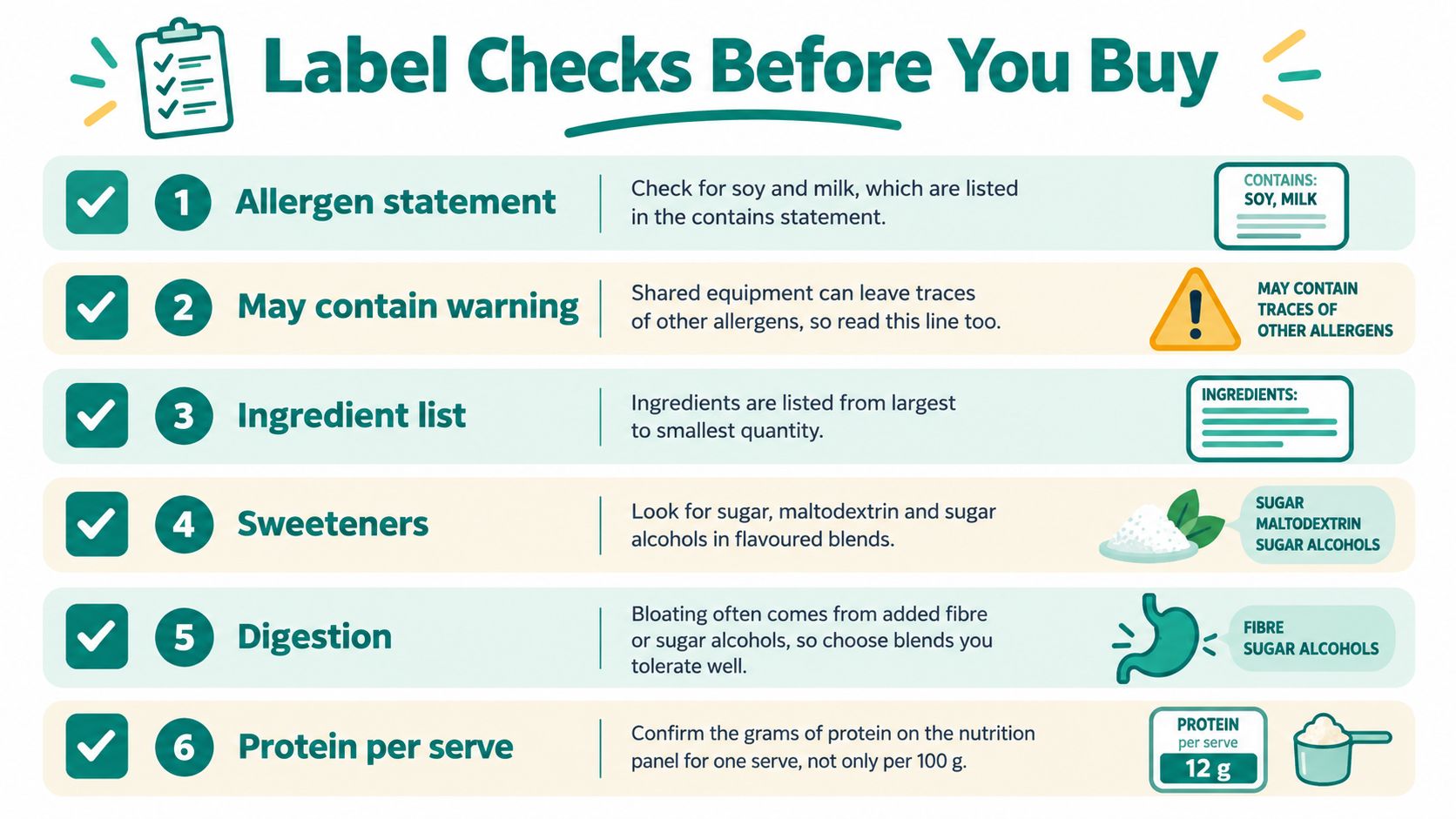
Read the back of the pack in a set order and you'll avoid most buying mistakes. Serve size comes early because every other number depends on it.
- Allergen statement: Check for soy and milk in the contains statement before you look at flavour.
- May contain warning: Shared equipment can leave traces, so read this line if you manage an allergy at home.
- Ingredient list: Look for sweeteners, gums, flavourings and added fibre, listed from largest to smallest quantity.
- Serve size: Confirm the scoop weight, since one brand's serve can be much larger than another's.
- Protein per serve: Use the nutrition panel figure, not a rounded claim on the front.
This checklist puts those checks in the order you'd use in store or online.
The NZ panel rule that makes comparison fair
The Ministry for Primary Industries labelling guidance says a packaged food sold at retail must use a Nutrition Information Panel showing energy, protein, fat, saturated fat, carbohydrate, sugars and sodium, with amounts per serving and per 100 g or 100 ml. Per serve figures tell you what one scoop gives you. Per 100 g figures let you compare formulas fairly when scoop sizes differ. MPI also says a nutrition content or health claim must be supportable and the relevant nutrition information must be included in the panel.
Digestion in plain terms
Pea, soy and hemp don't feel the same. Hemp brings more fibre, flavoured blends may include sugar alcohols or gums, and a large serve on an empty stomach can sit heavily even when the ingredients suit you. Start with half a serve in a smoothie, see how your stomach responds over a few days, then build up if it's comfortable.
Practical rule: If a powder upsets you, change the serve size and timing before you blame the protein source itself.
A powder also doesn't cover the wider nutrient picture by default. New Zealand plant based eating guidance flags protein, iron and zinc for attention, calcium when dairy is excluded, and vitamin B12 when all animal products are avoided. Check whether your meals, fortified foods or other products cover those gaps rather than assuming a protein tub does.
How to Work Out Cost Per Serve and Per 10 g of Protein
Price per tub tells you very little. You need two numbers, cost per serve for your budget and cost per 10 g of protein for fair comparison between brands.
This flow sets out the maths in four quick moves.
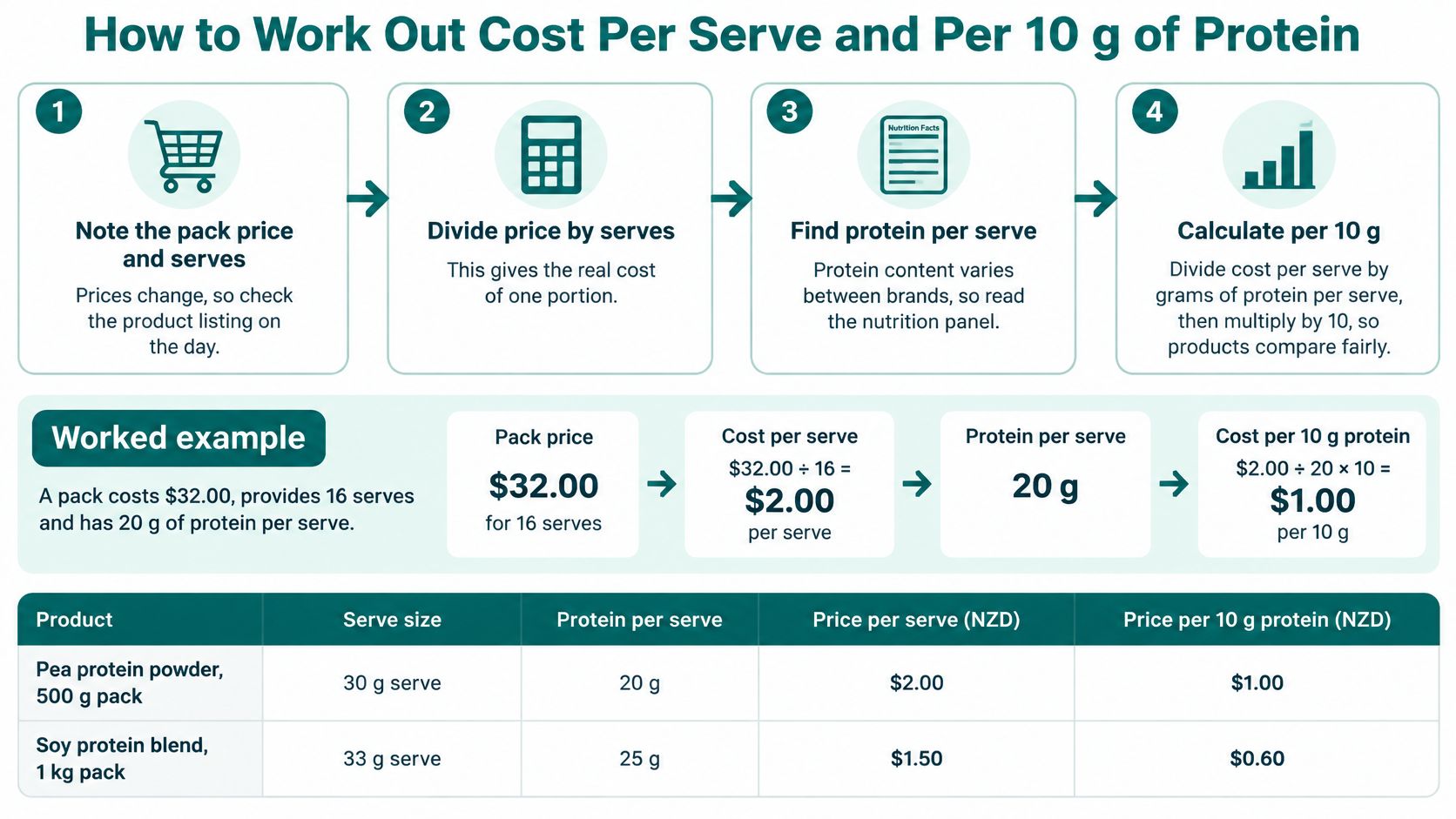
- Note the pack price and number of serves from the product listing, because prices and pack sizes change and you should check on the day.
- Divide price by serves to get cost per serve, which is what you'll really spend each time you use it.
- Read protein per serve from the Nutrition Information Panel, not from the front of the pack, because front claims can be rounded.
- Divide cost per serve by protein per serve, then multiply by 10. That gives cost per 10 g of protein, so a 25 g scoop and a 35 g scoop compare fairly.
- Check protein percentage per 100 g to spot formulas diluted by flavouring, sugar or fillers. A high per serve figure can mean just a bigger scoop.
- Use raw ingredient data only as a reference. Extraction, heating, blending and flavouring can shift the finished powder away from the base food.
A worked example
Say a tub costs $60 and gives 30 serves. That's $2.00 per serve. If the panel shows 24 g protein per serve, divide $2.00 by 24 and multiply by 10, giving about $0.83 per 10 g of protein. A cheaper tub with less protein per scoop can cost more by this measure, and a larger serve can flip the answer again.
For a New Zealand reference point, the New Zealand Food Composition Database FOODfiles 2024 release covers 2,857 foods and reports 87 components in its standard dataset, with amino acids reported as mg per 100 g of food, g per 100 g, and mg per g of total nitrogen. That's useful for checking a raw ingredient such as soy or peas. It doesn't replace the finished product label, because your powder's serve size and added ingredients set the final numbers.
Cheapest per serve and cheapest per 10 g of protein are often two different products.
Run the calculation for your top two options before you buy. It takes under a minute and removes most of the guesswork from Plant Based Protein NZ price comparisons.
Matching Plant Protein to Muscle, Meals and Older Adults
A daily protein total can look adequate while each meal contributes only a little. In a 2025 observational study of NZ vegans in PLOS One, average protein intake per eating occasion was 11.1 g, and 93.5% of participants ate less than 20 g on an occasion. The 20 g figure is a research reference often discussed in relation to muscle protein stimulation, not a personal target. Think of daily intake as a series of meal-sized contributions: spreading protein across breakfast, lunch, a training snack and dinner can matter as much as the total.
| Use case | What to check on the label | Practical pattern |
|---|---|---|
| Strength training and muscle | Protein per serve and amino acid disclosure | One serve after training, with legumes, tofu or soy at other meals |
| Meal replacement | Energy, fibre and protein per serve against the rest of the meal | Powder with fruit, oats and a fat source, rather than relying on shakes all day |
| Weight management | Energy per serve and added sugar | Count the serve in the daily energy total and keep whole foods in the pattern |
| Vegan day spread | Protein per serve at each meal | Spread protein across breakfast, lunch, a training snack and dinner; treat 20 g per occasion as a research reference only |
| Older adults and soft meals | Sodium, fibre per serve and texture of the mix | Choose a texture that works in smoothies or soft meals, alongside legumes and tofu |
A shake is still part of the day's food intake. If energy intake is part of your planning, Trim's evidence-based protein guide discusses placing protein serves within a daily total. Use the label to see how a serve fits alongside meals, rather than counting it as an addition with no energy contribution.
Older New Zealanders need a different lens
For older adults, a protein choice has to work at the table, not just on paper. Soft, affordable foods such as lentil soup, tofu, hummus or a smoothie may be easier to manage than a bodybuilding-style shake. Appetite, chewing, sodium, fibre tolerance and medication questions can all affect what suits someone. Discuss individual medical or dietary concerns with a GP or dietitian.
The guide to protein powder for older adults in NZ covers texture and serve choices. Compare the label's protein and sodium figures with the rest of the meal, and consider whether the powder's texture is comfortable to drink. Meal by meal, the aim is a pattern that provides protein in a form the person can manage, with amino acid quality and the rest of the meal in view.
Choose Your Plant Protein and Check the Label First
Choose a powder by checking how its protein fits your meals, how its label supports comparison, and what it costs per 10 g of protein. Daily grams are only part of the picture: compare the protein and amino acid quality you can get in a meal, then consider how the rest of your day is spread out. Skip options whose serve size, protein amount or allergen information is unclear.
Your four-step decision
- Pick your goal, such as training, topping up a meal or making a soft breakfast.
- Check allergen and ingredient fit on the contains statement, may-contain line and sweetener list.
- Compare cost per 10 g of protein using the pack price, listed serves and protein per serve.
- Shortlist two or three options, then judge them by taste, texture and how easily they fit the meals you eat day to day.
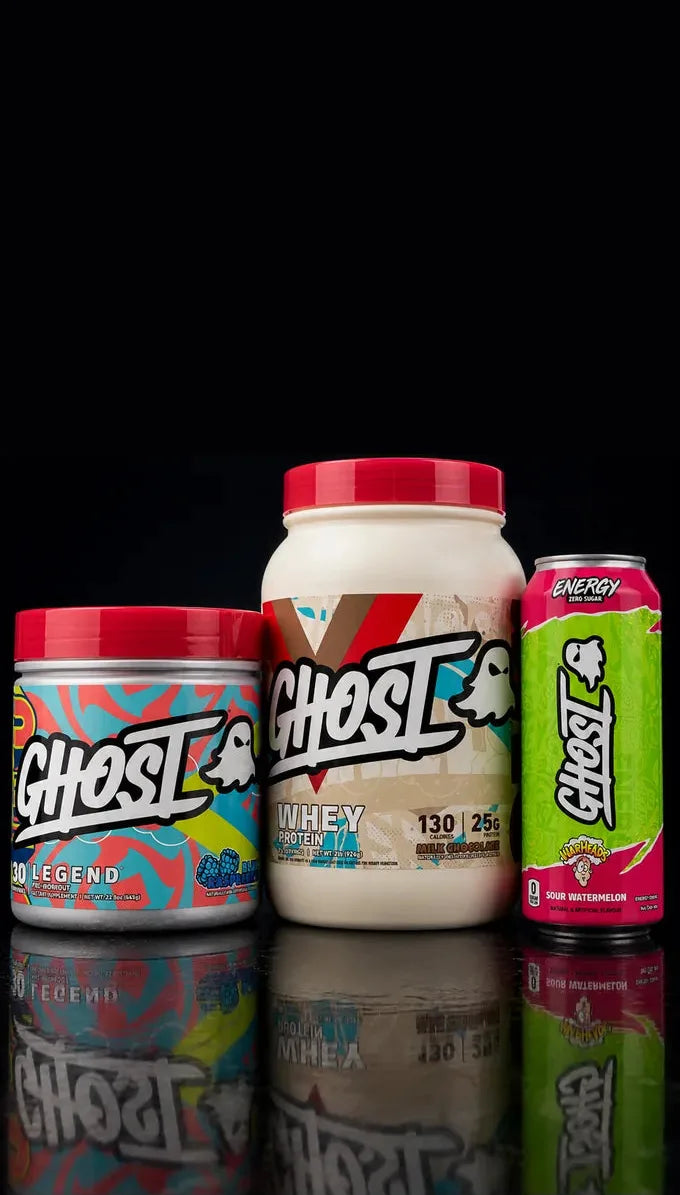
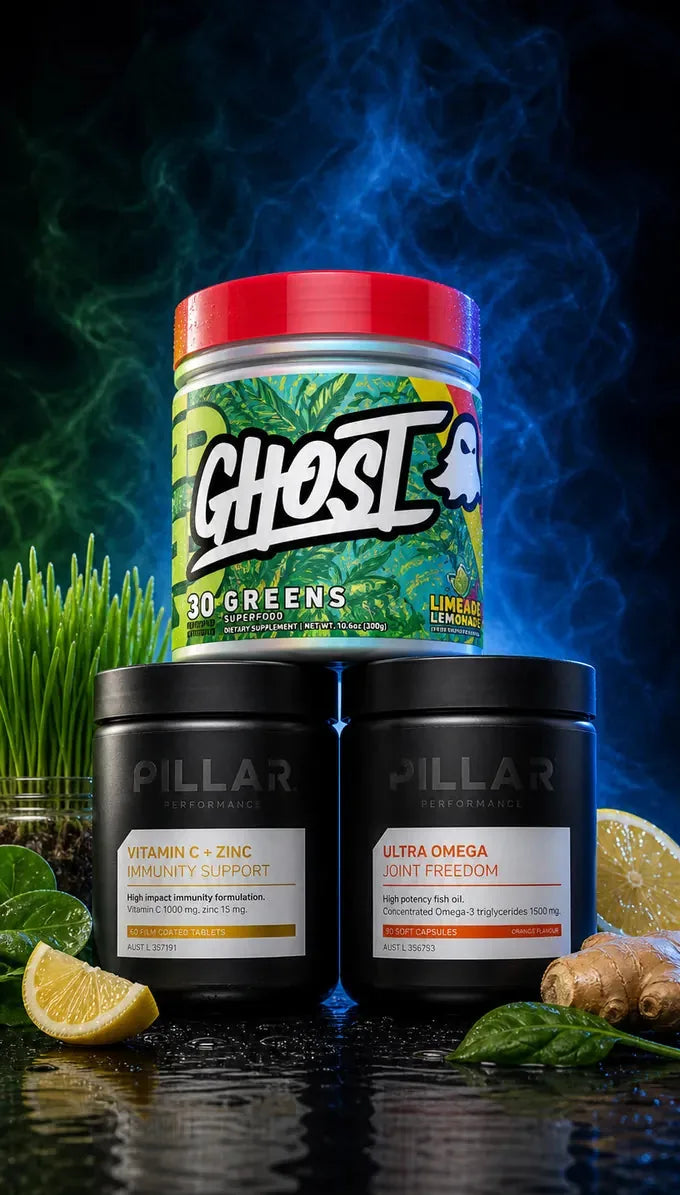
NZ Supps lists plant options including Ghost Vegan Protein and Pillar Performance Vegan Protein Isolate. For either product, use the same flavour and the current label figures when comparing. The examples below show how to make the calculation with figures from a pack, without treating different scoop sizes as equal.
| Product | Serve size | Protein per serve | Key ingredient amounts | Price per serve |
|---|---|---|---|---|
| Ghost Vegan Protein | Use the listed serve size | Use the flavour's listed protein amount | Record the plant sources and amounts shown on the label | Pack price ÷ listed serves |
| Pillar Performance Vegan Protein Isolate | Use the listed serve size | Use the flavour's listed protein amount | Record the plant sources and amounts shown on the label | Pack price ÷ listed serves |
| A third shortlisted blend | Use the listed serve size | Use the flavour's listed protein amount | Record the plant sources and amounts shown on the label | Pack price ÷ listed serves |
To compare cost per 10 g of protein, divide the price per serve by the protein grams in that serve, then multiply by 10. For example, a serve with 20 g of protein costs half its price per serve for each 10 g of protein. This makes a larger scoop easier to compare with a smaller one. Check the flavour-specific panel, since figures can differ between flavours.
If you are reviewing nutrient gaps alongside your food choices, blood testing for plant-based athletes offers context on topics active people may discuss with a clinician.
NZ Supps holds stock locally and dispatches from Palmerston North. Its free delivery threshold is $99. For a product comparison, keep the label, pack size and price together, then choose an option that fits your meals and is practical to use regularly.