SHOP NOW, PAY LATER











 Informed Sport
 Informed Choice
 NSF Certified for Sport
 HASTA Certified
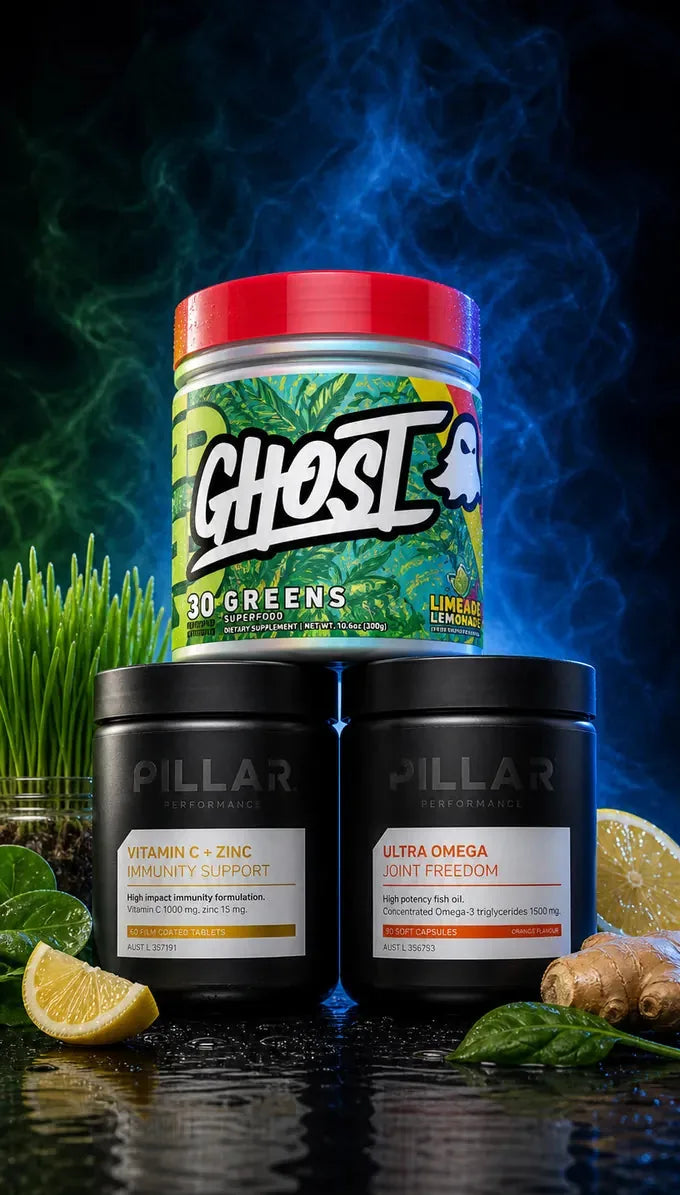

Do you need protein powder, or just a convenient way to get protein into meals you'll eat? You don't need powder, eggs, plain Greek yoghurt, cottage cheese, canned fish, chicken breast, tofu and tempeh, legumes, and milk are practical protein powder alternatives.
Powder is convenient, not essential. If carrying a shaker is easier than packing chilled food or cooking after training, protein powder NZ remains a straightforward option. Whole foods make more sense when you're already preparing a meal and want something to eat rather than drink.
For NZ shoppers, the useful comparison is protein in the portion you'll consume, its cost, and the preparation or refrigeration it needs. A small yoghurt tub, a drained can of fish and a chicken dinner aren't interchangeable servings.
Ministry for Primary Industries labelling guidance explains that nutrition panels show protein per serving and per 100 g or 100 ml. Use the serving column to plan your meal and the standardised column to compare similar foods.
There's no honest universal price or protein figure for every product below. Pack sizes, recipes and local shelf prices differ. Check the actual label rather than treating a generic food estimate as a guarantee.
Table of Contents
- 1. Eggs
- 2. Plain Greek yoghurt
- 3. Cottage cheese
- 4. Canned tuna and salmon
- 5. Chicken breast
- 6. Tofu and tempeh
- 7. Lentils and legumes
- 8. Milk
- Protein powder alternatives compared
- Food First, Powder When It Suits
1. Eggs
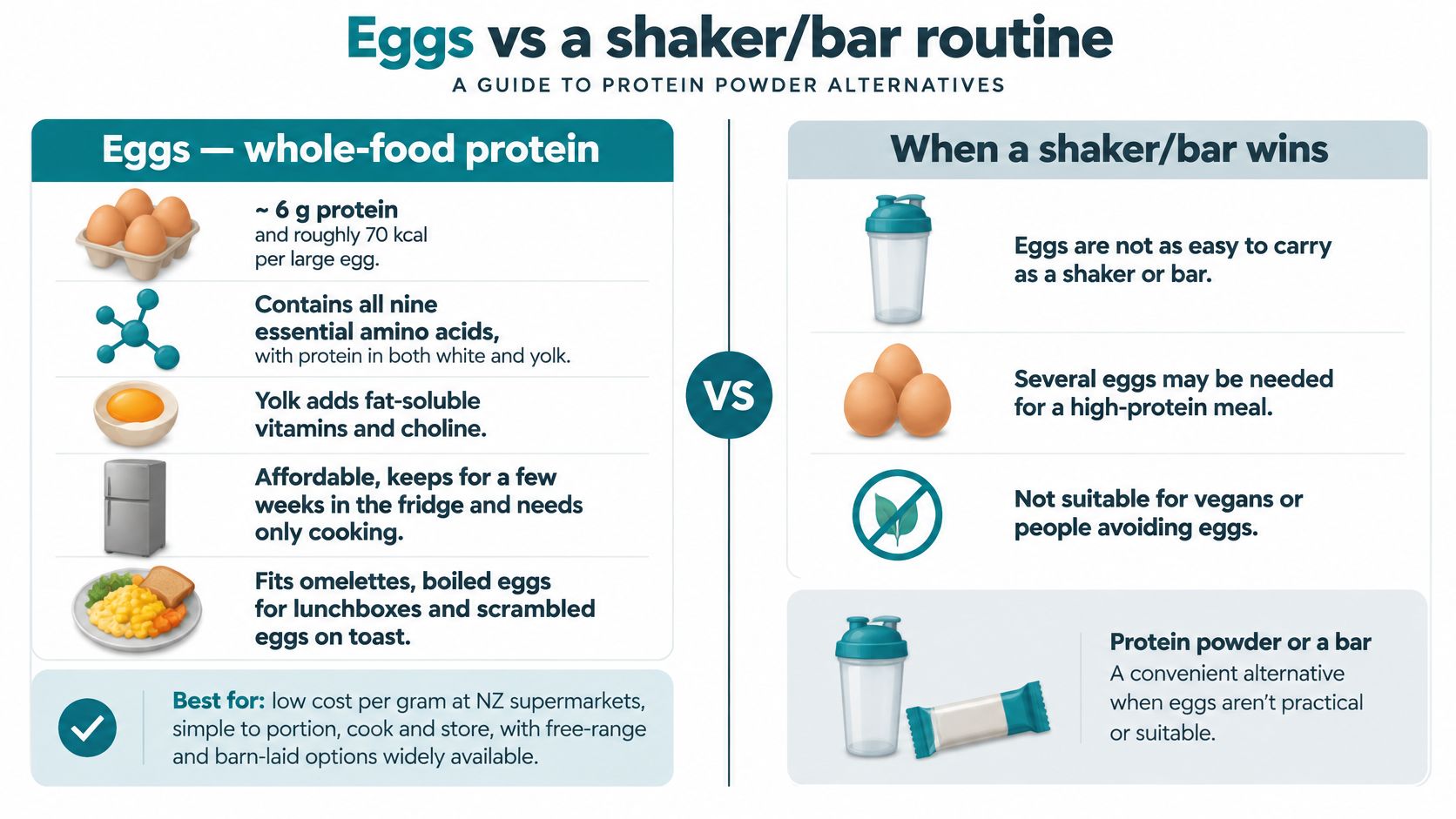
Eggs work best when you want a proper meal, not a drink. They're easy to find in NZ supermarkets, fit breakfast or lunch, and can be cooked without much equipment. Their main disadvantage against powder is preparation, followed by the need to keep cooked portions appropriately chilled.
For a quick post-training meal, scramble eggs on wholegrain toast. Add spinach or leftover vegetables while the pan is hot. An omelette with feta is another practical option, but count the whole meal rather than attributing all its protein to the eggs.
Health New Zealand's protein guidance includes eggs among everyday protein foods and describes two eggs as a serving. Egg size still matters when you're calculating what your meal supplies.
Compare by egg size and carton price
Use the carton's nutrition information where available. If the panel gives protein by weight rather than by egg, don't assume every egg contributes the same amount.
- For meal prep: Cook eggs ahead, chill them promptly and pack them with an ice pack when refrigeration isn't available.
- For value: Compare cartons of similar egg sizes. The cheapest carton isn't necessarily the cheapest equivalent portion.
- For buying preferences: Read the production label if barn-laid, free-range or cage-free matters to you.
Practical rule: Eggs are convenient once they're cooked. They aren't a grab-and-go alternative if you keep buying them without planning when to prepare them.
Pair them with toast, vegetables or another meal component rather than expecting eggs alone to replace every part of breakfast.
2. Plain Greek yoghurt
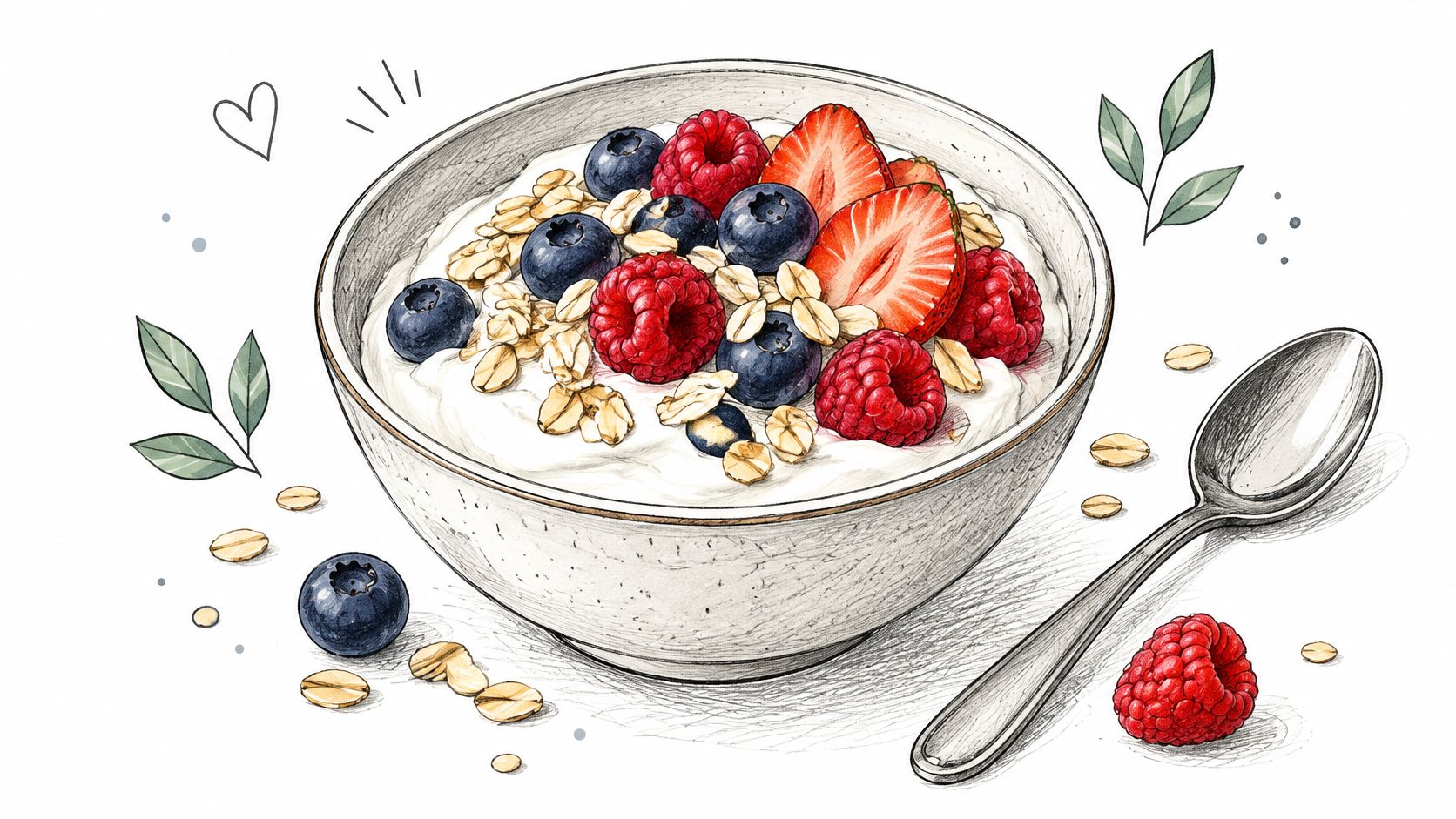
A bowl of plain Greek yoghurt, rolled oats and berries takes little preparation. It's an easy breakfast when you want to eat before leaving home, and a sealed tub works at the office if you have a fridge.
Don't buy on the word Greek alone. Products differ in ingredients, straining and protein concentration. Compare the nutrition panels rather than assuming thick texture means more protein.
Start with protein relative to the product's weight, then check how much you'll spoon into the bowl. A generous-looking bowl isn't a measured serving, especially once fruit, oats and toppings go in.
Buy the tub you'll finish
Large tubs can offer better value, but only if you use them. An individual tub may be the more practical purchase when you need a spoon-ready snack and won't finish a larger container.
- For breakfast: Add oats and fruit to plain yoghurt instead of buying several flavoured versions.
- For savoury meals: Mix with cucumber, garlic and herbs for a dip or dressing.
- For label comparisons: Check protein, sugars and ingredients together. Plain doesn't mean every product has the same composition.
Greek yoghurt's biggest advantage over powder is that it's ready to eat. Its biggest limitation is the cold chain: it needs fridge space at home, at work or in your training bag.
Choose it for routines where refrigeration is easy. For a long day travelling between venues, a chilled tub can become more work than a shaker.
3. Cottage cheese
Cottage cheese suits people who want a savoury protein option without cooking meat. Spread it on rye crackers, spoon it onto toast with tomato, or add it to a lunch bowl. It's generally found with chilled dairy products in NZ supermarkets.
The curd texture is the main dividing line. If you dislike it, blend the cheese until smooth before deciding it doesn't work for you. Blended cottage cheese can become a pasta sauce base or a filling for baked dishes.
Compare protein, fat and sodium on the pack. Reduced-fat and standard versions aren't identical products, and a front-of-pack claim won't tell you whether the flavour or texture suits your cooking.
Make the portion deliberate
Putting a thin scrape on crackers may add less protein than you expect. Measure your usual portion once, check it against the label, and use that as your starting point.
- For a work lunch: Pack cottage cheese separately from crackers so they don't soften.
- For a sweet snack: Add pineapple or another fruit you already buy.
- For cooking: Blend before stirring through a sauce, then heat gently and check the texture.
Cottage cheese contains casein, a milk protein. Our guide to casein before bed explains that protein category, but you don't need to reserve the food for bedtime.
Its practical weakness is the opened tub. Use a clean spoon, keep it chilled and follow the pack's storage instructions. If it regularly sits unfinished behind other groceries, a smaller tub is better value than a larger one you discard.
4. Canned tuna and salmon
For a desk drawer or travel pantry, unopened canned fish is more practical than most chilled alternatives. It doesn't need cooking, and you can turn it into lunch with bread, crackers or a microwave rice pouch.
NZ supermarkets carry plain and flavoured tuna and salmon in different pack sizes. Those differences matter. A small flavoured can isn't nutritionally equivalent to a larger can of plain fish.
Check whether the nutrition information refers to the drained contents or the product as sold. Compare that with the drained weight before calculating your portion. Otherwise, you may count packing liquid as though it were fish.
Build lunch around the can
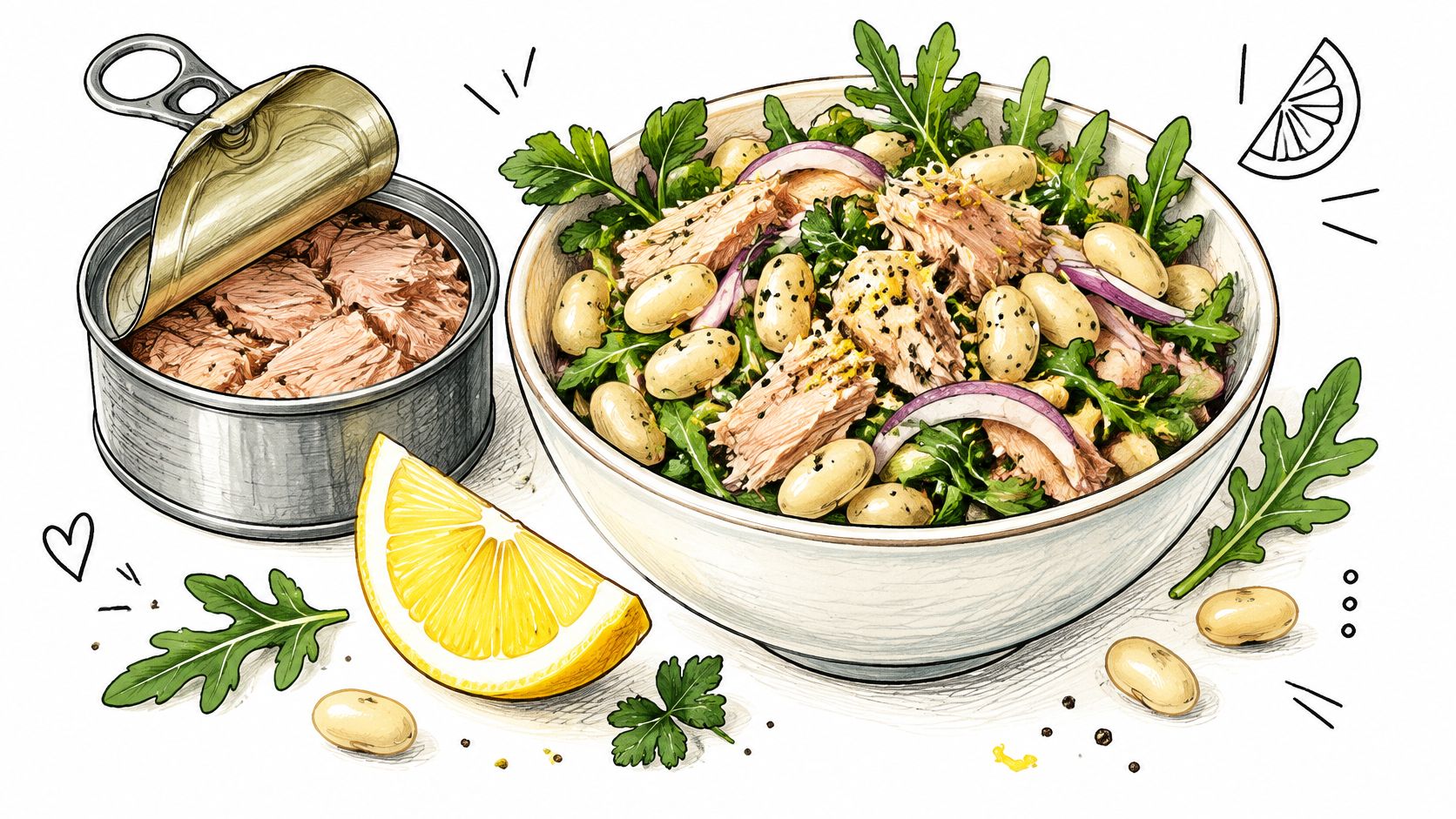
Mix tuna with white beans, lemon and red onion, then add bread or leftover rice. Canned salmon also works in patties with egg and breadcrumbs, although that requires cooking and cleanup.
- For easier packing: Choose a ring-pull can and carry a fork.
- For label accuracy: Check added sauces, oil and sodium rather than judging every can by the fish name.
- For leftovers: Transfer unused contents to a suitable covered container, refrigerate and follow the storage directions.
An unopened can is pantry food. An opened can needs a storage plan.
The trade-offs are smell, draining and disposal. Fish may be nutritionally convenient but socially awkward in a shared office or team van.
For price comparisons, use the amount you'll eat after draining. A cheaper can with less usable fish may not be the better buy.
5. Chicken breast
Chicken breast is a useful meal-prep option when you already cook lunches and dinners. It's less convincing as a powder replacement if you're starting from raw chicken every time you need a snack.
Serve it with rice and roasted vegetables, shred it into wraps, or slice it into a broccoli and capsicum stir-fry. These meals work because the chicken is part of food you'd eat anyway, not an extra task added after training.
Chicken is also an established part of NZ eating patterns: the New Zealand Adult Nutrition Survey recorded poultry contributing 9% of adults' protein intake in 2008/09. That describes population intake, not the protein content of your chicken portion.
Keep raw and cooked weights separate
Cooking changes the weight of chicken as moisture is lost. Don't weigh a cooked portion and apply nutrition information intended for raw meat. Use information that matches the food's preparation state.
- For even cooking: Slice thick breasts horizontally before seasoning.
- For reliable doneness: Use a meat thermometer and follow current food-safety guidance.
- For meal prep: Portion cooked chicken, chill promptly and freeze servings you won't use soon.
Buying a larger pack only saves money if you store and use it properly. Include cooking time, seasoning and potential waste when comparing it with a scoop of powder.
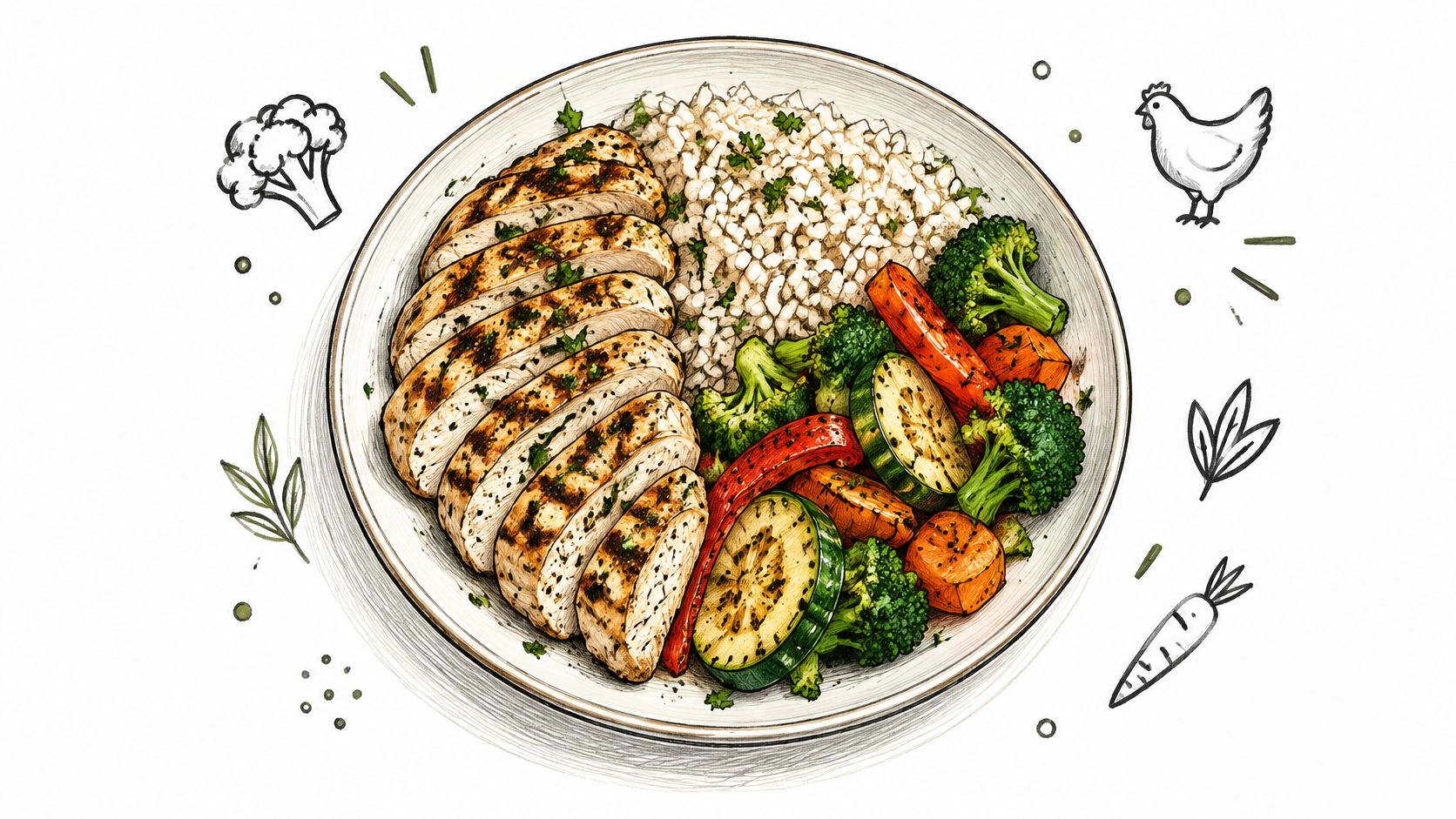
Chicken's strength is versatility. Its weakness is logistics: a prepared portion needs chilling, utensils and somewhere sensible to eat.
6. Tofu and tempeh
Choose firm tofu for a flexible starting point, or tempeh when you prefer a firmer bite. Both are soy-based options for vegan and dairy-free meals, but they aren't interchangeable in texture or protein concentration.
Look in NZ supermarket chilled plant-food sections and Asian grocery fridges. Availability varies by store, particularly for tempeh. Read the actual pack before committing to a recipe or calculating your portion.
Protein quality also involves more than total grams. A Ministry for Primary Industries analysis of protein discusses how pulses and other plant foods can complement each other's amino-acid profiles. For everyday meals, eat varied plant sources rather than expecting a single food to do everything.
Prepare for texture, then add flavour
Drain firm tofu and press it before pan-frying if you want a drier surface. Pat it dry, cut it evenly and avoid crowding the pan. Add sauce towards the end so the pieces can brown first.
- For stir-fries: Use firm tofu with noodles, vegetables and a sauce you enjoy.
- For sandwiches: Marinate sliced tempeh, then pan-fry or grill.
- For buying: Compare plain and pre-marinated packs separately, including protein and sodium.
This preparation video offers another way to approach tofu in the kitchen.
For powder-format alternatives, our guide to comparing protein powders provides further label context. Keep the immediate decision practical: tofu and tempeh suit meals, while powder suits situations where cooking and refrigeration aren't realistic.
7. Lentils and legumes
Lentils, chickpeas and beans are useful meal ingredients, not direct scoop-for-scoop replacements. They add protein alongside fibre and carbohydrate, so the portion and overall meal matter.
They're easy to find in NZ supermarkets as dried staples or ready-cooked cans. Dried legumes suit planned cooking. Canned versions suit quick lunches, shared kitchens and evenings when you don't want another pot on the stove.
The Ministry of Health's dietary-habits analysis found that nearly half of adults ate few or no legumes in the 2018/19 and 2019/20 New Zealand Health Survey. Adding them to familiar meals is a more useful starting point than buying a pantry full of unfamiliar ingredients.
Compare prepared food with prepared food
Dried and cooked weights aren't equivalent because legumes absorb water. Canned products also contain packing liquid. Use nutrition information that matches what you're eating, and check whether the stated weight is drained.
- For an inexpensive dinner: Make red lentil dhal and serve it with rice.
- For a fast lunch: Toss drained chickpeas with roasted vegetables and dressing.
- For familiar flavours: Use black beans in tacos with salsa and avocado.
Budget judgement: A cheap bag of dried beans isn't convenient food until you've allowed for soaking, cooking and storage.
Rinse canned legumes before adding them to a dish. If you're not used to eating them, start with a manageable portion rather than changing every meal at once.
For a more substantial protein-focused meal, pair legumes with tofu or tempeh. Grains also add variety across the day. Don't assume a spoonful of hummus supplies the same protein as a full serving of beans.
8. Milk
Milk is the simplest option when you want protein without cooking or opening a supplement tub. Pour it alongside a meal, use it in porridge, or blend it with banana and oats.
Measure the amount rather than estimating by glass size. Glasses and mugs differ, and a smoothie contains whatever you pour into the blender. Use the carton's protein declaration to calculate that portion.
Milk is widely available across NZ, but price comparisons still need context. NZ Herald reporting using Stats NZ price data cited an average price of $5.12 for two litres of milk, a historical benchmark rather than a guaranteed shelf price today.
Check the milk you actually buy
Standard, reduced-fat, lactose-free and protein-enriched milks can have different labels. Compare the carton in your trolley rather than borrowing the numbers from another version.
- For breakfast: Replace water with milk when making porridge.
- For a quick snack: Drink it alongside food rather than assuming a small splash in coffee contributes much.
- For dairy-free shopping: Check plant-drink protein labels individually. They aren't automatically equivalent to dairy milk.
Milk contains whey and casein. If you still use powder, our guide to mixing a protein shake with water or milk explains the practical differences between those bases.
The limitations are volume, refrigeration and personal tolerance. Some people find a large drink inconvenient before training, even when it's easy to prepare.
Choose milk when it fits your normal meals. A carton you finish is useful; one bought for an ambitious smoothie routine and left unopened isn't.
Protein powder alternatives compared
| Alternative | Typical protein per serve | Diet suitability | Best for |
|---|---|---|---|
| Eggs | About 6 g per large egg | Vegetarian; not vegan or egg-free | Affordable, versatile meals and snacks |
| Plain Greek yoghurt | About 9–10 g per 100 g | Vegetarian; not dairy-free | Quick breakfasts and cold snacks |
| Cottage cheese | About 11–12 g per 100 g | Vegetarian; not dairy-free | High-protein snacks and creamy dishes |
| Canned tuna and salmon | About 25 g per 100 g drained | Pescatarian; not vegetarian or vegan | Convenient, shelf-stable meals |
| Chicken breast | About 31 g per 100 g cooked | Not vegetarian or vegan | Lean meals and batch cooking |
| Tofu and tempeh | Tofu: 15–17 g; tempeh: 19–20 g per 100 g | Vegan and dairy-free; contains soy | Plant-based meals and meat alternatives |
| Lentils and legumes | About 9 g per 100 g cooked lentils | Vegan and vegetarian | Affordable, fibre-rich meals |
| Milk | About 3.4 g per 100 ml | Vegetarian; not vegan or dairy-free | Convenient drinks, cereal and smoothies |
Food First, Powder When It Suits
Choose the alternative that fits the meal, then check the portion. Chicken breast and canned fish suit substantial protein-focused lunches and dinners. Eggs work across meals, although the number and size you eat determine their contribution.
For vegan and dairy-free meals, start with tofu, tempeh and legumes. For everyday convenience where refrigeration is available, plain Greek yoghurt, cottage cheese and milk need little preparation. None is universally best.
Compare like with like
Use protein relative to weight or volume to compare concentration, then calculate what your actual serving supplies. Check cost for that same serving, not just the shelf price.
- Lowest-cost shortlist: Compare dried or canned legumes, eggs, milk and the groceries you already use.
- Highest-convenience shortlist: Consider unopened canned fish, ready-to-eat dairy where chilling is available, or powder when carrying food isn't practical.
- Best diet fit: Check ingredients and allergens before comparing flavour, price or packaging claims.
These are starting points, not fixed rankings. Preparation, food waste and refrigeration can change the result. A supplement also isn't automatically a complete meal just because it contains protein.
Drug-tested athletes need an additional check. The Sport Integrity Commission's supplement decision-making guide warns that supplement contamination is possible and batch testing doesn't provide a complete guarantee. Don't treat certification as permission to stop checking the exact product and batch.
For more background on powder formats, protein powder types and serving doses offers another comparison resource. Keep the product's own nutrition panel as the reference for your purchase.
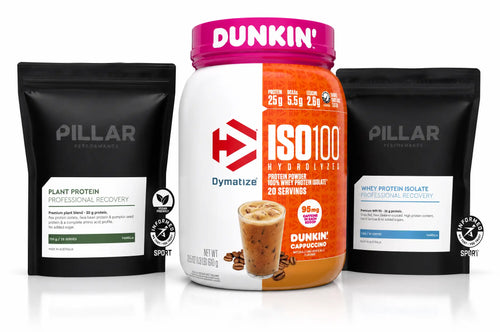
When convenience wins, compare our protein powder range against the whole-food portion you would otherwise eat. We carry plant-based proteins made from sources such as pea or rice, alongside whey options. Choose a formula that fits your diet rather than assuming every alternative serves the same purpose.
NZ Supps offers whey and plant-based protein options for days when preparing or carrying whole food isn't practical. Visit NZ Supps to compare ingredients and per-serve value against your usual meals. Shop all protein powder in NZ.