SHOP NOW, PAY LATER














 Informed Sport
 Informed Choice
 NSF Certified for Sport
 HASTA Certified

For most strength athletes who train in the evening, a moderate serving of casein taken about 30 minutes before sleep can raise overnight amino acid availability and support recovery. The catch: it only helps on top of adequate total daily protein, and the sleep-quality benefits are still preliminary. Read on for the actual doses studies used and how to fit this into a real routine.
TL;DR:
- Consuming 30 to 48 grams of casein about 30 minutes before sleep can enhance overnight muscle protein synthesis and amino acid availability, especially after evening workouts.
- The effectiveness of pre-sleep casein depends on proper dosage, timing with resistance exercise, and meeting daily protein targets, with benefits diminishing if these conditions are not met.
- Higher doses around 40 grams typically show more reliable results, but total daily protein intake remains the primary factor for muscle growth and recovery.
- People with high daily protein intake, morning-only trainers, or casual exercisers are less likely to benefit significantly from pre-sleep casein.
- Adverse effects like bloating or disrupted sleep can occur if the dose is too high or consumed with heavy fats, and those with lactose intolerance or kidney issues should consult a healthcare professional before use.
Table of Contents
- What Pre-Sleep Casein Actually Does for Muscle and Sleep
- What Do the Casein Studies Actually Show?
- How Much Casein Should You Take and When?
- Who Benefits Most From Casein at Night?
- Side Effects and Interactions to Know Before You Start
- What to Check on the Label Before Buying Casein
- Simple Pre-Sleep Casein Routines That Actually Work
- Where This Guidance Comes From
- The Bottom Line on Casein Before Bed
- Why the Timing Debate Misses the Real Point
- Get the Right Casein for Your Nightly Routine
- Sources
What Pre-Sleep Casein Actually Does for Muscle and Sleep
Casein’s whole reputation rests on one property: it digests slowly. Once it hits stomach acid, casein clots into a gel, which delays gastric emptying and drips amino acids into the bloodstream for six to seven hours instead of the quick spike-and-drop pattern you get from whey. That matters specifically at night, when you’re about to spend seven or eight hours not eating anything.
During that fasting window, your body defaults to breaking down a bit of muscle tissue for amino acids unless something else is available. A slow-release protein source gives it another option.
What happens within hours of drinking it:
- Plasma amino acid levels rise and stay elevated through most of the night
- Muscle protein synthesis gets a measurable bump during sleep
- Muscle protein breakdown gets partially suppressed, improving your overnight protein balance
Those are the acute, same-night effects. The longer-term payoff is less automatic. When it’s repeated night after night alongside evening resistance training, pre-sleep casein has been linked to better chronic hypertrophy and strength outcomes, largely because you’re extending the anabolic window that normally closes once you fall asleep, according to a review on pre-sleep protein timing. But strip out the resistance training and the effect on visible muscle gain shrinks considerably.
There’s also a secondary claim worth a reality check: does casein help you sleep better? Some sleep-health commentary points to modest improvements in sleep efficiency and duration in certain users, possibly tied to amino acids that feed into sleep-related neurotransmitter production. Treat that as a promising lead, not a settled fact. The research behind it is thin compared to the muscle recovery data, and it hasn’t been replicated widely enough to make a confident claim either way.
What Do the Casein Studies Actually Show?
The evidence on casein at night is more nuanced than most protein blogs let on, and the disagreements between studies usually trace back to dose, timing, or who was being tested.
The foundational work on this topic used 40 grams of casein protein, given about 30 minutes before sleep, following an evening bout of resistance exercise. That protocol reliably increased overnight plasma amino acid availability and stimulated muscle protein synthesis during sleep, according to the pre-sleep casein research that established this as a legitimate recovery strategy rather than a bro-science habit.
A separate crossover trial tested a higher casein dose, and found a likely increase in next-morning resting metabolic rate compared to a placebo. Effects on next-day training performance in that same study were small and inconsistent, which tells you the metabolic and performance outcomes don’t move in lockstep.
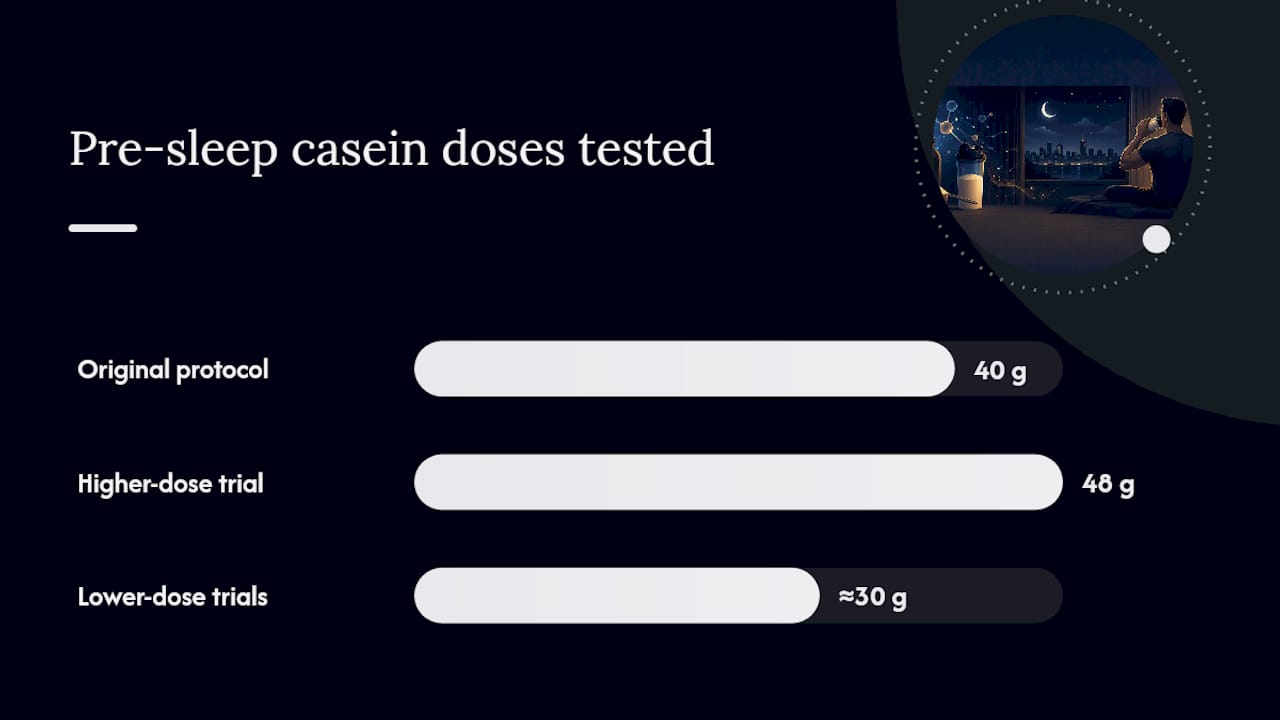
Not every trial found a benefit, though. Some studies using lower casein doses or where the resistance exercise wasn’t performed in the evening, reported no significant change in overnight muscle protein synthesis markers versus a placebo. That gap between positive and null results isn’t really a contradiction. It’s a dose and context signal: pre-sleep casein research suggests you need enough protein, and you need the workout timed so your body is already primed to use it.
Age is another variable that gets glossed over. Elderly populations show different anabolic responses to pre-sleep protein than young, trained adults, likely due to anabolic resistance, a reduced sensitivity to protein’s muscle-building signal that tends to develop with age.
| Study Focus | Dose Tested | Timing | Outcome |
|---|---|---|---|
| Original pre-sleep casein protocol | 40 g | 30 min before sleep, post-exercise | Increased overnight MPS and plasma amino acids |
| Higher-dose crossover trial | 48 g | 30 min before sleep | Likely RMR increase; small performance effect |
| Lower-dose comparison trials | ~30 g | Variable, not always evening exercise | No significant MPS increase |
| Long-term daytime vs nighttime comparison | Matched to total daily intake | Morning vs evening | Similar hypertrophy and strength when total protein equated |
That last row carries the most important caveat in this entire topic. When researchers matched total daily protein between groups, casein consumed at night produced results similar to the same amount eaten earlier in the day, for both muscle size and strength. Timing is a secondary lever. Total daily protein is still the dominant one.
How Much Casein Should You Take and When?
Here’s the practical version of everything above, stripped down to what to actually do:
- Target 30 to 48 grams, taken roughly 30 minutes before you go to sleep. The 40 gram mark is the figure most consistently used in the research that established this protocol, and it’s a reasonable default if you’re not sure where to start.
- Scale by bodyweight if you want more precision. A rough guide is 0.4 to 0.5 g/kg of bodyweight for this single serving. A 90 kg lifter lands near 40 to 45 grams; a 65 kg athlete is closer to 26 to 33 grams, which is why some lighter-framed lifters see less benefit at a flat 40 gram dose than heavier training partners.
- Check where this fits into your daily total first. Pre-sleep casein is a secondary strategy. If your total daily protein is already low, fix that before worrying about a pre-bed dose.
- Time it around evening training when possible. The strongest results in the data come from pairing this with resistance exercise done later in the day, not from taking casein in isolation as a passive supplement.
- Adjust for late-night athletes. If you train at 9 or 10 PM, take your casein serving right after you get home rather than waiting until you’re already drowsy and skipping it.
Pro Tip: If you’re a smaller athlete and 40 grams of casein feels like overkill, don’t force the full clinical dose. A 25 to 30 gram serving scaled to your bodyweight still gives you the slow-release benefit without unnecessary calories before bed.
Who Benefits Most From Casein at Night?
The people who see the clearest payoff share one trait: they’re already training hard enough for slow overnight amino acid delivery to matter.
Likely to benefit:
- Evening lifters and strength athletes doing resistance training within a few hours of bedtime
- Players or competitors with late matches or training sessions who need overnight recovery support
- Anyone on a structured hypertrophy or strength program who’s currently under their daily protein target
Less likely to see a difference:
- People already hitting a high daily protein intake through meals and other shakes
- Morning-only trainers whose training session is 12+ hours removed from bedtime
- Casual exercisers doing light cardio without a resistance component
A few groups need to be careful. Anyone with a milk allergy or significant lactose intolerance should skip dairy-based casein entirely, since even isolate forms retain trace lactose in some products. People with kidney disease should talk to a clinician before adding any concentrated protein source to their evening routine, since high protein loads change renal workload.
Side Effects and Interactions to Know Before You Start
Casein is generally well tolerated, but it’s not without downsides worth planning around.
- Bloating and GI discomfort are the most common complaints, largely because casein’s gel-forming property slows digestion, sometimes past the point of comfort. Splitting a large 40 gram shake into a smaller shake plus a food source, like cottage cheese, often solves this.
- Interrupted sleep from a full stomach can offset any theoretical sleep benefit if you’re eating a large meal alongside your protein serving. Keep the pre-sleep snack light on fat and fiber.
- Calorie accumulation matters if you’re cutting weight. A 40 gram casein serving adds roughly 150 to 160 calories, which needs to be accounted for in your daily total, not treated as a freebie.
- Medication timing is worth checking with a pharmacist if you’re on anything that interacts with dairy or requires an empty stomach, since casein’s slow digestion extends the window your stomach stays full.
Pro Tip: If a full protein shake before bed leaves you feeling too full to sleep, swap it for a half-cup of low-fat cottage cheese. You’ll get a comparable slow-digesting protein dose without the bloated feeling some people get from powder.
Stop using it and check with a doctor if you notice persistent digestive issues, unexplained weight gain beyond what your calorie math would predict, or any signs of an allergic reaction like hives or swelling.
What to Check on the Label Before Buying Casein
Not all casein products are built the same, and the label tells you most of what you need to know in under a minute.
- Protein per serving. Confirm the actual grams of protein per scoop, not just the serving size in grams. Some products pad servings with fillers that dilute the real protein content.
- Calories and added sugar. A clean casein product shouldn’t need much sweetener to be palatable. Watch for products stacking sugar alcohols or added sugars past a gram or two per serving.
- Micellar casein specifically, rather than a casein blend, if you want the slowest possible digestion rate. Micellar casein retains its natural micelle structure, which is what drives the extended release.
- Third-party testing. Independent testing for banned substances and label accuracy matters more for competitive athletes, but it’s a reasonable baseline for anyone buying protein powder.
- Form factor. Powder gives you the most control over exact dosing. Cottage cheese or Greek yogurt are legitimate alternatives if you’d rather eat than drink your protein, though you’ll need to check the label to hit your target grams. Ready-to-drink options are convenient but usually cost more per gram of protein.
Understanding how protein timing fits into muscle growth more broadly helps put a single evening serving into the right context, rather than treating it as a magic bullet on its own.
Simple Pre-Sleep Casein Routines That Actually Work
You don’t need a complicated ritual. Pick one of these based on what’s already in your kitchen and how much time you have.
- Basic shake: One scoop of micellar casein (roughly 24 to 30 g protein) mixed with water or milk, plus a small handful of berries if you want a bit of carbohydrate without much fat.
- Full-dose shake: Two scoops of casein blended with unsweetened almond milk, hitting the 40 to 48 gram range studies typically use.
- Cottage cheese bowl: Half a cup of low-fat cottage cheese topped with cinnamon, delivering a slow-digesting protein dose without needing a shaker bottle.
- Greek yogurt plus casein powder: Stir half a scoop of casein into a cup of plain Greek yogurt for a thicker, spoonable option that’s easier on the stomach than a large liquid shake.
- Portable option for late training nights: A pre-measured casein packet mixed in a shaker bottle you carry to the gym, ready to drink on the drive home so you’re not delaying the dose past the 30 minute window.
If you’re training late and getting home wired, pair this with something like magnesium glycinate for sleep rather than relying on protein alone to wind you down.
Where This Guidance Comes From
This article was written by Blake, drawing on peer-reviewed research on protein timing and recovery physiology to translate clinical dosing into practical nightly routines for training athletes.
The retailer is curated around transparent ingredient listings, meaning every product page shows exactly what’s in a serving rather than hiding formulations behind proprietary blends. That transparency is what lets you take the dosing guidance in this article and match it directly to grams-per-scoop on a real label, instead of guessing. Customer feedback on individual product pages adds another layer of real-world context beyond the lab data.
None of this replaces personalized medical advice. If you have a kidney condition, a dairy allergy, or another medical concern, talk to a clinician before adding a concentrated protein source to your evening routine.
The Bottom Line on Casein Before Bed
A 30 to 48 gram casein serving 30 minutes before sleep is a legitimate, low-risk recovery tool, especially after evening training. Test it over two to three weeks: keep the dose and timing consistent, and track recovery soreness, morning energy, and rough sleep quality. If you notice no difference and your total daily protein is already solid, it’s fine to drop it. If digestion issues show up, scale back the dose or talk to a healthcare provider.
Why the Timing Debate Misses the Real Point
Most casein-before-bed content treats timing like it’s the whole story, and that’s where the conventional advice goes wrong. The comparative research is clear that total daily protein drives long-term muscle outcomes far more than the clock does. Pre-sleep casein is a refinement, not a foundation.
Where I think the advice genuinely holds up is dose specificity. Too many recommendations vaguely say “have some protein before bed” without naming a number, and that vagueness is exactly why some people see no results while others swear by it. The studies that actually worked used 40 grams or more, tied to evening training. That’s a real target, not a suggestion.
What readers should prioritize first is boring but correct: hit your daily protein number, train hard in the evening if that’s your schedule, and only then layer in a measured casein serving as the finishing touch. Treat the sleep-quality claims as a bonus you might notice, not a reason to buy in.
— Blake
Get the Right Casein for Your Nightly Routine
Nzsupps carries micellar casein and isolate protein options with full ingredient transparency, so you can match your scoop size to the exact 30 to 48 gram target this article walks through, instead of guessing from a vague label. Product pages list protein per serving clearly, which matters when you’re trying to hit a specific research-backed dose rather than a rough estimate.

If mornings are where your training suffers most, pairing an evening casein serving with a stim-free pre-workout for your next session keeps your recovery and performance strategy connected rather than treating them as separate problems. For readers who want to think through nutrient timing more broadly before committing to a product, Nzsupps’ own protein timing breakdown and the training-adjacent listening on Protein and Prayer are worth a look. Pick a casein product that fits your daily protein total, check the label against the dosing math above, and add it to your cart before your next evening training session.
This article is general information, not a substitute for advice from a qualified doctor. Consult a qualified healthcare professional about your own circumstances before acting on anything here.
Sources
- Casein protein supplementation in trained men and women: morning versus evening
- Casein powder for better sleep