SHOP NOW, PAY LATER











 Informed Sport
 Informed Choice
 NSF Certified for Sport
 HASTA Certified

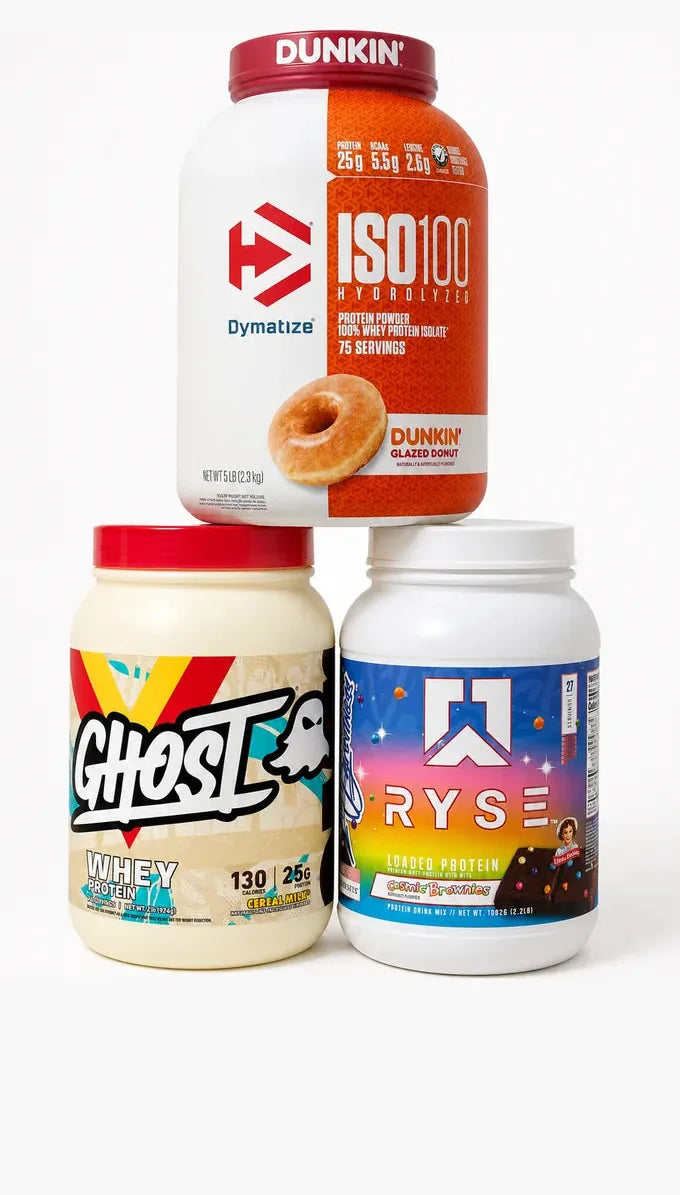
You're holding two tubs, and the one with less sugar per scoop looks like the obvious choice. A low-sugar protein powder should have little sugar both per serve and relative to its protein content, but you also need the per 100 g figures to compare different scoop sizes fairly. When browsing protein powder NZ, start with the Nutrition Information Panel rather than the flavour name or front-of-pack promise.
Table of Contents
- Sugar Levels That Count as Low in a Protein Powder
- How to Read the Sugar Line on a Label
- Sugars, Sweeteners and Carbs Behind the Label
- Which Formula Types Keep Sugar Lowest
- How Low-Sugar Powders Taste and Mix
- Suitability for Athletes and Drug-Tested Sport
- Tips to Cut Sugar in Your Shake
- Confirm Your Low-Sugar Pick Before You Buy
Sugar Levels That Count as Low in a Protein Powder
For everyday shopping, under 3 g of sugars in a 30 g scoop is a useful screening guide, not a legal definition or a guarantee that the formula suits your needs. A smaller serving can make almost any powder's sugar figure look more favourable.
Sugar per serve bands for a 30 g scoop
| Sugar per serve | Reading |
|---|---|
| Under 1 g | Very low |
| 1 to 3 g | Low |
| 3 to 5 g | Moderate |
| Over 5 g | High |
These are editorial working bands, not regulatory limits. At the shared boundary between bands, focus on the actual label rather than the category name.
New Zealand's rules treat low sugar as a defined nutrition claim. The Ministry of Health's response on sugar claims gives no more than 2.5 g of sugars per 100 mL as the low-sugar threshold for liquids. Don't apply that liquid threshold directly to dry powder, or assume a powder meets it without checking the preparation instructions and applicable claim conditions.
Keep the whole diet in view
The adult Eating and Activity Guidelines describe the WHO recommendation to keep free sugars below 10 percent of total energy, with below 5 percent suggested for additional tooth-decay prevention. Those recommendations concern the whole diet, not an allowance for an individual shake.
Free sugars and the total sugars printed on a tub aren't interchangeable terms. Use the panel to compare products, without treating every gram on that line as added table sugar.
Practical rule: A sugar-per-serve figure only becomes useful once you know how much powder the manufacturer calls a serve.
For example, 3 g of sugars in a hypothetical 20 g scoop represents a different concentration from 3 g in a 40 g scoop. The headline number is identical; the amount of powder isn't.
How to Read the Sugar Line on a Label
Turn the tub around before comparing flavours or claims. The British Journal of Nutrition analysis of New Zealand food claims explains the labelling framework, including nutrition information expressed per serving and per 100 g or 100 mL.
Use this visual reminder while you check the panel.
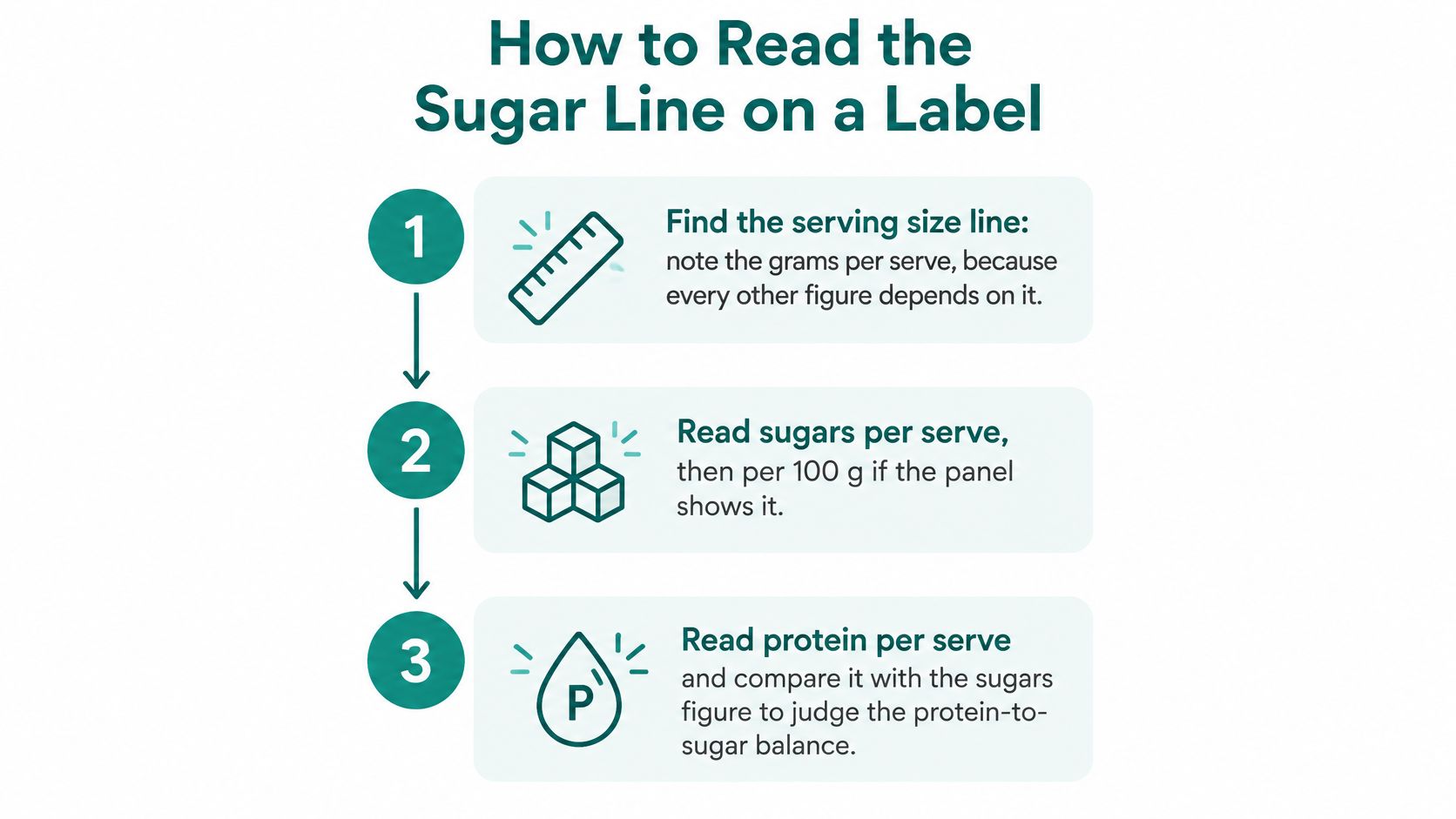
- Find the serving size. Note the weight in grams, not just the number of scoops. A scoop measures volume, and the amount it holds changes with packing and heaping.
- Read sugars in both columns. Per serve tells you what the measured portion supplies. Per 100 g lets you compare concentration.
- Read protein the same way. Check whether the lower-sugar portion also supplies less protein.
- Calculate protein relative to sugar. Divide protein grams by sugar grams from the same column. A higher result means more protein for each gram of declared sugars.
- Check carbohydrate and energy. Compare kilojoules using the same basis for both tubs, rather than mixing per-serve and per-100 g figures.
- Read the ingredients. Look for the protein sources, added sugars, carbohydrate ingredients and sweeteners. Don't assume a sweet taste means a high sugars figure.
For unfamiliar panel terms, the supplement label guide gives you a useful reference while shopping.
A worked example of misleading scoop sizes
These figures are invented for teaching, not taken from products for sale.
| Illustrative label | Tub A | Tub B |
|---|---|---|
| Serve size | 30 g | 20 g |
| Protein per serve | 24 g | 16 g |
| Sugars per serve | 1.2 g | 0.9 g |
| Calculated sugars per 100 g | 4.0 g | 4.5 g |
| Calculated protein-to-sugar ratio | 20 to 1 | About 18 to 1 |
For Tub A, the calculation is 1.2 ÷ 30 × 100 = 4.0 g sugars per 100 g. Its protein-to-sugar ratio is 24 ÷ 1.2 = 20 to 1.
Tub B looks lower in sugar per serve, but Tub A supplies less sugar at an equal powder weight and slightly less sugar relative to protein. That makes Tub A the stronger choice on those sugar comparisons, not automatically on taste, price or suitability.
The accompanying video offers another way to follow the label-reading process.
Sugars, Sweeteners and Carbs Behind the Label
Think of ingredients as going into two bins: those counted as sugars, and those that need checking elsewhere on the label. The second bin isn't automatically a problem, but overlooking it can give you the wrong impression of a powder.
The New Zealand Food Composition Database's explanation of sugars distinguishes the broad nutrient term from everyday table sugar. Naturally occurring lactose in dairy ingredients can contribute to the sugars figure, even when no table sugar has been added.
Where common sugar and sweetener ingredients show up on a label
| Ingredient | Counts toward sugars line? | Where it shows | What to check |
|---|---|---|---|
| Lactose from milk | Yes | Sugars line; milk ingredients in the ingredients list | Concentrate and milk-based blends can retain more lactose than isolates |
| Sucrose, glucose syrup, dextrose | Yes | Sugars line and ingredients list | Added sugar ingredients and their position in the list |
| Maltodextrin | Not generally as sugars | Ingredients list and total carbohydrate | Carbohydrate can remain substantial despite low sugars |
| Sucralose, acesulfame potassium | No | Ingredients list | Sweetness doesn't establish sugar content |
| Stevia leaf extract | No | Ingredients list | Check accompanying bulking ingredients |
| Erythritol and other sugar alcohols | Usually no | Ingredients list; may be declared separately | Check the panel's treatment rather than assuming inclusion in total carbohydrate |
Sugar alcohol labelling needs particular care. Don't automatically assume every sugar alcohol is included in the carbohydrate total shown on a New Zealand label. Read any separate declarations and preparation notes.
Maltodextrin is the clearer carbohydrate trap: it's starch-derived, so a low sugars line doesn't tell you how much of it the formula contains. If it appears prominently in the ingredients, check total carbohydrate before deciding.
A sweetener explains sweetness. It doesn't explain the powder's total carbohydrate or energy content.
Low sugar isn't the same as low carbohydrate or low energy. Read both the carbohydrate and kilojoule figures rather than using sugar as a shortcut for the entire formula.
Which Formula Types Keep Sugar Lowest
| Formula | Protein comparison | Sugar comparison | Best fit for low sugar |
|---|---|---|---|
| Whey isolate | Check protein at an equal powder weight | Usually retains less lactose than concentrate | Dairy-based option worth checking first |
| Whey concentrate | Compare protein density with price | Retained lactose can increase sugars | Value-focused shoppers who accept some lactose |
| Whey blend of concentrate and isolate | Read the panel, not just the blend name | Determined by the complete recipe | Shoppers balancing flavour, texture and cost |
| Plant blend of pea, rice or soy | Check the finished blend's panel | Flavour ingredients can change the result | Vegan and dairy-avoiding shoppers |
| Unflavoured isolate or plant powder | Compare the actual protein ingredients | No sweet flavour system, but not necessarily sugar-free | Shoppers who want control over additions |
Formula names help you narrow the shelf, but they don't establish a verified sugar range. Without individual labels, it would be misleading to attach precise protein and sugar amounts to every member of a formula family.
Dairy powders
Whey isolate undergoes processing that removes much of the lactose and fat. That makes it a sensible starting point when you want a dairy powder with little sugar, although flavour ingredients can alter the finished product.
Whey concentrate retains more of the original milk components. It can still suit a low-sugar shortlist, particularly when its price and texture appeal, but compare the actual panel rather than rejecting it by name.
A whey blend combines protein ingredients in proportions that may not be obvious from the front label. The whey isolate versus concentrate guide explains the distinction, while the finished product's panel remains your shopping reference.
Plant and unflavoured powders
Plant proteins avoid dairy ingredients, but dairy-free doesn't mean low sugar. Check the finished flavour recipe and allergen statement, especially when dairy avoidance is essential.
Unflavoured powders give you more control over what you add. They aren't guaranteed to have the lowest sugar, and fruit, milk or other additions change the finished shake.
As a hypothetical example, an unflavoured isolate labelled 24 g protein and under 1 g sugars per 30 g serve would retain those powder contributions when mixed with water. Adding unsweetened cocoa changes the finished drink's carbohydrate contribution, so use the cocoa label rather than assuming it adds nothing.
How Low-Sugar Powders Taste and Mix
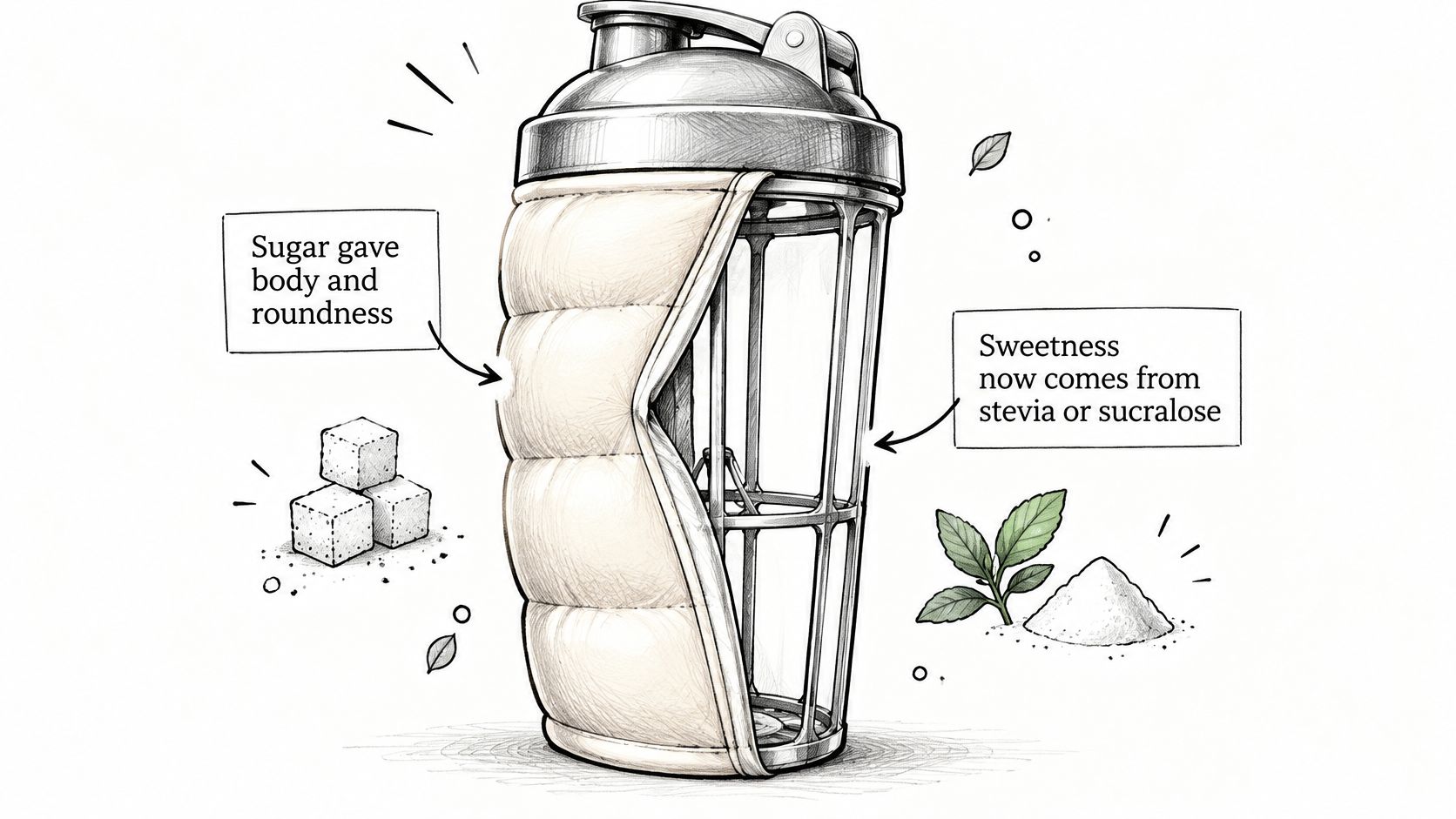
Sugar can act like padding in a cushion, adding body and rounding out flavour. When a manufacturer removes it, you may notice the protein's underlying taste more clearly.
A low-sugar vanilla shake might taste sweet at first, then leave a lingering finish. Depending on the recipe and your palate, you might notice bitterness, a cooling sensation or a slightly metallic note.
This illustration highlights the shift from sugar towards other sweetening ingredients.
Judge texture as well as sweetness
Isolates can feel thinner in water, while blends containing milk solids or thickeners may feel creamier. Plant powders can have a chalkier or grainier texture, particularly when you use little liquid.
Unflavoured powders aren't tasteless. Milky, earthy or faintly savoury notes can come from the protein itself rather than a faulty batch.
- Start small. Choose a sample or smaller pack before committing to a large tub.
- Keep preparation consistent. Use the same liquid, temperature and mixing method when comparing flavours.
- Finish the shake. Judge the aftertaste as well as the first mouthful.
A flavour you enjoy briefly isn't necessarily one you'll want regularly. Give yourself a few separate tries before deciding.
Suitability for Athletes and Drug-Tested Sport
The cleanest-looking nutrition label isn't automatically the safest tub for a tested athlete. Sugar content tells you nothing about banned-substance contamination.
The Sport Integrity Commission's supplement guidance warns that contamination occurs in New Zealand and notes that Consumer NZ found illegal drugs in six supplement products in 2022. Batch-specific checking matters because contamination can affect one batch without affecting another.
Use the checklist as a purchasing safeguard, not a guarantee.
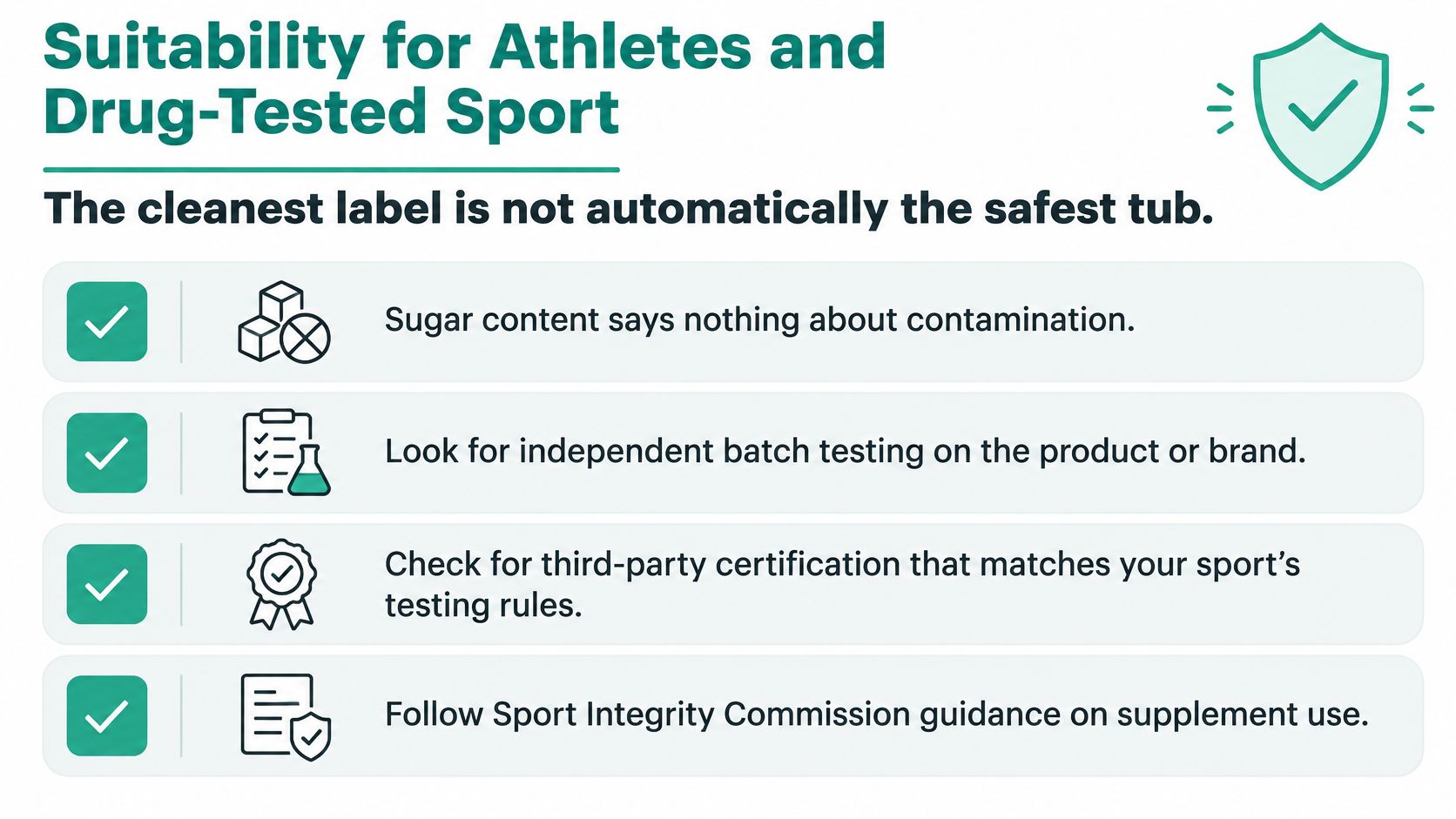
- Confirm the need. Decide whether a powder fills a practical gap in your food intake.
- Check the certification scope. Look for Informed Sport, Informed Choice, NSF Certified for Sport or HASTA, then establish what the particular programme verifies. These marks aren't interchangeable.
- Verify the exact batch. Match the container's details with the testing record where available. A brand-level statement isn't an exact-batch check.
- Keep the evidence. Retain the container, lid and batch details until you've finished the product.
- Read the complete recipe. Check flavours, sweeteners and added ingredients, not just the main protein source.
The Tested for Sport filter can narrow the shopping range, while the Informed Sport protein powder guide helps explain what to verify.
For runners considering where a shake fits into their routine, protein powder advice from Swift Running provides additional reading. Keep that nutrition decision separate from the anti-doping check.
Independent testing reduces risk. It doesn't eliminate it or guarantee supplement purity.
Athletes who aren't drug tested still need a clear serving size, suitable ingredients and a useful protein contribution.
Tips to Cut Sugar in Your Shake
The finished drink can contain considerably more sugar than the powder alone. Start with the liquid and larger additions before worrying about a sprinkle of flavouring.
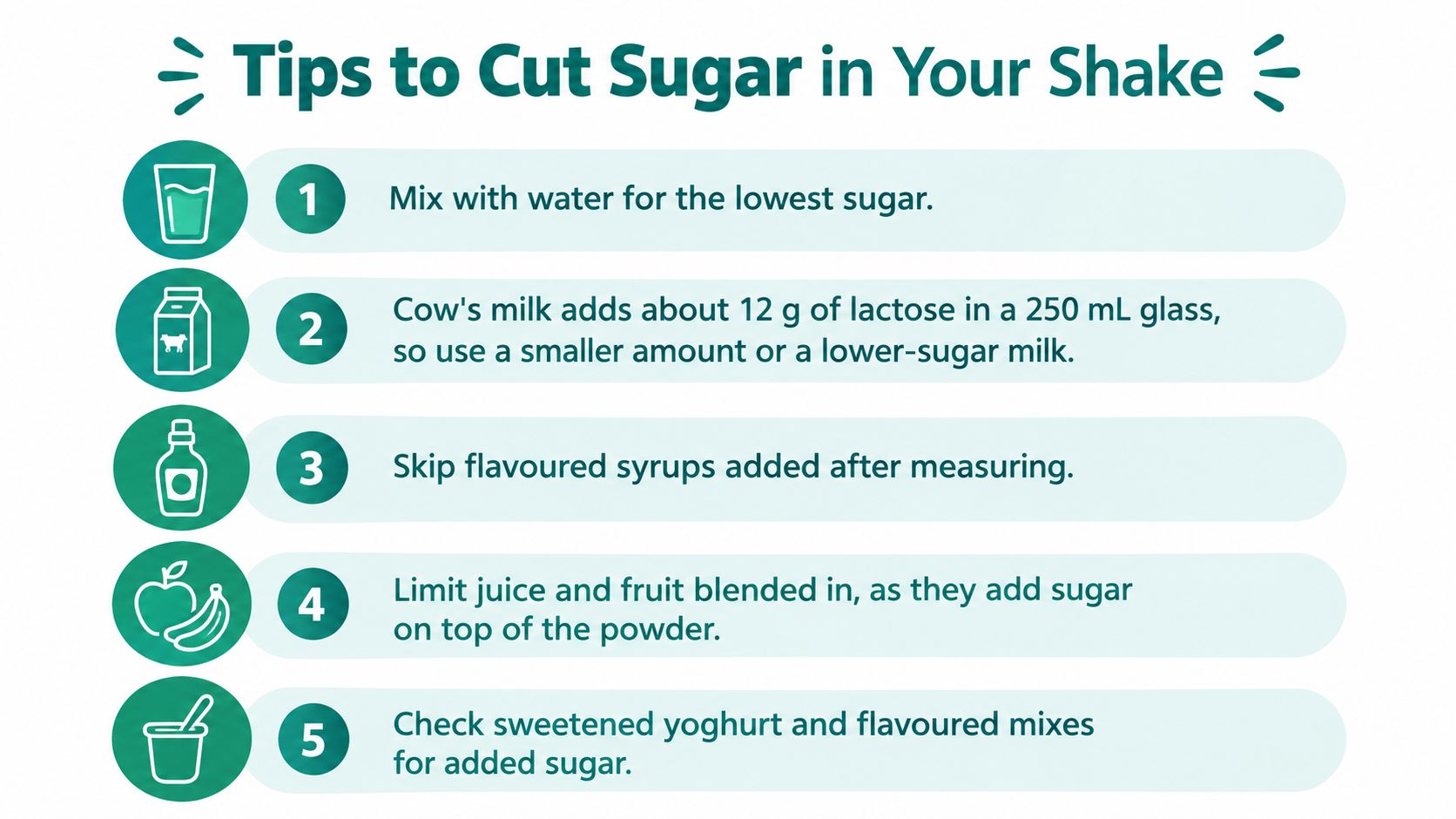
- Choose the liquid deliberately. Water adds no sugar. Cow's milk contributes lactose, so include its label figures when calculating the finished drink.
- Check unsweetened alternatives. Compare soy, almond and oat drinks individually. Unsweetened wording doesn't mean every option has the same total sugars.
- Leave out syrups and juice. Honey, flavoured syrups and fruit juice add sugars after you've measured the powder.
- Read yoghurt labels. Sweetened yoghurt can change the drink substantially. Plain options still need checking.
- Measure fruit additions. Frozen berries contribute naturally occurring sugars. They can be a deliberate ingredient without becoming an unlimited addition.
- Use flavourings carefully. Try unsweetened cocoa or cinnamon instead of sweetened chocolate mixes. Check vanilla extract for added sugar.
- Weigh the powder. Use kitchen scales and the declared serving weight. Level the scoop rather than heaping it.
The visual checklist summarises common additions to reconsider. Use your chosen milk's label for its actual lactose and sugar contribution.
Keep the same brand, flavour and preparation method while you assess the result. Changing everything at once makes it harder to tell which adjustment improved the taste.
Confirm Your Low-Sugar Pick Before You Buy
Pass a tub only when you can verify its serving weight, protein, sugars, carbohydrate, energy and ingredients. Put it aside if the serving size is unclear or you can't obtain a comparable per-100 g panel.
For a hypothetical shopping screen, you might choose under 3 g sugars, at least 20 g protein, and a protein-to-sugar ratio of 10 to 1 or better per serve. Those are editorial selection criteria, not regulatory limits or personal protein requirements.
They must also work together. A product can meet the protein and sugar cut-offs while missing the ratio, so don't treat any single tick as a complete pass.
Check the listing before making a shortlist
Current product stock, exact product URLs, flavour-specific panels and live prices haven't been verified here. No named product can therefore be presented as an in-stock recommendation, and the table below is a verification worksheet rather than a live shortlist.
| Product type | Serve size | Protein per serve | Sugars per serve | Sweetener | Price per serve |
|---|---|---|---|---|---|
| Whey isolate, lowest-sugar candidate | Copy declared grams | Copy flavour-specific panel | Check both panel columns | Read full ingredients | Pack price divided by declared servings |
| Plant or blend, dairy-free candidate | Copy declared grams | Copy flavour-specific panel | Check both panel columns | Read full ingredients and dairy statement | Pack price divided by declared servings |
Save a photo of the panel and ingredients before buying. Check that the photographed flavour and pack match the item in your basket.
The FSANZ consumer food-labelling report reinforces why the panel, ingredients and allergen information deserve attention alongside nutrient claims. For your purchase, those details are more useful than an appealing front label.
Browse protein powder NZ with your comparison notes beside you, and confirm certification records separately if you're drug tested.
NZ Supps offers whey, isolate and plant-based protein options with ingredient information and per-serve pricing to support comparison. Visit with your label checklist, confirm the selected flavour's current details, and choose a powder that fits how you'll really prepare it. Shop all protein powder in NZ.