SHOP NOW, PAY LATER










 Informed Sport
 Informed Choice
 NSF Certified for Sport
 HASTA Certified

Store protein powder in its original sealed tub, or a genuinely airtight container, inside a cool, dark cupboard away from the stove and sink. Never put it in the fridge or freezer. Keep the scoop bone dry, portion large tubs into smaller batches, and always give it a smell and color check before you scoop.
TL;DR:
- Store protein powder in a cool, dark cupboard below 70°F, away from heat sources and humidity, to prevent oxidation and spoilage.
- Never refrigerate or freeze protein powder, as temperature fluctuations and condensation accelerate degradation and clumping.
- Use airtight containers with silica packs, and decant only small portions into smaller jars to limit exposure and maintain freshness.
- Trust your senses more than expiration dates: dispose of protein powder if it smells rancid, shows discoloration, mold, or forms hard, unbreakable chunks.
- Always dry the scoop completely before returning it to the container to avoid introducing moisture that causes clumping and spoilage.
Table of Contents
- What’s the Best Place to Store Protein Powder?
- Should You Refrigerate or Freeze Protein Powder?
- How Can You Tell if Protein Powder Has Gone Bad?
- What Are the Best Containers for Protein Powder?
- How Should You Store Bulk Protein Powder Long Term?
- How Do You Keep the Scoop From Ruining Your Protein Powder?
- Quick Protein Powder Storage Checklist
- What I’ve Learned About Storing Protein Powder Right
- Smaller Tubs, Simpler Storage
- Sources
What’s the Best Place to Store Protein Powder?
Heat and humidity are what actually ruin protein powder, not time on the shelf. Research on whey protein stability shows it holds up well for up to 12 to 19 months when kept around 70°F (21°C) in low humidity, while higher temperatures speed up oxidation and shorten that window considerably.
That makes the pantry or a kitchen cabinet the right call, as long as it’s not the one next to the stovetop, kettle, or dishwasher vent. Those spots run warmer and steamier than you’d think, even with the door closed.
Good storage spots share three traits:
- Below roughly 70°F, ideally somewhere between 60 and 68°F
- Away from direct sunlight, which speeds up ingredient breakdown
- Dry air, with no steam, condensation, or humidity spikes nearby
If your tub has a working screw lid and a foil seal you haven’t torn off, the original packaging is often fine for the typical length of use for one container. Decanting only makes sense once you’re scooping from it daily and want a smaller, easier-to-grab container on the counter or in a gym bag.
Should You Refrigerate or Freeze Protein Powder?
No. Pulling a cold tub out of the fridge into warm kitchen air creates condensation on contact, the same way a cold soda can sweats in summer. That moisture lands directly on the powder.
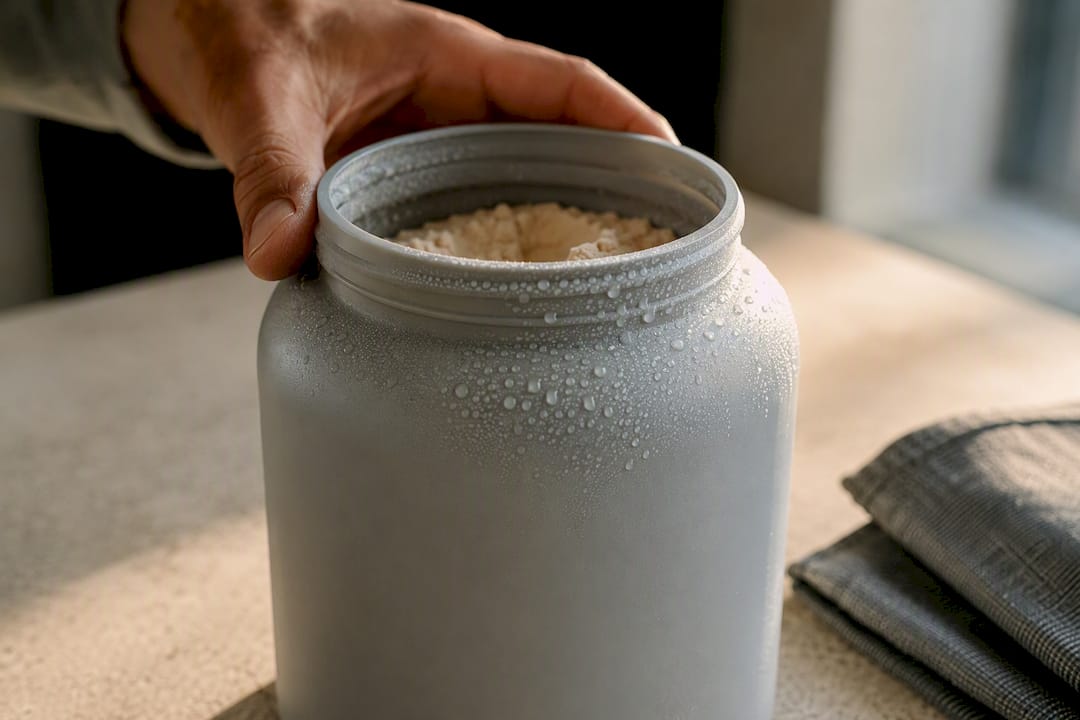
Every time you open a fridge or freezer, you also expose the contents to a fresh temperature swing, and repeated swings are worse for powder quality than steady room temperature. Moisture buildup accelerates oxidation and off-flavor formation in stored protein products, a pattern confirmed in research on temperature-driven degradation.
The one narrow exception is a factory-sealed, vacuum-packed tub that’s never been opened. Vacuum packaging keeps air and moisture out regardless of where it sits, though even then, a cool cupboard beats a fridge shelf once you actually break the seal.
How Can You Tell if Protein Powder Has Gone Bad?
Trust your nose before you trust the date stamp. A “best by” date is a quality marker, not a safety cliff edge, and Prevention’s reporting on protein powder shelf life backs that up: correctly stored powder often stays usable well past the printed date, while poorly stored powder can turn before it.
Run through this quick check before your next shake:
- Smell it. A rancid, sour, or “off” odor means it’s done, no matter the date.
- Look at the color. Yellowing or brown patches signal oxidation.
- Check for mold. Any visible fuzz or spotting means toss it immediately.
- Taste a pinch. A bitter or sour edge is a spoilage sign, not a flavor variation.
- Feel the clumps. Soft clumps that break apart between your fingers are just humidity. Rock-hard chunks that won’t crumble are a different problem entirely.
These are the same red flags Healthline outlines for spoiled protein powder: rancid smell, bitter taste, color shifts, and hard clumping. Any one of them is reason enough to discard the tub, even if it’s a week from the printed date.
What Are the Best Containers for Protein Powder?
The original tub is often your best container, assuming the lid still seals tight and the foil liner is intact. The moment either fails, or you want a smaller grab-and-go option, switch to something built for an airtight seal: thick glass jars or BPA-free plastic containers with a silicone gasket in the lid.
A few rules make decanting actually work:
- Move the factory silica or desiccant packet into the new container. It keeps humidity down and costs you nothing extra.
- Write the original best-by date on the new container before you forget which tub it came from.
- Pick stackable containers sized for daily portions, not decorative jars with a loose-fitting lid that looks nice but seals nothing.
The smartest setup is two containers: one small daily-use jar you refill often, and the bulk supply kept sealed and untouched until you need to top off. That way the bulk stock only gets exposed to air occasionally instead of every single scoop.
Pro Tip: Decant into a container roughly the same size as a week’s worth of servings. It forces you to reseal the bulk tub often instead of leaving the daily jar half-empty and full of trapped air.
How Should You Store Bulk Protein Powder Long Term?
Buying the biggest tub or bag available saves money per serving, but it also means more days of that powder sitting exposed to air once it’s open. The fix is portioning: split a large bulk pouch into one-month supplies right after purchase, then vacuum-seal the extra portions or drop them into airtight zip bags with a silica pack tucked inside.
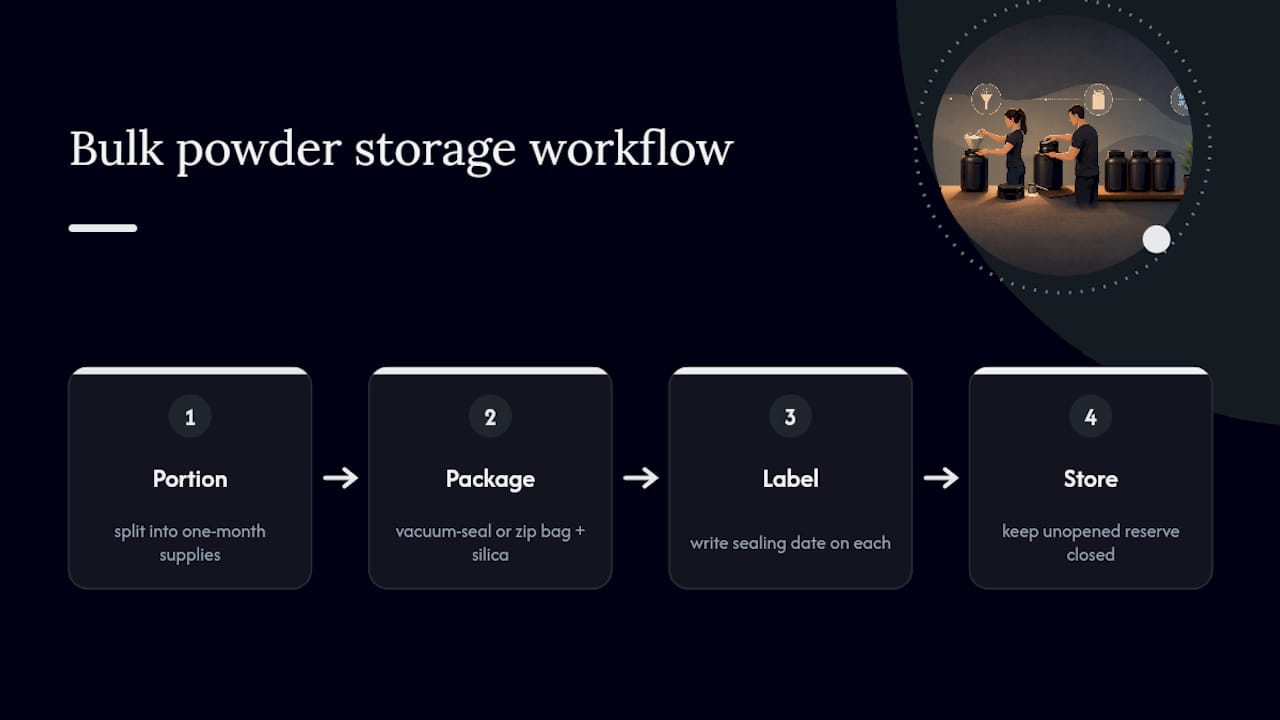
Climate and protein type change how careful you need to be. If you live somewhere humid, smaller, more frequent portions beat one giant tub sitting half-full for months. Hydrolyzed whey and very finely milled powders clump faster than standard concentrate because of their particle size, so they benefit even more from single-serve packaging in sticky climates.
Label every portion with the date you sealed it, and keep the untouched reserve closed until a bag actually runs empty.
How Do You Keep the Scoop From Ruining Your Protein Powder?
Most clumping problems trace back to one habit: dropping a wet or sweaty scoop back into the tub after a shake. That single move introduces more moisture than a whole month of humid air ever could, and it’s the most common household mistake behind clumped powder.
Small fixes solve most of it:
- Rinse the scoop after use, dry it fully, then store it in a separate dry cup, not inside the tub.
- Swap the flimsy factory scoop for a flat silicone spatula. It’s easier to wipe dry and doesn’t trap residue in ridges.
- Dry your hands before you open the lid, especially right after a workout.
- Snap the lid shut firmly every time, and mix your shake away from the sink or a boiling kettle.
Pro Tip: Keep a small towel next to your shaker bottle station. Wiping the scoop takes five seconds and prevents weeks of clumping.
Quick Protein Powder Storage Checklist
Run through this before every scoop:
- Cool, dark, dry cupboard. No fridge, no freezer.
- Scoop stays dry and stored separately, never left inside a damp tub.
- Bulk tubs get portioned; only the daily container gets opened repeatedly.
- Airtight seal on every container, with the silica packet moved along with it.
- Best-by date labeled on any decanted container.
- Discard immediately if you notice rancid smell, discoloration, visible mold, or hard clumps.
What I’ve Learned About Storing Protein Powder Right
Most complaints about protein powder “going bad” trace back to habits, not bad luck or a bad batch. The scoop goes back in wet, the tub sits next to the stove, or a half-used bag gets left open in a gym bag for a week. Fix those three things and spoilage becomes rare.
Nzsupps has covered this in more depth in our piece on protein powder expiration and freshness, which digs into how ingredient quality interacts with storage over time. If your current tub is too big for how quickly you go through it, it might be worth checking product sizes built for smaller, faster turnover rather than fighting a bulk container for months.
— Blake
Smaller Tubs, Simpler Storage
Storage headaches usually start with the container size, not the powder itself. A tub that takes you four months to finish gets opened, closed, and exposed to air far more times than one you’ll finish in three or four weeks, and every one of those openings is a chance for moisture to sneak in.
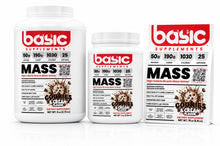
Nzsupps carries options built around that math. The Basic Supplements Beef Isolate in 908g gives you a size that gets finished before storage becomes a problem, instead of sitting half-full on a shelf for months. If you go through protein fast enough to justify buying in bulk, the 2.27kg Isolate tub is sized for exactly that, paired with the portioning habits covered above. Either way, check the product page for the size that actually matches how fast you go through a tub, then build your storage routine around it.
Sources
- Does Protein Powder Expire? - Healthline
- Does Protein Powder Expire? - Prevention
- NCBI study (PMC3497008)
- How to Store Whey Protein - MuscleZeus